

Discover 10 creative ways to use crystal beads in your projects. Transform your crafts with sparkling designs and easy techniques!
TL;DR:
- Crystal beads are versatile decorative elements that can transform jewelry, home décor, and art projects. Choosing the right size and material improves the final appearance and durability of each piece. High-quality findings and proper techniques, such as head pins and secure knots, enhance professionalism and longevity.
Crystal beads are faceted, light-catching beads made from crystal glass or similar materials, and the ways to use crystal beads extend far beyond classic necklaces and bracelets. Whether you work with Swarovski crystal, Czech glass, or acrylic transparent beads, these sparkling components transform ordinary projects into something worth a second look. You need only a few basic tools, including round-nose pliers, a bead board, and the right cord, to get started. Bead size drives everything from project type to finished feel, so understanding your options before you buy saves time and money.
1. How to use crystal beads in jewelry making
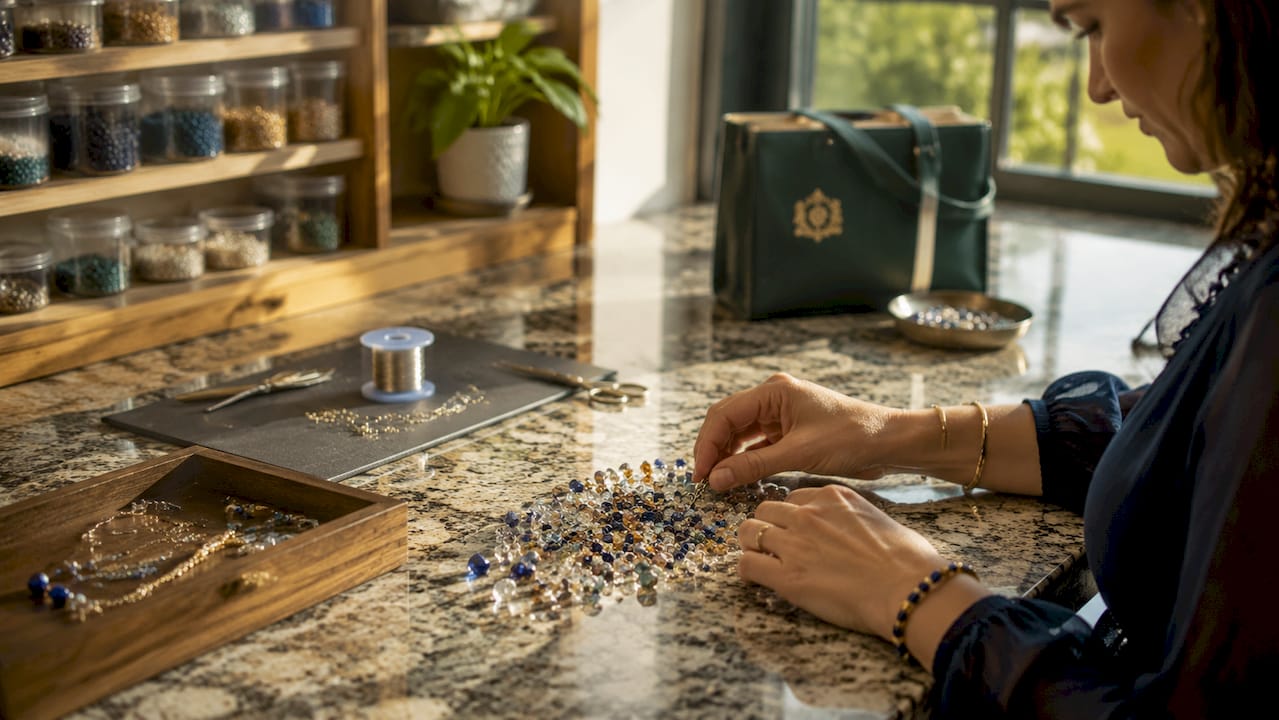
Crystal bead jewelry making is the most accessible entry point for new crafters. A simple bracelet using 4mm–6mm beads sits comfortably on the wrist and works for everyday wear. These mid-size beads thread easily onto elastic cord or beading wire, and a beginner can finish a bracelet in under an hour with basic tools.
Wire wrapping opens up earrings and pendants. Head pins simplify this process by acting as a factory-made stopper at the base of each bead, so you skip the tricky step of forming a handmade loop from scratch. Thread your crystal bead onto the head pin, bend the wire above the bead, and form a loop with round-nose pliers. That loop connects directly to an ear wire or chain.
For a polished finish, use crimp beads and a lobster clasp on beading wire necklaces. Stainless steel findings resist tarnish far longer than cheaper alloy components, and they coordinate better with silver-toned crystal beads. Matching your metal finish to your bead color is not just a durability decision. It is a design decision that separates amateur work from professional results.
Pro Tip: Tie a surgeon’s knot inside the bead hole when finishing elastic bracelets. Add a tiny drop of jeweler’s cement to the knot before tucking it inside the bead. The knot disappears, the bracelet holds, and there is no visible residue.
- Round-nose pliers: $7–$15
- Wire cutters: $8–$20
- Beading needles: $2–$8
- Elastic cord or beading wire: sold by the spool at most craft retailers
2. Making suncatchers and hanging prism decorations
Suncatchers are one of the best uses for crystal beads in home décor. Larger beads in the 8mm–12mm range maximize light refraction, casting rainbow patterns across walls and ceilings when sunlight hits them. Hang a strand of crystal beads in a south or west-facing window for the strongest effect.
The construction is simple. Cut a length of clear monofilament or silver wire, string your beads in a pattern, and attach a small hook at the top. You can mix bead shapes, combining round, teardrop, and faceted cube beads, to create more complex light patterns. Crystalplace carries a wide range of hanging crystal options that work perfectly for this type of project.
Pro Tip: Space beads with small metal spacers between each crystal. The spacers prevent beads from clinking together and add a refined look to the finished piece.
3. Crystal bead embroidery and textile art
Small crystal beads in the 2mm–4mm range are the standard choice for embroidery and sewn textile projects. Their size lets them sit flat against fabric without pulling the weave out of shape. Sew them individually onto a design outline using a beading needle and thread, or couch a strand of pre-strung beads along a curved line for faster coverage.
Crystal beads work especially well on bridal veils, evening bags, and decorative pillows. The facets catch light with every movement, which gives textile pieces a dynamic quality that flat embroidery floss cannot match. Use a doubled thread and a half-hitch knot after every third or fourth bead to prevent a single break from unraveling the entire row.
4. Beaded curtains and room dividers
A beaded curtain made from crystal beads does two jobs at once. It divides a space visually while still letting light pass through. String long strands of crystal beads onto clear fishing line or stainless steel wire, then hang them from a tension rod or a wooden dowel mounted above a doorway or window opening.
For a cohesive look, stick to one bead size per strand and vary the color across strands. Clear, pale blue, and soft pink crystal beads work well together in a bedroom or reading nook. Larger 10mm–12mm beads create a bolder, more dramatic curtain suited to a living room or studio space.
5. Keychains and bag charms
Keychains and bag charms are fast, low-cost projects that use up leftover beads from larger builds. A basic keychain requires a split ring, a short length of wire or chain, and three to five crystal beads. The whole assembly takes about ten minutes. Transparent crystal and glass beads in round, flower, cube, and teardrop shapes give you plenty of variety even within a small project.
Bag charms attach to a zipper pull or handle ring the same way. Use a lobster clasp so the charm is removable and can move between bags. Combine crystal beads with a single enamel or metallic charm for a focal point that keeps the design from looking too uniform.
6. Clothing and shoe embellishment
Sewing or gluing crystal beads onto clothing turns a plain garment into a statement piece. A denim jacket with crystal beads along the collar and cuffs reads as custom without requiring advanced sewing skills. Use a beading needle and strong thread for sewn applications, or E6000 adhesive for glued applications on shoes, bags, and accessories where sewing is not practical.
Key tips for wearable bead work:
- Use thread that matches the fabric color so stitches disappear between beads.
- Apply a small amount of clear nail polish over each knot on the inside of the fabric to lock it in place.
- On shoes, apply glue in small sections and let each section cure fully before moving to the next.
- Avoid placing beads on high-friction areas like the sole edge or inner sleeve seam, where they will wear off quickly.
- Test adhesive on a fabric scrap before applying it to the finished garment.
7. Hair accessories
Crystal beads add sparkle to bobby pins, hair combs, and headbands without adding significant weight. Wrap wire-threaded crystal beads around the top bar of a bobby pin, then bend the wire ends flat against the pin so they do not snag hair. A set of six matching pins takes about thirty minutes to make and costs a fraction of what boutique versions sell for.
For hair combs, use jewelry wire to attach clusters of crystal beads to the top spine of a plain metal comb. Vary bead sizes within each cluster, placing a larger 6mm bead at the center and smaller 3mm beads around it. This approach mirrors the construction used in creative jewelry design for layered, dimensional pieces.
8. DIY wall hangings and art installations
Crystal beads work as three-dimensional elements in wall art. Stretch a canvas or wooden frame with wire grid, then attach crystal bead clusters at intersections using jewelry wire. The result is a piece that changes appearance as light shifts throughout the day. This is one of the more underused creative uses for crystal beads, and it suits a modern or minimalist interior well.
You can also string beads across a driftwood branch or a painted dowel to create a hanging wall piece. Alternate bead colors in a gradient from one end to the other for a clean, gallery-ready look. The role of crystal beads in interior design goes well beyond chandeliers and suncatchers when you treat them as art materials rather than just craft supplies.
9. Event and wedding décor
Crystal beads are a practical choice for event décor because they photograph well and pack flat. String them along table centerpiece frames, wrap them around candle holders, or drape strands across a ceremony arch. The light refraction they produce in candlelit or LED-lit spaces creates an effect that fabric and paper decorations cannot replicate.
For wedding applications, clear and pale-toned crystal beads read as elegant without competing with floral arrangements. Use 8mm round beads for table garlands and 4mm beads for detail work on place card holders or favor boxes. Crystalplace has supplied crystal components for decorators and event designers since 1992, making it a reliable source for bulk bead orders.
10. Choosing the right bead size for your project
Bead size is the single most important variable in any crystal bead project. The wrong size makes assembly harder and the finished piece look off.
| Bead size | Best uses | Key advantage |
|---|---|---|
| 2mm–4mm | Embroidery, fine jewelry, detail work | Sits flat, allows tight spacing |
| 4mm–6mm | Bracelets, layered necklaces, earrings | Comfortable weight, easy to thread |
| 8mm–12mm | Statement pieces, suncatchers, décor | Strong visual presence, high refraction |
Material type matters as much as size. Genuine crystal glass produces sharper light refraction than acrylic. Acrylic beads cost less and weigh less, which makes them better for large-scale décor projects where hundreds of beads are needed. For jewelry and wearable pieces where quality shows up close, authentic crystal beads deliver a finish that acrylic cannot match.
Pro Tip: Match your thread or wire gauge to the bead’s drill hole diameter before you buy. A bead with a 0.5mm hole will not accept standard beading wire without forcing, which weakens both the wire and the bead.
Key takeaways
Crystal beads are most effective when bead size, material type, and project scale are matched deliberately rather than chosen at random.
| Point | Details |
|---|---|
| Match bead size to project type | Use 2mm–4mm for embroidery, 4mm–6mm for jewelry, and 8mm–12mm for décor and statement pieces. |
| Choose findings by material | Stainless steel findings resist tarnish and coordinate better with crystal bead color tones. |
| Use head pins for wire wrapping | Head pins give beginners a secure, simple method for making earrings and pendants without complex loops. |
| Secure knots inside beads | Tuck surgeon’s knots with jeweler’s cement inside bead holes for clean, durable elastic bracelets. |
| Expand beyond jewelry | Suncatchers, wall art, embroidery, and event décor all benefit from crystal beads used at the right scale. |
What I have learned from years of working with crystal beads
Most crafters underestimate how much bead size changes the character of a finished piece. A bracelet made with 4mm beads feels delicate and everyday. The same bracelet made with 8mm beads becomes a statement. That shift happens with no change in technique, no extra cost, and no additional tools. Size is the fastest design lever you have.
The other thing I keep coming back to is the value of quality findings. A beautiful set of crystal beads strung on cheap alloy wire looks wrong within weeks. The metal oxidizes, the clasp fails, and the whole piece ends up in a drawer. Stainless steel or sterling silver findings cost more upfront, but they hold the design together for years. That is not a luxury choice. It is the practical one.
Wire wrapping intimidates a lot of beginners, but head pins remove most of the difficulty. You do not need to form a perfect loop from raw wire on your first try. Start with a head pin, thread your bead, bend the wire, and close the loop with pliers. The technique builds quickly, and within a few sessions you will be comfortable enough to try more complex wraps. The meditative quality of the work, the repetition of threading and wrapping, is something most crafters do not expect and end up genuinely enjoying.
— BCC
Explore premium crystal beads at Crystalplace
Crystalplace has been sourcing authentic crystal products directly from trusted manufacturers since 1992. The selection covers crystal beads in sizes from 2mm through 12mm, along with findings, wire, and accessories suited to every project type on this list.
Whether you are building your first bracelet or designing a full event installation, Crystalplace carries the materials to match your scale. The site offers free shipping on orders over $22 within the USA. Browse the full crystal bead collection to find the right sizes, shapes, and quantities for your next project. The Crystalplace blog also covers techniques, décor ideas, and home lighting with crystal beads for crafters at every level.
FAQ
What size crystal beads work best for bracelets?
4mm–6mm crystal beads are the industry standard for bracelets. They sit comfortably on the wrist and thread easily onto elastic cord or beading wire.
Can crystal beads be used in home décor projects?
Crystal beads work well in suncatchers, beaded curtains, wall hangings, and event décor. Larger 8mm–12mm beads produce the strongest light refraction for interior decoration.
What tools do I need to start working with crystal beads?
Round-nose pliers, wire cutters, a bead board, and beading needles cover most beginner projects. Basic jewelry tools cost between $2 and $20 per item.
How do I keep knots from showing on elastic bracelets?
Tie a surgeon’s knot, apply a small drop of jeweler’s cement, and tuck the knot inside a bead hole. The knot becomes invisible and holds significantly longer than an untreated knot.
What is the difference between crystal glass and acrylic beads?
Crystal glass produces sharper light refraction and a more refined finish, making it the better choice for jewelry and close-up décor. Acrylic beads cost less and weigh less, which suits large-scale installations where hundreds of beads are needed.
Recommended
- Why Use Crystal Beads for Your Craft Projects – CrystalPlace
- Why Choose Crystal Beads for Jewelry and Decor – CrystalPlace
- The Role of Crystal Beads in Design for Decorators – CrystalPlace
- Crystal Bead Types: Enhance Lighting and Style with Informed Choices – CrystalPlace