

Discover the advantages of real crystal for home and event lighting. Experience unmatched brilliance, durability, and timeless elegance.
TL;DR:
- Real crystal offers prismatic fire from high-refractive-index materials that glass and acrylic cannot match. Its durability, resistance to clouding, and long-term value make it ideal for high-impact, heirloom fixtures, unlike acrylic that degrades quickly. Proper maintenance and verification of authenticity ensure lasting brilliance and investment protection.
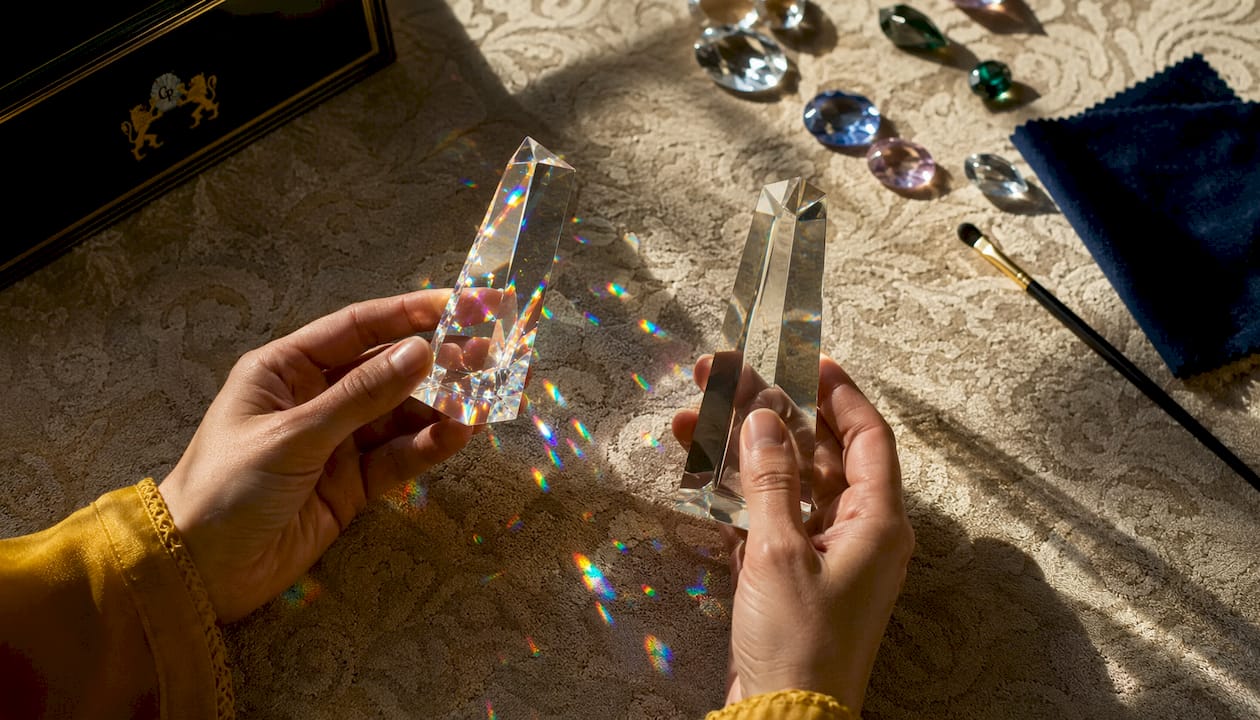
Real crystal delivers something glass and acrylic simply cannot: prismatic “fire.” That’s the technical term for what happens when light enters a high-refractive-index material, bends sharply, and splits into visible color bands across your walls and ceiling. Lead crystal achieves a refractive index of 1.56–1.70+, compared to soda-lime glass at roughly 1.50–1.52. That gap is the entire difference between a chandelier that glows and one that dazzles.
The advantages of real crystal go beyond optics. Genuine crystal resists yellowing and optical clouding for decades, holds its resale value, and rewards a simple maintenance routine with sustained brilliance. Acrylic fades and clouds; glass glows softly but never fires. For statement fixtures in entry foyers, formal dining rooms, ballrooms, or hospitality lobbies, real crystal is the only material that performs at that level long-term.
TL;DR: Buy real crystal for high-impact fixtures, verify authenticity through manufacturer markings or a certified retailer like Crystalplace, and commit to a regular cleaning routine. Those three steps protect your investment for decades.
- Optical brilliance: refractive index 1.56–1.70+ produces prismatic color dispersion glass cannot match
- Durability: resists yellowing and optical clouding that degrade acrylic within years
- Long-term value: crystal chandeliers often become heirlooms; acrylic depreciates fast
- Authenticity signals: Swarovski markings, manufacturer certificates, and sourcing from established retailers like Crystalplace
- Maintenance: a correct routine preserves brilliance; wrong products (ammonia, abrasives) cause permanent surface damage
Why real crystal produces sparkle that glass cannot replicate
The physics here are straightforward. Light bends when it crosses from one medium into another, and the degree of bending is determined by the refractive index. Lead crystal’s refractive index of 1.56–1.70+ versus soda-lime glass at ~1.50–1.52 means light bends far more sharply inside crystal, producing stronger reflections at cut surfaces and greater dispersion of white light into its component colors. That dispersion is the “fire” — the rainbow flashes that appear on walls and ceilings when a chandelier catches the light.
Refractive index comparison: Lead crystal: 1.56–1.70+ | Soda-lime glass: ~1.50–1.52 | Acrylic: ~1.49
Dispersion is not a marketing claim. Industry practitioners treat sparkle as a measurable optical result of dispersion: higher dispersion yields visible rainbow effects under white light, while lower-dispersion materials produce a uniform glow. Crystal also has higher density, which allows thinner, sharper facets that multiply light and create multi-angle sparkle without requiring higher wattage. Lighting specifiers note that crystal distributes light directionally, producing visual energy from fewer bulbs.
Pro Tip: Facet shape matters as much as material. Deep, angular cuts scatter light into more directional rays than smooth or rounded surfaces. When evaluating a fixture, look for sharp, precise facet edges — a sign of quality cutting and a predictor of how much “fire” the piece will produce.
- Higher refractive index = more dramatic bending and color separation
- Greater dispersion = visible rainbow effects, not just a soft glow
- Denser material = sharper facets, more light multiplication per prism
- Crystal can achieve similar perceived brightness at lower wattage than glass
How crystal holds up over decades compared to glass and acrylic
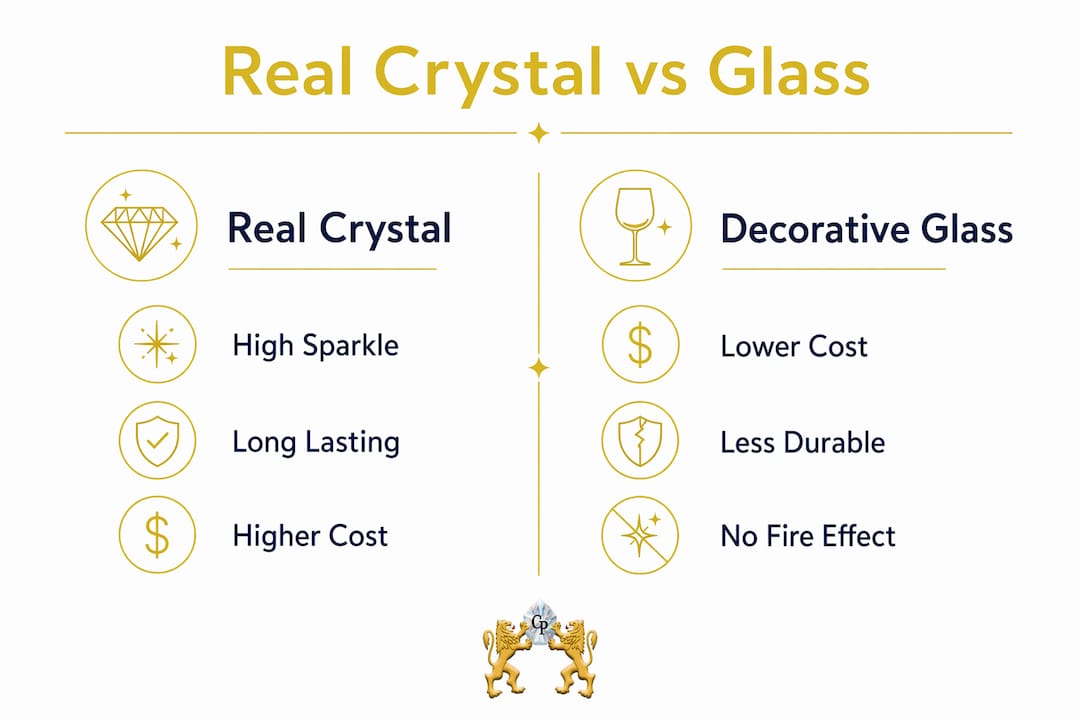
Real crystal often yields lower lifetime cost for premium installations because it resists optical degradation and retains value. Acrylic is the clearest example of the opposite: it clouds and yellows within years, and its static charge draws dust back almost immediately after cleaning. A properly maintained crystal chandelier can hold its original brilliance for multi-decade service.
| Feature | Real Crystal | Decorative Glass | Acrylic |
|---|---|---|---|
| Initial cost | Higher | Moderate | Lowest |
| Optical quality (refractive index) | 1.56–1.70+ | ~1.50–1.52 | ~1.49 |
| Longevity / yellowing resistance | Decades with maintenance | Good, may dull | Yellows and clouds within years |
| Scratch resistance | Moderate (lead crystal is softer) | Good | Lower; surface hazes |
| Maintenance frequency | Periodic deep clean | Occasional wipe | Frequent (static re-soils fast) |
| Aesthetic flexibility | Clear and colored prisms, deep cuts | Limited cut depth | Molded shapes only |
Lead crystal is softer than soda-lime glass in mechanical terms — PbO content raises refractive index while reducing microhardness — so it can scratch if handled carelessly. That trade-off is worth understanding before specifying. The payoff is that lead crystal yields to the cutter’s wheel, enabling the deep, precise facets that produce prismatic fire. K9 optical crystal offers a lead-free alternative with high refraction, commonly specified in hospitality-grade chandeliers where PbO compliance is a concern.
Pro Tip: Crystal is denser and heavier than glass or acrylic. Before installation, confirm your ceiling box and structural support are rated for the fixture’s weight. For large chandeliers, professional installation is not optional — it’s a safety requirement.
When real crystal is worth the investment
Choose crystal when you need a focal, high-impact fixture or long-term heirloom value. The material earns its premium in spaces where the chandelier is the design statement, not just a light source.
- Entry foyers and grand staircases: crystal’s prismatic fire fills vertical space and creates an immediate impression
- Formal dining rooms: the interplay of crystal with candlelight or dimmable LEDs produces the warmth and drama that glass cannot
- Ballrooms and event venues: crystal multiplies light across large volumes; see chandelier crystal examples for scale reference
- Hospitality lobbies: K9 or premium cut crystal for compliance-sensitive commercial projects; Swarovski for flagship luxury properties
- Antique chandelier restoration: replacing original crystal with genuine crystal preserves authenticity and value
- Feature pendants in residential projects: a single well-placed crystal pendant over a kitchen island or reading nook delivers outsized visual impact
Where crystal is a harder sell: high-traffic areas where breakage risk is real, very low ceilings where weight and installation complexity add cost, or spaces with a deliberately minimalist aesthetic where a soft glass glow is the right choice.
How to care for real crystal so it stays brilliant
A regular, correct maintenance routine preserves crystal’s sparkle and extends service life. The routine is not complicated, but the wrong products cause permanent damage.
- Dusting: every 2–4 weeks with a soft, lint-free cloth or a natural-bristle brush; prevents buildup that dulls facets
- Deep clean: two to four times per year, or whenever sparkle visibly diminishes
- Safe cleaning solution: a purpose-formulated crystal cleaner like Brilliante, or a diluted solution of mild dish soap in lukewarm water; never hot water (thermal shock can stress crystal)
- Hand-wash only: no dishwasher; the heat and detergent chemistry etch crystal surfaces permanently
- Avoid: ammonia-based cleaners, abrasive cloths or pads, and any solvent-based product
- Dry immediately: air-drying leaves water spots; use a clean, lint-free cloth and buff gently
Acrylic re-soils almost immediately after cleaning because static charge draws particulate matter back to the surface. Crystal does not carry that static, so a proper clean stays clean longer.
Pro Tip: For spot-cleaning between deep cleans, a light mist of Brilliante crystal chandelier cleaner — applied and left to drip-dry — removes fingerprints and light dust without disassembly. It’s the fastest way to restore sparkle between full cleaning sessions.
For full step-by-step guidance, Crystalplace maintains a chandelier maintenance checklist and a detailed cleaning method guide for large fixtures. When a chandelier shows structural damage, missing prisms, or finish deterioration, restoration services are the right call rather than continued spot-cleaning.
How to verify authenticity before you buy
The top signals that indicate genuine crystal: manufacturer markings, facet precision, weight and feel, the tap test, and documented provenance.
Quick authentication checklist:
- Tap test: a light strike near the edge produces a clear, bell-like ring that sustains for a moment; soda-lime glass thuds and stops
- Weight: crystal is noticeably denser than glass of the same size; lead crystal ranges from about 2.9 to over 3.1 g/cm³ versus ~2.4–2.5 g/cm³ for soda-lime glass
- Facet edges: genuine cut crystal has sharp, angular edges; molded glass and acrylic have rounded, less defined cuts
- Manufacturer markings: Swarovski pieces carry the swan logo and SKU documentation; ask for it
- Seller provenance: request invoices, SKU references, or a certificate of authenticity; reputable retailers provide these as standard
- Temperature: real crystal feels cool to the touch; acrylic feels warmer
On lead content: PbO raises refractive index and enables deep cutting but reduces microhardness and can release lead under acidic conditions. Keep lead crystal away from food contact. Modern lead-free optical alternatives like K9 deliver high refractive performance without PbO regulatory concerns — a practical choice for commercial projects or buyers who prefer to avoid lead entirely.
Crystalplace carries authenticated Swarovski crystal with full documentation, and its buying guide covers what to look for when evaluating crystal online. Thirty-plus years in the business means the sourcing and verification standards are established, not improvised.
Pro Tip: When buying online, request close-up photos of facet edges and the manufacturer’s mark. A seller who cannot provide both is a red flag, regardless of price.
Key Takeaways
Real crystal’s advantages come down to optical physics, longevity, and buying discipline: a refractive index of 1.56–1.70+ produces prismatic fire no glass or acrylic can match, and a correct maintenance routine keeps that brilliance for decades.
| Point | Details |
|---|---|
| Optical superiority | Refractive index 1.56–1.70+ creates prismatic fire; glass tops out near 1.52. |
| Long-term value | Crystal resists yellowing and clouding for decades; acrylic degrades within years. |
| Lead-free options | K9 optical crystal delivers high refraction without PbO for compliance-sensitive projects. |
| Maintenance commitment | Hand-wash only, purpose-formulated cleaners, and periodic deep cleans preserve brilliance. |
| Crystalplace | Carries authenticated Swarovski and Magnificent Crystal Brand prisms with 30+ years of sourcing expertise. |
For a full maintenance checklist and tips on preserving crystal brilliance, Crystalplace’s resource library is the practical starting point. One safety note: if your project requires lead-free compliance, specify K9 or another lead-free optical crystal and confirm with your supplier.
Why genuine crystal remains the right call for premium lighting
The conventional wisdom says crystal is a luxury indulgence. That framing misses the point entirely. For a fixture that anchors a room — a foyer chandelier, a ballroom centerpiece, a dining room statement piece — the material is the investment. Acrylic looks acceptable in a showroom photograph and disappoints within two years. Glass glows pleasantly and never fires. Crystal does something neither can: it turns ambient light into a dynamic, room-filling optical event.
What most buyers underestimate is the total cost argument. A crystal chandelier that holds its brilliance for 20 or 30 years, with periodic cleaning and occasional prism replacement, often costs less per year of visual impact than an acrylic fixture replaced twice in the same period. The math shifts further when you factor in the resale and heirloom value that genuine crystal carries and acrylic never will.
Crystalplace has operated since 1992 with a straightforward premise: source authenticated crystal, offer the full range of chandelier components, and support customers through the life of their fixture. That means Swarovski prisms with documented provenance, the Magnificent Crystal Brand for buyers who want quality without the Swarovski premium, and Brilliante cleaner for the maintenance side. Restoration services round out the offering for buyers inheriting or repairing antique fixtures.
The real crystal prisms guide on the Crystalplace site covers the specific prism formats in more detail for buyers who want to go deeper on product selection.
Crystalplace: authenticated crystal and the support to back it
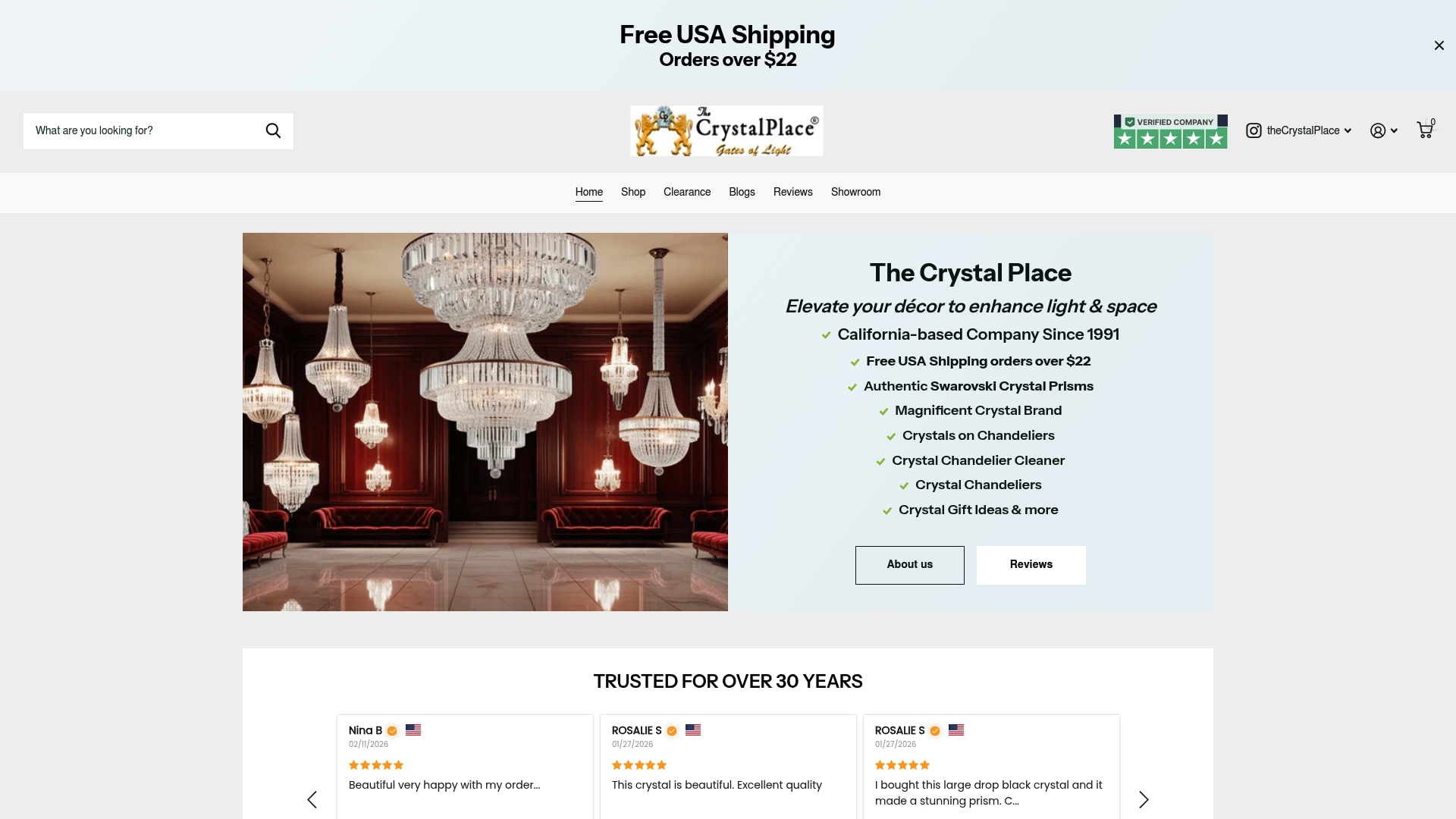
Crystalplace stocks authenticated Swarovski crystal prisms and its own Magnificent Crystal Brand line — clear and colored — alongside the full range of chandelier components: connectors, bobeches, columns, arms, candle covers, hooks, finials, and garlands. Brilliante crystal chandelier cleaner is available for buyers who want the right maintenance product alongside their purchase. Volume pricing tiers (Buy 2/6/12) and free U.S. shipping over $22 make stocking up for a large installation or restoration project straightforward.
For large or structurally complex installations, contact Crystalplace support directly before ordering. Thirty-plus years of sourcing experience means the team can help you match prism type, size, and finish to your fixture. Browse the full crystal selection to find authenticated prisms, parts, and care products in one place.
Useful sources
- Lead glass — Wikipedia: refractive index data and density comparisons for lead crystal versus soda-lime glass
- Role of PbO in Structure, Properties, and Durability of Commercial Lead Crystal Glasses: materials-science trade-offs between PbO content, refractive index, microhardness, and chemical durability
- Lead in Glass — Wiley: history, composition standards, and regulatory context for lead crystal glass
- What is Lead Crystal Glass? — ASMR Education: composition, density, acoustic properties, and optical behavior explained accessibly
- Crystal vs Glass vs Acrylic Chandeliers — Kinglong Lighting: hospitality-grade specification guidance and K9 optical crystal context
- Crystal vs. Glass: How to Tell the Difference for Chandeliers — Brilliante: practitioner guidance on dispersion, sparkle, and the tap test
- You’re Ruining Your Home With “Cheap” Plastic Crystals — Ecobrite: acrylic static behavior and maintenance cost implications
- Chandelier maintenance checklist — Crystalplace: step-by-step routine and deep-clean guidance
- Crystal chandelier maintenance 2026 — Crystalplace: current maintenance statistics and brilliance-preservation data
This article is general informational guidance, not professional installation or safety advice. Confirm lead-content regulations and structural requirements with a qualified professional for your specific project.
Recommended
- 7 Advantages of Real Crystal Prisms for Home Lighting – CrystalPlace
- Why Use Real Crystals for Home Décor and Lighting – CrystalPlace
- Crystal lighting benefits: 30% brighter, elegant interiors – CrystalPlace
- Enhance Your Home with Crystal Interior Lighting – CrystalPlace