

Learn what chandelier finials are, how to choose the right crystal type, and why this small detail makes a big difference in your home's lighting design.
TL;DR:
- Finials are decorative pieces that complete the visual design of a chandelier, acting as finishing touches.
- High-quality crystal finials, especially Swarovski or lead crystal, enhance light refraction and overall elegance.
- Proper sizing, attachment, and maintenance ensure a cohesive look and long-lasting beauty of chandelier fixtures.
Most homeowners spend hours choosing the right chandelier crystals, prisms, and drops, yet overlook the single piece that pulls the whole design together. The finial sits quietly at the base of your chandelier’s stem, but it carries enormous visual weight. It’s the period at the end of a sentence: small, but absolutely necessary. Interior designers who work with luxury lighting will tell you that a mismatched or missing finial makes even an expensive fixture look unfinished. This guide will change how you see that understated detail, walking you through what finials are, how to identify quality, and how to choose the right one for your home.
Key Takeaways
| Point | Details |
|---|---|
| Finials complete chandeliers | Finials serve as the elegant, decorative finishing touch that brings harmony to chandelier design. |
| Material quality matters | Choosing premium crystal like Swarovski enhances light refraction and durability for striking impact. |
| Details set designs apart | Intentional finial selection elevates home lighting from ordinary to refined. |
| Proper sizing is crucial | Matching threading and fit ensures both aesthetic and structural success. |
What is a chandelier finial?
The sparkle you love in a chandelier doesn’t come from crystals alone. There’s a quieter element doing a very specific job, and it’s time to give it the credit it deserves.
A chandelier finial is a decorative ornamental piece, often made of crystal, that serves as the final flourish at the very bottom of the chandelier’s stem or center rod. Think of it as the fixture’s signature, the last visual note after all the arms, bobeches, prisms, and drops have made their statement. It draws the eye downward and gives the design a sense of conclusion.
Here’s what makes a finial distinct from other chandelier components:
- Location: Finials sit at the very bottom of the center stem, or sometimes at the tips of chandelier arms depending on the style.
- Material: Crystal is the most popular choice, followed by glass and metal. Each material changes the look and light behavior of the piece.
- Purpose: Unlike most chandelier parts, finials are almost entirely about aesthetics. As noted by lighting accessory specialists, finials on chandeliers are more decorative and not typically used to secure shades, which sets them apart from lamp finials.
- Scale: They range from petite teardrop shapes to substantial elongated spires, and the right size creates visual balance with the rest of the fixture.
“A chandelier without its finial is like a picture frame without its corner details. The structure is there, but the refinement is missing.”
The design completion function of a finial is subtle but real. When you walk into a room and feel that a chandelier looks “right,” it’s often because every part, including the finial, was thoughtfully chosen. Our crystal finial buying guide goes deeper into specific styles if you want to explore particular options.
Finials also vary by attachment method. Some thread directly onto the center rod of the chandelier. Others clip or hang from decorative rings. Knowing how your finial attaches matters a great deal when it comes time to replace or upgrade one, which we’ll cover in a later section.
Types of chandelier finials and common materials
Now that you understand what a finial is, the next step is knowing what options are available and which materials truly shine, literally and figuratively.
Shape and style categories:
- Standard bottom finials: These hang from or thread onto the bottom of the center rod. They’re the most common type and come in teardrop, spire, ball, and elongated faceted shapes.
- Arm-hung finials (Venetian style): Venetian-style chandeliers feature finials sometimes hanging from glass rings on arms, adding cascading elegance to the design.
- Specialty shapes: Star, fleur-de-lis, pinecone, and custom-cut shapes are available for homeowners who want a more personalized statement.
Material comparison:
| Material | Sparkle | Durability | Price range | Best for |
|---|---|---|---|---|
| Lead crystal | Very high | High | Mid to high | Traditional, formal rooms |
| Swarovski crystal | Exceptional | Very high | Premium | Luxury interiors |
| Standard glass | Moderate | Medium | Budget | Casual or transitional spaces |
| Metal (brass, chrome) | Low | Very high | Varies | Industrial or modern styles |
The clarity and cut of the crystal are what determine how much light a finial refracts. Faceted surfaces multiply light into rainbows. Smooth surfaces reflect it cleanly but without drama. For maximum visual impact, prioritize Swarovski or lead crystal for premium refraction and durability, especially in dining rooms or entryways where the chandelier is the focal point.
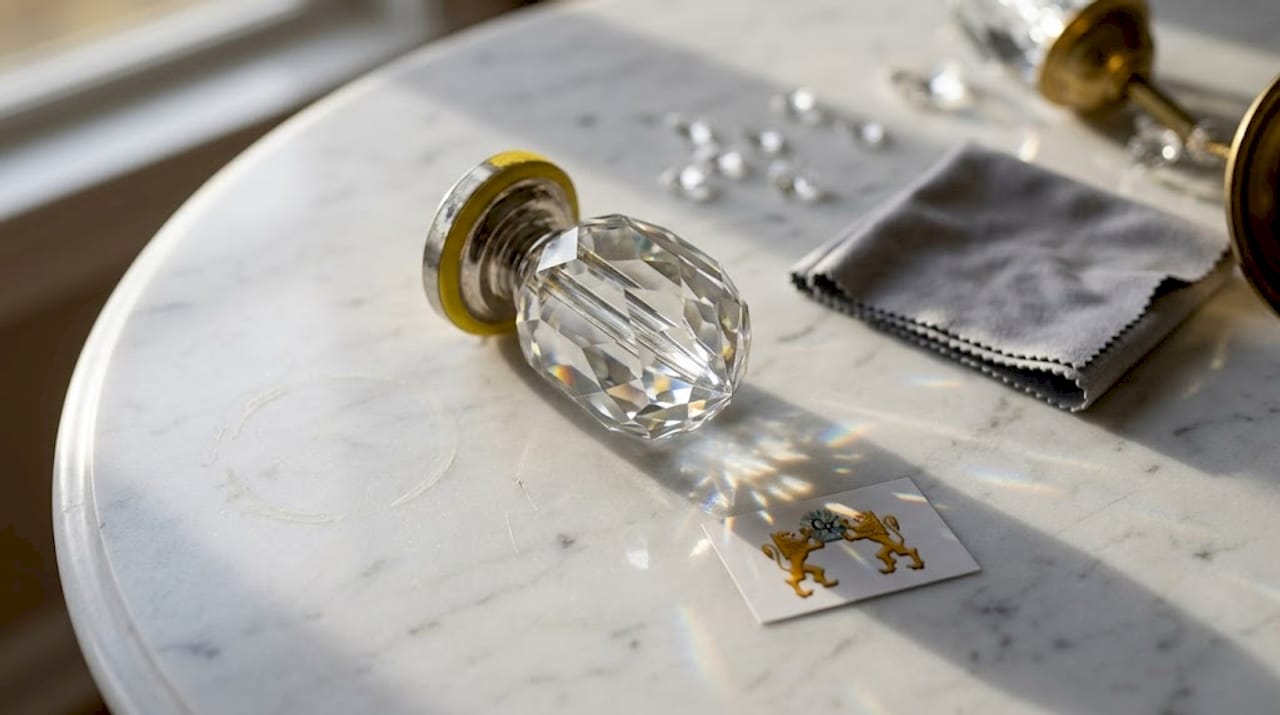
The Swarovski crystal appeal goes well beyond jewelry. The same precision cutting that makes Swarovski so desirable in fashion translates directly to how a crystal finial performs under light. You genuinely see the difference.
Pro Tip: If your chandelier already uses Swarovski strands or drops, match your finial to the same brand to ensure color and clarity consistency. Mixing crystal grades creates a visible mismatch that even untrained eyes will notice.
For homeowners interested in elevating lighting with crystal fixtures more broadly, choosing a high-quality crystal finial is one of the fastest, most affordable upgrades you can make.
How chandelier finials differ from prisms, drops, and lamp finials
With styles and materials in mind, it’s worth clearing up a confusion that trips up even experienced decorators: what exactly separates a finial from all those other hanging crystal pieces?
Finials vs. prisms and drops:
Finials differ from prisms and drops in a fundamental way. Prisms and drops are primarily light-refracting components, positioned throughout the chandelier’s body to scatter and multiply light across a room. A finial, on the other hand, marks an endpoint. Its job is decorative termination, not light distribution.
Here’s a quick numbered breakdown to keep it straight:
- Prisms: Flat, faceted pieces strung throughout the chandelier body. Their job is light refraction.
- Drops: Pendant-shaped crystals that hang from bobeches or arm tips. Primarily decorative and light-scattering.
- Finials: Terminate the bottom of the stem or arm ends. Primarily aesthetic endpoints.
- Lamp finials: These are a different category entirely. Finials on lamps secure shades; on chandeliers, they are purely decorative.
The practical difference matters when you’re ordering replacements. Swapping a prism for a finial position won’t look right and won’t sit correctly. Each piece has a specific geometry and attachment method designed for its role.
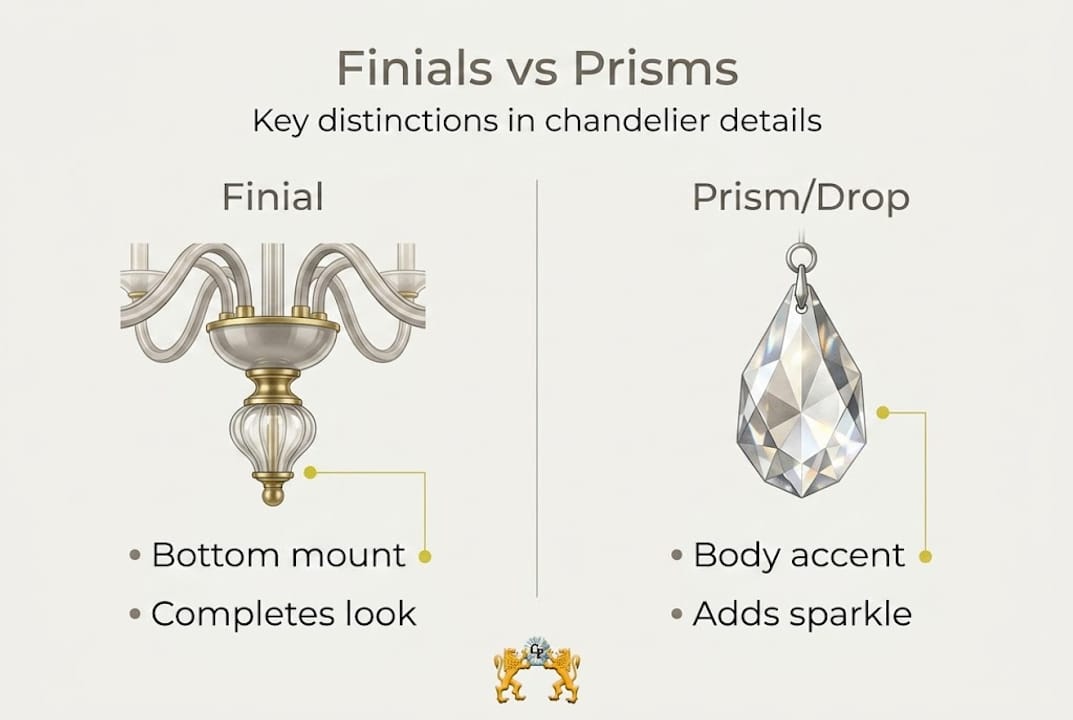
How to spot a finial at a glance:
| Feature | Finial | Prism/drop |
|---|---|---|
| Location | Bottom of stem or arm tip | Throughout chandelier body |
| Attachment | Threaded or ring-hung | Wire or pin-linked |
| Primary role | Decorative endpoint | Light refraction |
| Typical shape | Elongated, spire, or ball | Flat faceted, teardrop |
Pro Tip: When replacing chandelier finials, photograph your existing piece before removing it. The shape and attachment style will tell you exactly what to order.
If you’re also working with table or floor lamps, crystal lamp finials follow completely different sizing and threading standards, so always shop them separately.
Selecting and maintaining chandelier finials
Once you can identify and describe a finial with confidence, the next practical challenge is choosing the right one and keeping it looking brilliant over time.
Steps to select the correct finial:
- Measure your current finial or opening. Note the length, width at the widest point, and attachment hole diameter.
- Check the threading. Most standard chandeliers use a 1/4-27 thread. Matching the threaded size to your fixture ensures easy, secure replacement without adapters.
- Identify your style. Look at the overall fixture. A traditional brass chandelier calls for a classic crystal teardrop; a contemporary nickel fixture pairs better with a clean faceted ball or spire.
- Consider arm-hung configurations. Venetian-style arm-hung finials require matching hole configurations during restoration, so measure the ring diameter precisely before ordering.
- Order a sample if possible. Crystal quality and scale look very different in person than in product photos.
For additional guidance on fit, our sizing your chandelier finial resource covers common measurements and threading types in detail.
Maintenance checklist for crystal finials:
- Dust gently with a soft, dry microfiber cloth every month.
- For deeper cleaning, use a chandelier-specific spray cleaner. Never use ammonia-based products on crystal; they can cloud the surface over time.
- Avoid abrasive cloths or paper towels that can scratch faceted surfaces.
- Inspect the attachment point annually. A loose finial can fall and shatter.
- For antique or Venetian-style fixtures, consult a specialist before attempting DIY removal. The rings and attachment hardware on older pieces can be fragile.
If you’re also refreshing the rest of your fixture, replacement crystals are available to match your finial and restore the chandelier’s full brilliance.
Pro Tip: When cleaning, remove the finial from the fixture rather than cleaning it in place. You’ll reach all the facets evenly, and you eliminate any risk of dripping cleaner onto electrical components.
Why the right chandelier finial is the secret to cohesive design
Here’s a perspective that most lighting guides won’t give you: the finial isn’t a detail. It’s a decision.
Professional interior decorators who specialize in luxury spaces will often audit a chandelier’s finial before anything else when something feels off about a room. Guests can’t name what’s wrong. They just feel it. A mismatched or missing finial creates a subtle visual restlessness, the design equivalent of a shirt with the bottom button left undone.
What makes this so interesting is that finials are among the least expensive parts of any chandelier. Yet replacing or upgrading one has an outsized effect on how complete and intentional the room feels. Rooms with thoughtfully chosen finials have a “finished” quality that registers subconsciously.
We’ve seen this pattern repeatedly at Crystal Place since 1991. Customers who invest in quality finials matching their fixture’s crystal grade always report being happier with the overall result than those who treat the finial as an afterthought. It’s a small decision with a lasting payoff. For anyone serious about enhancing interiors with crystal lighting, the finial is the detail worth getting right.
Upgrade your chandelier with premium crystal finials
If this guide has made you look at your chandelier differently, you’re already ahead of most homeowners. Choosing the right finial doesn’t require a redesign or a large budget. It requires knowing what to look for and where to find genuine quality.
At Crystal Place, we’ve been sourcing authentic Swarovski and lead crystal components since 1991. Our selection of premium crystal finials covers traditional teardrop styles, Venetian arm-hung pieces, and specialty shapes to suit any fixture. We offer free shipping on orders over $22 within the USA, and our team is available to help you match materials and threading to your specific chandelier. Whether you’re restoring an antique fixture or upgrading a modern one, we carry the pieces to help you finish the job beautifully.
Frequently asked questions
What is the purpose of a chandelier finial?
A chandelier finial serves as a decorative finishing touch, adding elegance and completing the design at the bottom of the fixture’s stem or at arm endpoints.
How do I choose the right size finial for my chandelier?
Match the threading, commonly 1/4-27 for easy replacement, and choose a style proportional to your fixture’s scale and overall design aesthetic.
Are crystal finials better than glass or metal ones?
Crystal finials, especially Swarovski or lead crystal, offer noticeably superior sparkle and long-term durability compared to standard glass or metal alternatives.
Can I replace a missing finial on an antique or Venetian chandelier?
Yes, but matching hole configurations precisely is essential for Venetian-style fixtures, and professional consultation is recommended to avoid damaging fragile original hardware.
Recommended
- Crystal Chandelier Finials for Sale Guide – CrystalPlace
- Add Sparkle to Your Lamps with Crystal Lamp Finials – CrystalPlace
- Chandelier Crystals: Transforming Home Lighting Elegance – CrystalPlace
- Role of Chandelier Crystals: Enhancing Light and Elegance – CrystalPlace
- Why use candle accessories to elevate home and wellness – mi KALMA