

Compare Swarovski, K9, lead crystal, and acrylic beads to find the best crystal beads for your lighting fixtures and home decor style.
TL;DR:
- Crystal bead selection depends on material, cut, shape, and lighting environment for best sparkle.
- Swarovski offers the highest brightness with precise cuts and lead content, but at a premium price.
- K9 and lead crystal beads provide a practical balance of brilliance, weight, and cost for large or casual fixtures.
Picking the right crystal beads for a chandelier or lighting fixture sounds simple until you’re staring at dozens of options with different materials, cuts, shapes, and price points. Swarovski, K9, lead crystal, acrylic — each category promises brilliance, but not all deliver the same visual payoff in your specific space. Sparkle, durability, lead content, and budget all pull in different directions, making the decision genuinely tricky. This guide breaks down every major crystal bead type, explains what actually separates them, and gives you a practical framework to match the right bead to your lighting vision.
Key Takeaways
| Point | Details |
|---|---|
| Sparkle depends on material | Swarovski offers the most brilliance, K9 and lead crystal balance cost and beauty, while acrylic provides economy with less shine. |
| Shape transforms lighting | Bead cut and facet count determine how light is scattered, dramatically affecting the room’s visual impact. |
| Purpose-driven selection | Luxury spaces deserve high-lead crystal, while K9 or acrylic suit large or high-traffic areas for practicality and price. |
| Test before committing | Always preview bead samples in your actual lighting, since showroom effects rarely match your home environment. |
Key criteria for evaluating crystal beads
Before shopping, it helps to know exactly what you’re comparing. Crystal beads aren’t interchangeable — small differences in material and cut create massive differences in how light behaves in your room.
What actually determines sparkle:
- Refractive index: This is a measure of how sharply a material bends light. Higher values mean brighter, more colorful rainbows cast across walls and ceilings.
- Cut precision: Facets (the flat polished surfaces on a bead) need to be exactly angled. Machine-cut beads like Swarovski produce crisp, defined light points, while hand-finished beads create softer effects.
- Shape: A teardrop and an octagon bead made from the same material will still perform differently because facet count and geometry change how light exits the crystal.
- Lead content: More lead oxide in the glass formula raises the refractive index, which is why high-lead crystal is prized for sparkle. However, safety and environmental concerns are shifting preferences toward lower-lead options in residential settings.
- Brand and quality tier: Understanding what crystals are used in quality chandeliers helps set expectations. Generic glass beads often look similar in photos but disappoint in person.
Price and durability also matter. Premium crystal is an investment, but it holds clarity for decades with basic care. Budget acrylic or generic glass may yellow, scratch, or lose their finish within a few years.
“Higher lead content increases refractive index, bending light into rainbows; Swarovski 80% preferred in blind tests over K9 options with softer sparkle.”
Pro Tip: Always order samples before committing to a large purchase. Hold them up in your actual room, under your actual light bulbs, at different times of day. Showroom lighting is designed to flatter every crystal equally — your living room is not.
Swarovski crystal beads: The luxury standard
When designers and decorators talk about “real crystal,” they often mean Swarovski. The brand has set the global benchmark for decorative crystal since the late 1800s, and its beads remain the most sought-after in high-end residential and commercial lighting.
Why Swarovski beads perform differently:
- Lead content: Swarovski uses 30%+ lead oxide in its formula, giving it a refractive index of approximately 1.72. That’s among the highest of any decorative glass.
- Machine-cut precision: Each facet is cut to exact angles using proprietary machinery. The result is crisp, concentrated light points rather than a diffuse glow.
- Aesthetic preference: In controlled comparisons, Swarovski 80% preferred in blind tests, meaning most viewers chose it over alternatives without knowing the brand.
- Durability: With proper handling and cleaning, Swarovski beads score around Mohs 7 in hardness and realistically last 15 to 25 years.
- Cost: Expect to pay 30 to 50% more than comparable K9 or lead crystal alternatives.
The premium is real, but so is the payoff. A Swarovski chandelier in a dining room or entryway creates a visual centerpiece that genuinely holds attention. The light dispersion is sharper, colors are more vivid, and the effect reads as unmistakably elegant rather than decorative.
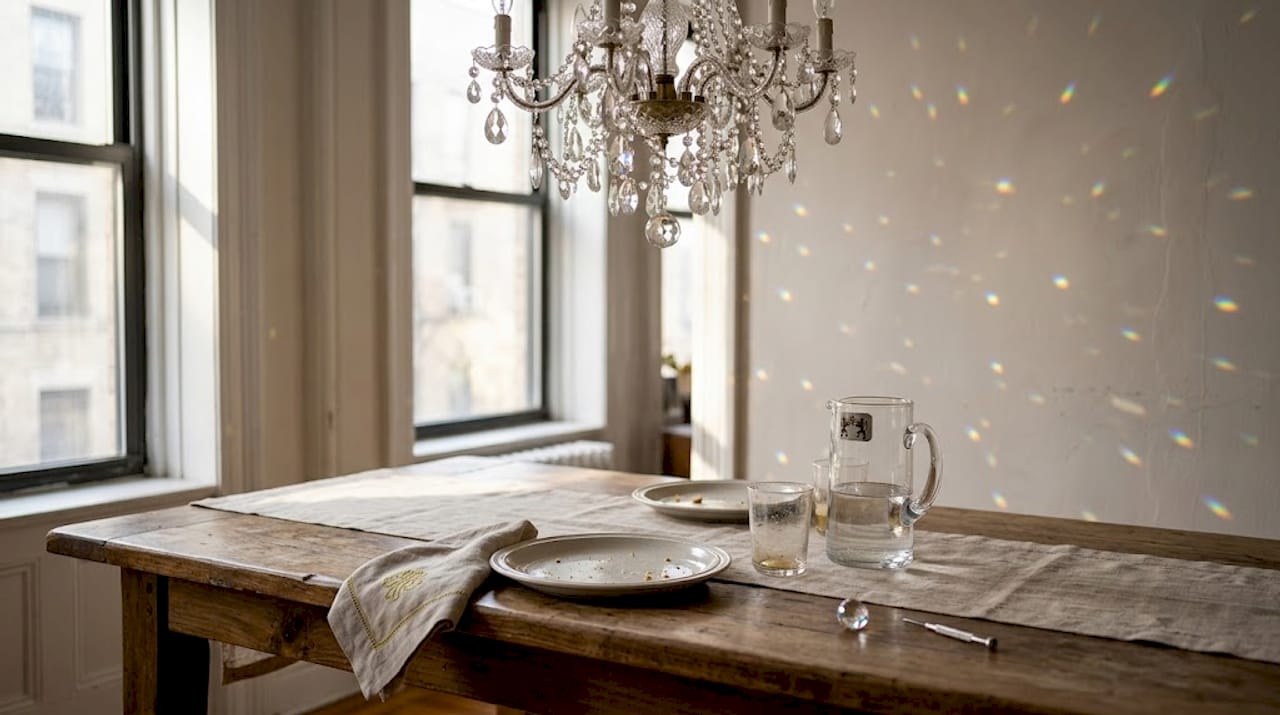
For fixtures that sit far from eye level — a high foyer chandelier, for instance — some of the Swarovski advantage is lost because viewers can’t appreciate fine facet detail from a distance. Save the premium beads for where they’ll actually be noticed.
Verifying Swarovski authenticity matters too. The market has no shortage of imitations labeled “Swarovski style” that share none of the actual optical properties. Genuine pieces carry the swan logo etching or verifiable sourcing documentation.
Pro Tip: Use Swarovski beads specifically on your focal point fixture, like a chandelier above a dining table or a pendant in an entryway. Mixing in more affordable options elsewhere in the same room is a smart budget move without sacrificing visual impact where it counts.
K9 and lead crystal beads: Balance between brilliance and value
Not every installation calls for the highest-priced option. K9 and lead crystal beads occupy a practical middle ground, offering real sparkle at a fraction of the Swarovski price point.
Breaking down each type:
- K9 crystal: An optical glass with roughly 9 to 10% lead content and a refractive index of approximately 1.52. It’s noticeably lighter than high-lead crystal, which makes installation easier, especially on large fixtures with hundreds of beads. Clarity is good, sparkle is visible, and cost runs roughly half of comparable Swarovski pieces.
- Lead crystal: Contains 24 to 30% lead oxide, giving it a refractive index in the 1.5 to 1.6 range. It produces a richer, heavier shine than K9 but doesn’t quite match Swarovski’s crispness. Traditional and formal in character.
- Acrylic: Technically not glass at all. Shatter-resistant and extremely lightweight, acrylic beads score around Mohs 6 in hardness but offer the least sparkle of any category. They work in event decor, children’s rooms, or commercial spaces where safety and budget trump visual performance.
When K9 makes sense:
Large chandeliers with 300 or more beads are where K9 really earns its place. The weight savings are meaningful structurally, and the lower cost lets you fill the fixture completely without budget compromise. For modern or minimalist spaces where subtle shimmer is preferred over dramatic rainbow effects, K9 actually suits the aesthetic better than Swarovski’s intensity.
Also consider reviewing Swarovski vs K9 details before finalizing a large order, because the visual gap between them is smaller in certain lighting environments, particularly with warm LED bulbs.
Pro Tip: Use K9 or lead crystal for the secondary strands, garlands, or filler beads in a mixed-material design. Reserve precision-cut premium beads for the pendant drops and visible focal points. You’ll cut costs significantly while keeping the display sharp where eyes actually land.
Shapes and facets: The art of light play
Material choice gets most of the attention, but shape may be the single biggest factor in how your finished lighting actually looks. Two beads made from identical crystal can create completely different atmospheres based purely on geometry.
The three most common shapes and what they do:
- Octagon: Eight facets arranged symmetrically create a balanced, even shimmer. Octagons are the workhorse of chandelier garlands and chains because their even dispersion suits repeating patterns without creating hot spots or visual clutter.
- Teardrop/almond: With 14 facets and a tapered profile, these beads concentrate sparkle vertically and are the classic choice for pendant drops. They catch light as they move and create elegant focal interest without overwhelming a space.
- Prism: The most dramatic option. With 20+ facets, prism beads throw distinct rainbow patterns across walls and ceilings. They’re best used sparingly on statement fixtures where the light show is intentional.
For a deeper dive into geometry, comparing octagon vs almond prisms shows how even slight shape differences affect dispersion patterns at various room distances.
| Shape | Facets | Light effect | Best use |
|---|---|---|---|
| Octagon | 8 | Even, balanced shimmer | Garlands, chains, filler strands |
| Teardrop/almond | 14 | Vertical sparkle, elegant movement | Pendant drops, focal points |
| Prism | 20+ | Dramatic rainbows across surfaces | Statement fixtures, entryways |
Lighting type also plays into this. Cool white LED bulbs intensify faceted bead effects, while warm incandescent tones soften them. If you’re working with cool lighting, a prism bead can become almost theatrical — which may or may not be what you want.
Summary comparison: Which type is right for you?
Here’s a side-by-side view of all four main crystal bead categories to help you finalize your selection.
| Type | Lead content | Refractive index | Sparkle level | Durability | Relative cost |
|---|---|---|---|---|---|
| Swarovski | 30%+ | ~1.72 | Maximum | Mohs ~7, 15-25 yrs | Highest |
| Lead crystal | 24-30% | 1.5-1.6 | High | Good | Moderate-high |
| K9 | ~9-10% | ~1.52 | Good | Mohs ~6 | Moderate |
| Acrylic | None | Low | Low | Scratches easily | Lowest |
Situational recommendations:
- Small statement fixtures in living rooms or dining rooms: Swarovski for maximum visual impact.
- Large installations or commercial spaces: K9 for practical weight savings and cost control.
- Traditional or formal settings: Lead crystal for that classic, heavy shine.
- Temporary decor, event design, or children’s spaces: Acrylic for safety and affordability.
- Mixed installations: Combine crystal type explanations with layering strategies for richer, more dimensional results.
Common pitfalls to avoid:
- Mixing bead types within the same visual field without testing. As sample testing confirms, mismatched beads create inconsistent sparkle that reads as a mistake rather than intentional design.
- Underestimating cleaning frequency. High-lead crystal shows dust and fingerprints more readily than K9 or acrylic.
- Buying by photo alone. Catalog images are shot under ideal lighting. Real-world results vary significantly.
- Ignoring scale. A prism bead that dazzles in a large entryway can feel chaotic in a small bedroom.
Our perspective: Rethinking ‘best’ in crystal bead selection
The industry defaults to recommending Swarovski as the answer to every crystal question, and that framing misses a lot. After working with homeowners and decorators across all kinds of spaces, we’ve seen one consistent pattern: the “best” bead is almost always the one that fits the room’s actual lighting environment, not the showroom’s.
A full Swarovski chandelier in a room with warm 2700K bulbs and dark walls can actually feel underwhelming because the light temperature suppresses the crystal’s signature crispness. Meanwhile, a well-chosen K9 pendant in a bright white kitchen with cool LED lighting can be genuinely stunning.
Mixing materials also produces richer results than most people expect. Using prism drops for focal emphasis and K9 octagons for garland fill creates real visual depth — more interesting than a monolithic all-Swarovski approach. Read more about this layering strategy in our crystal chandelier design guide. The real lesson: see samples in your space before you commit. Nothing else substitutes for that.
Where to find the perfect crystal beads for your project
Ready to bring your lighting vision to life? Explore handpicked crystal beads tailored for any style.
At Crystal Place, we’ve been sourcing authentic Swarovski, K9, and specialty crystal beads directly from verified manufacturers since 1992. Whether you’re restoring a vintage chandelier or designing a new installation from scratch, our selection covers every bead type, shape, and size discussed in this guide.
Browse our full range of crystal chandelier prisms and more crystal options to find exactly what your space needs. Our team is available to help you match materials, estimate quantities, and recommend combinations that work for your specific fixture and lighting setup. Orders over $22 ship free within the USA.
Frequently asked questions
What’s the difference between Swarovski and K9 crystal beads?
Swarovski beads use 30%+ lead oxide with a refractive index of about 1.72 for maximum sparkle, while K9 uses roughly 9 to 10% lead and a refractive index of about 1.52, making it lighter, more affordable, and still visually impressive.
Which crystal bead shape produces the strongest rainbow effects?
Prism-shaped beads with over 20 facets deliver the most dramatic rainbow patterns when positioned in a well-lit fixture.
Are acrylic crystal beads a good option?
Acrylic beads are shatter-resistant and lightweight but produce far less sparkle than real glass or crystal, making them best suited for temporary decor or high-traffic areas where safety matters more than brilliance.
How can I ensure visual consistency in a lighting installation?
Using the same bead type throughout and testing in room lighting before committing to a full order prevents mismatched sparkle and clarity issues that can undermine an otherwise well-designed fixture.
Recommended
- Crystal lighting benefits: 30% brighter, elegant interiors – CrystalPlace
- Enhance your space: the role of crystals in lighting – CrystalPlace
- Crystal lighting: 30% more brilliance for your space – CrystalPlace
- Crystal chandelier styles explained: choose brilliance – CrystalPlace