
Discover crystal decor styling tips to elevate your home! Learn how to choose, pair, and maintain crystals for a polished and luxurious space.
TL;DR:
- Effective crystal decor involves selecting room-appropriate stones, using the rule of three for cohesive groupings, and ensuring proper maintenance to preserve their beauty. Choosing large, well-scaled pieces and giving each crystal space enhances their visual impact and mimics artful displays. Proper care, including protecting colored crystals from sunlight and cleaning according to crystal type, ensures long-lasting brilliance.
Crystal decor styling, known in professional interior design circles as mineral or specimen styling, is the practice of placing natural and crafted crystal pieces as intentional design elements within a living space. Done well, it adds texture, light refraction, and a sense of organic luxury that no synthetic material replicates. The crystal decor styling tips in this guide draw on expert sources including Crystal Almanac, Real Simple, and Crystalplace’s own product knowledge to help you place, pair, and maintain crystals with confidence. Whether you are decorating with crystals for the first time or refining an existing collection, these principles apply to every room and every budget.
1. Crystal decor styling tips start with the right crystal for each room
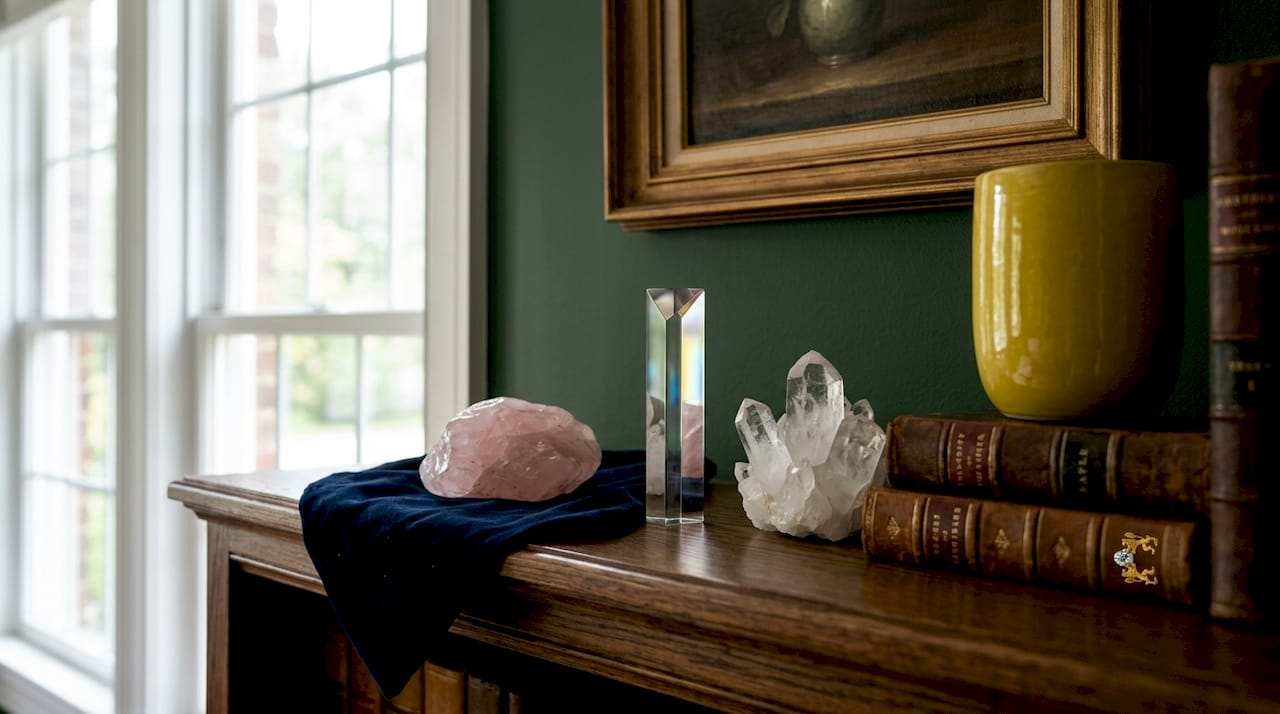
The single most important rule in interior decor with crystals is matching the crystal to the room’s conditions, not just its color palette. A crystal that looks beautiful in a showroom can degrade, dull, or even dissolve in the wrong environment.
Durability is measured on the Mohs hardness scale, which runs from 1 (talc) to 10 (diamond). Kitchens require Mohs hardness above 6, and bathrooms demand water-stable crystals because of constant humidity and cleaning chemicals. This means quartz family crystals, citrine, and amethyst are safe choices for wet or high-traffic zones, while selenite is not.
Here is a quick room-by-room breakdown:
- Living room: Large quartz clusters, amethyst geodes, or clear quartz points. These handle ambient conditions well and reward generous sizing.
- Bedroom: Rose quartz, selenite wands, or moonstone. Keep placement away from direct sunlight and water sources.
- Kitchen: Citrine, tiger’s eye, or jasper. All score above 6 on the Mohs scale and tolerate occasional humidity.
- Bathroom: Clear quartz or citrine only. Avoid selenite, malachite, and any porous or water-soluble specimens.
- Entryway: Black tourmaline, obsidian, or large quartz clusters. These are visually striking and durable enough for a high-traffic zone.
- Home office: Fluorite, amethyst, or clear quartz. These photograph well and add color without demanding complex care.
Pro Tip: Before buying any crystal for a specific room, look up its Mohs hardness and water sensitivity. Two minutes of research prevents expensive mistakes.
2. Scale your crystals to the size of the room
Size is where most homeowners underestimate crystal decor. A small tumbled stone on a large mantel reads as clutter, not decor. For rooms over 400 square feet, crystal specimens should be no smaller than 30 cm for visual impact, with statement pieces ranging from 60 to 120 cm in height or width. That scale creates a sculptural focal point rather than a decorative afterthought.
Living rooms and entryways benefit most from large crystals placed directly on pedestals or floors. A cathedral amethyst geode standing 90 cm tall on a low wooden plinth commands the same visual authority as a piece of sculpture. Smaller rooms, such as a home office or bedroom, work better with medium specimens in the 15 to 30 cm range placed on shelves or nightstands.
The practical takeaway: buy one well-scaled piece before buying five small ones. A single correctly sized crystal does more for a room than a crowded shelf of miniatures.
3. Apply the rule of three when grouping crystals
The rule of three is the most reliable composition tool in interior design, and it works especially well with crystals because their irregular shapes naturally resist symmetry. Grouping in odd numbers creates balance and layered visual interest by varying height, scale, and texture. Designers consistently cite this as the most flexible strategy for preventing clutter while maintaining cohesion.
When building a crystal vignette on a coffee table or shelf, lead with the tallest piece as the anchor, then support it with two smaller elements at different heights. The tallest piece draws the eye first. The supporting pieces guide it downward and outward. The result feels intentional rather than collected.
Pair crystals with non-crystal objects to break up the mineral density. A tall amethyst cluster next to a small stack of art books and a low ceramic bowl creates a vignette that feels curated, not themed. The contrast between organic crystal surfaces and smooth manufactured objects makes both look better.
Pro Tip: Photograph your arrangement before committing to it. The camera flattens depth and reveals imbalances your eye misses in person.
4. Give crystals breathing room and treat them like art
Crystals deserve the same spatial respect as art. Large pieces work best on plinths, pedestals, or floors in living rooms. Bedrooms benefit from a single restrained piece rather than a crowded display. Over-styling is the most common mistake in crystal interior design, and it dilutes the impact of every individual piece.
Breathing room means leaving empty space around a crystal so light can interact with its surface. A quartz cluster placed against a white wall with 15 cm of clear space on each side catches and scatters light in a way that the same crystal crowded between books and candles never will. This is especially true for hanging crystal prisms and suncatchers, which need open air to rotate and refract light effectively. Crystalplace’s crystal interior lighting guide covers this principle in detail for anyone working with chandelier crystals or hanging prisms.
Consider the light source as deliberately as you consider the placement surface. North-facing rooms receive cool, diffuse light that flatters clear quartz and selenite. South-facing rooms get direct sun, which is ideal for prisms but damaging to colored stones over time.
5. Protect colored crystals from direct sunlight
Amethyst is one of the most popular crystals in home decor, and it is also one of the most vulnerable to light damage. Amethyst fades in direct sunlight due to UV-induced bleaching, with iron impurities and color centers in the stone degrading over time. A deep purple geode placed in a south-facing window can turn pale gray within a single season.
The same applies to rose quartz, citrine, and fluorite. All colored crystals should be placed in ambient or indirect light to preserve their color. If you want to display a crystal near a window for its light-catching properties, choose clear quartz, which has no color to lose.
This rule also affects how you photograph crystals for social media or home documentation. Direct flash bleaches surface color. Natural diffuse light from a north or east-facing window captures the true depth of a colored specimen far more accurately.
6. Creative ways to use crystals throughout your home
Interior design with crystals goes well beyond placing a geode on a shelf. The most visually interesting applications treat crystals as functional objects, not just decorative ones.
- Hanging crystal prisms: Suspended from curtain rods, ceiling hooks, or window frames, Swarovski-style crystal prisms cast moving rainbow light across walls when sunlight hits them. This is one of the most dramatic and affordable crystal decor ideas available.
- Crystal coasters: Polished agate slices make striking coasters that double as table art. They are durable, water-resistant, and available in a range of natural colors.
- Mantel clusters: A large amethyst or quartz cluster centered on a fireplace mantel anchors the entire room. Flank it with candles or small plants rather than more crystals to let it read clearly.
- Crystal accent lighting: Placing a small LED puck light beneath a clear quartz cluster or behind a translucent selenite slab creates a warm, glowing effect that works especially well in bedrooms and dining rooms.
- Seasonal refreshes: Swap citrine and warm-toned jasper into your displays in autumn, then shift to clear quartz and selenite in winter for a cooler, more minimal look.
For more ideas on pairing crystals with existing furniture and accessories, Crystalplace’s guide on crystal ornament decorating covers a wide range of home styles from modern minimalist to maximalist traditional.
Integrating crystals with metallic accents, particularly brass and gold, amplifies their natural warmth. Pairing a rose quartz cluster with a brass tray and a few dried botanicals creates a vignette that reads as intentional luxury without requiring expensive furniture.
7. Maintain your crystals to preserve their brilliance
Proper care is what separates a crystal collection that looks stunning for decades from one that dulls and chips within a year. The most critical care mistake homeowners make is applying the same cleaning method to every crystal.
Selenite ranks 2 on the Mohs scale and dissolves or dulls on contact with water. Clean it exclusively with a dry microfiber cloth or a soft brush. Never rinse it, mist it, or place it near a humidifier. Selenite’s fragility also means it should be placed away from high-traffic areas where it might be knocked or scratched.
For harder crystals like quartz, amethyst, and citrine, a damp cloth is sufficient for routine dusting. Avoid commercial cleaning sprays, which can leave residue or react with mineral surfaces. For crystal chandeliers and prisms, a dedicated crystal cleaning solution designed for the purpose preserves clarity without damaging coatings or metal fittings.
Additional care guidelines worth following:
- Rotate crystals away from direct sun every few months to prevent uneven fading.
- Store fragile pieces in soft pouches when not on display.
- Handle pointed or terminated crystals from the base, not the tip, to avoid snapping delicate formations.
- If you practice crystal cleansing rituals, use moonlight, sound, or dry sage smoke rather than water for moisture-sensitive specimens.
Pro Tip: Label the underside of each crystal with its name and Mohs hardness using a small sticker. When cleaning day comes, you will never have to guess which stones can handle moisture.
Key takeaways
Effective crystal decor styling combines room-specific selection, deliberate composition, and material-appropriate care to create displays that remain beautiful long-term.
| Point | Details |
|---|---|
| Match crystal to room conditions | Use Mohs hardness and water sensitivity to choose crystals suited to kitchens, bathrooms, and high-traffic zones. |
| Scale to room size | Rooms over 400 sq ft need specimens at least 30 cm wide; one well-scaled piece outperforms five small ones. |
| Apply the rule of three | Group in odd numbers, vary height, and anchor with the tallest piece to create cohesive, clutter-free vignettes. |
| Protect colored stones from UV | Keep amethyst, rose quartz, and fluorite in indirect light to prevent irreversible fading. |
| Clean by crystal type | Selenite requires dry cleaning only; harder crystals like quartz tolerate a damp cloth. |
Why crystal decor rewards patience more than spending
Most people approach crystal decor the way they approach buying throw pillows: grab a few, scatter them around, and see what sticks. That approach almost always produces a result that looks busy rather than beautiful. What I have observed, working with crystal products and interior styling for years, is that the homeowners with the most striking crystal displays almost always own fewer pieces than you would expect.
The difference is intentionality. One well-chosen amethyst geode at the right scale, placed on a simple pedestal in a corner with good ambient light, does more for a room than a shelf crowded with twenty tumbled stones. Crystals are not accessories in the traditional sense. They are closer to sculpture, and they deserve to be treated that way.
The other thing most guides do not tell you is that crystal decor is genuinely forgiving once you understand the basic rules. You do not need a designer’s eye or an expensive collection. You need to know your room’s light, your crystal’s hardness, and the rule of three. Start with one statement piece, give it space, and build from there. The design impact of crystal accents becomes obvious the moment you stop treating crystals as decoration and start treating them as focal points.
— BCC
Discover Crystalplace’s crystal decor collection
Crystalplace has been sourcing authentic crystal products since 1992, with a catalog that includes Swarovski crystal prisms, hanging suncatchers, decorative clusters, and chandelier components for both repair and new installations. Every piece is selected for brilliance, clarity, and craftsmanship, making them well-suited to the styling approaches covered in this guide. Whether you are looking for a single statement prism to hang in a south-facing window or a full set of crystal prisms and hanging decor to refresh a chandelier, Crystalplace ships free on orders over $22 within the USA. For broader interior inspiration, the home decor resources at Luxury Art Canvas pair well with crystal styling for a complete room refresh.
FAQ
What crystals work best for home decor beginners?
Clear quartz and amethyst are the most forgiving starting points. Both score above 7 on the Mohs scale, tolerate ambient light well, and complement nearly every interior color palette.
How do I clean crystal decor without damaging it?
Cleaning method depends on the crystal type. Hard crystals like quartz and amethyst can be wiped with a damp cloth, while selenite requires a dry microfiber cloth only, since water dissolves selenite and causes permanent damage.
Can I put crystals in a bathroom?
Yes, but only water-stable varieties. Clear quartz and citrine handle bathroom humidity well. Selenite, malachite, and other porous or soft minerals should never be placed in bathrooms.
How many crystals should I display in one room?
Fewer than you think. One statement piece at the correct scale for the room creates more visual impact than multiple small pieces. If you group crystals, odd-number groupings of three create the most natural and balanced compositions.
Do crystals fade over time?
Colored crystals like amethyst and rose quartz fade with prolonged UV exposure. Keeping them in indirect or ambient light preserves their color. Clear quartz has no color to lose and is the safest choice for bright, sun-facing rooms.
Recommended
- How Crystal Accents Transform Interiors: Design Impact – CrystalPlace
- Crystal Ornament Decorating Ideas for Every Home Style – CrystalPlace
- Crystal accessories: elevate your space with light and elegance – CrystalPlace
- Holiday Sparkle: Crystal Decoration Ideas – CrystalPlace