

Discover essential crystal terminology explained for decorators. Learn key terms to confidently select and enhance your space with crystals.
TL;DR:
- Crystal is defined as glass with metallic oxides that enhance density and light-bending ability. Authentic crystal has a refractive index of 1.55 or higher, producing sharp, colorful light dispersion. Knowing material composition, cut quality, and symbolic meanings helps buyers select genuine and purposeful crystal decor.
Crystal terminology is the vocabulary used to describe a crystal’s material composition, optical properties, shape, cut, and symbolic meaning. Knowing these terms matters whether you are selecting a chandelier prism, a suncatcher, or a healing stone. The word “crystal” itself is frequently misapplied in retail, making it harder to judge quality without a working crystal definitions guide. This article breaks down the core terms, from refractive index to chakra associations, so you can shop and decorate with real confidence.
What does “crystal” actually mean? Material and optical properties explained
Crystal is defined as glass containing metallic oxides that raise its density, weight, and light-bending ability above ordinary glass. The most recognized form is lead crystal, which requires a minimum of 24% lead oxide by weight and achieves a refractive index of 1.55 or higher. That refractive index is what produces the sharp, multi-colored prismatic light dispersal you see in a quality chandelier. Standard soda-lime glass sits at a refractive index of 1.45–1.52, which is why it looks flat by comparison.
The term “crystal” is often misused commercially to describe any faceted glass product, regardless of its actual composition. That misuse creates real confusion for decorators trying to assess quality. Authenticity is better judged by refractive index and material composition than by the label alone. Crystalplace sources directly from verified crystal brands, which removes much of that guesswork for buyers.
Lead crystal has higher density than soda-lime glass, often exceeding 2.9 g/cm³ compared to roughly 2.4–2.5 g/cm³ for standard glass. That extra density allows manufacturers to cut thinner walls and sharper facets, which amplifies brilliance. The weight difference is noticeable when you hold a lead crystal prism versus a glass one of the same size.
Modern lead-free crystals use barium, zinc, or potassium oxides to achieve similar density, weight, and light performance without the toxicity concerns of lead. Because lead-free crystal is now visually comparable to traditional lead crystal, the distinction is largely regulatory and preference-based rather than a difference in optical quality. For home decorators, this means both options can deliver excellent brilliance.
Pro Tip: When shopping for crystal prisms, ask for the refractive index specification. Any value at or above 1.55 confirms genuine crystal-grade optical performance, whether the formula uses lead or a modern lead-free substitute.
What are the different crystal shapes and cuts?
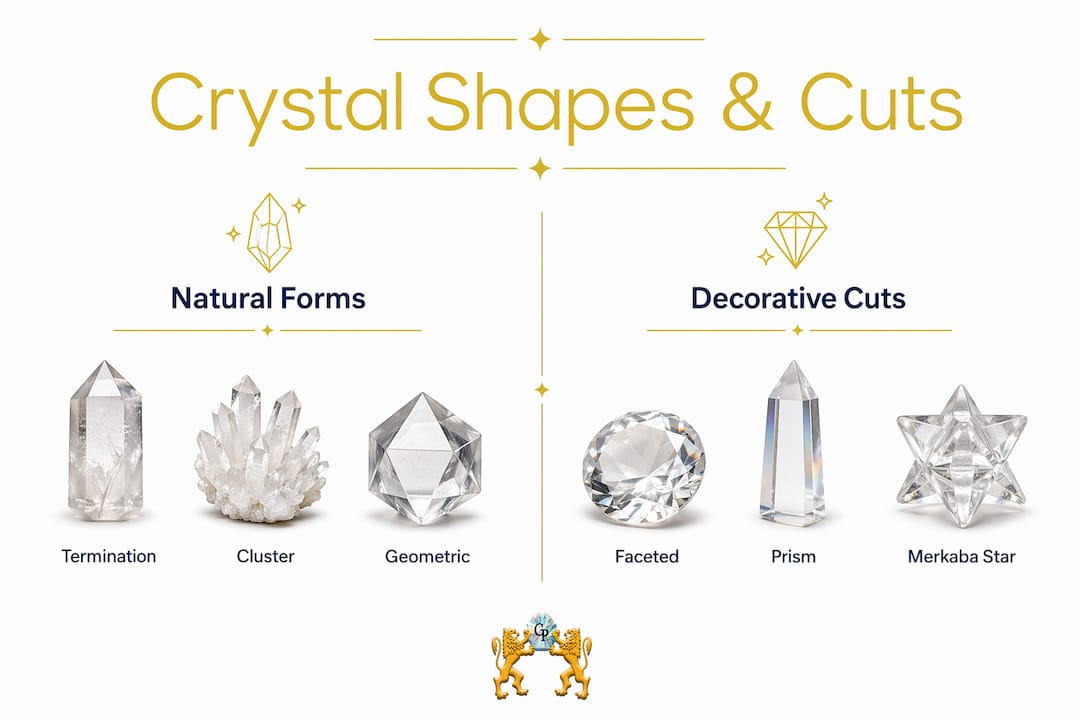
Shape and cut are two distinct terms that decorators and collectors often use interchangeably, but they describe different things. Shape refers to the outline of a crystal viewed from above, such as round, pear, marquise, princess, or asscher. Cut refers to the arrangement and proportions of a crystal’s facets, which determine how it handles light. A round shape can carry many different cuts, each producing a different visual effect.
Understanding crystal systems adds another layer to this vocabulary. Seven crystal systems define the geometric lattice that governs how a crystal grows and what external shape it naturally forms. These systems are:
- Cubic: produces symmetrical, blocky forms like pyrite and fluorite
- Tetragonal: similar to cubic but elongated along one axis, seen in zircon
- Hexagonal: creates six-sided columns, classic in quartz and aquamarine
- Trigonal: a subdivision of hexagonal, producing three-fold symmetry in calcite and tourmaline
- Orthorhombic: forms rectangular prisms, common in topaz and peridot
- Monoclinic: creates slanted, asymmetric shapes found in selenite and gypsum
- Triclinic: the least symmetric system, seen in labradorite and turquoise
Beyond natural growth forms, decorative crystals use specific shape terms. A termination is the pointed end of a crystal, often associated with directing energy in healing practices. A cluster is a group of crystals sharing a common base. A drusy is a surface covered in tiny crystal points, prized for its sparkle. A geode is a hollow rock lined with crystals on the interior.
Geometric forms like merkaba stars and platonic solids carry strong cultural and aesthetic symbolism that influences modern decorative trends more than their physical crystal properties do. A merkaba star, for example, is a three-dimensional Star of David carved from crystal, associated with spiritual protection in many traditions. Platonic solids, the five geometric shapes described by ancient Greek philosophy, are carved from crystals and used as both decor and meditation tools.
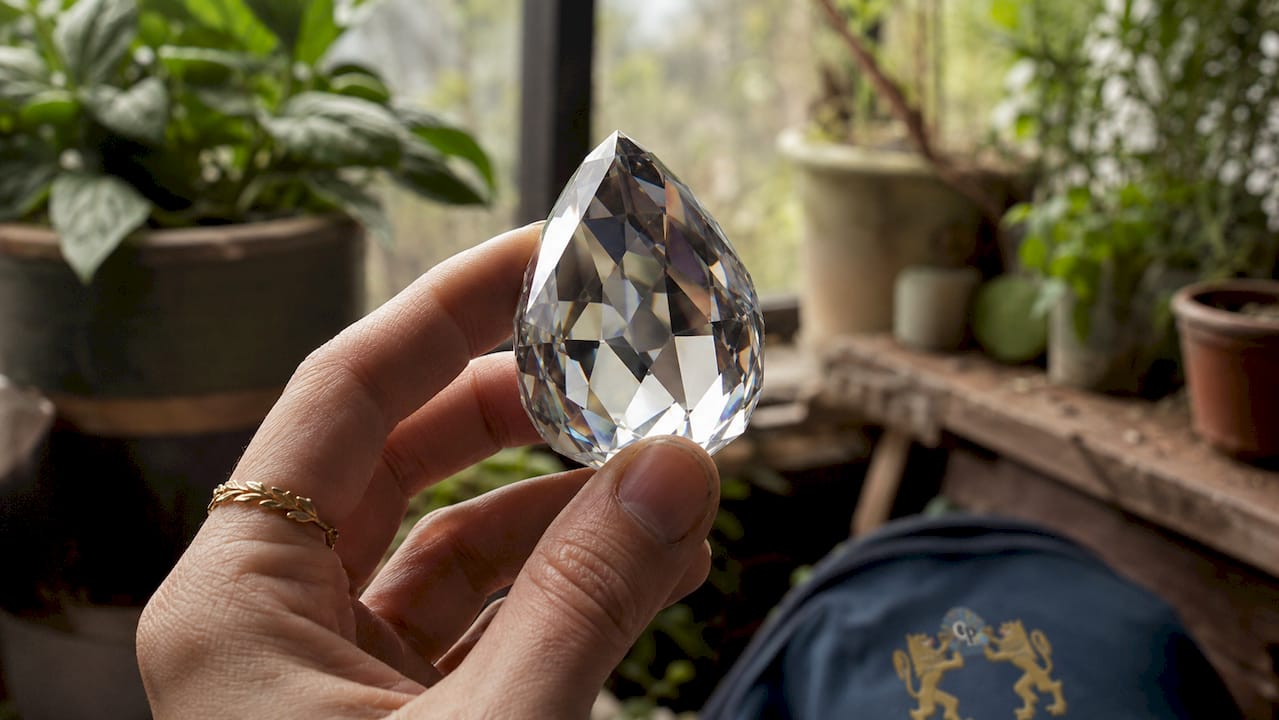
Pro Tip: For chandelier and prism applications, prioritize cut quality over shape. A well-cut facet reflects light at precise angles, creating the rainbow dispersion that makes a room feel alive. A poorly cut facet, regardless of shape, scatters light unevenly.
How do color, clarity, and symbolic meanings work in crystal vocabulary?
Clarity is defined as the degree to which a crystal transmits light without obstruction from inclusions, fractures, or cloudiness. Crystals are classified along a spectrum from fully transparent to translucent to opaque. Transparent crystals like clear quartz allow light to pass through completely. Translucent crystals like rose quartz diffuse light softly. Opaque crystals like malachite block light entirely and rely on surface color and pattern for their visual appeal.
Color classification in crystals follows both physical and symbolic frameworks. Physically, color results from trace minerals, light absorption, or structural defects within the crystal lattice. Symbolically, color carries meaning that varies across cultural traditions. The crystal healing terminology most commonly assigned to popular stones includes:
| Crystal | Color | Symbolic meaning | Chakra association |
|---|---|---|---|
| Amethyst | Purple | Clarity, peace, calm | Crown |
| Citrine | Yellow/orange | Success, positivity, energy | Solar plexus |
| Aquamarine | Blue-green | Tranquility, courage | Throat |
| Bloodstone | Dark green with red | Strength, vitality | Root |
| Rose quartz | Pink | Love, compassion | Heart |
Chakra associations link specific crystals to the seven energy centers recognized in Hindu and yogic traditions. The root chakra connects to grounding stones like bloodstone. The crown chakra connects to high-vibration stones like amethyst. These associations are cultural and symbolic, not physical properties of the crystal itself. Knowing this distinction helps you use the vocabulary accurately without overstating what a crystal can do.
Zodiac links are another layer of crystal healing terminology. Citrine is commonly associated with Gemini and Aries. Aquamarine connects to Pisces. These links come from centuries of astrological tradition and are widely used in gift selection and decorative styling. For interior decorators, understanding these associations helps when clients request crystals that align with personal symbolism or seasonal themes. Pairing a decorative fabric selection with crystals that share a color palette and symbolic tone creates a cohesive interior story.
How do you use crystal terminology to select and decorate thoughtfully?
Knowing the vocabulary gives you a real advantage when evaluating crystal products or working with a designer. Apply it in a structured way by following these steps:
-
Identify the material first. Ask whether the product is lead crystal, lead-free crystal, or standard glass. Check for a refractive index specification. Anything at 1.55 or above qualifies as crystal-grade. Crystalplace lists material specifications for its products, which makes this step straightforward.
-
Assess the cut quality. Look at the facets under direct light. Sharp, clean edges with consistent angles produce the best prismatic effect. Rounded or uneven facets indicate lower cut quality, regardless of the material.
-
Apply the ring test. Lead crystal produces a clear, sustained ring when tapped gently. Soda-lime glass gives a dull thud. Lead-free crystal produces a similar ring but slightly shorter in duration. This test works well when comparing pieces in person. You can read more about this in Crystalplace’s guide on identifying real crystal.
-
Match shape and cut to the setting. Faceted drops and pendalogues work best in chandeliers where light passes through them. Flat-back crystals suit wall sconces and framed decor. Clusters and geodes work as standalone decorative objects on shelves or tables.
-
Align symbolic meaning with purpose. If you are selecting crystals for a meditation space, amethyst and clear quartz are the most widely recognized choices for calm and clarity. For a living room meant to feel energizing, citrine’s warm tones and success associations fit well. Understanding crystal clarity and light design helps you match the right piece to the right room.
-
Check regulatory compliance for lead content. If you are selecting crystals for spaces used by children, lead-free formulations are the safer choice. Modern lead-free options from reputable sources match traditional lead crystal in brilliance. The difference between lead crystal and glass prisms is worth reviewing before making a final purchase.
Key Takeaways
Knowing crystal terminology gives decorators a direct advantage: it separates genuine crystal from imitation glass, connects material properties to visual performance, and links symbolic meaning to purposeful design choices.
| Point | Details |
|---|---|
| Refractive index defines quality | Genuine crystal achieves a refractive index of 1.55 or higher, producing sharp prismatic light. |
| Shape and cut are different terms | Shape is the outline; cut is the facet arrangement that controls light performance. |
| Lead-free crystal is now comparable | Modern barium, zinc, or potassium formulas match lead crystal in brilliance and weight. |
| Symbolic meanings are cultural | Crystal healing associations like chakras and zodiac links come from tradition, not physical properties. |
| Terminology builds buying confidence | Knowing material specs, cut quality, and symbolic vocabulary helps you evaluate any crystal product accurately. |
Why crystal jargon matters more than most people realize
The terminology confusion I see most often is not between lead and lead-free crystal. It is between crystal and glass. Retailers use the word “crystal” freely, and most shoppers have no framework to push back. Once you know that refractive index is the actual measure of quality, the label becomes almost irrelevant. You stop buying words and start buying performance.
The symbolic side of crystal vocabulary gets dismissed in design circles, and I think that is a mistake. Clients who understand that amethyst connects to calm, or that citrine carries associations with energy and success, make faster, more confident decisions. They are not just picking a pretty stone. They are building a space with intention. That intention shows up in the final result.
The lead-free shift in the industry is the most underreported development in crystal terminology right now. Many decorators still assume lead crystal is the gold standard. The reality is that high-quality lead-free formulations now meet or exceed traditional lead crystal in optical performance. Updating your vocabulary to include terms like barium crystal or potassium crystal puts you ahead of most buyers and designers working in this space.
Crystal terminology is not just jargon for specialists. It is the difference between a room that looks expensive and one that actually is.
— BCC
Authentic crystal prisms and decorative pieces at Crystalplace
Crystalplace has sourced authentic crystal products directly from verified brands since 1992. The selection covers lead crystal prisms, lead-free crystal options, chandelier drops, suncatchers, and decorative accessories for residential and commercial interiors.
Every product category reflects the material and optical standards covered in this guide. Whether you need a specific cut for a chandelier repair or a cluster piece for a shelf display, the crystal prisms and hanging decor at Crystalplace are specified by material and design so you can apply your terminology knowledge directly. Free shipping applies to orders over $22 within the USA.
FAQ
What is the minimum lead oxide content for lead crystal?
Lead crystal requires at least 24% lead oxide by weight, which produces a refractive index of 1.55 or higher and the characteristic prismatic light dispersal.
How is crystal different from regular glass?
Crystal contains metallic oxides that increase density and refractive index above standard soda-lime glass, resulting in greater brilliance, sharper facets, and a distinct ringing tone when tapped.
What does “cut” mean in crystal terminology?
Cut refers to the arrangement and proportions of a crystal’s facets, which control how the piece reflects and disperses light. Shape refers only to the outline, such as round or pear.
Are lead-free crystals as good as lead crystal?
Modern lead-free crystals using barium, zinc, or potassium oxides achieve comparable density, weight, and light performance to traditional lead crystal, making the distinction primarily regulatory rather than optical.
What do chakra associations mean in crystal healing terminology?
Chakra associations link specific crystals to the seven energy centers in Hindu and yogic tradition. These connections are cultural and symbolic, not physical properties of the crystal material itself.
Recommended
- Key Crystal Terminology: A Guide for Design Professionals – CrystalPlace
- Crystal Shapes Explained: A Collector’s Decor Guide – CrystalPlace
- Crystal ornaments: types, sparkle, and home decor uses – CrystalPlace
- Crystal Ornament Definition: What They Are and Why They Shine – CrystalPlace