

Discover the key difference between glass and crystal. Learn how metallic oxides enhance crystal's beauty and quality, impacting your choices.
TL;DR:
- Crystal is glass enhanced with metallic oxides, which increase its refractive index, density, and brilliance. It is recognized by its higher optical sparkle, weight, and sharp facets compared to ordinary glass. Consumers can identify crystal through sound, weight, optical dispersion, and visual details, but modern lead-free formulas closely mimic leaded crystal.
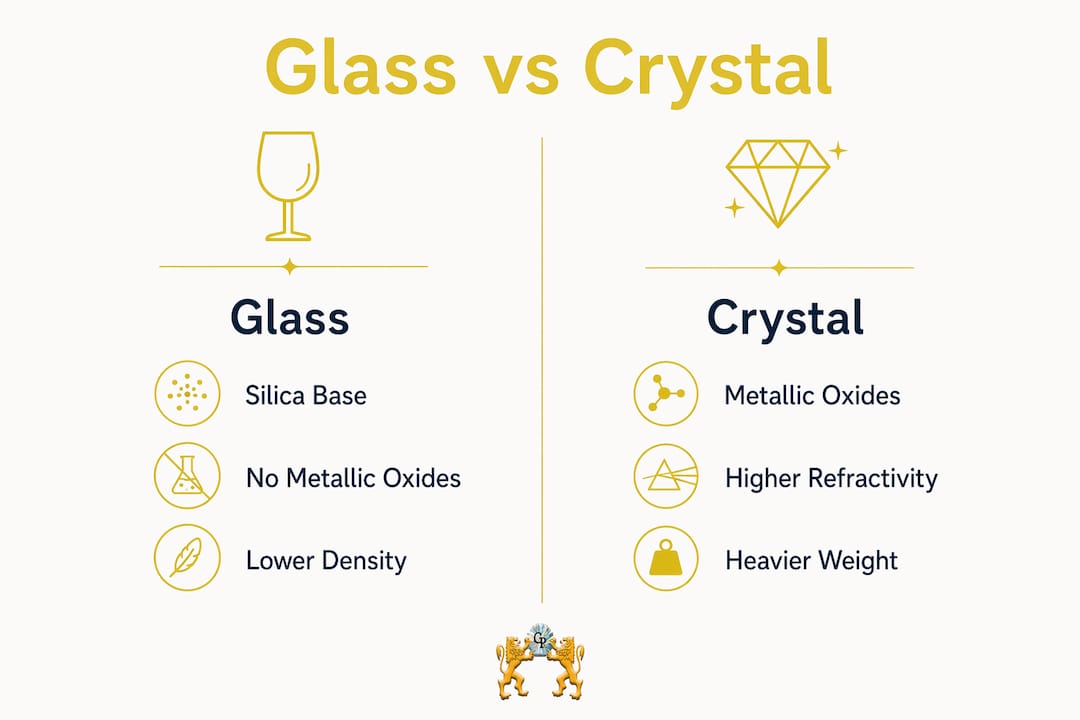
Crystal is defined as glass enhanced with metallic oxides, traditionally lead oxide, that increase its refractive index, density, and optical brilliance beyond what ordinary glass achieves. The difference between glass and crystal matters most when you are choosing stemware, chandeliers, or decorative pieces where sparkle and weight signal quality. Standard glass contains roughly 70% silica, 15% sodium oxide, and 10% calcium oxide with no metallic additives. Crystal starts with that same soda-lime base and then adds lead, barium, zinc, or potassium oxides to change how light moves through it. That single compositional shift explains every visible and tactile difference you notice between the two materials.
What is the difference between glass and crystal in composition?
Glass and crystal share the same silica foundation, but crystal’s metallic oxide additions change its physical behavior entirely. The refractive index of ordinary glass sits around 1.50–1.52. Crystal’s refractive index reaches 1.56–1.70 or higher depending on the metal oxide used. A higher refractive index means light bends more sharply inside the material, which produces the rainbow dispersion and “fire” that crystal is known for.
The industry recognizes three main categories, and the distinctions matter when you read a product label. Full lead crystal contains 30% or more lead monoxide (PbO) by weight. Lead crystal contains at least 24% PbO per EU regulations. Anything below that threshold, or made with substitute oxides, is labeled “crystal glass” or “crystalline.” Understanding these tiers helps you evaluate whether a product’s price matches its actual composition.
Lead-free crystal uses barium, zinc, or potassium oxides to replicate the optical properties of leaded crystal without the toxicity concerns. Top-tier lead-free crystal matches the refractive index and density of traditional leaded versions. That means a modern lead-free piece from a quality manufacturer can look and feel identical to a leaded one from decades ago. The crystal types guide at Crystalplace breaks down these categories clearly if you want to cross-reference labels before buying.
| Property | Ordinary glass | Lead crystal | Lead-free crystal |
|---|---|---|---|
| Primary additive | None | Lead monoxide (24%+ PbO) | Barium, zinc, or potassium oxide |
| Refractive index | ~1.50–1.52 | Up to 1.70 | ~1.56–1.68 |
| Density | Lower | Higher | Comparable to leaded |
| Sound when tapped | Dull thud | Bell-like ring | Bell-like ring |
| Typical wall thickness | Thicker | Thinner | Thinner |
Pro Tip: When shopping online, look for the EU regulatory label “full lead crystal” or “lead crystal” rather than the generic word “crystal.” Vague labeling almost always signals a lower-grade product.
How can you identify crystal versus glass at home?
The tap test is the fastest home method. Tap the rim of a piece lightly with your fingernail. Crystal produces a sustained, bell-like ringing tone while ordinary glass gives a short, dull thud. The difference is audible within seconds and requires no equipment. That ringing comes from crystal’s denser molecular structure, which vibrates at a higher frequency.
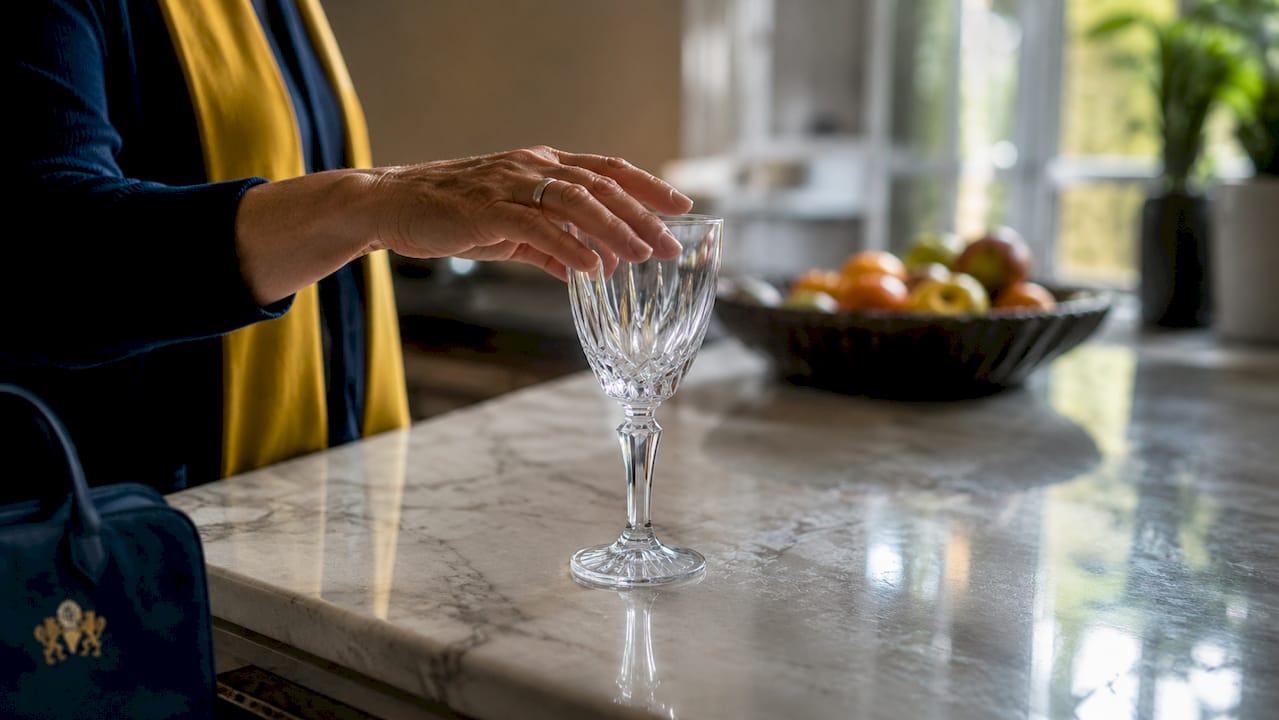
Weight is the second reliable signal. Crystal is denser than glass, so two pieces of the same size will feel noticeably different in your hand. A crystal wine glass feels substantial even when its walls are thin. An ordinary glass of the same size feels lighter and often has thicker walls to compensate for lower structural integrity.
Light refraction gives you the most visually dramatic clue. Hold a piece near a window or lamp and look for rainbow patterns on nearby surfaces. Crystal’s higher light dispersion creates strong rainbow patterns that ordinary glass cannot replicate. Glass produces a faint, washed-out glow at best.
Additional visual checks worth running before any purchase:
- Edges and cuts: Crystal holds sharper, cleaner facets. Glass edges tend to look slightly rounded or frosted.
- Bubbles: Ordinary glass often contains tiny air bubbles visible under light. Quality crystal is free of them.
- Clarity: Crystal appears water-clear. Glass often carries a faint green or blue tint from iron impurities in the silica.
- Wear patterns: Older crystal shows fine surface scratches from use. Rock crystal (quartz) resists scratching better than either glass or lead crystal.
Visual inspection of edges, bubbles, and wear patterns provides useful clues, but no single feature is absolute. Context and multiple factors together give a reliable answer. The Crystalplace buyer’s guide to identifying real crystal walks through these checks with product photos for reference.
Pro Tip: Modern lead-free crystal formulas now mimic the acoustic and physical behavior of leaded crystal so closely that home sensory tests alone may not distinguish them. If you need a definitive answer, X-ray fluorescence (XRF) testing identifies elemental composition without damaging the piece.
Why choose crystal over glass for decor, events, or collectibles?
Crystal’s optical performance is the primary reason decorators and event designers pay a premium for it. Lead crystal’s refractive index up to 1.7 produces the “fire” and sparkle that makes a chandelier look alive under light. Glass prisms scatter light weakly by comparison. When you hang crystal prisms in a window or chandelier, the room fills with moving rainbow patterns that glass simply cannot produce.
The practical advantages for home decor and events include:
- Thinner walls with maintained strength: Crystal’s density allows manufacturers to shape thinner, more elegant forms without sacrificing durability. A crystal flute looks delicate but holds up to regular use.
- Collectible and resale value: Full lead crystal pieces, particularly from established makers, hold value over time. Ordinary glass does not carry the same collector interest.
- Ambiance at events: Crystal stemware and centerpieces catch venue lighting in ways that elevate the visual quality of a table setting. Event designers consistently choose crystal for formal occasions because the difference is visible across a room.
- Prestige and weight in the hand: The density of crystal communicates quality to anyone holding it. That tactile signal matters for gifting, entertaining, and display.
The trade-offs are real and worth knowing. Crystal requires more careful washing, ideally by hand, because dishwasher heat and detergents can cloud the surface over time. The expert care guide from Crystalplace covers the right cleaning methods in detail. Crystal is also more fragile than thick-walled glass, so it suits display and special-occasion use better than everyday casual settings. When you are furnishing a space where visual impact matters, pairing crystal with other quality materials pays off. A furniture showroom guide for home decor buyers offers useful context on evaluating quality across product categories.
What are the common misconceptions about crystal and glass?
The word “crystal” on a product label does not mean the piece is made from a true crystalline mineral. Scientifically, crystal glass lacks a true crystalline structure. It is an amorphous solid, meaning its molecules are arranged randomly, just like ordinary glass. The metallic oxides change its optical and physical properties, but they do not create the ordered atomic lattice that defines a true crystal in mineralogy.
Three terms that buyers regularly confuse:
- Rock crystal: This is genuine crystalline quartz, a natural mineral. It is harder than glass or lead crystal and resists scratching. Antique decorative objects labeled “rock crystal” are made from this mineral, not from glass.
- Lead crystal: This is glass with lead monoxide added. It is amorphous, not crystalline. The name is a commercial and historical convention, not a scientific description.
- Cut glass: This describes a manufacturing technique, not a material. Cut glass identifies a surface treatment, engraving or faceting, without indicating lead content. A piece of cut glass could be ordinary soda-lime glass or full lead crystal. The cut tells you nothing about composition.
Regulatory differences add another layer of confusion for American buyers. The EU defines “full lead crystal,” “lead crystal,” and “crystalline” with specific PbO thresholds. The US does not apply the same mandatory labeling standards. That gap means a product sold in the US as “crystal” may not meet EU lead crystal thresholds at all.
“Crystal” is a marketing term signaling clarity and quality, not a strict mineralogical classification. Modern lead-free crystals often equal or surpass traditional leaded varieties in optical performance, which means the label alone cannot tell you what you are actually buying.
The lead crystal vs glass prisms comparison at Crystalplace explains these regulatory definitions in plain language, which helps when you are evaluating product listings that use the term loosely.
Key takeaways
Crystal outperforms ordinary glass in optical brilliance, density, and acoustic resonance because metallic oxides fundamentally change its refractive index, workability, and physical weight.
| Point | Details |
|---|---|
| Composition defines the difference | Crystal adds metallic oxides like lead, barium, or zinc to a standard glass base, raising its refractive index to 1.56–1.70. |
| EU labeling sets the standard | Full lead crystal requires 30%+ PbO; lead crystal requires 24%+; anything less is labeled crystal glass or crystalline. |
| Home tests work but have limits | The tap test and weight check identify most crystal, but modern lead-free formulas now mimic leaded crystal closely enough to fool sensory tests. |
| “Crystal” is a commercial term | Crystal glass is amorphous, not mineralogically crystalline; rock crystal is quartz; cut glass describes a technique, not a material. |
| Care requirements differ | Crystal needs hand washing and gentle handling; its thinner walls and higher density make it more fragile than thick-walled everyday glass. |
What I have learned from years of working with crystal and glass
The single most reliable quality signal I have found is weight combined with clarity. When you pick up a piece and it feels unexpectedly heavy for its size, and the walls look water-clear with no green tint, you are almost certainly holding real crystal. That combination is hard to fake cheaply.
What surprises most buyers is how much the home tests have changed in relevance. Ten years ago, the tap test was close to definitive. Today, high-quality lead-free crystal rings almost as clearly and weighs nearly as much as traditional leaded pieces. The test still filters out cheap glass, but it no longer separates leaded from lead-free crystal reliably. If you are buying a collectible or a high-value piece, ask for documentation or buy from a source that specifies the exact composition and manufacturer.
The care question is where I see buyers make the most costly mistakes. Crystal’s beauty comes partly from its surface quality, and dishwasher detergents erode that surface over time. Hand washing with mild soap and drying immediately with a lint-free cloth preserves the sparkle for decades. Neglect that step and a $200 crystal piece looks like a $20 glass one within a few years.
My practical advice for decor and collectible selection: read the label carefully, prioritize brands that specify PbO content or name the metal oxide substitute, and handle the piece before buying when possible. Marketing language like “crystal-clear” or “crystal-inspired” signals glass, not crystal. The real thing is always labeled with a specific compositional claim.
— BCC
Premium crystal prisms and decor at Crystalplace
Crystalplace has specialized in authentic crystal products since 1992, sourcing directly from verified crystal manufacturers including Swarovski.
The collection covers crystal prisms for chandeliers, hanging crystals, suncatchers, and decorative accessories built for the optical performance this article describes. Every piece is selected for clarity, refractive quality, and craftsmanship. Whether you are restoring a chandelier, designing an event space, or adding sparkle to a room, Crystalplace carries the materials that deliver visible results. Free shipping applies to orders over $22 within the USA.
FAQ
What is the main difference between glass and crystal?
Crystal is glass with metallic oxides added, typically lead, barium, or zinc, which raise its refractive index to 1.56–1.70 compared to ordinary glass at 1.50–1.52. That higher index produces crystal’s characteristic sparkle and rainbow dispersion.
Is glass a crystal in the scientific sense?
Glass is not a crystal in the mineralogical sense. It is an amorphous solid with no ordered atomic structure, while true crystals like quartz have a regular molecular lattice. The term “crystal glass” is a commercial label, not a scientific classification.
How do you identify crystal at home without equipment?
Tap the rim lightly with your fingernail. Crystal produces a sustained bell-like ring; glass gives a short dull thud. Crystal also feels heavier than glass of the same size and disperses light into rainbow patterns when held near a light source.
Does lead-free crystal look the same as traditional lead crystal?
Top-tier lead-free crystal matches the refractive index and density of leaded crystal closely enough that most buyers cannot distinguish them by sight or touch. XRF testing is the only reliable method for definitive identification.
Why does crystal cost more than glass?
Crystal’s metallic oxide additives increase material cost, and its higher density requires more skilled forming and finishing. The resulting optical brilliance, weight, and collectible value justify the premium for decor, event design, and gifting applications.
Recommended
- Lead Crystal vs Glass Prisms – CrystalPlace
- Crystal Terminology Explained: A Decorator’s Guide – CrystalPlace
- Crystal Clarity Explained: Properties, Light, and Design – CrystalPlace
- Swarovski Prisms vs Glass: What Changes? – CrystalPlace