

Discover how to hang crystal suncatchers to maximize light and create stunning rainbows in your home. Get tips and step-by-step guidance!
TL;DR:
- Proper placement of crystal suncatchers in south-facing windows ensures the strongest rainbow displays under optimal sunlight. Using adjustable-length lines and secure hooks—preferably drilled cup hooks for heavier pieces—allows for seasonal height adjustments and reliable hanging. Regular cleaning, hardware inspection, and avoiding environmental disturbances maintain their brilliance and dynamic light effects year-round.
Crystal suncatchers are decorative prisms designed to refract sunlight into rainbow patterns across your walls and ceilings. Knowing how to hang crystal suncatchers correctly determines whether you get a dazzling light show or a disappointing, motionless ornament. The right spot, the right hardware, and a few smart adjustments make all the difference. This guide covers location selection, tools, step-by-step installation, troubleshooting, and maintenance so your suncatchers perform beautifully year-round. You will need fishing line or a fine chain, a secure hook, and a window with direct sun exposure to get started.
How to hang crystal suncatchers: choosing the best location
The single most important factor in displaying crystal suncatchers is sunlight access. No amount of quality crystal or careful installation compensates for a poorly lit window.
South-facing windows are the top choice for homeowners in the Northern Hemisphere. They receive consistent direct sunlight throughout the day, which gives crystal prisms the longest daily window to scatter rainbows. East-facing windows deliver strong morning light, making them ideal for breakfast rooms or kitchens. West-facing windows produce warm afternoon and evening effects, which work well in living rooms where you spend evenings relaxing.
Before committing to a spot, check for external obstructions. Trees, roof overhangs, and neighboring buildings can block the sun at key hours and reduce the effect significantly. Stand at the window at different times of day and observe how much direct light actually enters.
Sun angle changes with the seasons, and that affects your suncatcher’s performance. Seasonal sun angle changes mean the sun sits lower in the sky during winter, so a suncatcher hung high in summer may miss the light entirely by december. Using adjustable-length lines solves this problem without reinstalling hardware.
- South-facing windows: best for consistent, all-day light
- East-facing windows: ideal for morning rainbow effects
- West-facing windows: great for afternoon and evening sparkle
- Avoid windows shaded by trees, awnings, or buildings
- Check for inspiring placement ideas to visualize effects in real rooms
Pro Tip: Place a small mirror or white card on the floor below your window on a sunny morning. If you see bright reflected light, that window has enough sun intensity to produce strong rainbow effects from a crystal suncatcher.
Drafts are the other location factor most people overlook. Strong drafts cause excessive spinning, which tangles lines and reduces the suncatcher’s effectiveness. Gentle air movement is fine and actually helps the prism rotate slowly for a dynamic light display. Avoid hanging directly above heating vents or air conditioning units.
What tools and materials do you need to hang suncatchers?
Gathering the right materials before you start saves time and prevents damage to your suncatcher or window frame. The table below covers everything you need.
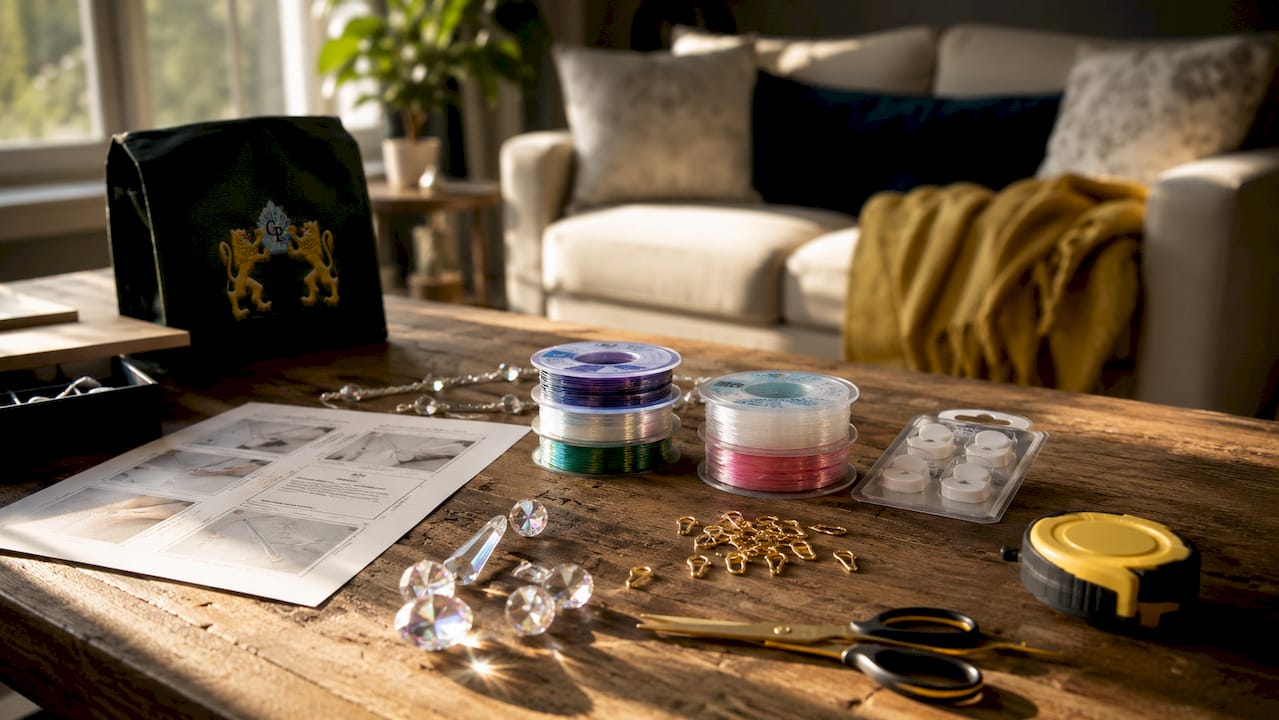
| Material | Purpose | Notes |
|---|---|---|
| Clear fishing line | Invisible hanging support | 10–20 lb test weight recommended |
| Cup hooks (screw-in) | Secure anchor point | Best for wooden frames |
| Adhesive hooks | No-drill alternative | Must be rated for the suncatcher’s weight |
| Suction cups | Temporary glass mounting | Suitable for lightweight pieces only |
| Tape measure | Accurate positioning | Helps center the suncatcher on the window |
| Scissors or wire cutters | Cutting line or chain | Keep sharp for clean cuts |
| Step stool or ladder | Safe reach for high windows | Use a stable, non-slip model |
Clear fishing line is the preferred hanging material for crystal prisms. It creates a floating effect that keeps the focus on the crystal rather than the hardware. Fishing line also allows the prism to spin gently with air currents, which maximizes light dispersion throughout the room.
Fine chains and decorative cords are solid alternatives when you want the hanging element to be part of the visual design. Brass or silver chains complement crystal well and add a finished look. The tradeoff is that chains are heavier and can restrict the free spinning that produces the best rainbow effects.
- Fishing line: nearly invisible, allows free spinning, affordable
- Decorative chain: visible, adds style, limits rotation
- Nylon cord: durable, slightly visible, good for outdoor use
- Avoid thin thread or string, which degrades quickly in sunlight
Pro Tip: Buy fishing line rated for at least double the weight of your suncatcher. A crystal piece that feels light in your hand can exert surprising force when it swings, especially near a window that gets opened regularly.
For heavier suncatchers, drilled cup hooks into wooden window frames provide the most reliable anchor. Pilot holes prevent the wood from splitting and make installation cleaner. Adhesive hooks work well for lighter pieces when applied correctly to a clean, dry surface.
Step-by-step guide to installing crystal suncatchers
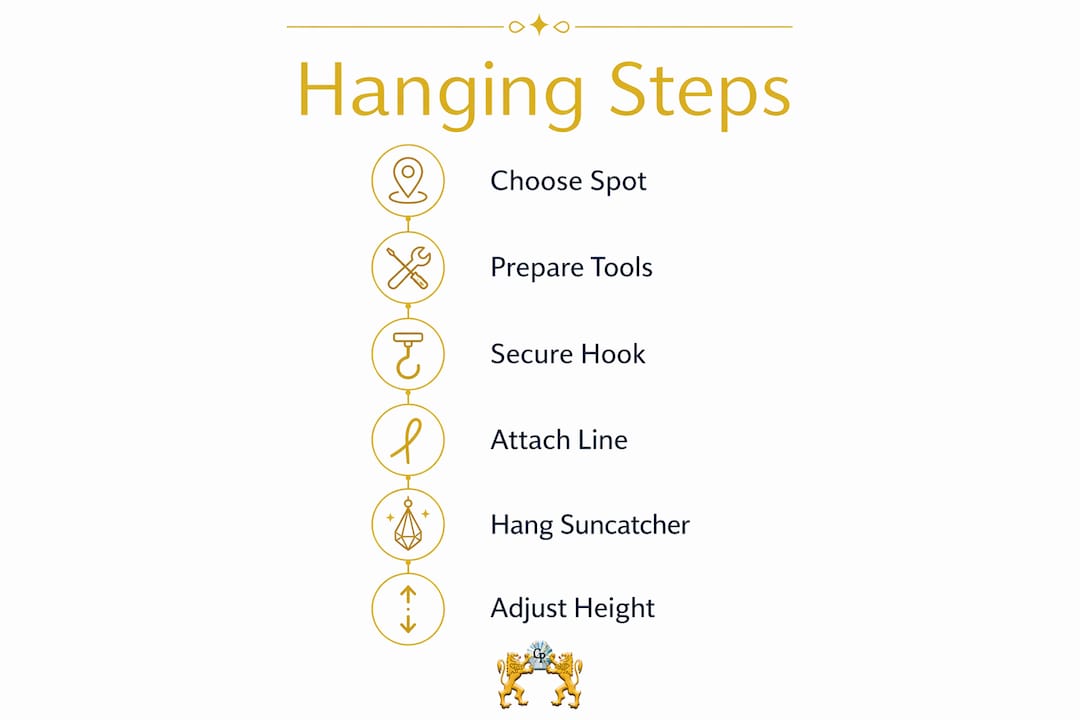
Follow these steps in order for a secure, attractive installation that lasts.
-
Choose and prepare your hook location. Measure the center of your window frame and mark the spot lightly with a pencil. Clean the surface with a dry cloth to remove dust, oil, or residue. For adhesive hooks, wipe the surface with rubbing alcohol and let it dry completely before applying.
-
Install your hook. For wooden frames, drill a small pilot hole slightly narrower than your cup hook, then screw the hook in by hand until it sits flush and firm. For adhesive hooks, press firmly for 30 seconds and allow the full curing period (usually 24–72 hours) before adding any weight. Adhesive hooks on clean surfaces perform reliably when given proper curing time.
-
Cut your fishing line or chain. Measure the distance from your hook to where you want the suncatcher to hang, then add 6 inches for knotting. For adjustable hanging, cut the line longer and use a sliding knot or small clip so you can raise or lower the suncatcher as the seasons change.
-
Attach the line to the suncatcher. Thread the line through the suncatcher’s hanging loop and tie a secure knot. A double overhand knot or a figure-eight knot holds well without slipping. Tug firmly to test before hanging.
-
Hang the suncatcher and test the position. Loop the top of the line over your hook and adjust the height. Step back and observe the light at different angles. Raise or lower the suncatcher until rainbows appear on your walls or ceiling at the height you prefer.
-
Check for tangling risk. Make sure the suncatcher has at least 2 inches of clearance on all sides so it can rotate freely. If it bumps the window glass or frame, shorten the line or reposition the hook.
Pro Tip: Hang your suncatcher on a sunny morning so you can immediately see where the rainbows land. Adjust the height in real time rather than guessing and coming back later.
For renters who cannot drill, adhesive hooks rated for weight are the most practical solution. Apply them to the window frame rather than the glass for a stronger bond. Avoid suction cups for anything heavier than a small ornament. Suction cups lose their seal with temperature changes, which is a real risk near windows that heat up in direct sun.
You can also explore five proven hanging methods for Swarovski crystal suncatchers specifically, which covers additional techniques for different frame types and crystal weights.
Common problems and how to fix them
Even a well-planned installation runs into issues. Here are the most common problems and their solutions.
Hook adhesion failure is the top complaint among first-time installers. The cause is almost always surface contamination or skipping the curing period. Remove the hook, clean the surface again with rubbing alcohol, reapply, and wait the full recommended time before loading it with weight.
Excessive spinning and tangling happens when the suncatcher is too close to a draft source or when the line is too long relative to the weight of the crystal. Shortening the line reduces the pendulum effect. Moving the suncatcher away from vents or open windows solves the draft problem.
“Gentle air currents promote spinning, but strong drafts should be avoided for stability.” This distinction matters because slow rotation produces the best rainbow effects, while rapid spinning just creates a blur and risks tangling.
Weak or absent rainbow effects usually point to one of three causes: insufficient direct sunlight, dirty crystal surfaces, or a hanging height that misses the current sun angle. Clean the crystal first, then reassess the window’s light exposure, and finally adjust the hanging height for the season.
For renters, the no-drill approach using adhesive hooks on window frames is the most reliable DIY suncatcher hanging idea. Command strips rated for the weight of your piece work on painted wood and metal frames. Avoid applying them directly to glass, where the bond is weaker.
- Hook falling off: reclean the surface, reapply, and allow full curing time
- Tangling: shorten the line and move away from strong air currents
- No rainbows: clean the crystal, check sun exposure, and adjust height
- Renter restrictions: use weight-rated adhesive hooks on the window frame
How to keep crystal suncatchers clean and safe long-term
Maintenance is what separates a suncatcher that dazzles for years from one that looks dull within months. The process is simple and takes less than ten minutes.
Clean crystals monthly using distilled water and a soft, lint-free cloth. Tap water leaves mineral deposits that cloud the crystal surface and reduce light refraction. Remove the suncatcher from its hook before cleaning to avoid stressing the line or hardware.
Inspect hooks and lines every few months for signs of corrosion, fraying, or weakening. Metal hooks near windows can rust from condensation, and fishing line degrades with prolonged UV exposure. Replacing hardware proactively costs almost nothing and prevents accidental drops.
Pro Tip: Store crystal suncatchers in a soft pouch or wrapped in microfiber cloth during extended periods when you are not using them. Dust accumulation in storage is harder to remove than regular surface dust.
- Clean monthly with distilled water and a soft cloth
- Remove before cleaning windows with commercial glass cleaners
- Inspect hooks and lines every 2–3 months for wear
- Store in soft pouches when not in use for extended periods
- Recharge crystal energy by placing near a moonlit window overnight
For a curated selection of pieces worth maintaining, the best crystal suncatchers for windows list from Crystalplace covers top-rated options across different sizes and styles.
Key takeaways
The best way to hang crystal suncatchers combines a south-facing window, clear fishing line, a secure hook rated for the weight, and seasonal height adjustments to keep rainbows consistent year-round.
| Point | Details |
|---|---|
| Location determines performance | South-facing windows with no obstructions produce the strongest, most consistent rainbow effects. |
| Match hardware to weight | Use drilled cup hooks for heavy pieces and weight-rated adhesive hooks for lighter ones or renter situations. |
| Use clear fishing line | Fishing line creates a floating visual effect and allows free spinning for maximum light dispersion. |
| Adjust height seasonally | Lower the suncatcher in winter when the sun angle drops to maintain strong rainbow projection. |
| Clean and inspect regularly | Monthly cleaning with distilled water and quarterly hardware checks keep suncatchers safe and brilliant. |
What I have learned from years of hanging crystal suncatchers
Most people underestimate how much the sun’s seasonal movement affects their suncatcher’s performance. I have seen beautifully installed pieces go completely dark by november simply because the owner hung them at a fixed summer height and never adjusted. The fix is a sliding knot or a small clip on the line so you can reposition in minutes without removing the hook.
My other strong opinion: skip suction cups for anything you actually care about. They feel convenient, but a temperature swing on a sunny afternoon can pop the seal without warning. I have seen Swarovski pieces hit a hardwood floor because of a suction cup failure on a warm october day. For anything with real weight or value, a drilled cup hook in the window frame is worth the five minutes of effort.
The eclectic living room approach, where suncatchers mix with other light-catching decor like mirrors and metallic accents, produces some of the most striking results I have seen. If you want ideas on how to combine suncatchers with room decor, layering them with reflective surfaces amplifies the rainbow effect across a much larger area of the room.
One last thing: adjustable lines are not optional if you want year-round performance. They are the single upgrade that makes the biggest difference with the least effort.
— BCC
Discover premium crystal suncatchers at Crystalplace
Crystalplace has specialized in authentic crystal decor since 1992, sourcing directly from trusted brands including Swarovski. Whether you are setting up your first suncatcher or adding to an established collection, the site offers a curated range of crystal prisms and hanging decor built for both beauty and durability. Every piece is selected for brilliance, clarity, and craftsmanship. Crystalplace ships free on orders over $22 within the USA, making it easy to experiment with placement and find the combination that works best for your windows and rooms.
FAQ
What is the best way to hang suncatchers without drilling?
Adhesive hooks rated for the weight of your suncatcher are the most reliable no-drill option. Apply them to a clean, dry window frame and allow the full curing period before hanging.
Where should you hang a crystal suncatcher for the best rainbows?
South-facing windows produce the strongest and most consistent rainbow effects in the Northern Hemisphere. Avoid windows blocked by trees, buildings, or roof overhangs.
How do you stop a crystal suncatcher from spinning too much?
Move the suncatcher away from heating vents, air conditioning units, and open windows. Shortening the line also reduces the pendulum effect that causes rapid spinning.
How often should you clean a crystal suncatcher?
Clean crystal suncatchers monthly using distilled water and a soft, lint-free cloth. Tap water leaves mineral deposits that dull the surface and reduce light refraction over time.
Can you use suction cups to hang a heavy crystal suncatcher?
Suction cups are not reliable for heavy or valuable crystal pieces. Temperature changes near windows can break the seal without warning, risking a fall and breakage.
Recommended
- 5 Ways to Hang Your Swarovski Crystal Suncatcher – CrystalPlace
- Brighten Up Your Home with Crystal Place’s Stunning Suncatchers – CrystalPlace
- Inspiring examples of crystal suncatchers for elegant spaces – CrystalPlace
- 10 Best Crystal Suncatchers for Windows – CrystalPlace