

Discover how to restore crystal brilliance at home with the right tools and techniques. Revive your crystals and keep them sparkling!
TL;DR:
- Most dullness in crystal is superficial and can be removed using gentle cleaning methods. Proper tools, patience, and routine maintenance are essential to preserve crystal’s brilliance and prevent permanent damage. Avoid harsh chemicals, abrasive tools, and thermal shock to ensure long-lasting clarity.
Restoring crystal brilliance is the process of removing residue, mineral deposits, and surface films that block light from passing through crystal cleanly. Most dullness is not permanent. Mineral buildup forms a dull haze as water evaporates on the surface, especially from hard water containing calcium and magnesium. That haze is superficial, which means the right cleaning method removes it completely. This guide covers the tools you need, the step-by-step cleaning process, common mistakes to avoid, and how to keep your crystal sparkling long after restoration.
How to restore crystal brilliance: tools and materials you need
The right supplies make the difference between a safe clean and a damaged piece. Crystal is a delicate material, and the wrong cloth or cleaner leaves scratches that no amount of polishing can fix.
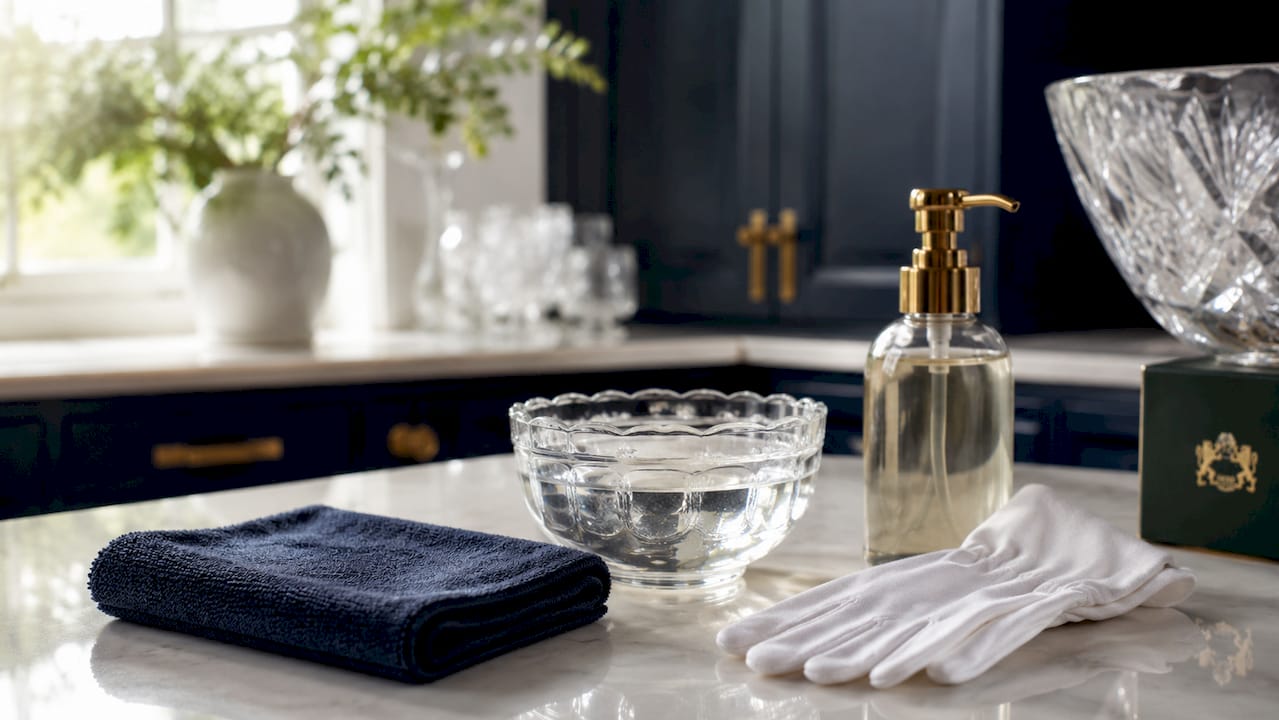
What to gather before you start:
- Soft microfiber cloths and lint-free towels for washing, drying, and polishing
- Mild pH-neutral dish soap without citrus additives or strong fragrances, which can leave residue
- Distilled white vinegar diluted in lukewarm water for dissolving mineral deposits
- Lukewarm water only, never hot or cold, to avoid thermal shock to the crystal
- Soft sponges or brushes designed for delicate surfaces, such as natural-bristle brushes
- Cotton gloves for handling pieces before and after cleaning
What to avoid entirely:
- Abrasive scrubbing pads or steel wool
- Harsh chemical cleaners, bleach, or ammonia-based products
- High heat, including hot water or direct sunlight during drying
- Paper towels, which are coarser than they appear and can micro-scratch crystal surfaces
Pro Tip: Wear clean cotton gloves whenever you handle crystal. The oils from your fingertips leave a thin film that dulls the surface within hours, and gloves eliminate that problem entirely.
Having everything ready before you start means you never rush a step or grab the wrong cloth mid-clean. Preparation is the part most homeowners skip, and it is the part that causes the most accidental damage.
Step-by-step method to clean and revive crystal luster
This process works for crystal glassware, decorative prisms, chandelier drops, and suncatchers. Follow each step in order. Skipping steps, especially drying, creates new problems.
1. Assess the piece before you touch it
Hold the crystal up to natural light and look for chips, cracks, or deep scratches. Cleaning a cracked piece can cause it to split further. If you see structural damage, set that piece aside for professional repair before attempting any cleaning.
2. Soak in diluted white vinegar
Fill a bowl with one part white vinegar and three parts lukewarm water. Submerge the crystal and let it soak for 10–20 minutes. Soaking in diluted white vinegar is the standard safe method for dissolving hard-water mineral deposits. The mild acidity breaks down calcium and magnesium buildup without attacking the crystal surface itself.
3. Hand wash with mild soap
After soaking, gently wash the piece with a soft sponge and a small drop of pH-neutral dish soap. Work in small circular motions and pay attention to crevices where oils and dust collect. Dullness in worn crystal is most often caused by a thin film from skin oils, dust, and cosmetic residue, so this step targets exactly that layer.
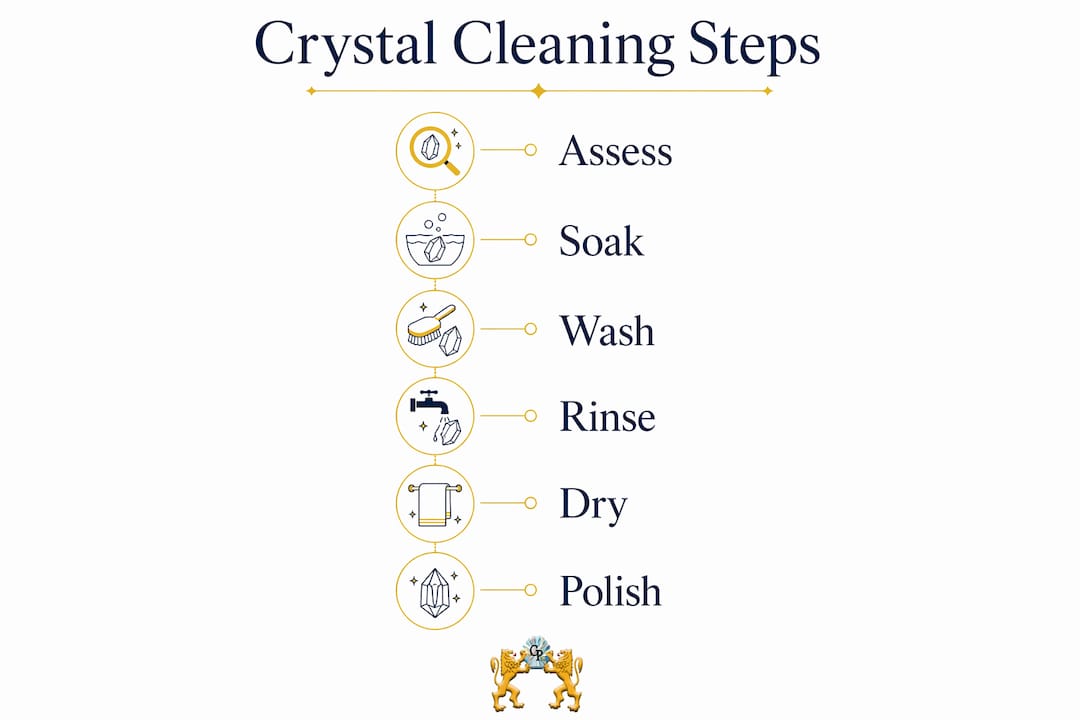
4. Rinse thoroughly
Rinse the piece under a gentle stream of lukewarm water until all soap is gone. Any soap left on the surface dries into a new film that dulls the crystal again. Keep the water temperature consistent throughout to avoid thermal shock.
5. Dry immediately with a lint-free cloth
Proper drying immediately after washing prevents water marks and dull residue on crystal surfaces. Do not let crystal air dry. Pick up a soft microfiber cloth and dry the piece completely, turning it in your hands to reach every angle.
6. Polish with a dry microfiber cloth
Once dry, use a clean, dry microfiber cloth to buff the surface in gentle circular motions. Wet polishing with soft microfiber cloths after vinegar soaking restores brilliance without damaging fragile vintage crystal. For antique or very delicate pieces, spread this polishing across multiple short sessions spaced over a day or two rather than applying pressure in one go.
The single most important rule in crystal restoration is patience. Rushing the drying or polishing step causes more damage than the original dullness ever did. A crystal piece that took decades to acquire deserves ten extra minutes of careful attention.
Pro Tip: For chandelier crystals and prisms still mounted on a fixture, check Crystalplace’s guide on cleaning a crystal chandelier safely before you start. Mounted pieces require a different approach than items you can remove and soak.
What mistakes damage crystal during restoration?
Most restoration failures come from one of four errors: wrong temperature, wrong cleaner, wrong tool, or wrong expectations. Knowing which problems are fixable and which are permanent saves you time and frustration.
Fixable problems:
- Mineral haze from hard water (vinegar soak removes it)
- Oil and dust film from handling (mild soap wash removes it)
- Light water spots from air drying (immediate drying with microfiber prevents and fixes this)
Permanent problems:
- Etching: A frosted, matte appearance caused by alkaline cleaners or prolonged acid exposure. This is surface damage at the molecular level and cannot be polished away.
- Thermal cracks: Caused by sudden temperature changes, such as rinsing hot crystal under cold water. Dishwashing crystal risks thermal shock and exposure to chemicals that cause permanent cloudiness. Hand washing is always the safer choice.
- Deep scratches: Scratches and etching caused by harsh cleaning and improper storage are often permanent and limit restoration. Abrasive pads and rough cloths are the most common cause.
Handling vintage and fragile pieces differently:
Older crystal, particularly lead crystal made before the 1990s, is softer and more porous than modern alternatives. Use less vinegar in your soak solution (one part vinegar to five parts water), reduce soaking time to 5–10 minutes, and use lighter pressure when polishing. When in doubt, a professional crystal repair service is the right call for irreplaceable pieces.
Pro Tip: Run your fingertip lightly across a dull area. If it feels smooth, the problem is a surface film you can clean. If it feels rough or uneven, you are likely dealing with etching or scratching that cleaning will not fix.
How do you maintain crystal brilliance long-term?
Restoration gets your crystal back to its best. Maintenance keeps it there. The goal is to prevent buildup from forming in the first place, which means small, consistent habits rather than occasional deep cleans.
Daily and weekly habits:
- Wipe each piece with a dry microfiber cloth after handling to remove oils and dust before they bond to the surface. A simple wipe-down after use maintains brilliance better than infrequent deep cleaning.
- Dry crystal completely after every wash. Never leave it on a drying rack where water pools at the base.
- Handle pieces with cotton gloves or by their bases to minimize oil transfer.
Storage practices:
- Store crystal loosely, upright, and with soft cloth protection between pieces. Tight packing causes rubbing that creates micro-scratches over time.
- Keep crystal away from direct sunlight during storage. UV exposure can cause certain coatings to degrade and adhesives on decorative pieces to weaken.
- Never stack crystal pieces directly on top of each other without padding.
Cleaning frequency:
A light wipe-down after every use is the most effective maintenance habit. A full vinegar soak and hand wash every four to six weeks is sufficient for pieces on display. Crystal in active daily use, such as glassware or chandelier drops in a kitchen, benefits from a gentle wash every two weeks.
Pro Tip: Consistent daily maintenance with microfiber cloths reduces the need for deep cleaning and preserves crystal coatings longer. Think of it like brushing your teeth. Two minutes a day prevents a much bigger problem later.
For chandelier owners, Crystalplace’s chandelier maintenance checklist covers the full routine for keeping mounted crystal drops spotless between deep cleans.
Key Takeaways
Restoring crystal brilliance requires gentle methods, the right tools, and consistent maintenance to preserve clarity and prevent permanent damage.
| Point | Details |
|---|---|
| Most dullness is fixable | Mineral haze, oil films, and dust are all removable with vinegar soaking and mild soap. |
| Vinegar soak is the core method | Dilute one part white vinegar in three parts lukewarm water and soak for 10–20 minutes. |
| Dry immediately after washing | Air drying leaves water spots; use a lint-free microfiber cloth right after rinsing. |
| Etching and deep scratches are permanent | Harsh cleaners and abrasive pads cause irreversible damage that no polish can reverse. |
| Daily wiping beats deep cleaning | A quick microfiber wipe after each use prevents buildup and reduces the need for full restoration. |
What years of handling crystal actually taught me
Most homeowners come to crystal restoration expecting a quick fix. They soak a piece, wipe it down, and feel disappointed when it does not look brand new. The truth is that restoration is a process, not a single step, and the results depend almost entirely on what caused the dullness in the first place.
The mistake I see most often is using the wrong cloth. People grab a paper towel or a cotton T-shirt because it is nearby, and they create micro-scratches that scatter light instead of reflecting it cleanly. A proper microfiber cloth costs almost nothing and changes the outcome completely.
Vintage crystal deserves extra patience. I have seen beautiful antique pieces ruined by a single round in a dishwasher. The thermal shock alone can cause invisible stress fractures that only show up weeks later. For anything with sentimental or monetary value, hand washing is not optional.
The other lesson is that maintenance is far easier than restoration. A 30-second wipe after you handle a piece prevents the kind of buildup that takes an hour to remove. Crystal rewards the people who pay attention to it regularly, not the ones who attempt a rescue every few months.
— BCC
Crystalplace has the crystals and guidance to keep your home sparkling
Whether you are restoring a single prism or refreshing an entire chandelier, having quality crystal makes the work worthwhile.

Crystalplace has been sourcing authentic Swarovski and premium crystal products since 1992. The collection includes crystal prisms and hanging decor for chandeliers, suncatchers, and decorative accents, all chosen for their clarity and light-catching quality. If a piece is beyond home restoration, Crystalplace also offers expert guidance on repair options to bring fixtures back to their original brilliance. Free shipping applies to orders over $22 within the USA. Browse the full collection and find the pieces worth restoring and maintaining.
FAQ
What is the best method for cleaning crystal at home?
Hand washing with mild pH-neutral dish soap and lukewarm water, followed by a diluted white vinegar soak, is the most effective and safe method. Dry immediately with a lint-free microfiber cloth to prevent water spots.
Can cloudy crystal always be restored?
Cloudiness from mineral deposits and oil films is fully reversible with vinegar soaking and gentle washing. Cloudiness caused by etching, thermal damage, or deep scratches is permanent and cannot be polished away.
Why should you avoid putting crystal in the dishwasher?
Dishwashers expose crystal to thermal shock and harsh alkaline detergents that cause permanent cloudiness and surface etching. Hand washing is always the recommended method for crystal care.
How often should you clean decorative crystal?
Wipe decorative crystal with a dry microfiber cloth after each handling session. A full wash with vinegar soak every four to six weeks is sufficient for display pieces in normal home conditions.
When should you call a professional for crystal restoration?
Seek professional help when a piece shows structural cracks, deep etching, or damage that gentle cleaning does not improve. Crystalplace offers crystal repair guidance for homeowners dealing with fixtures and valuable decorative pieces.
Recommended
- Crystal repair services: restoring your fixture’s brilliance – CrystalPlace
- Achieving Crystal Clarity with Brilliante Crystal Cleaner – CrystalPlace
- Crystal Repair Tips: Restore Your Crystals at Home – CrystalPlace
- Revive the Sparkle: Restoring Your Crystal Chandelier – CrystalPlace