

Master key crystal terminology to enhance your design projects. Discover essential terms that improve client conversations and sourcing accuracy.
TL;DR:
- Understanding crystal terminology is essential for accurate sourcing and client trust in design and jewelry work. Crystals have a highly ordered atomic structure called a crystal lattice, which distinguishes them from amorphous materials like glass. Using precise scientific and trade vocabulary ensures proper identification, durability, and effective communication about crystal properties and materials.
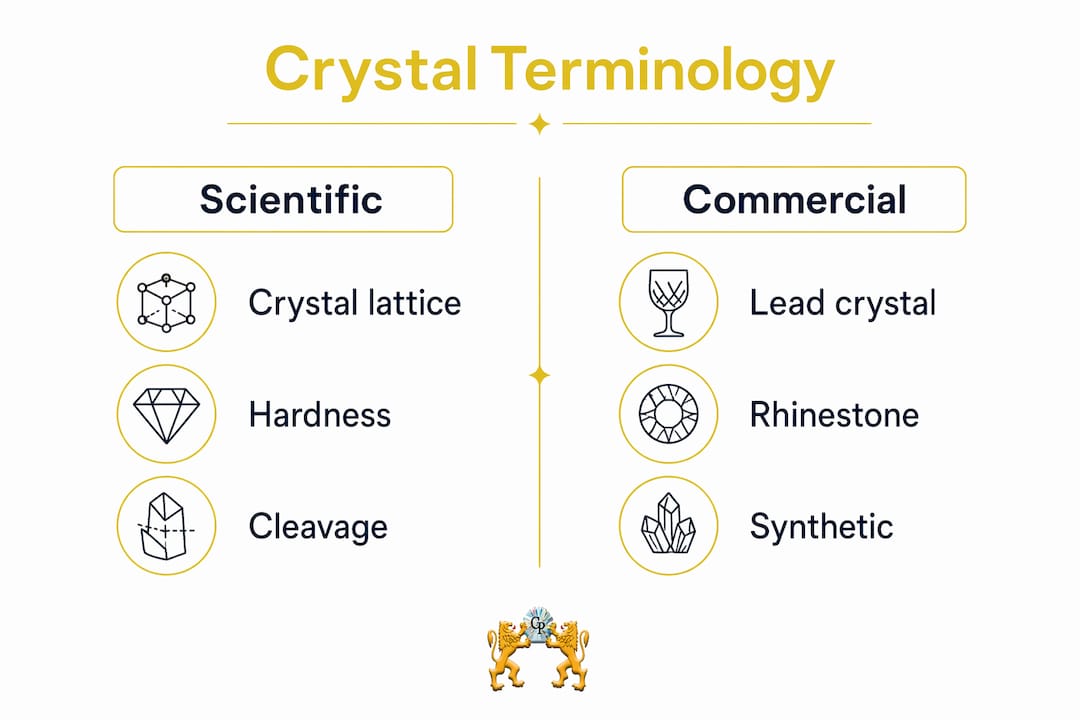
Key crystal terminology is the set of defined terms that describe a crystal’s physical structure, optical properties, and industry classification. Professionals in interior design, jewelry making, and decorative arts rely on this vocabulary every day. Without it, sourcing decisions become guesswork and client conversations lose credibility. A crystal is defined by a highly ordered, periodic atomic arrangement called a crystal lattice, which separates it from amorphous solids like glass. Knowing that distinction alone changes how you read a product label, evaluate a gemstone, or specify materials for a chandelier installation.
What is key crystal terminology and why does it matter?
Crystal terminology draws from two overlapping worlds: mineralogy and trade. The International Union of Crystallography sets the scientific standards, while gemological bodies like the Gemological Institute of America define the commercial vocabulary. Both systems matter for professionals who work with physical materials.
Precision in language protects you from costly mistakes. A designer who specifies “crystal prisms” without understanding the difference between lead crystal and natural mineral crystal may receive a product that looks similar but performs differently under light. The Mohs hardness scale, facet geometry, and crystal habit are not abstract concepts. They determine how a stone cuts, how it reflects light, and how long it survives in a setting or fixture.
The vocabulary also shapes client trust. When you describe a chandelier component using accurate terms, clients recognize expertise. When you confuse “rhinestone” with “crystal,” they notice.
How do crystal physical features and formations work?
Crystal habit refers to the natural growth shape of a mineral, and it is one of the first identification tools available without any equipment. Quartz typically forms six-sided prisms. Pyrite grows in cubes or pyritohedra. Ideal habits are rare in nature because growth restrictions from surrounding rock alter the final shape.
Key crystal features you need to recognize
Facets are the flat, polished surfaces on a cut stone. They are not natural in most cases. A lapidary cuts and polishes them to maximize light return. The number, angle, and symmetry of facets determine how brilliantly a stone performs under lighting.
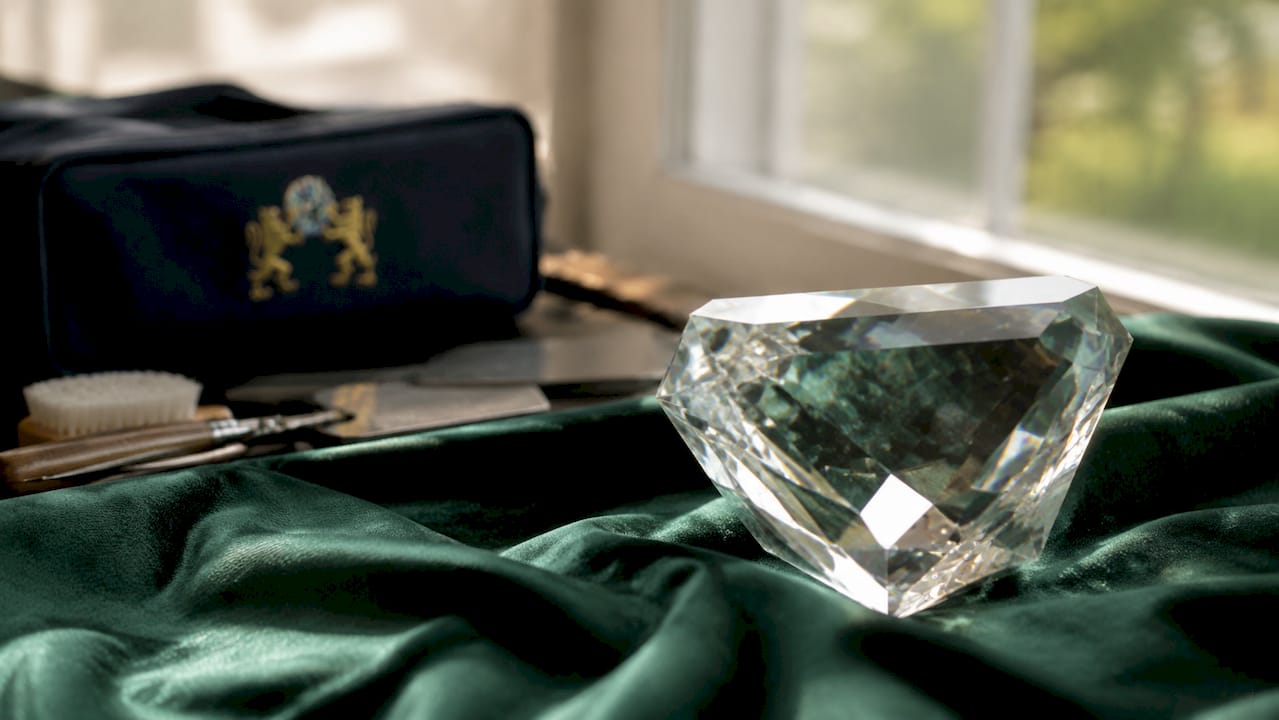
Key crystals are a specific formation worth knowing. A key crystal features three- or six-sided indentations on its surface, created where two crystals grew together and one portion is missing. The indentation narrows into the body of the crystal, creating a keyhole shape. Crystal healing practitioners assign symbolic meaning to this formation, but for designers and collectors, the visual identification is what matters most.
Crystal systems classify minerals by their internal symmetry. The six major systems are cubic, tetragonal, orthorhombic, hexagonal, trigonal, and monoclinic. Each system produces predictable external shapes.
| Crystal system | Example minerals | Typical shape |
|---|---|---|
| Cubic | Diamond, garnet, fluorite | Cube, octahedron |
| Hexagonal | Beryl, apatite | Six-sided prism |
| Trigonal | Quartz, calcite, tourmaline | Three-sided prism |
| Orthorhombic | Topaz, peridot | Rhombic prism |
| Monoclinic | Moonstone, gypsum | Oblique prism |
| Triclinic | Labradorite, kyanite | Irregular flat plates |
Knowing a stone’s crystal system helps predict its cleavage direction, which directly affects how it should be set in jewelry or mounted in a fixture.
Pro Tip: When sourcing decorative crystals for a chandelier, ask suppliers for the crystal system of the material. Hexagonal and trigonal stones refract light differently than cubic ones, and that difference shows up clearly when the fixture is lit.
What scientific and gemological vocabulary applies to crystals?
Gemological vocabulary describes how a stone behaves physically and optically. These terms appear on grading reports, supplier invoices, and product specifications.
- Mohs hardness: A standard scale from 1 to 10 measuring resistance to scratching. Jewelry-grade stones typically require a hardness of 7 or above because everyday dust contains silica at hardness 7. Diamond rates 10; talc rates 1.
- Cleavage: The tendency of a mineral to break along flat planes determined by its crystal structure. Diamond has perfect cleavage, which makes it susceptible to chipping despite its extreme hardness.
- Fracture: How a mineral breaks when cleavage is absent or incomplete. Quartz fractures conchoidally, meaning it breaks in smooth, curved surfaces like glass.
- Refractive index (RI): A measurement of how much a material bends light. Professionals rely on refractive index measurements over color for reliable identification because color varies widely from trace impurities.
- Specific gravity (SG): The ratio of a stone’s weight to an equal volume of water. SG helps distinguish stones of similar appearance, like blue topaz from aquamarine.
- Inclusions: Internal marks, fractures, or foreign materials trapped inside a stone during formation. Inclusions affect clarity and can weaken structural integrity, which matters when setting stones in rings or high-contact jewelry.
One critical nuance: hardness alone does not guarantee durability. Cleavage and tenacity also determine how a stone survives daily wear. Designers often choose stones with moderate hardness but better toughness to reduce breakage risk in high-traffic installations.
Pro Tip: Always check both the Mohs rating and the cleavage direction before specifying a stone for a ring or a frequently handled decorative object. A stone rated 8 on the Mohs scale can still chip easily if it has perfect cleavage in multiple directions.
How does commercial crystal terminology differ from scientific language?
The word “crystal” carries different meanings depending on context. This gap between scientific and trade language creates real confusion for buyers and designers.
Scientifically, a crystal must have a crystal lattice. Commercially, the term “crystal” is applied to lead crystal glass, rhinestones, and Swarovski products, none of which are mineral crystals in the scientific sense. Lead crystal is a commercial term for glass containing lead oxide. The lead oxide increases weight and brilliance, making it visually similar to natural crystal. It is widely used in chandeliers, decorative prisms, and tableware.
“Many decorative pieces marketed as ‘crystal’ are actually lead crystal or simulated glass. Understanding the difference between glass and crystal is the first step toward accurate sourcing and honest client communication.”
Rhinestones are glass or crystal imitations cut to simulate the sparkle of gemstones. They contain no mineral crystal structure. Swarovski products occupy a distinct category: precision-cut glass or crystal components manufactured to strict optical standards. They are not natural gemstones, but they are not low-quality imitations either.
The table below shows how these terms align across scientific and commercial contexts.
| Term | Scientific meaning | Commercial meaning |
|---|---|---|
| Crystal | Mineral with crystal lattice | Any brilliant glass or cut stone |
| Lead crystal | Not applicable | Glass with lead oxide for brilliance |
| Rhinestone | Not applicable | Glass or crystal imitation gemstone |
| Natural stone | Mineral formed in nature | Unaltered mined gemstone |
| Synthetic stone | Lab-grown with same chemistry as natural | Lab-created gemstone |
Synthetic stones share the same chemical and physical properties as their natural counterparts. Imitation stones differ in composition entirely. This distinction matters on product labels and in client proposals.
How to apply crystal terminology in real design and jewelry scenarios
Applying gemstone vocabulary accurately starts before you purchase anything. These steps give you a practical framework.
- Confirm hardness before specifying a stone for jewelry. Any stone below Mohs 7 risks scratching from daily contact. For rings and bracelets, target Mohs 7 or above. For pendants and earrings with less contact, softer stones are acceptable.
- Check cleavage direction before setting. Ask your supplier for the cleavage rating. Stones with perfect cleavage in multiple directions need protective settings that reduce impact exposure.
- Request the refractive index for decorative applications. Higher RI values produce more brilliance. For chandelier prisms and suncatchers, RI is the primary optical specification. Facet-grade rough requires clear standards of clarity and color for cutting into stones that retain brilliance.
- Identify crystal habit before buying rough stones. Crystal habit narrows down mineral identity without expensive equipment. This approach is favored by professional designers and collectors who source directly from suppliers.
- Use precise labels in client documents. Write “lead crystal prisms” or “natural quartz points” rather than just “crystal.” Precise labels prevent disputes and demonstrate expertise.
- Distinguish natural from synthetic in writing. Synthetic stones carry the same physical properties as natural ones but different market value. Clients deserve to know which they are receiving.
Pro Tip: When visiting a showroom or trade fair, carry a loupe and a reference card listing common refractive index values. You can quickly cross-check a stone’s RI against known values to confirm whether it matches the seller’s description.
Key Takeaways
Mastering crystal vocabulary means knowing both the scientific definitions and the commercial terms, because they do not always match.
| Point | Details |
|---|---|
| Crystal lattice defines real crystals | A true crystal has a periodic atomic structure; glass and lead crystal do not. |
| Mohs 7 is the durability threshold | Stones below Mohs 7 scratch too easily for most jewelry and high-contact decor. |
| Cleavage matters as much as hardness | Perfect cleavage makes even hard stones like diamond vulnerable to chipping. |
| Commercial “crystal” is often glass | Lead crystal, rhinestones, and Swarovski products are not mineral crystals scientifically. |
| Refractive index drives optical performance | For lighting and decorative applications, RI determines how much brilliance a piece delivers. |
Why I think most crystal guides get the terminology backwards
Most glossaries start with healing properties and end with a footnote about hardness. That sequence is backwards for anyone who actually works with crystals professionally.
The physical and optical properties come first. They determine what a stone can do, where it can go, and how long it will last. The naming conventions and trade language come second. They determine what you call it when you write a spec sheet or talk to a client. Healing associations, if relevant to your work, come last.
The most common mistake I see from designers entering the crystal space is treating “crystal” as a single category. It is not. A natural quartz point, a lead crystal prism, and a Swarovski pendant are three completely different materials with different sourcing chains, different optical behaviors, and different price points. Calling all three “crystal” in a client proposal creates confusion that costs time and money to fix later.
The second mistake is relying on color for identification. Color is the least reliable property in gemology. Trace impurities shift color dramatically across specimens of the same mineral. Refractive index and specific gravity are the reliable identifiers. Build those into your evaluation process early.
Clear terminology also protects your reputation. A client who later discovers that their “crystal chandelier” contains lead glass rather than natural mineral crystal will feel misled, even if lead crystal was the right material for the job. The solution is simple: use the correct term from the start and explain why it is the right choice.
— BCC
Crystalplace resources for crystal selection and learning
Crystalplace has supplied authentic crystal products to homeowners, decorators, and lighting professionals since 1992. The catalog covers Swarovski prisms, chandelier crystals, hanging crystals, suncatchers, and specialty components for chandelier repair and assembly.
For professionals applying the terminology covered here, Crystalplace offers detailed product descriptions that distinguish lead crystal from glass prisms, helping you specify the right material with confidence. The site also covers Swarovski versus generic crystals in depth, so you can make informed sourcing decisions for any project. Free shipping applies to orders over $22 within the USA. Visit crystalplace.com to browse the full selection and access additional guides.
FAQ
What is the scientific definition of a crystal?
A crystal is a solid material whose atoms are arranged in a highly ordered, repeating pattern called a crystal lattice. This structure distinguishes crystals from amorphous solids like glass, which have no such internal order.
What does Mohs hardness mean for jewelry?
Mohs hardness measures a mineral’s resistance to scratching on a scale from 1 to 10. Stones rated 7 or above are generally suitable for jewelry because everyday dust contains silica at hardness 7.
What is a key crystal in gemstone terminology?
A key crystal is a formation with three- or six-sided indentations on its surface, created where two crystals grew together and one portion is missing. The shape narrows into the body of the stone, resembling a keyhole.
Is lead crystal the same as natural crystal?
Lead crystal is glass containing lead oxide, not a mineral crystal. It produces high brilliance and weight similar to natural crystal, but it lacks a crystal lattice structure and is classified as glass.
How do synthetic stones differ from imitation stones?
Synthetic stones share the same chemical and physical properties as their natural counterparts but are grown in a laboratory. Imitation stones differ entirely in composition and only mimic the appearance of the stone they represent.
Recommended
- The Role of Crystals in Interior Design: 2026 Guide – CrystalPlace
- Crystal Clarity Explained: Properties, Light, and Design – CrystalPlace
- What Is Crystal Craftsmanship: A Crafter’s Guide – CrystalPlace
- The Role of Crystal Decor in Events: 2026 Guide – CrystalPlace