

Discover the origin of Swarovski crystals and how they transform interiors. Uncover the craftsmanship behind their brilliance today!
TL;DR:
- Swarovski crystals distinguish themselves through precise faceting, high-quality materials, and enduring craftsmanship. Their consistent quality offers superior brilliance, longevity, and aesthetic value compared to generic crystals, making them ideal for elevating interior decor. Investing in authentic Swarovski pieces ensures lasting beauty and a unique sense of luxury within any space.
Not all crystals are created equal, and nowhere is that more obvious than when genuine Swarovski crystal catches the afternoon light in a well-designed room. For homeowners and interior designers alike, Swarovski is a name that carries serious weight, yet many people aren’t entirely sure why. Is it marketing? Heritage? The actual material? The answer is all three, and understanding the full story behind these crystals will change the way you approach decorative lighting and interior styling forever.
Key Takeaways
| Point | Details |
|---|---|
| Austrian craftsmanship | Swarovski crystals were born from expert innovation in Austria and are still produced with meticulous precision. |
| Distinctive quality | Proprietary formulas and flawless cutting create brilliance unique to Swarovski crystals. |
| Practical selection tips | Knowledge of authenticity and application ensures you’ll choose decor that truly transforms your interiors. |
| Lasting value | Genuine Swarovski pieces bring enduring beauty and elevate the atmosphere of any design project. |
The roots of brilliance: How Swarovski began
Daniel Swarovski was born in 1862 in Bohemia, a region historically renowned for glass and crystal craftsmanship. His father was a glass cutter, which means Daniel grew up surrounded by the rhythms of precision work from an early age. By the time he was a young man, he was already obsessed with a single problem: how to cut crystal with greater speed, accuracy, and consistency than the human hand could achieve on its own.
In 1895, Daniel moved to Wattens, a small town in the Austrian Alps, and established what would become one of the most recognized crystal companies in the world. The location wasn’t random. Wattens offered the hydroelectric power the factory needed, and the remote Alpine setting ensured his proprietary cutting methods stayed protected from competitors for years.
The invention that changed everything was his precision cutting machine, patented in 1892. This device could cut crystal with mechanical accuracy that no artisan could match by hand alone. As Swarovski revolutionized crystal production with this precision-cutting technology, the company set a new global standard for what decorative crystal could look like and how consistently it could be produced.
Daniel’s founding mission was surprisingly democratic for the era. He believed that brilliant crystal, which had previously been the exclusive domain of royalty and the very wealthy, should be available to a wider market. That vision is a big part of Swarovski’s popularity even today, more than 130 years later.
| Key milestone | Year | Significance |
|---|---|---|
| Daniel Swarovski born | 1862 | Bohemian glassmaking tradition |
| Precision cutting machine patented | 1892 | Mechanical accuracy beyond human cutting |
| Factory established in Wattens, Austria | 1895 | Alpine power and secrecy |
| First fashion collaborations | Early 1900s | Expanded market beyond chandeliers |
| Global design leadership | Mid 20th century | Standard for luxury interiors worldwide |
“The measure of true craft is not how beautiful a single piece is, but how perfectly identical a thousand pieces can be.” This principle, rooted in Daniel Swarovski’s original vision, remains the foundation of everything the company produces today.
What distinguishes a Swarovski crystal?
With a clear idea of Swarovski’s start, it makes sense to ask what truly sets their crystals apart from others on the market.
The short answer is that every detail matters. Regular glass beads or decorative crystals sold at low price points are typically mass-produced without the precise facet angles that control how light enters and exits the material. Swarovski pieces, by contrast, are engineered so each facet sits at an exact angle calculated to maximize internal reflection and outward brilliance. The result is that characteristic fire you see when light passes through a genuine piece.
Material composition is another major differentiator. Historically, Swarovski used lead oxide in their formulations, which dramatically increased the refractive index of the glass and created that deep, almost wet-looking sparkle. In recent years the company has shifted to lead-free formulations that meet modern environmental standards while still delivering exceptional optical performance. Their proprietary chemical coatings and lead content contribute to their unmatched sparkle, something you simply cannot replicate with standard decorative glass.
Here’s a quick comparison of genuine Swarovski versus generic crystal alternatives:
| Feature | Swarovski crystal | Generic decorative crystal |
|---|---|---|
| Refractive index | High, engineered precisely | Variable, often lower |
| Facet precision | Machine-cut to exact angles | Often molded or poorly cut |
| Surface coatings | Proprietary Aurora Borealis and others | Minimal or none |
| Consistency across units | Extremely high | Inconsistent |
| Light dispersion | Full spectrum rainbow effect | Dull or yellow-tinted light |
| Longevity of brilliance | Long-lasting with proper care | Fades or chips over time |
For anyone wondering how to recognize the real thing, here are the top signs of genuine Swarovski crystal:
- Perfect clarity with zero visible bubbles, cloudiness, or surface irregularities.
- Sharp, exact facets that feel crisp under your fingertip with no soft or rounded edges.
- Full-spectrum light dispersion producing vivid rainbow patterns even in low light.
- Official markings such as the swan logo, holographic sticker, or accompanying certificate.
- Consistent color across multiple pieces from the same batch, including coated varieties.
When comparing prisms vs generic crystals, the difference is most visible when sunlight or strong artificial light hits the piece directly. A genuine Swarovski prism throws clear, vivid rainbow patterns across walls and ceilings. A generic alternative produces flat, washed-out light at best.
Pro Tip: If you’re spotting authentic Swarovski pieces for purchase, bring a small flashlight to the store or check the product description carefully online. Genuine Swarovski will display a full color spectrum when the light source is direct and close.
From factory to fixture: How Swarovski crystals are crafted
Once you understand what makes Swarovski unique, seeing how these traits come alive through thoughtful craftsmanship brings the origin story full circle.
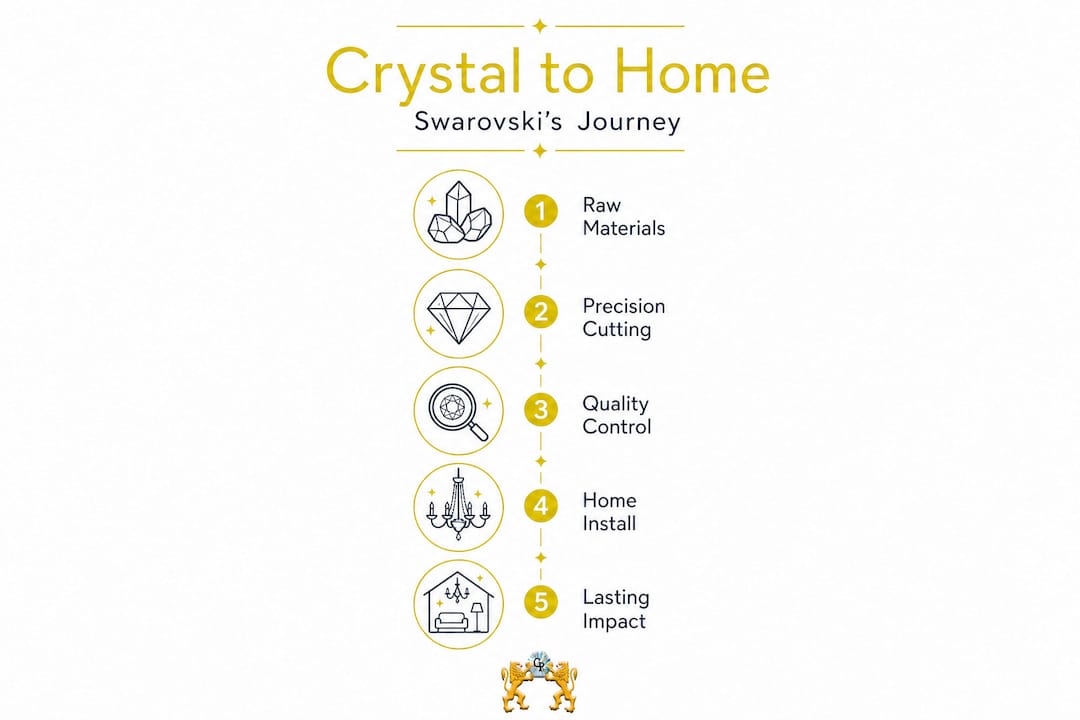
Modern Swarovski production starts with carefully sourced raw materials, primarily silica sand combined with proprietary mineral compounds. These materials are melted at extremely high temperatures in furnaces that must maintain precise and consistent heat throughout the process. Even minor fluctuations during melting can affect the clarity and refractive quality of the finished crystal.
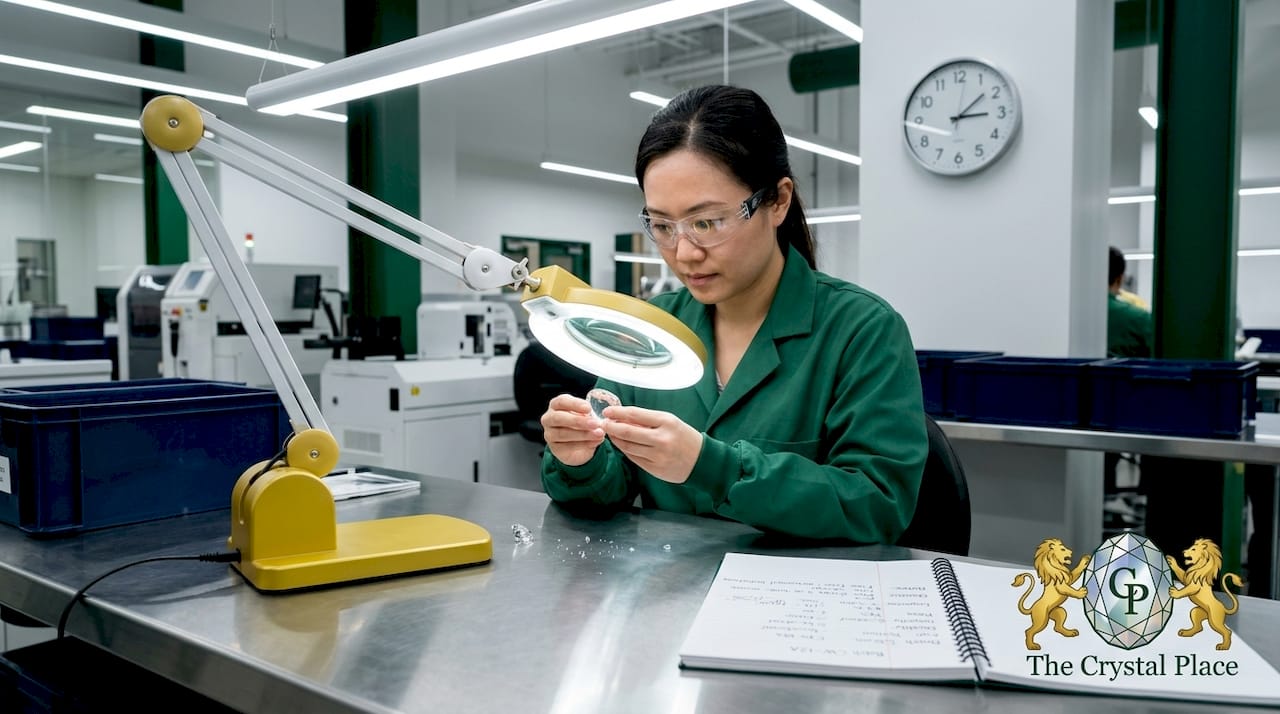
After melting, the molten glass is formed into rough blanks. This is where the legacy of Daniel’s original cutting machine becomes most apparent. Computer-controlled cutting equipment, which has evolved from his 1892 patent, shapes each piece with microscopic precision. The facets are not simply cut; they are polished through multiple stages to achieve a surface smoothness measured in microns.
Here’s what the modern production process looks like from start to finish:
- Raw material blending: Precise formulations are mixed before melting to ensure consistent refractive index throughout the batch.
- High-temperature melting: Furnaces run at controlled temperatures to produce clear, bubble-free molten glass.
- Blank formation: Molten material is shaped into rough forms for cutting.
- Machine cutting: Computer-guided cutters shape each facet to engineered specifications.
- Multi-stage polishing: Pieces pass through progressive polishing steps to achieve optical clarity.
- Specialty coating application: Aurora Borealis and other surface treatments are applied in controlled conditions.
- Quality inspection: Each Swarovski crystal undergoes rigorous refinement, precise faceting, and multiple quality checks before leaving the facility.
- Final sorting and packaging: Pieces are grouped by size and color tolerance for consistency.
This level of process control is why you can order Swarovski crystal components for chandelier repair years apart and still achieve a seamless visual match. Generic crystals rarely offer that kind of batch-to-batch consistency, which matters enormously when you’re replacing a single piece in a large fixture.
Pro Tip: When using crystal prisms in decor, hang them in locations where they can catch both natural and artificial light at different times of day. A south-facing window in the morning and a warm lamp in the evening will produce completely different but equally stunning effects from the same prism.
The versatility of Swarovski crystals extends well beyond chandeliers. Swarovski crystal suncatchers placed near windows fill rooms with color and movement throughout the day, and they require no complex installation or rewiring. This makes them an excellent entry point for homeowners who want to test the effect of genuine crystal in their space before committing to a full lighting project.
Applying Swarovski’s legacy: Choosing crystals for your home
Knowing how Swarovski crystals are made, the next practical step is learning how to select and style them to enhance your own space.
Selection should always start with your room’s light sources and interior style. Crystal responds to light, so rooms with abundant natural light, south or west-facing windows, or strong overhead fixtures will show off Swarovski to its best advantage. Before purchasing, consider:
- Identify your primary light source. Natural daylight produces rainbow dispersion effects. Warm incandescent bulbs enhance the golden warmth of crystal. LED bulbs in the 2700K to 3000K range offer a balanced, modern effect.
- Match the crystal style to your interior aesthetic. Traditional chandeliers suit classic and transitional interiors. Sleek Swarovski prism clusters work well in contemporary and minimalist spaces. Bohemian or eclectic rooms can handle an abundance of hanging crystal elements.
- Choose the right size and shape for the fixture. Larger rooms benefit from longer strands and larger prisms. Smaller rooms are better served by fine-cut pieces in smaller clusters that don’t overwhelm the proportions.
- Verify authenticity before purchasing. Ask specifically for Swarovski-branded pieces and look for product descriptions that reference the genuine brand, not vague “crystal glass” language.
- Think beyond chandeliers. Swarovski for elegant home decor extends to wall sconces, table lamps, curtain tiebacks, and even window installations.
Properly placed Swarovski crystals can transform a room’s ambiance with dazzling light effects that change throughout the day as sunlight shifts.
There are also some common pitfalls to avoid:
- Mixing genuine and imitation pieces on the same fixture creates obvious tonal and reflective inconsistencies that are hard to fix without replacing everything.
- Ignoring cleaning frequency. Dust and oils from handling dull crystal’s surface over time. Plan on a light cleaning every few months using a dedicated crystal cleaner.
- Overlooking hardware quality. Beautiful crystals hung on cheap wire or oxidizing pins will look dated fast. Invest in quality brass or stainless pin hardware that matches your fixture’s style.
- Placing crystals in high-humidity areas like bathrooms without proper ventilation. Moisture can affect surface coatings over time.
Why true brilliance isn’t just about sparkle: Insights for modern interiors
After working with both genuine Swarovski and imitation crystal products across hundreds of interior and lighting projects, we’ve arrived at an opinion that many designers eventually reach on their own: the value of Swarovski was never really about the sparkle alone.
Here’s what conventional wisdom gets wrong. Most conversations about Swarovski in design circles start and end with how it looks. People talk about rainbows on the walls and how it photographs beautifully. And it does. But that framing misses the deeper reason that serious designers keep coming back to authentic pieces year after year.
The real value is in consistency and longevity. Imitation crystals often look acceptable in the first year. They photograph fine and fool a casual observer. But within two to three years, the surface coatings dull, facets show micro-chips, and the light dispersion flattens out. A room that felt luminous and elevated starts to feel tired without any obvious change in the fixture or the bulbs. The crystal is simply aging poorly.
Authentic Swarovski pieces bring lasting value and artistry, and that durability is what outshines superficial sparkle over a ten or twenty-year horizon. When you consider the cost-per-year over the life of a quality fixture, genuine Swarovski often works out to be more economical than the cycle of replacing cheap crystal every few years.
There’s also something harder to quantify but very real in client experience: the feeling a space creates. Rooms furnished with authentic materials carry a quality of presence that copies simply don’t replicate. That’s not marketing language. It’s the accumulated effect of precise geometry, pure material, and enduring craftsmanship in the authenticity of chandelier crystals reflecting the room’s best light back to you every single day.
The most honest advice we can offer any homeowner or designer is this: buy fewer, better pieces rather than filling a space with inferior material. One genuine Swarovski prism cluster placed where it catches morning light will do more for a room than a whole fixture of imitation crystal ever could.
Enhance your interior with genuine Swarovski crystal decor
Understanding the history, craft, and design principles behind Swarovski gives you a real advantage when shopping for your home or your next client project.
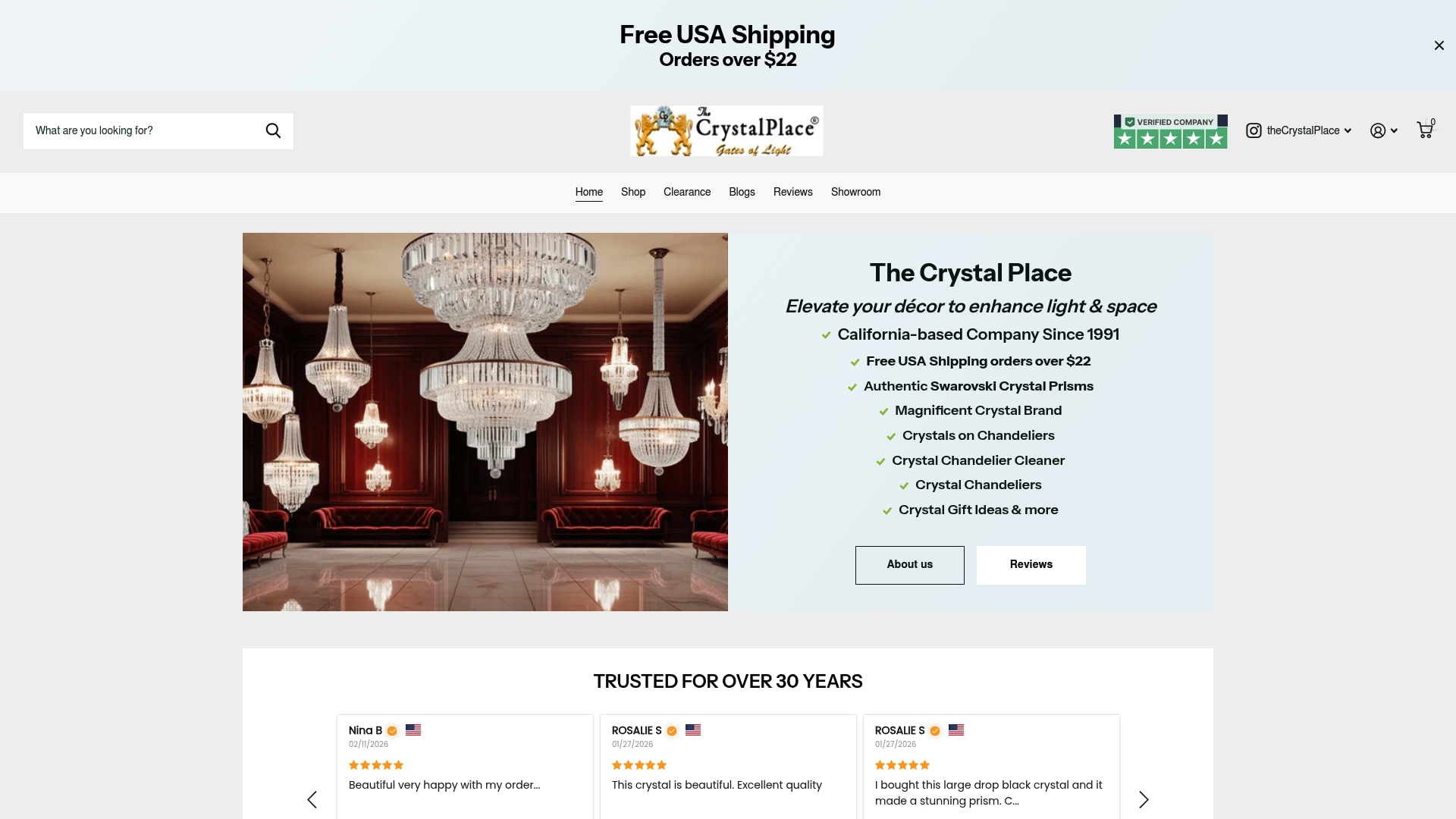
At Crystal Place, we’ve been sourcing and supplying authentic Swarovski crystal products directly since 1992. Our selection covers everything from individual crystal prisms for chandeliers and decorative suncatchers to full chandelier repair components and custom crystal designs. Every product we carry reflects the same commitment to genuine quality that Daniel Swarovski built into his original factory more than a century ago. We offer free shipping on orders over $22 within the USA, so exploring your options has never been more accessible. Visit Crystal Place to find pieces that bring the full Swarovski legacy into your home.
Frequently asked questions
Who founded Swarovski crystals and when?
Daniel Swarovski founded the company in 1895 in Wattens, Austria, after revolutionizing crystal production with his patented precision cutting machine three years earlier.
How can I tell if a Swarovski crystal is genuine?
Genuine crystals feature flawlessly precise cuts, vivid full-spectrum sparkle, and typically carry official brand markings. The differences between authentic and imitation Swarovski are most obvious when light hits the facets directly.
Are Swarovski crystals suitable for all types of interior lighting?
Swarovski crystals work well in most lighting contexts, with chandeliers, sconces, and suncatchers delivering the best results. Their optical quality transforms light fixtures far beyond what generic decorative glass can achieve.
What makes Swarovski more valuable than other crystals?
Exceptional craftsmanship, precisely engineered facets, and proprietary material formulations give Swarovski crystals superior radiance and durability. Swarovski’s innovations in material and cut make them consistently outperform generic alternatives over time.
How should I care for my Swarovski crystal decor?
Gently clean with a soft, lint-free cloth and avoid harsh chemical cleaners to preserve brilliance and protect surface coatings over the long term.
Recommended
- Why Swarovski crystals deliver elegance and brilliance – CrystalPlace
- Swarovski Prisms vs K9 Crystals: What Shows – CrystalPlace
- Why Is Crystal Swarovski So Popular? – CrystalPlace
- What Is Swarovski Crystal? Guide for Elegant Lighting – CrystalPlace