
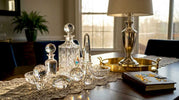
Explore the fascinating history of crystal decor, tracing its journey from medieval craftsmanship to modern design. Discover its cultural impact!
TL;DR:
- Crystal decor emerged from medieval Bohemian and Renaissance Venetian glassmaking, aiming to replicate natural quartz’s optical qualities. Innovations like Ravenscroft’s lead glass and Swarovski’s precision cutting advanced crystal’s brilliance, making it both functional and decorative. Historically, crystal chandeliers served as symbols of wealth, art, and cultural prestige across European aristocracy and religious spaces.
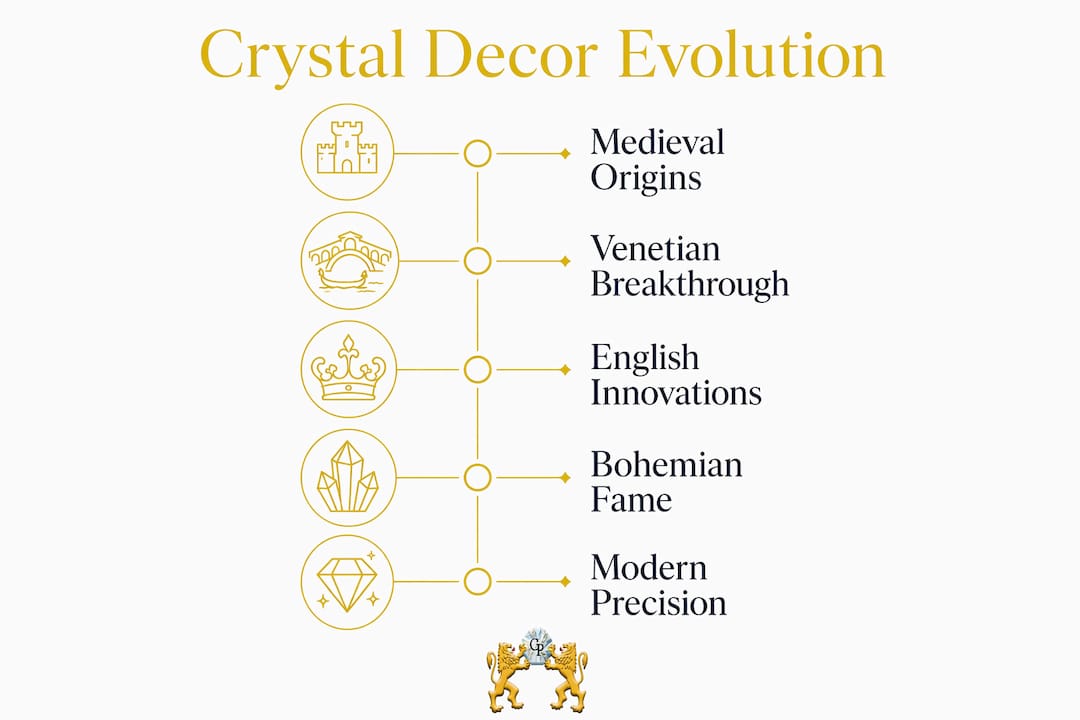
Crystal decor is defined as cut, engraved, or faceted glass engineered to refract and scatter light, serving simultaneously as decorative art and functional illumination technology. The history of crystal decor stretches from medieval Bohemian glasshouses to Swarovski’s precision-cut factory floors, tracing a path where chemistry, craftsmanship, and cultural ambition intersected at every turn. What makes this history genuinely surprising is that crystal was never purely ornamental. For centuries, it was the most sophisticated lighting technology available, and the artisans who shaped it understood optics as intuitively as they understood beauty. This article traces the full arc of that story, from the first transparent glass vessels to the chandelier-lit ballrooms of European aristocracy.
What are the origins of crystal decor in medieval and Renaissance Europe?
The crystal decor origins story begins not with luxury but with a technical problem: how to make glass clear enough to transmit and amplify light. Medieval glassmakers across Bohemia and Venice spent generations solving it. Bohemian craftsmen, working with the mineral-rich forests of the Ore Mountains, developed potash-lime glass from wood ash, which produced a harder, more workable material than the soda-based glass favored in Venice. This regional chemistry gave Bohemian glass a distinct advantage that would define its artistic tradition for centuries.
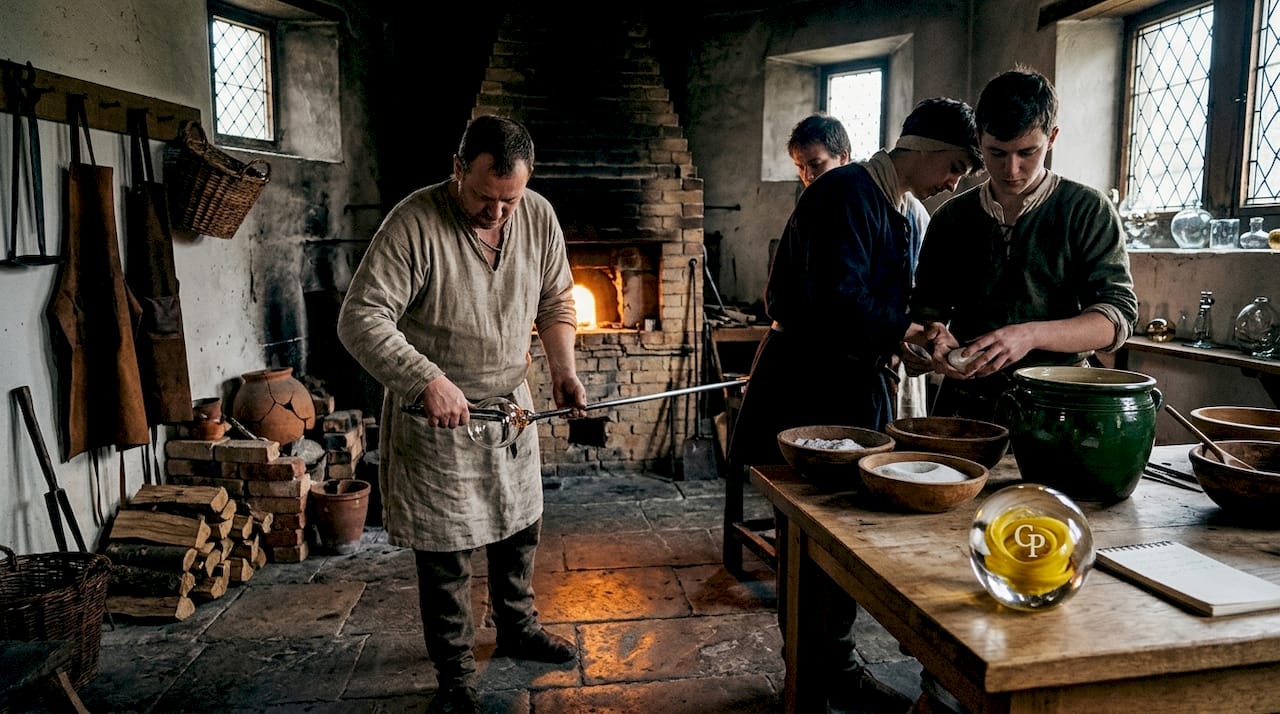
The Venetian contribution arrived in the 15th century through Angelo Barovier, a master glassmaker on the island of Murano who developed cristallo, a nearly colorless, highly refined glass that mimicked the appearance of natural rock crystal (quartz). Before Barovier’s breakthrough, decorative glass was typically tinted or cloudy. His formula opened the door to glass as a medium for light manipulation rather than just containment.
Pro Tip: When examining antique crystal pieces, distinguish true cut glass from pressed or molded glass by running a finger along the edges. Cut glass produces sharp, precise ridges; molded glass feels rounded and slightly soft at the edges.
Early crystal decorative art was not yet the chandelier-hung spectacle of later centuries. The first applications were goblets, reliquaries, and decorative vessels for aristocratic tables. These objects were valued precisely because they resembled natural rock crystal, which had long been associated with purity and divine light in medieval European culture. The transition from practical vessel to pure decorative object happened gradually as cutting and engraving techniques became more refined, and as patrons began commissioning pieces for display rather than use.
- Bohemian potash-lime glass: harder and more cuttable than Venetian soda glass
- Venetian cristallo: the first commercially refined colorless glass, developed circa 1450
- Rock crystal (natural quartz): the original luxury standard that glassmakers worked to replicate
- Early decorative forms: goblets, reliquaries, mirrors, and engraved vessels for aristocratic display
How did lead glass and English innovations shape the evolution of crystal decor?
The single most transformative event in the evolution of crystal decor was George Ravenscroft’s development of lead glass in England. Ravenscroft patented lead glass in the 1670s, producing a material with exceptional clarity and a noticeably higher refractive index than any previous glass formula. The addition of lead oxide solved a persistent problem called “crizzling,” a network of fine internal cracks that had plagued earlier attempts at clear glass. By 1696, English glasshouses were producing flint glass containing 30 to 35% lead oxide at commercial scale.
The practical advantages of lead glass over Bohemian or Venetian alternatives were significant:
- Greater optical clarity, producing a water-white appearance without tinting
- Higher density, which slowed the cutting wheel and allowed deeper, more precise facets
- Superior refractive index, meaning each facet bent and scattered light more dramatically
- Softer composition relative to hardness, making it easier to cut intricate patterns without shattering
- Longer working time in the furnace, enabling larger and more complex forms
The economic context matters here. England’s glass industry expanded rapidly after Ravenscroft’s patent, partly because continental glass was subject to heavy import duties. English lead crystal became both a domestic luxury and a major export commodity. Glasshouses in Stourbridge, Bristol, and London competed to produce the most brilliant tableware and decorative objects for the growing merchant and aristocratic classes.
| Property | Bohemian potash-lime glass | English lead crystal |
|---|---|---|
| Hardness | High, ideal for deep cutting | Moderate, allows intricate faceting |
| Refractive index | Good | Superior |
| Clarity | Clear | Water-white |
| Weight | Light | Noticeably heavy |
| Primary use | Engraved vessels, chandeliers | Tableware, prisms, chandeliers |
Pro Tip: The weight test remains one of the most reliable quick checks for lead crystal. Genuine lead crystal feels noticeably heavier than ordinary glass of the same size, because lead oxide significantly increases density.
One counterintuitive consequence of English taxation on glass by weight was that it pushed manufacturers toward thinner, more elaborately cut designs. Heavier glass cost more to sell, so craftsmen learned to achieve maximum visual impact with minimum material. This fiscal pressure accidentally produced some of the most elegant cut glass forms in history.
Why is Bohemian crystal considered a landmark in crystal decor history?
While English lead crystal dominated tableware, Bohemian glassmakers achieved international recognition by the 17th century for a hard, clear glass that was ideal for cutting and engraving. The distinction from Venetian and English glass was not just chemical but artistic. Bohemian craftsmen developed a decorative vocabulary that went far beyond cutting, incorporating engraving, enamelling, and gilding into a single object. A Bohemian goblet from the 18th century might carry wheel-engraved hunting scenes, gilded rims, and enamel floral panels, all on the same piece.
Bohemian crystal’s higher refractive index enabled it to bend and scatter light in ways that amplified candle and oil lamp illumination. This was not accidental. Glassmakers understood that deeper cuts and more angled facets produced more dramatic light effects, and they engineered their compositions accordingly. The result was a material that functioned as a genuine optical instrument in interior spaces.
The decorative techniques that defined Bohemian crystal decor included:
- Wheel engraving: using rotating stone or copper wheels to carve detailed pictorial scenes into the glass surface
- Copper-wheel cutting: creating geometric facets and patterns that caught and scattered light
- Enamel decoration: applying colored glass paste to the surface and firing it, reaching peak complexity in the 18th and 19th centuries with floral and historicist motifs
- Gilding: applying gold leaf or gold paint to rims, stems, and decorative borders
Export markets drove Bohemian production to extraordinary scale. By the 18th century, Bohemian crystal was reaching courts across Europe, the Ottoman Empire, and the Americas. Aristocratic patrons in France, Spain, and Russia ordered complete sets of engraved glassware as diplomatic gifts and status displays. The regional chemistry of Bohemian glass directly shaped this economic success: the potash-lime formula was harder than lead crystal, which meant it held engraved detail more crisply over time.
What role did chandeliers play in the cultural significance of crystal decor?
Chandeliers evolved from simple wooden frames to ornate lead crystal structures that acted simultaneously as light sources and luxurious display objects. This evolution tracks almost perfectly with the history of glassworks and the development of cut crystal technology. The earliest chandeliers were purely functional, holding candles above a room to distribute light. The transformation into crystal-hung spectacles happened when glassmakers realized that faceted drops and prisms could multiply a single candle’s output across an entire ceiling.
Cut lead crystal chandeliers became extremely popular from the mid-18th century through the early 1900s, establishing themselves as the defining status symbol of elite interiors. A chandelier in a palace or cathedral was not merely decorative. It was a demonstration of wealth, technical mastery, and access to the finest materials in Europe.
“Crystal’s optical effects are culturally significant, with facets engineered to multiply light and create visual richness rather than uniform brightness. This creates layered illumination, soft shadows, and shimmering highlights valued in both Baroque interiors and modern minimalist design.”
The cultural symbolism of the crystal chandelier operated on several levels at once:
- In aristocratic homes, a chandelier signaled access to expensive materials and skilled craftsmen
- In religious spaces, the scattering of light through crystal carried theological meaning, representing divine radiance
- In public theaters and opera houses, crystal chandeliers created the theatrical atmosphere that audiences expected from a premium cultural experience
- In diplomatic settings, gifting a crystal chandelier was a recognized gesture of political alliance and cultural prestige
The shift from candle and oil to electric lighting in the late 19th century changed crystal’s role fundamentally. Rather than amplifying weak light sources, crystal now refracted and decorated distributed electric illumination. This required different design strategies: fewer, larger prisms rather than dense clusters of small drops, and more open structures that allowed electric light to pass through rather than reflect off surfaces. Understanding how crystal affects lighting in a modern electric context is a different discipline from the candle-era calculations of Baroque craftsmen.
How did Swarovski’s precision cutting influence contemporary crystal decor?
The modern chapter of crystal decor history opens in 1895 in Wattens, Austria, where Daniel Swarovski founded his crystal cutting company. Swarovski invented an electric cutting machine that produced precise, consistent facets at a scale and accuracy no hand cutter could match. This single invention changed the economics and aesthetics of crystal production permanently. Where a skilled craftsman might cut a few dozen prisms in a day, Swarovski’s machines produced thousands with identical geometry.
The technical profile of Swarovski crystal differs from traditional lead crystal in ways that matter for collectors and designers:
- Traditional lead crystal contains 24 to 32% lead oxide, giving it weight and high refractive index
- Swarovski crystals historically contained about 32% lead oxide, producing exceptional brilliance
- Recent Swarovski formulas use lead-free compounds that maintain optical performance without the health and environmental concerns of lead
- The precision of machine cutting creates facet angles calculated to maximize light return, a property called “brilliance” in gemological terms
The influence of Swarovski on how crystal decor became popular in the 20th century cannot be overstated. By making high-brilliance crystal affordable and consistent, Swarovski moved crystal from aristocratic exclusivity toward broad decorative use. Fashion designers, jewelry makers, and interior decorators all gained access to a material that previously required either natural gemstones or expensive hand-cut glass. The crystal lighting benefits that Baroque craftsmen engineered by hand became reproducible at scale.
Pro Tip: When sourcing crystal for chandelier repair or new installations, verify whether pieces are genuine Swarovski or Bohemian crystal by checking for manufacturer markings. Swarovski pieces carry a swan logo on modern production; older pieces may be unmarked but identifiable by their precise facet geometry and exceptional clarity.
The lead-free shift also opened new markets. Residential decorators who had avoided lead crystal for safety reasons in homes with children now had access to optically equivalent alternatives. This expanded the audience for crystal decor significantly, contributing to its continued relevance in contemporary interior design.
Key takeaways
The history of crystal decor is fundamentally a history of light technology, where chemistry, craftsmanship, and cultural ambition combined to produce objects that shaped how humans experienced interior space for over five centuries.
| Point | Details |
|---|---|
| Crystal as lighting technology | Faceted crystal was engineered to multiply candlelight, making it functional before it was purely decorative. |
| Bohemian crystal’s optical edge | Its higher refractive index and hard composition made it the preferred material for chandeliers and engraved luxury goods. |
| Ravenscroft’s lead glass formula | English lead crystal, developed in the 1670s, set the optical standard for European crystal production for 200 years. |
| Chandeliers as cultural symbols | Crystal chandeliers signaled wealth, divine light, and political prestige in aristocratic, religious, and diplomatic spaces. |
| Swarovski’s mass precision | Electric cutting machines made high-brilliance crystal affordable and consistent, expanding crystal decor from palaces to modern homes. |
Why crystal decor deserves more credit as a scientific achievement
Most decorative arts writing treats crystal as a luxury material and stops there. That framing misses the more interesting story. For roughly 400 years, from the Baroque period through the invention of electric lighting, crystal was the most sophisticated light-management technology available to interior designers. The craftsmen who cut Bohemian prisms and assembled English lead crystal chandeliers were solving optical engineering problems without the vocabulary of optics. They knew, empirically, that a 45-degree facet angle returned more light than a 30-degree angle. They knew that deeper cuts produced more dramatic sparkle. They were doing applied physics with hand tools.
What I find genuinely underappreciated is how the shift to electric lighting changed crystal’s design logic almost overnight. Pre-electric crystal was optimized to amplify scarce light. Post-electric crystal had to be redesigned to work with abundant light without overwhelming a space. The craftsmen and designers who navigated that transition in the early 20th century deserve more recognition than they typically receive in decorative arts histories.
For collectors, the practical implication is that restoration choices matter more than most people realize. Over-polishing antique cut crystal reduces the intended sparkle by rounding the facet edges that create light return. A piece that looks cleaner after aggressive polishing may actually perform worse optically. The best conservation approach preserves original facet geometry even at the cost of some surface clarity.
Crystal decor’s continuing relevance in modern interiors is not nostalgia. It is a recognition that the physics of light refraction has not changed, and that the visual experience of layered, shimmering illumination remains one of the most effective ways to make a space feel alive.
— BCC
Explore authentic crystal prisms and decor at Crystalplace
Crystalplace has sourced authentic crystal decor directly from premium manufacturers since 1992, offering everything from Swarovski prisms to Bohemian crystal chandelier drops for both restoration and new installations. Whether you are repairing a Victorian chandelier or designing a contemporary interior that draws on centuries of crystal craftsmanship, the selection at Crystalplace covers the full range of historical styles and modern formulas. Every piece reflects the optical precision that defines genuine crystal decor. Browse the full collection of crystal prisms and hanging decor to find pieces that bring the history of this art form directly into your space. Free shipping applies to orders over $22 within the USA.
FAQ
What is the origin of crystal decor?
Crystal decor originated in medieval Bohemia and Renaissance Venice, where glassmakers developed clear, cuttable glass to replicate the appearance and optical properties of natural rock crystal (quartz). Angelo Barovier’s 15th-century cristallo formula was the first commercially refined colorless glass designed for decorative use.
What makes Bohemian crystal different from regular glass?
Bohemian crystal has a higher refractive index than ordinary glass, enabling it to bend and scatter light more dramatically. Its potash-lime composition is also harder than soda glass, making it ideal for deep wheel engraving and precise cutting.
Why were crystal chandeliers considered status symbols?
Cut lead crystal chandeliers became status symbols because they combined expensive materials, skilled craftsmanship, and functional brilliance in a single object. In aristocratic and religious interiors, they demonstrated wealth and access to Europe’s finest glassmaking traditions.
How did Swarovski change crystal decor production?
Swarovski’s 1895 electric cutting machine produced facets with a precision and consistency that hand cutting could not match, making high-brilliance crystal affordable at scale. This shifted crystal decor from exclusive aristocratic use to broad application in fashion, jewelry, and residential interiors.
What is the difference between lead crystal and lead-free crystal?
Lead crystal contains lead oxide (traditionally 24 to 32%), which increases density, clarity, and refractive index. Lead-free crystal uses alternative compounds such as barium oxide or zinc oxide to achieve comparable optical performance without the health and environmental concerns associated with lead content.
Recommended
- How Crystal Accents Transform Interiors: Design Impact – CrystalPlace
- Swarovski crystals: history, craft, and home impact – CrystalPlace
- Crystal accessories: elevate your space with light and elegance – CrystalPlace
- Elegant crystal ornaments: Stunning examples for home décor – CrystalPlace