

Learn to identify chandelier parts accurately, avoid common repair mistakes, and source authentic crystals. Expert guide to restoring brilliance safely.
Many homeowners believe chandelier crystals are universally interchangeable, leading to frustrating repair failures and wasted money. The truth is, each chandelier uses specific parts with unique sizes, cuts, and attachment methods. This guide equips you to identify chandelier parts accurately, understand their essential roles, and select authentic replacements that restore your chandelier’s brilliance and safety.
Key takeaways
| Point | Details |
|---|---|
| Part definitions matter | Canopy, chain, frame, arms, sockets, crystals, prisms, and finials each serve structural or decorative roles. |
| Material quality is critical | Authentic crystals like Swarovski provide superior sparkle and durability compared to imitation glass or plastic. |
| Avoid common mistakes | Incorrect part identification causes 37% of DIY repair failures, leading to mechanical and aesthetic damage. |
| Use a classification framework | Categorizing parts as structural, functional, or decorative simplifies selection and repair prioritization. |
| Source from trusted US suppliers | Buying from established American vendors prevents counterfeits and ensures proper fit and authenticity. |
Understanding the key parts of a chandelier
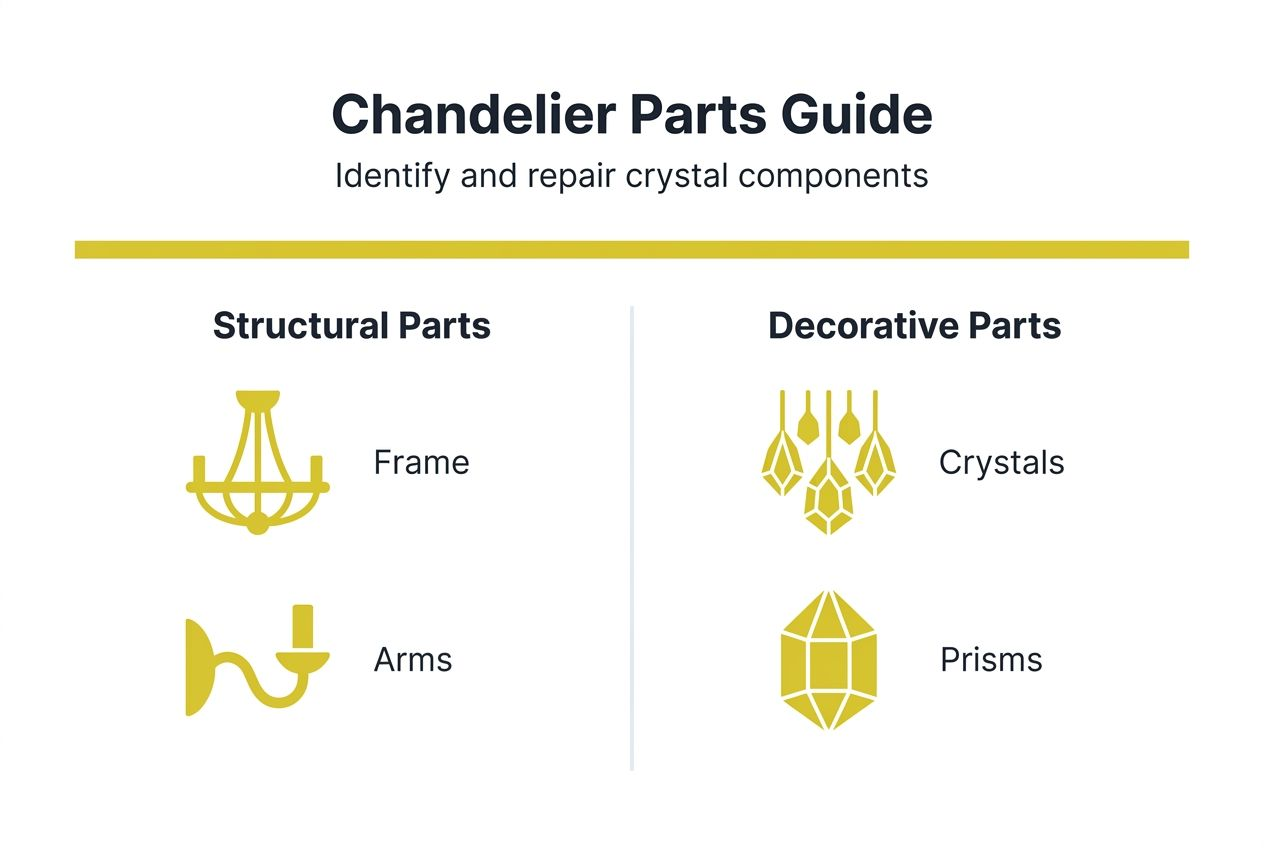
Chandelier parts work together to create both structural stability and visual elegance. Structural parts like frame and arms provide stability while decorative parts like crystals enhance visual appeal. Knowing each component helps you identify what needs repair or replacement.
Here are the main chandelier parts you’ll encounter:
- Canopy: The ceiling-mounted plate that covers electrical connections and anchors the chandelier securely to the ceiling structure.
- Chain or rod: Suspends the chandelier at the desired height while concealing electrical wiring from canopy to fixture body.
- Frame: The central structural skeleton that holds all other components together and distributes weight evenly.
- Arms: Branch outward from the frame to position light sockets and crystal strands for balanced illumination and design.
- Sockets: Hold light bulbs and provide electrical connections, determining both lighting capacity and bulb compatibility.
- Crystals and prisms: Decorative elements that refract light into rainbow spectrums, creating the signature chandelier sparkle.
- Finials: Decorative caps or ornaments at the bottom or top of the chandelier that complete the aesthetic and hide mechanical connections.
Understanding this chandelier parts checklist prevents confusion during repairs. Functional parts like sockets enable operation, while decorative crystals create visual impact.
Material quality and authenticity in chandelier parts
Material composition directly affects how your chandelier performs and appears. Using authentic Swarovski crystals enhances sparkle and light dispersion by up to 25%, outperforming imitations. The difference comes down to lead content and precision manufacturing.
Authentic crystals contain lead oxide, which increases refractive index and creates brilliant rainbow effects. Machine-cut facets on genuine crystals are precise and consistent, allowing light to bounce at optimal angles. Imitation glass or plastic crystals lack this precision, resulting in dull, inconsistent sparkle.
Pro Tip: Hold a crystal up to natural light. Authentic crystals produce sharp, colorful prisms, while imitations create washed-out or blurry reflections.
Durability also varies dramatically between materials:
| Material Type | Lead Content | Clarity | Durability | Light Refraction |
|---|---|---|---|---|
| Authentic Swarovski | 30-32% | Flawless | Decades | Excellent |
| Quality lead crystal | 24-30% | High | 15-20 years | Very good |
| Glass imitations | 0% | Moderate | 5-10 years | Poor |
| Plastic replicas | 0% | Low | 2-5 years | Very poor |
Understanding what chandelier crystals are made of helps you avoid costly mistakes. Authentic materials preserve your chandelier’s value and appearance for generations, while imitations degrade quickly and diminish aesthetic appeal.

Using genuine parts also ensures proper weight distribution. Imitation materials often have different densities, potentially unbalancing your chandelier and stressing attachment points.
Common misconceptions and mistakes in chandelier part identification
The belief that all chandelier crystals fit any fixture causes significant problems. Incorrect part identification causes 37% of DIY chandelier repair failures and additional damage. Crystals vary in size, cut style, attachment hole diameter, and hanging method.
Here are the most frequent errors:
- Assuming universal fit: Crystals come in dozens of sizes and cuts. A 38mm prism won’t replace a 50mm one, even if shapes look similar.
- Ignoring attachment methods: Some crystals use octagon connectors, others use clips or pins. Mixing systems leads to loose parts that fall.
- Substituting materials: Replacing authentic crystals with plastic or glass imitations creates visual inconsistency and reduces overall brilliance.
- Misidentifying part function: Confusing decorative bobeches with functional drip pans can compromise both safety and aesthetics.
Measure existing parts carefully before ordering replacements. Use calipers for precision on hole diameters and overall dimensions. Check attachment points to understand connector requirements.
Pro Tip: Take clear photos of your chandelier from multiple angles before disassembly. These images serve as reference guides during reassembly and help suppliers recommend correct parts.
This chandelier crystals replacement guide walks through proper identification steps. Learning to replace chandelier crystals without guesswork saves time and prevents damage to your fixture.
Attachment errors also cause mechanical failures. Threading the wrong connector type can crack crystals or strip metal fittings, requiring additional repairs.
Conceptual framework for understanding chandelier parts
Organizing chandelier components into three categories simplifies repair decisions and part selection. A framework for chandelier parts categorizes components into structural, functional, and decorative, aiding selection and repair prioritization.
Structural parts form the skeleton:
- Frame, arms, and central column bear weight and maintain shape
- Canopy and mounting hardware secure the fixture to ceiling joists
- Chain or rod provides adjustable suspension while routing electrical wiring
Functional parts enable operation:
- Sockets hold bulbs and deliver electricity for illumination
- Wiring connects power source to individual lights safely
- Switches and dimmers control brightness levels
Decorative parts create visual appeal:
- Crystals and prisms refract light into colorful displays
- Finials add finishing touches and architectural interest
- Bobeches catch drips while enhancing candle-style aesthetics
| Category | Purpose | Examples | Replacement Priority |
|---|---|---|---|
| Structural | Support and stability | Frame, arms, canopy | High (safety critical) |
| Functional | Electrical operation | Sockets, wiring | High (needed for use) |
| Decorative | Visual enhancement | Crystals, finials | Medium (aesthetic) |
This mental model prevents confusion during repairs. If your chandelier doesn’t light, focus on functional parts. If sparkle diminishes, examine decorative crystals. This systematic approach speeds diagnosis and ensures you order correct replacement parts.
Understanding categories also helps budget repairs effectively. Structural issues require immediate attention for safety, while decorative upgrades can be phased over time.
Step-by-step guide to chandelier repair using specific parts
Successful chandelier repair requires methodical identification, sourcing, and installation of correct parts. Following correct repair procedures, including part compatibility checks and electrical safety, prevents hazards and ensures chandelier longevity.
Step 1: Identify the specific part
Examine function, location, and appearance. Is it structural, functional, or decorative? Note dimensions, attachment methods, and any manufacturer markings. Reference your chandelier parts checklist to confirm component names.
Step 2: Verify authenticity and compatibility
Match replacement parts to original specifications. Check material composition, dimensions, and connector types. Avoid substituting authentic crystals with imitations, as this degrades performance.
Step 3: Source from reputable suppliers
Buy from established US vendors specializing in chandelier parts. Verify product authenticity through certifications or brand authorization. Read customer reviews to confirm quality and fit accuracy.
Step 4: Follow safety protocols
Turn off power at the circuit breaker before working on electrical components. Use appropriate tools and wear safety glasses. For chandelier arm replacement parts, ensure proper weight support during installation.
Step 5: Install parts correctly
- Clean mounting surfaces before attaching new components
- Tighten connections securely without overtightening and cracking crystals
- Route wiring through proper channels to prevent pinching
- Align decorative elements symmetrically for balanced appearance
Step 6: Test functionality and stability
Restore power and verify all bulbs illuminate. Check that crystals hang level and secure. Gently shake the chandelier to confirm solid attachment and proper balance.
Pro Tip: Keep a small container to organize removed parts during disassembly. Label bags with part locations to simplify reassembly.
For chandelier column replacement parts, pay special attention to threading and alignment. Cross-threading damages components permanently. Use this chandelier replacement parts checklist to verify you have everything before starting work.
Where to source high-quality chandelier parts in the USA
Buying chandelier parts from trusted US suppliers ensures authenticity and proper fit. Overseas sellers frequently offer counterfeit crystals made from cheap glass or plastic that lack brilliance and durability. These imitations fade, yellow, or crack within months.
Benefits of purchasing from established American vendors include:
- Guaranteed authenticity: Certified genuine Swarovski and quality crystal brands
- Accurate specifications: Detailed dimensions, materials, and compatibility information
- Expert support: Knowledgeable staff who help identify correct parts for your chandelier
- Reliable shipping: Fast delivery within the continental US, often with tracking
- Easy returns: Hassle-free exchanges if parts don’t fit as expected
When selecting suppliers, look for these quality indicators:
- Long business history demonstrating reliability and customer satisfaction
- Direct relationships with crystal manufacturers like Swarovski
- Detailed product descriptions including measurements and materials
- Clear return policies protecting your purchase investment
- Responsive customer service available via phone or email
Crystal Place offers a wide selection of authentic chandelier prisms and replacement components backed by decades of expertise. Since 1991, they’ve provided genuine crystal products with free shipping on orders over $22.
Avoid marketplace sellers with vague product descriptions or suspiciously low prices. Authentic Swarovski crystals cost more than imitations because of superior materials and precision manufacturing. Bargain pricing usually signals counterfeit products.
Maintaining and enhancing chandelier part performance
Proper maintenance preserves sparkle and extends part lifespan significantly. Regular cleaning and inspection prevent buildup that dulls crystals and identify loose components before they fall.
Cleaning best practices:
- Use specialized crystal chandelier cleaning solutions, never harsh chemicals or abrasive cleaners
- Spray cleaners designed for crystals evaporate without leaving residue or dulling surfaces
- Wipe metal parts with soft microfiber cloths to prevent scratching finishes
- Clean crystals every 3-6 months depending on environmental dust levels
Inspection routine:
- Check crystal attachment points monthly for looseness or wear
- Examine metal arms and frame for corrosion or stress cracks
- Test socket connections to ensure firm bulb seating
- Verify chain or rod attachments remain secure to ceiling canopy
Pro Tip: Create a maintenance log noting cleaning dates and any repairs performed. This history helps track part lifespans and plan future replacements.
Preserve structural integrity by addressing small issues promptly. A loose crystal today becomes a fallen crystal tomorrow, potentially damaging other components. Tighten connections gently using appropriate tools sized for delicate crystal fittings.
Learn about the best cleaner for chandeliers to maintain brilliance safely. Follow proven crystal chandelier maintenance practices to retain shine and prevent costly repairs.
Avoid these damaging practices:
- Household glass cleaners containing ammonia that cloud crystal surfaces
- Paper towels or rough cloths that scratch finishes
- Excessive force when tightening connections that cracks crystals
- Water submersion of electrical components creating shock hazards
Proper care keeps your chandelier sparkling beautifully for decades while minimizing repair frequency and expense.
Enhance your chandelier with authentic crystal parts from Crystal Place
You now understand chandelier parts, their functions, and how to repair them correctly. Ready to restore your chandelier’s brilliance with genuine components? Crystal Place offers authentic, high-quality chandelier parts designed for perfect fit and lasting beauty.

Shop certified crystal prisms for chandeliers, precision arms, decorative finials, and all essential replacement components. Each product includes detailed specifications and compatibility guidance to eliminate guesswork. Access expert advice and comprehensive guides like this chandelier replacement parts checklist to simplify your repair process. With over three decades of experience and direct sourcing from trusted manufacturers, Crystal Place ensures your chandelier receives only authentic, premium-quality parts.
Frequently asked questions about chandelier parts
What is a chandelier part?
A chandelier part is any component that contributes to the fixture’s structure, function, or appearance. Parts include canopy, chain, frame, arms, sockets, wiring, crystals, prisms, and finials. Each serves specific roles in supporting weight, enabling illumination, or creating decorative sparkle.
How do I identify which chandelier part I need?
Examine the part’s location, function, and appearance carefully. Measure dimensions precisely using calipers. Note attachment methods like clips, pins, or threaded connectors. Compare your findings to manufacturer documentation or consult specialized suppliers who can identify parts from photos.
Can I replace chandelier crystals with any similar-looking ones?
No, crystals must match in size, cut style, hole diameter, and attachment method. Using incorrect replacements creates visual inconsistency and may not fit properly. Always verify exact specifications before purchasing replacement crystals to ensure proper fit and matching sparkle.
What’s the difference between authentic and imitation chandelier crystals?
Authentic crystals contain lead oxide for superior light refraction and are precision-cut for consistent brilliance. Imitations use regular glass or plastic with lower refractive indexes and imprecise cuts. Genuine crystals produce vibrant rainbow prisms and last decades, while imitations appear dull and degrade quickly.
Where should I buy replacement chandelier parts?
Purchase from established US suppliers specializing in authentic chandelier components. Look for vendors with long business histories, direct manufacturer relationships, detailed product specifications, and responsive customer service. Avoid overseas sellers offering suspiciously low prices, as these typically sell counterfeit or incompatible parts.
Recommended
- Chandelier Parts Checklist: 7 Essential Parts for Perfect Repair – CrystalPlace
- Crystal Chandelier Repair 2026: 95% Satisfaction Guide – CrystalPlace
- Replace Chandelier Crystals Without Guesswork – CrystalPlace
- How to Repair Chandelier Crystals for Flawless Shine – CrystalPlace