

Discover what a suncatcher is, its types, benefits, and how it transforms light into stunning displays. Brighten up your space today!
TL;DR:
- A suncatcher is a portable ornament that refracts sunlight into colorful rainbow patterns in a room. High-quality crystal produces sharper, more vivid rainbows than acrylic, making it preferable for visual effects. They have historical roots in spiritual and artistic practices dating back to 3500 BCE.
A suncatcher is a decorative ornament, typically made of glass, crystal, or acrylic, that captures sunlight and refracts it into colorful patterns across a room. The prism effect at the heart of every suncatcher turns ordinary white light into a shifting rainbow display. Crystalplace has offered authentic crystal suncatchers since 1992, and the difference between a real crystal piece and a plastic substitute is immediately visible in the quality of light it throws. Understanding what is a suncatcher means understanding both its art and its physics.
What is a suncatcher and how does it work?
A suncatcher works by bending and dispersing white light through a transparent or translucent material, splitting it into its component colors. This is the same principle behind a glass prism in a physics classroom. When sunlight enters a faceted crystal or glass piece at the right angle, each wavelength of light bends at a slightly different degree, producing the full visible spectrum. The result is a dynamic, moving display of color that shifts as the sun moves across the sky.
The technical term for this process is light refraction, and it is the defining function of every suncatcher. The quality of refraction depends directly on the material. Leaded crystal and genuine Swarovski crystal produce sharper, more vivid rainbows than acrylic or low-grade glass. That gap in quality is why decorators who care about the visual result consistently choose real crystal over budget substitutes.
What are the different types of suncatchers?
Suncatcher materials include glass, crystal, acrylic, and beads, and each produces a different quality of light interaction. Glass offers vivid refraction and a classic look. Acrylic is lightweight and budget friendly but delivers softer, less defined rainbows. Beads add color and texture variety, making them popular for DIY suncatcher crafts. Genuine crystal, especially leaded or Swarovski-grade, produces the sharpest and most brilliant light effects of any material.

Design formats also vary widely. A single faceted prism hanging from a suction cup is the simplest form. Multi-piece bead cascades create layered light effects. Stained glass suncatchers use colored glass panels to filter and tint light rather than purely refract it.
| Feature | Crystal or glass suncatcher | Stained glass panel |
|---|---|---|
| Light interaction | Refracts and disperses into rainbows | Filters and tints light |
| Mobility | Portable, easy to reposition | Fixed installation |
| Assembly | Single or few pieces | Multi-piece, permanent |
| Cost range | Often under $20 for quality pieces | Typically higher, installation required |
| Best use | Window ornament, light play | Architectural feature |
Suncatchers differ from stained glass in one critical way: they are modular and movable, while stained glass is a fixed, multi-piece assembly. That portability is a practical advantage. You can rehang a suncatcher in a different window as seasons change and the sun’s path shifts. Stained glass stays where it is installed.
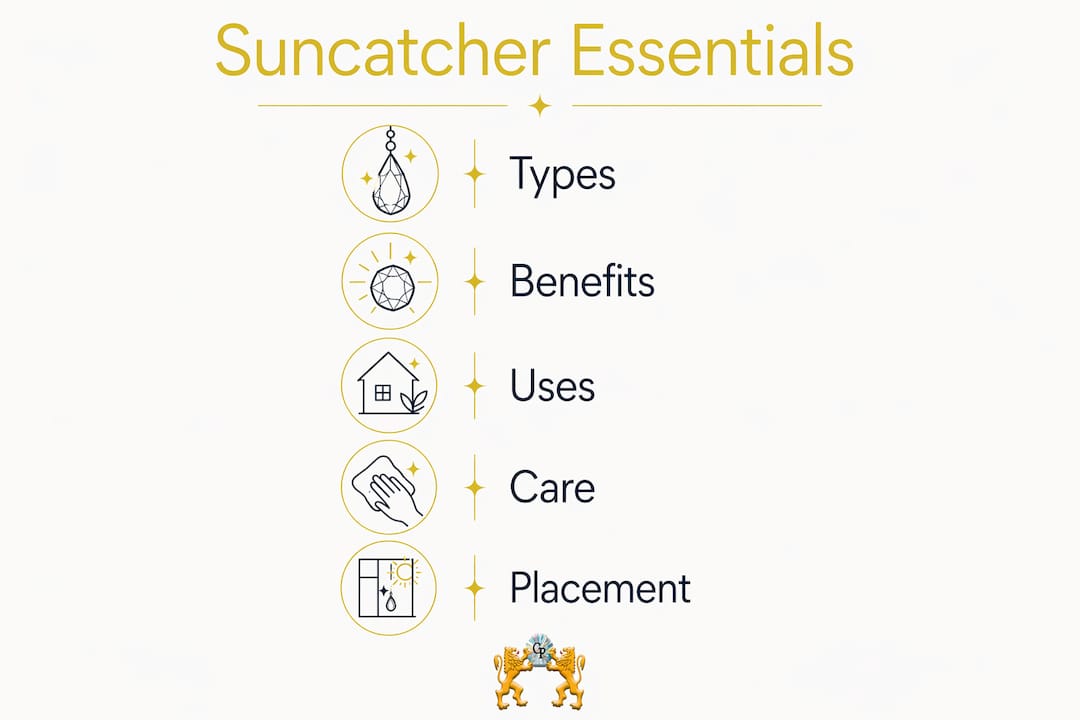
- Faceted crystal prisms: Produce the sharpest rainbow effects; ideal for living rooms and home offices.
- Bead cascades: Combine color and texture; popular for children’s rooms and craft projects.
- Stained glass suncatchers: Emphasize color and imagery over light dispersion; suited to decorative focal points.
- Acrylic suncatchers: Lightweight and affordable; good for outdoor use where breakage is a concern.
Pro Tip: If you want the most vivid rainbow display, choose a faceted leaded crystal or Swarovski prism over acrylic. The difference in light quality is not subtle.
Where do suncatchers come from historically?
Suncatcher origins trace back to 3500 BCE, when ancient civilizations used polished stones and crystals deliberately to catch and redirect sunlight. These were not purely decorative. Light-reflecting objects carried spiritual weight across many cultures, used in rituals to invite positive energy or mark sacred spaces.
The cultural significance of suncatchers spans several traditions:
- Ancient Egypt and Mesopotamia: Polished stones and gems were placed to catch sunlight in temples and burial sites.
- Native American traditions: Crystals and reflective objects were used in ceremonies to connect with natural forces.
- Feng Shui: Suncatchers attract positive energy and are placed in windows to harmonize the flow of chi within a living space.
- Medieval Europe: Stained glass in cathedrals served a related but distinct purpose, using colored glass to tell religious stories through filtered light rather than to cast rainbows.
The distinction between medieval stained glass and the suncatcher tradition is worth noting. Stained glass was monumental, permanent, and symbolic. Suncatchers were personal, portable, and experiential. That difference in scale and intent has carried forward into modern decorative arts. Today, suncatchers sit at the intersection of art, science, and mindfulness, a small object that connects a room to the movement of the sun throughout the day.
What are the benefits of suncatchers for your home?
Suncatchers improve mood through light exposure, which is linked to serotonin production in the brain. Natural light is a well-established mood regulator, and a suncatcher amplifies its presence in a room by spreading it across walls and ceilings in colorful patterns. The effect is most noticeable in rooms that receive limited direct sunlight, where a single crystal prism can transform a dull corner into a lively, light-filled space.
The benefits extend beyond mood. In Feng Shui practice, suncatchers placed in east or southeast-facing windows are believed to activate positive energy flows. Interior designers use them to add visual interest without permanent changes to a space. A suncatcher costs far less than a lighting fixture and requires no installation beyond a suction cup or small hook.
Placement determines how much benefit you actually get. The key factors are:
- Window orientation: South-facing windows in the Northern Hemisphere receive the most direct sunlight year-round. East-facing windows are best for morning light.
- Height in the window: Hanging a suncatcher at mid-window height typically produces the widest spread of refracted light across the room.
- Distance from the glass: Keeping the suncatcher within a few inches of the window surface maximizes the angle of incoming light.
- Seasonal adjustment: The sun’s angle changes with the seasons. A position that works well in summer may need adjustment in winter.
The 42-degree incident angle is the physics benchmark for optimal rainbow formation. At that angle, light entering a prism produces the most complete and vivid spectrum. You cannot set this angle manually, but you can approximate it by choosing south or southwest-facing windows during afternoon hours.
Pro Tip: Avoid hanging suncatchers in indirect light or more than 12 inches from the window. The visual impact drops sharply when direct sunlight cannot reach the crystal.
Suncatchers also encourage mindfulness by drawing attention to the changing quality of natural light throughout the day. Chloe Powell of Revivalist notes that watching a suncatcher’s rainbows shift across a wall creates small, daily moments of joy that are easy to overlook but genuinely meaningful. That psychological benefit costs nothing extra once the suncatcher is in place.
How to choose, hang, and care for a suncatcher
Choosing the right suncatcher starts with the material. Crystal and glass suncatchers deliver the sharpest light effects and the longest lifespan. Acrylic works for outdoor use or children’s spaces where durability matters more than optical quality. Beaded designs suit decorative layering and DIY suncatcher crafts projects.
Hanging a suncatcher correctly takes three minutes and makes a significant difference in performance:
- Use a suction cup hook rated for the weight of the piece, pressed firmly against clean glass.
- Position the suncatcher so it hangs freely without touching the window frame or glass.
- Check that the piece can rotate slightly in air movement. Rotation spreads the rainbow effect across a wider area.
- For heavier crystal pieces, use a small adhesive hook on the window frame rather than a suction cup on the glass.
Cleaning is straightforward but regular maintenance preserves brilliance. Dust and fingerprints reduce the clarity of refraction noticeably. Wipe crystal and glass suncatchers with a soft, lint-free cloth dampened with water or a mild glass cleaner. Avoid abrasive materials that scratch the surface. Beaded suncatchers can be gently rinsed and air dried. Acrylic pieces should be cleaned with a plastic-safe cleaner to prevent micro-scratching.
For readers interested in suncatcher DIY projects, the simplest approach uses clear glass beads or faceted acrylic crystals threaded on monofilament line and hung from a wooden dowel. The result captures light effectively and gives you full control over color and length. Crystalplace’s Swarovski prism suncatchers show what the premium end of this format looks like, which is useful as a design reference even if you are building your own.
Pro Tip: Clean your suncatcher every two to three weeks during high-use seasons. A cloudy crystal produces a cloudy rainbow.
Key Takeaways
A suncatcher is a portable, light-refracting ornament that transforms direct sunlight into colorful displays, with crystal and glass delivering the sharpest effects and the greatest mood and aesthetic benefits.
| Point | Details |
|---|---|
| Core function | Suncatchers refract sunlight into rainbows using the prism effect of glass or crystal. |
| Best material | Leaded crystal and Swarovski-grade glass produce the sharpest, most vivid light effects. |
| Optimal placement | South or southwest-facing windows during afternoon hours maximize rainbow formation. |
| Cultural roots | Suncatcher use dates to 3500 BCE, with spiritual and artistic applications across many cultures. |
| Care routine | Clean every two to three weeks with a soft cloth to maintain full optical clarity. |
Why suncatchers deserve more credit than they get
Most people treat suncatchers as a novelty, something pretty to hang in a window and forget about. That undersells what they actually do. A well-placed crystal prism does not just look nice. It changes the character of a room in a way that no paint color or furniture arrangement can replicate. The light moves. It responds to the time of day, the season, and the weather. That responsiveness is rare in home decor.
I have watched people walk into a room with a quality crystal suncatcher in the window and stop mid-conversation to look at the wall. That reaction is not about the object itself. It is about what the object does to the space around it. A $15 crystal prism from Crystalplace can produce that effect just as reliably as a $200 art piece, which makes suncatchers one of the most undervalued tools in decorative arts.
The mindfulness angle is real too. Paying attention to where the rainbows land in the morning, noticing how they shift by noon, is a small but genuine act of presence. You do not need a meditation practice to benefit from that. You just need a sunny window and a piece of real crystal.
— BCC
Crystalplace’s crystal suncatcher collection
Crystalplace has sourced authentic crystal prisms and suncatchers since 1992, and the range covers everything from entry-level glass pieces to premium Swarovski crystal ornaments. Real crystal suncatchers under $20 are available, making it easy to brighten your home without a large investment.
Whether you want a single faceted prism for a bedroom window or a set of three Swarovski hanging crystals for a living room display, Crystalplace ships free on orders over $22 within the USA. The full range of crystal prisms and suncatchers is available on the site, with options for every window size, style preference, and budget. Authentic crystal makes a visible difference. The collection shows exactly why.
FAQ
What is a suncatcher used for?
A suncatcher is used to refract sunlight into colorful rainbow patterns inside a room. It also serves decorative, spiritual, and mood-enhancing purposes in home decor and Feng Shui practice.
What are suncatchers made of?
Suncatchers are made from glass, crystal, acrylic, or beads. Crystal and glass produce the sharpest light effects, while acrylic offers a more affordable and durable option.
Where should you hang a suncatcher?
Hang a suncatcher in a south or southwest-facing window to maximize direct sunlight exposure. Position it close to the glass and allow it to rotate freely for the widest spread of refracted light.
How do suncatchers create rainbows?
Suncatchers create rainbows by bending white light through a prism or faceted crystal, splitting it into its component colors. The 42-degree incident angle produces the most vivid and complete spectrum.
Are suncatchers the same as stained glass?
Suncatchers and stained glass are not the same. Suncatchers are portable, single or few-piece ornaments that refract light dynamically, while stained glass is a fixed, multi-piece installation that filters and tints light.
Recommended
- Inspiring examples of crystal suncatchers for elegant spaces – CrystalPlace
- Brighten Up Your Home with Crystal Place’s Stunning Suncatchers – CrystalPlace
- Crystal Suncatcher Benefits: Transform Light and Mood at Home – CrystalPlace
- What Is a Crystal Suncatcher? How Rainbows Transform Interiors – CrystalPlace