

Discover what crystal craftsmanship is and its significance. Learn how artisans create stunning pieces that transform your space with brilliance.
TL;DR:
- Crystal craftsmanship involves transforming raw crystal into decorative and functional objects through skilled cutting, shaping, and polishing. It relies on materials like 24% lead oxide crystal for brilliance, weight, and workability, with traditional techniques emphasizing hand craftsmanship over machine production. Understanding these standards enhances appreciation, enabling discerning selection of authentic, high-quality crystal pieces.
Crystal craftsmanship is the art of transforming raw crystal material into finely detailed decorative and functional objects through cutting, shaping, engraving, and polishing. It is not simply glassmaking. The craft relies on specific materials, most notably 24% lead oxide crystal, to achieve the weight, brilliance, and workability that define true artisan quality. Brands like Waterford, Bohemian crystal houses, and British manufacturers have shaped this tradition across centuries. Whether you collect crystal prisms, repair chandeliers, or simply love the way light moves through a well-cut piece, understanding what crystal craftsmanship means changes how you see every object.
What materials define quality crystal craftsmanship?
The foundation of quality crystal craftsmanship is material composition. Genuine lead crystal contains at least 24% lead oxide, a standard known as 24 PbO. That threshold is not arbitrary. Lead oxide increases the refractive index of the glass, which means light bends more sharply as it passes through, producing the signature sparkle collectors recognize immediately.
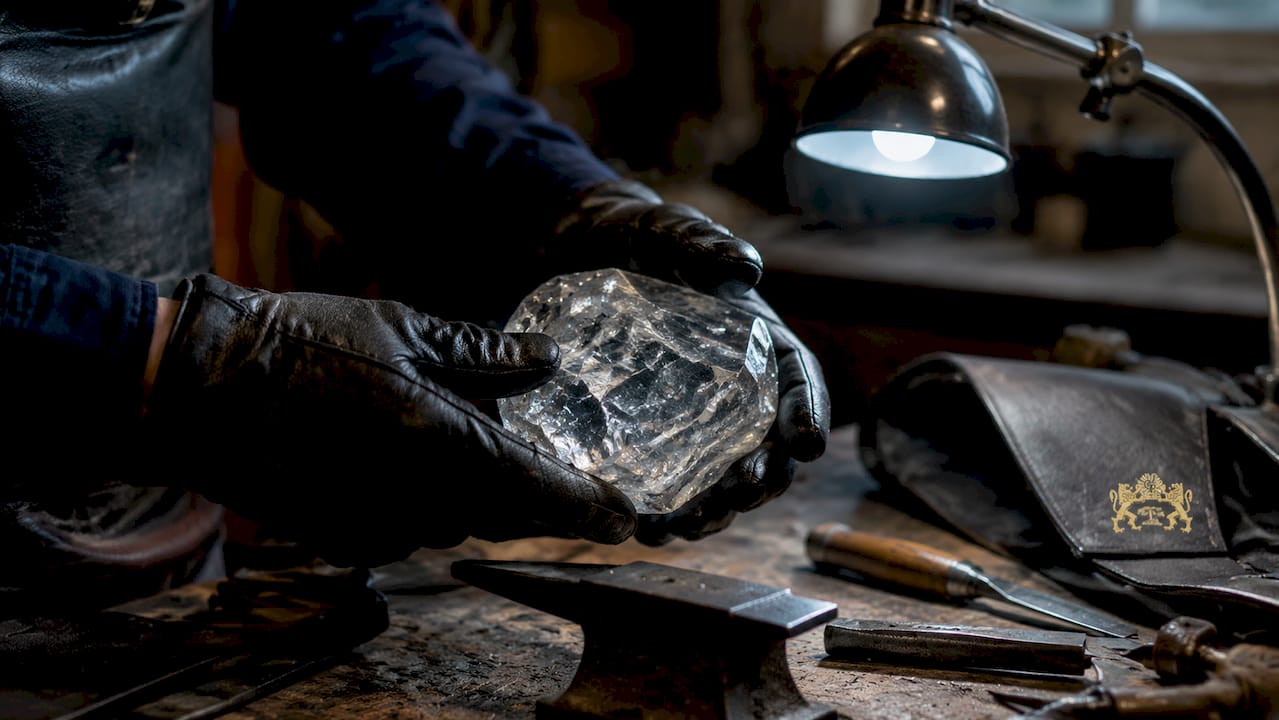
Lead oxide also makes the material softer and more workable than ordinary glass. Artisans can cut deeper grooves, engrave finer details, and achieve sharper facets without the material fracturing. The result is a piece with tactile density, acoustic resonance, and optical brilliance that ordinary glass simply cannot replicate. When you tap a lead crystal glass and hear a sustained ring, that sound comes directly from the mineral composition.
The difference between lead crystal and standard glass is measurable and visible. Here is a quick comparison:
| Property | Lead Crystal (24 PbO) | Ordinary Glass |
|---|---|---|
| Lead oxide content | 24% minimum | None |
| Refractive index | Higher (more sparkle) | Lower |
| Weight | Noticeably heavier | Lighter |
| Workability for cutting | Excellent | Limited |
| Acoustic resonance | Clear, sustained ring | Dull thud |
Modern manufacturers have also developed lead-free crystal formulas using barium oxide or titanium oxide as substitutes. These alternatives meet environmental regulations while preserving much of the brilliance. However, most serious collectors and artisans still regard 24 PbO as the benchmark for crystal vs. glass quality.
Pro Tip: When shopping for crystal prisms or chandelier parts, look for the 24 PbO designation on product listings. It tells you the piece was made to the genuine lead crystal standard, not just marketed as crystal.
How are traditional crystal crafting techniques performed?
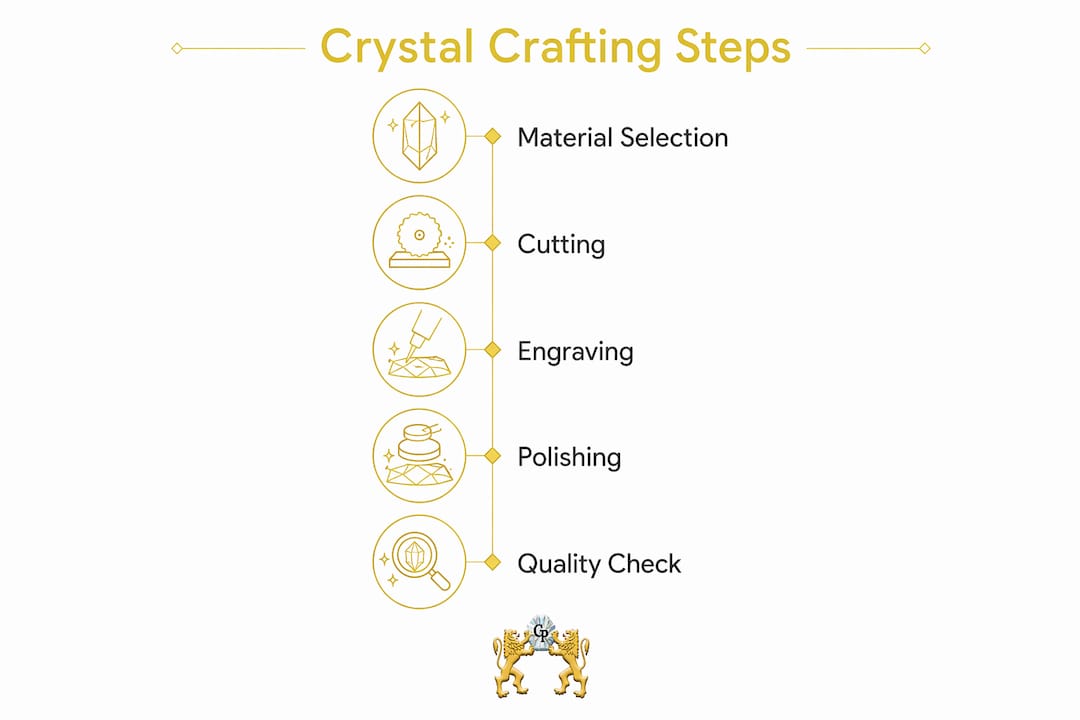
Traditional crystal crafting follows a sequence of steps that each require a distinct skill set. The process from raw material to finished piece typically takes about two weeks per handmade item, with labor accounting for roughly 60% of total production cost. That figure alone explains why artisan crystal commands premium prices.
The core steps in traditional crystal crafting are:
- Melting and gathering. Raw materials including silica, lead oxide, and potash are melted in a furnace at temperatures above 2,300°F. The glassblower gathers molten crystal on the end of a blowpipe.
- Blowing and shaping. The artisan blows air through the pipe while rotating it continuously. This shapes the molten crystal into the desired form. Skilled glassblowers control wall thickness and symmetry through breath pressure and rotation speed alone.
- Annealing. The shaped piece moves into a cooling oven called a lehr. Controlled slow cooling removes internal stress from the crystal. Skipping this step causes cracking.
- Cutting. Once cooled, the piece goes to a cutter who uses diamond-tipped or stone wheels to carve facets, grooves, and patterns into the surface. Bohemian crystal cutting uses intentionally sharp facets to control light refraction, treating each cut as part of an optical system rather than pure decoration.
- Polishing. Two methods exist. Wheel polishing uses progressively finer abrasive wheels to smooth cut surfaces. Acid polishing immerses the piece in an acid bath at 50°C to achieve a high-gloss finish, which is especially effective on complex, intricate cuts where a wheel cannot reach.
- Inspection and finishing. Each piece is checked for clarity, symmetry, and surface quality before leaving the workshop.
Modern machine production compresses several of these steps and removes the human variable. Machines can press or mold crystal into shape without blowing, and automated cutting wheels follow programmed patterns. The output is consistent but lacks the depth of character that hand processes create.
Pro Tip: If you are learning to identify handmade crystal, hold the piece up to a light source and look at the wall thickness. Hand-blown pieces show slight variation across the surface. Machine-made pieces are perfectly uniform.
Handmade vs. machine-made crystal: what is the real difference?
The gap between handmade and machine-made crystal goes well beyond price. Machine-made crystal maintains a tolerance of 0.05mm or less, meaning every piece in a production run is nearly identical. That consistency is useful for replacement parts and large-scale chandelier assembly, where uniformity matters.
Handmade crystal tells a different story. Hand-blown pieces show wall thickness variations of up to 3mm and may contain tiny air bubbles trapped during the blowing process. These are not flaws. These traits add visual depth and tactile richness that machine production eliminates entirely. A collector holding two crystal prisms side by side can often feel the difference before seeing it.
The price gap reflects this distinction directly. Handmade artisan crystal can command up to 40 times the price of comparable machine-made pieces. That multiplier accounts for the two-week production cycle, the skill of the artisan, and the cultural value attached to objects made by human hands. As one principle in the craftsmanship world holds, how and where a product is made upholds its prestige and uniqueness in ways that no machine can replicate.
For craft enthusiasts, this distinction matters practically. If you are restoring a vintage chandelier, you may want machine-made replacements for consistency. If you are building a collection or selecting a statement piece, handmade crystal carries an authenticity that shows up in every reflection. Crystalplace offers a useful breakdown of how these differences appear in real products when comparing artisanal and machine-made options.
How has history shaped modern crystal craftsmanship?
The history of crystal craftsmanship is the history of controlled light. Every major tradition in the craft developed around the question of how to make crystal interact with light in more complex and beautiful ways.
Key milestones that still influence the craft today include:
- 1674: George Ravenscroft’s lead crystal formula. The British glassmaker Ravenscroft developed the first stable lead crystal formula in England, replacing the potash-lime glass used in Venice. His formula produced a heavier, more workable material that could be cut deeply without shattering. This discovery launched the British tradition of cut crystal.
- 18th and 19th century Bohemia. Bohemian glassmakers in what is now the Czech Republic developed their own cutting and engraving traditions, focusing on sharp geometric facets and elaborate surface patterns. Bohemian crystal facets are designed as an optical system, with each surface calculated to bend, split, and reflect light in multiple directions simultaneously.
- Waterford Crystal and Irish tradition. Waterford Crystal, founded in Ireland in 1783, became the defining example of the British and Irish cut crystal tradition. Waterford’s skilled hand-cutting and polishing methods set a standard that shaped collector expectations worldwide and continues to influence artisan values today.
- 20th century industrialization. Machine production made crystal accessible to a broader market but also created a clear divide between mass-market and artisan pieces. This divide increased the cultural and monetary value of handmade work.
- Contemporary crystal carving. Modern crystal sculptors work with natural crystal minerals as well as manufactured glass crystal. Successful crystal carving requires artistic vision that respects the physical limitations of each crystal type to avoid waste and cracking. The skill set combines geology, sculpture, and optical design.
The history of crystal decor from Ravenscroft to modern chandelier design shows a consistent thread: every era’s best craftspeople pushed the material to its optical and structural limits.
Key takeaways
Crystal craftsmanship is defined by material composition, artisan technique, and historical tradition working together to produce objects with optical and tactile qualities that machine production cannot fully replicate.
| Point | Details |
|---|---|
| Material composition matters | Genuine lead crystal requires at least 24% lead oxide for superior brilliance and workability. |
| Technique defines quality | Traditional crafting involves six distinct steps from melting to polishing, each requiring specialized skill. |
| Handmade carries a premium | Artisan crystal can cost up to 40 times more than machine-made pieces due to labor intensity and authenticity. |
| History informs value | Traditions from Ravenscroft, Bohemia, and Waterford still shape artisan standards and collector expectations today. |
| Facets are optical tools | Each cut facet is designed to control light refraction, not simply to decorate the surface. |
Why knowing the craft changes everything you see
Most people look at a crystal prism and see something pretty. After fifteen years of writing about decorative arts and material culture, I see something different. I see a record of decisions: what mineral ratio the maker chose, which cutting wheel they used, how long the piece spent in the acid bath, and whether a human hand or a machine program made the final call.
That shift in perspective is not academic. It changes what you buy, what you keep, and what you pay. I have watched collectors pass over flawless machine-made pieces to pay serious money for a hand-blown prism with a visible air bubble near the base. The bubble is not a defect to them. It is evidence that a person made this object, and that evidence has real monetary and emotional weight.
The balance between tradition and modern production is genuinely interesting right now. Lead-free formulas are improving every year, and some contemporary artisans are producing work that rivals 24 PbO pieces in optical quality. At the same time, the market for verified handmade crystal is growing, not shrinking, because machine production has made perfect uniformity common and human variation rare.
My honest recommendation for any craft enthusiast: learn to read the object before you read the label. Wall thickness variation, the sound of a tap, the depth of a cut groove, the slight asymmetry in a facet pattern. These are the signatures of real craftsmanship, and they tell you more than any marketing copy will.
— BCC
Explore authentic crystal at Crystalplace
Crystalplace has sourced authentic crystal products directly from verified manufacturers since 1992. The collection includes Swarovski crystal prisms, chandelier crystals, suncatchers, and decorative hanging crystals, all selected for material quality and craftsmanship pedigree.
Whether you are restoring a vintage chandelier, building a collection, or adding light and brilliance to a room, Crystalplace carries pieces that reflect genuine artisan standards. Browse the full selection of crystal prisms and decor to find options that match your project and your eye for quality. Free shipping applies to orders over $22 within the USA.
FAQ
What does crystal craftsmanship mean exactly?
Crystal craftsmanship is the skilled practice of cutting, shaping, polishing, and engraving crystal materials to create decorative or functional objects with high optical brilliance. It combines material science, artisan technique, and design tradition into a single discipline.
What is the 24 PbO standard in crystal?
The 24 PbO standard means a crystal product contains at least 24% lead oxide by weight. This threshold defines genuine lead crystal and determines its superior refractive index, workability, and acoustic resonance compared to ordinary glass.
How can you tell handmade crystal from machine-made crystal?
Handmade crystal shows slight variations in wall thickness, minor air bubbles, and small asymmetries in cut patterns. Machine-made crystal maintains tolerances of 0.05mm or less, producing perfectly uniform pieces with no natural variation.
What is crystal engraving and how does it differ from cutting?
Crystal cutting uses wheels to carve geometric facets and grooves into the surface, while crystal engraving uses smaller tools to create detailed pictorial or decorative designs. Both techniques require the workability that lead crystal provides.
Why is bohemian crystal considered a benchmark for craftsmanship?
Bohemian crystal is recognized for its precise facet geometry, which treats each cut surface as part of an optical system designed to control light refraction. This tradition, developed over centuries in the Czech region, produces layered reflections that define the highest standard in decorative crystal.
Recommended
- What Is Crystal Repair? a Collector’s Practical Guide – CrystalPlace
- The Role of Crystal Beads in Design for Decorators – CrystalPlace
- Why Use Crystal Beads for Your Craft Projects – CrystalPlace
- How to Identify Real Crystal: A Buyer’s Guide – CrystalPlace