

Discover why use real crystals for home décor and lighting. Experience the unmatched brilliance and ambience that only authentic crystals provide.
TL;DR:
- Real crystals contain at least 24% lead oxide, giving them superior light refraction and brilliance. They feel heavier, emit a resonant ring when tapped, and produce vivid rainbow dispersions. Regular cleaning and proper care preserve their optical quality and long-lasting beauty.
Real crystals are glass compositions containing at least 24% lead oxide by weight, a formula that produces the signature brilliance, weight, and light refraction that standard glass cannot replicate. For homeowners and interior enthusiasts, that distinction is the entire point. Why use real crystals instead of cheaper alternatives? Because the optical and physical differences show up immediately in how a room looks and feels. Authentic crystal splits white light into full rainbow spectrums, creates soft ambient glow, and carries a density and craftsmanship that synthetic materials simply cannot match. Crystalplace has sourced authentic crystal products since 1991, and the difference between real and imitation is visible the moment light hits the piece.
What physical and optical properties make real crystals superior?
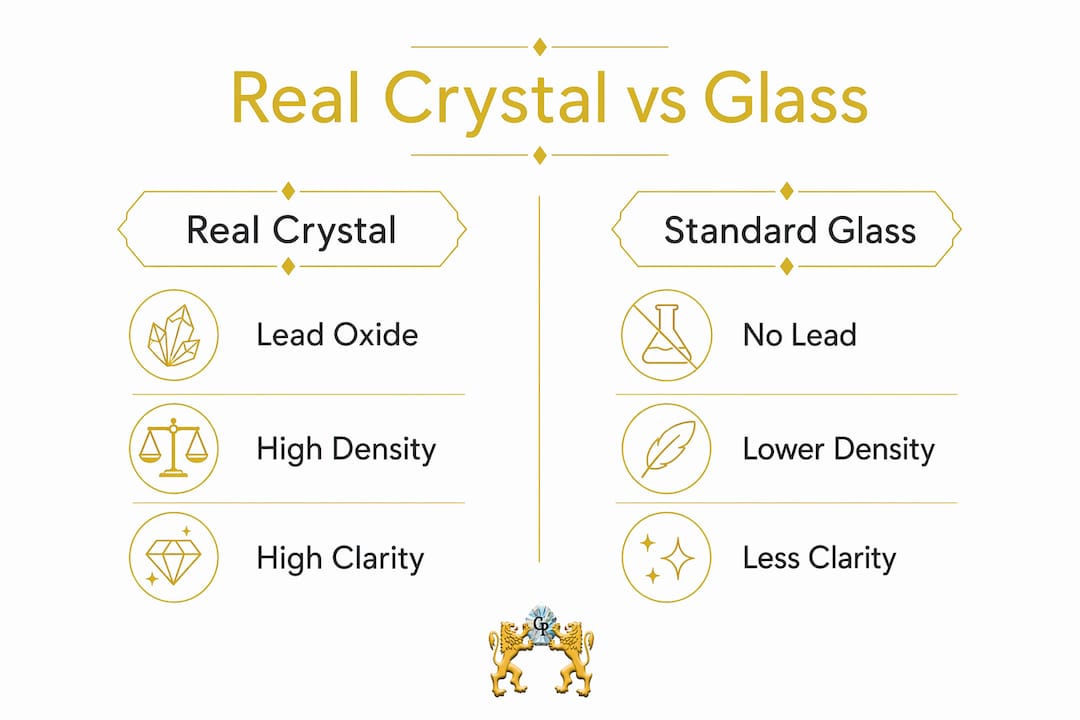
Lead oxide content is the defining variable in real crystal. Authentic lead crystal must contain at least 24% lead oxide by weight to achieve its signature sparkle and refractive properties. That chemical addition changes everything about how the material interacts with light.
The density difference is measurable and noticeable. Lead crystal density typically exceeds 2.9 g/cm³, compared to standard glass at 2.4–2.5 g/cm³. That extra weight gives real crystal a substantial, quality feel in the hand that immediately signals authenticity.
The optical advantage is even more dramatic. Lead crystal’s refractive index reaches up to 1.7, compared to ordinary glass at around 1.5. A higher refractive index means light bends more sharply as it passes through the material, splitting into a wider, more vivid rainbow spectrum. Standard glass produces a pale, narrow dispersion. Real crystal produces full-color fire across walls and ceilings.
Optical clarity is another measurable gap. Lead crystal shows a near-neutral color shift (ΔE of 0.9) compared to soda-lime glass (ΔE of 3.1). That means real crystal transmits light with far less color distortion, keeping whites bright and colors true.
Pro Tip: When shopping for crystal chandeliers, hold a pendant up to a single light source. Real crystal will cast distinct rainbow patches on nearby surfaces. Standard glass produces only a faint, colorless glow.
| Property | Real Crystal | Standard Glass |
|---|---|---|
| Lead oxide content | At least 24% | None |
| Density | Over 2.9 g/cm³ | 2.4–2.5 g/cm³ |
| Refractive index | Up to 1.7 | Around 1.5 |
| Color shift (ΔE) | 0.9 (near neutral) | 3.1 (noticeable distortion) |
How can you identify authentic crystals versus fake materials?
The weight test is the fastest check. Real crystal feels noticeably heavier than standard glass of the same size. Pick up a pendant and compare it to a piece you know is glass. The density difference is immediate and unmistakable.
The sound test is equally reliable. Authentic real crystal produces a resonant, bell-like tone when gently tapped. Standard glass produces a short, dull thud. Crystal’s higher density and elasticity allow a longer sustained ringing tone. That ring is one of the most satisfying sensory confirmations of quality you can get in a showroom.
Visual inspection reveals artisan quality markers that imitation materials lack:
- Tiny bubbles or microscopic cords: Handcrafted crystal pieces contain small bubbles or microscopic cords inside the material. These are signs of artisan craftsmanship, not defects. Mass-market glass appears unnaturally uniform and perfect.
- Sharp, precise facets: Real crystal holds a crisp edge on every cut facet. Imitation acrylic or low-grade glass shows rounded or slightly blurry edges under close inspection.
- Rainbow dispersion: Hold the piece near a light source. Authentic crystal casts distinct, vivid rainbow patches. Imitation materials produce weak or colorless reflections.
- Lead oxide certification: Reputable suppliers list lead oxide content on product specifications. If a listing does not include this detail, ask directly or treat the piece as unverified.
Pro Tip: Experienced decorators use the weight and sound tests as quick authenticity checks in any showroom setting. Carry a small reference piece of known real crystal to compare on the spot.
Modern lead-free crystals are also worth knowing about. Lead-free formulations use barium, zinc, or potassium oxides to match the optical properties of traditional lead crystal without toxicity concerns. These maintain brilliance and a similar ringing tone, making them a strong alternative for households with children or pets.
What benefits do real crystals provide in lighting and home décor?
Real crystal does something no standard light fixture can replicate on its own. It acts as an optical tool, splitting white light into full rainbow spectrums and scattering it across walls, ceilings, and floors. That effect transforms a room from simply lit to visually alive.
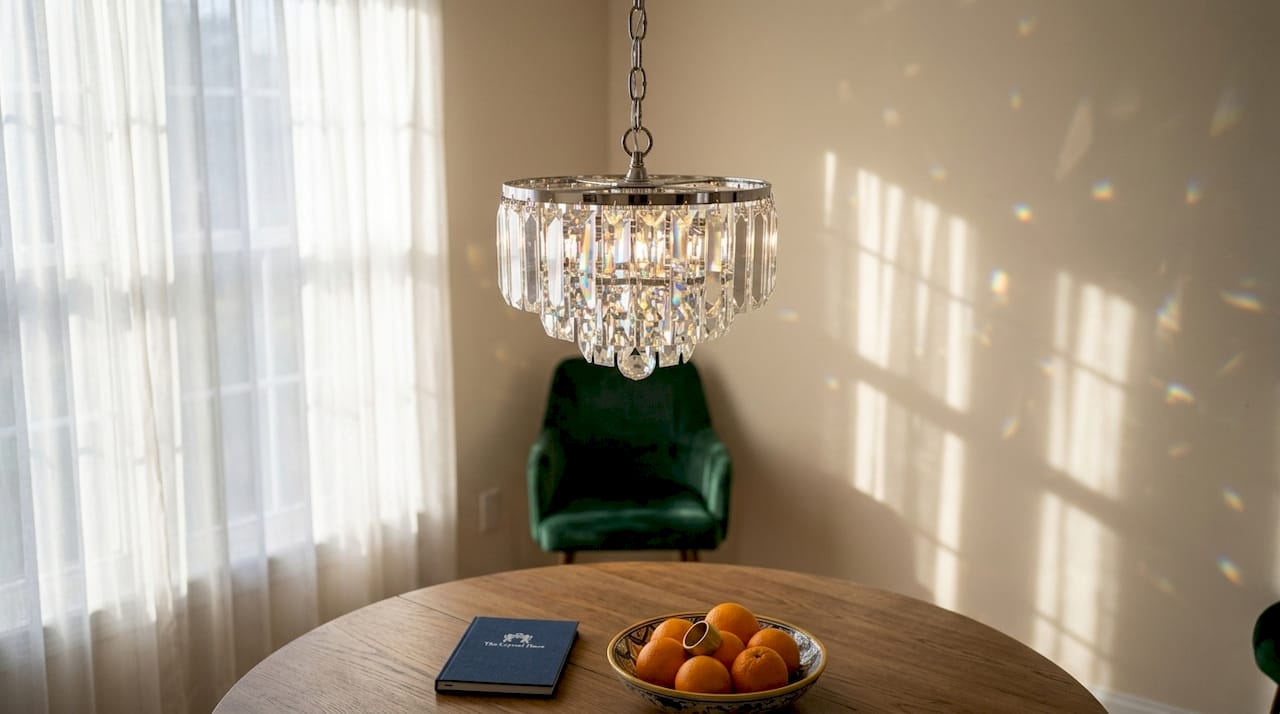
The light diffusion advantages of authentic crystal go beyond aesthetics. Real crystal scatters light rays to create soft, even illumination and reduce harsh glare. A bare bulb creates hard shadows and hot spots. A crystal chandelier distributes that same light gently across the entire room.
The facet count on each crystal piece multiplies this effect. Each crystal pendant typically carries 12 to 20 precisely cut facets, each one redirecting light at a slightly different angle. The result is a layered, dynamic sparkle that shifts as you move through the room. No static decorative element achieves that kind of visual movement.
The benefits of real crystals in home décor extend well beyond lighting:
- Ambient glow creation: Faceted crystals scatter bright bulb light, eliminating harsh glare and shadows. The room feels warmer and more welcoming without changing the bulb wattage.
- Rainbow pattern projection: Sunlight or artificial light through hanging crystal prisms casts moving color patterns that change throughout the day. This effect is impossible to replicate with plastic or standard glass.
- Perceived quality and luxury: The weight and craftsmanship of real crystal communicate quality instantly. Guests notice the difference even before they understand why.
- Design versatility: Crystal works across traditional, transitional, and contemporary interiors. A single well-chosen chandelier or set of hanging crystal prisms can anchor a room’s entire visual identity.
Dust buildup reduces crystal sparkle and light diffusion by up to 30%. That number shows why regular maintenance is not optional for anyone serious about preserving the lighting quality that real crystal delivers.
What practical considerations apply to using and maintaining real crystals?
Real crystal requires specific care to maintain its optical performance. Proper cleaning preserves approximately 95% of original light diffusion and brilliance over time. Neglect that maintenance and the sparkle fades noticeably within months.
Key care and safety points every homeowner should know:
- Clean regularly: Dust and grime accumulate on facets and block light refraction. Monthly maintenance retains the full visual impact of your crystal pieces. Crystalplace offers dedicated chandelier cleaning guidance to help you maintain brilliance without damaging delicate pieces.
- Avoid food and beverage contact: Lead can leach from crystal that contacts acidic beverages. Traditional lead crystal is safe for decorative use but not suitable for food or drink storage. Lead is locked within the glass matrix under normal decorative conditions, so touching the surface carries no exposure risk.
- Check ceiling support capacity: Real crystal chandeliers can weigh 50–100 pounds or more. The ceiling support structure must be rated to handle that load safely. Always verify the junction box rating and add blocking between joists if needed before installation.
- Use appropriate cleaning solutions: Harsh chemicals strip the surface coating on some crystal types. Use products formulated specifically for crystal, applied with a soft, lint-free cloth.
- Handle with dry hands: Oils from skin transfer to facets and reduce clarity over time. Wear cotton gloves when repositioning or cleaning individual crystal pieces.
Choosing the right chandelier size for your space also affects how well the crystal performs. An undersized fixture in a large room loses its visual impact. An oversized piece in a small room overwhelms the space and concentrates too much light in one area.
Key Takeaways
Real crystals outperform standard glass in every measurable optical and physical category, making them the definitive choice for homeowners who want lighting that genuinely transforms a room.
| Point | Details |
|---|---|
| Lead oxide is the key ingredient | Authentic crystal contains at least 24% lead oxide, producing superior density and light refraction. |
| Refractive index drives the sparkle | A refractive index up to 1.7 creates vivid rainbow dispersion that standard glass at 1.5 cannot match. |
| Weight and sound confirm authenticity | Real crystal feels heavier and rings like a bell when tapped; glass feels light and sounds dull. |
| Maintenance preserves performance | Regular cleaning retains up to 95% of original light diffusion and brilliance over time. |
| Safety is straightforward | Lead crystal is safe for decorative use; avoid food or drink contact and verify ceiling support before installation. |
The case for choosing real over imitation
I have spent years looking at crystal in showrooms, homes, and event spaces, and the gap between real and imitation never gets smaller. If anything, it becomes more obvious the more you know what to look for.
The thing most decorators underestimate is how much real crystal changes the quality of light, not just the quantity. A room lit by authentic crystal chandeliers feels different at 7:00 PM than it does at noon, because the angle of light changes the rainbow patterns on the walls. That dynamic quality is what makes real crystal worth the investment. Synthetic materials give you a static sparkle that looks the same all day.
I also think the artisan markers matter more than people realize. Those tiny bubbles and microscopic cords inside handcrafted crystal are not flaws. They are proof that a skilled craftsperson shaped that piece. Mass-produced acrylic is perfect in the wrong way. Real crystal carries the evidence of its own making, and that story adds to the experience of living with it.
The practical side is simpler than most people expect. Clean it monthly, keep it away from acidic liquids, and make sure your ceiling can handle the weight. Do those three things and real crystal will hold its brilliance for decades. That kind of longevity makes the upfront cost look very different over a ten-year horizon.
— BCC
Authentic crystal pieces from Crystalplace
Crystalplace has sourced and sold authentic crystal products since 1991, with direct access to genuine crystal brands and a catalog built for homeowners, decorators, and lighting professionals who want the real thing.
The collection covers crystal prisms, chandelier components, hanging suncatchers, and decorative ornaments, all selected for optical quality and craftsmanship. Every piece is chosen to deliver the light diffusion, rainbow dispersion, and sensory weight that define authentic crystal. Crystalplace ships free on orders over $22 within the USA. Browse the full range of crystal prisms and décor to find pieces that will genuinely change how your space looks and feels.
FAQ
What makes real crystal different from regular glass?
Real crystal contains at least 24% lead oxide, which raises its density and refractive index significantly above standard glass. That composition produces the vivid rainbow dispersion and bell-like ring that glass cannot replicate.
Are real crystals safe to use in home décor?
Lead crystal is fully safe for decorative use. Lead is locked within the glass matrix under normal conditions, and touching the surface carries no exposure risk. Avoid using traditional lead crystal for food or drink storage.
How do I know if a crystal piece is authentic?
Tap it gently and listen for a sustained, bell-like ring. Real crystal also feels noticeably heavier than glass of the same size, and it casts vivid rainbow patches when held near a light source.
How often should I clean crystal chandeliers?
Monthly cleaning retains approximately 95% of original light diffusion and brilliance. Dust buildup on facets can reduce sparkle and light quality by up to 30% if left unaddressed.
Can lead-free crystal match the quality of traditional lead crystal?
Lead-free formulations using barium, zinc, or potassium oxides maintain brilliance and a similar ringing tone to traditional lead crystal, making them a strong option for households that prefer to avoid lead entirely.
Recommended
- Enhance your space: the role of crystals in lighting – CrystalPlace
- Enhance Your Home with Crystal Interior Lighting – CrystalPlace
- Crystal lighting benefits: 30% brighter, elegant interiors – CrystalPlace
- 7 Advantages of Real Crystal Prisms for Home Lighting – CrystalPlace