

Learn what defines chandelier crystal, compare lead crystal vs glass vs acrylic, and discover how to select and maintain crystals for stunning home lighting in 2026.
Many homeowners confuse glass, acrylic, and crystal when shopping for chandeliers, leading to disappointment with their lighting’s sparkle and brilliance. Understanding what defines a chandelier crystal is essential for selecting fixtures that deliver true elegance and stunning light refraction. This guide clarifies the key types of chandelier crystals, their unique qualities, and how to choose the right option to transform your space with authentic brilliance.
Key takeaways
| Point | Details |
|---|---|
| Crystal composition | Chandelier crystal contains at least 24% lead oxide, enhancing clarity and light refraction beyond standard glass. |
| Material types | Options include Swarovski (30%+ lead), standard lead crystal, K9 crystal, and acrylic alternatives with varying sparkle. |
| Visual differences | Crystal refracts light more intensely than glass or acrylic, creating rainbow effects and superior brilliance. |
| Selection and care | Match chandelier size to room dimensions, use appropriate bulbs, and maintain with gentle cleaning for lasting sparkle. |
What is a chandelier crystal? Defining the term
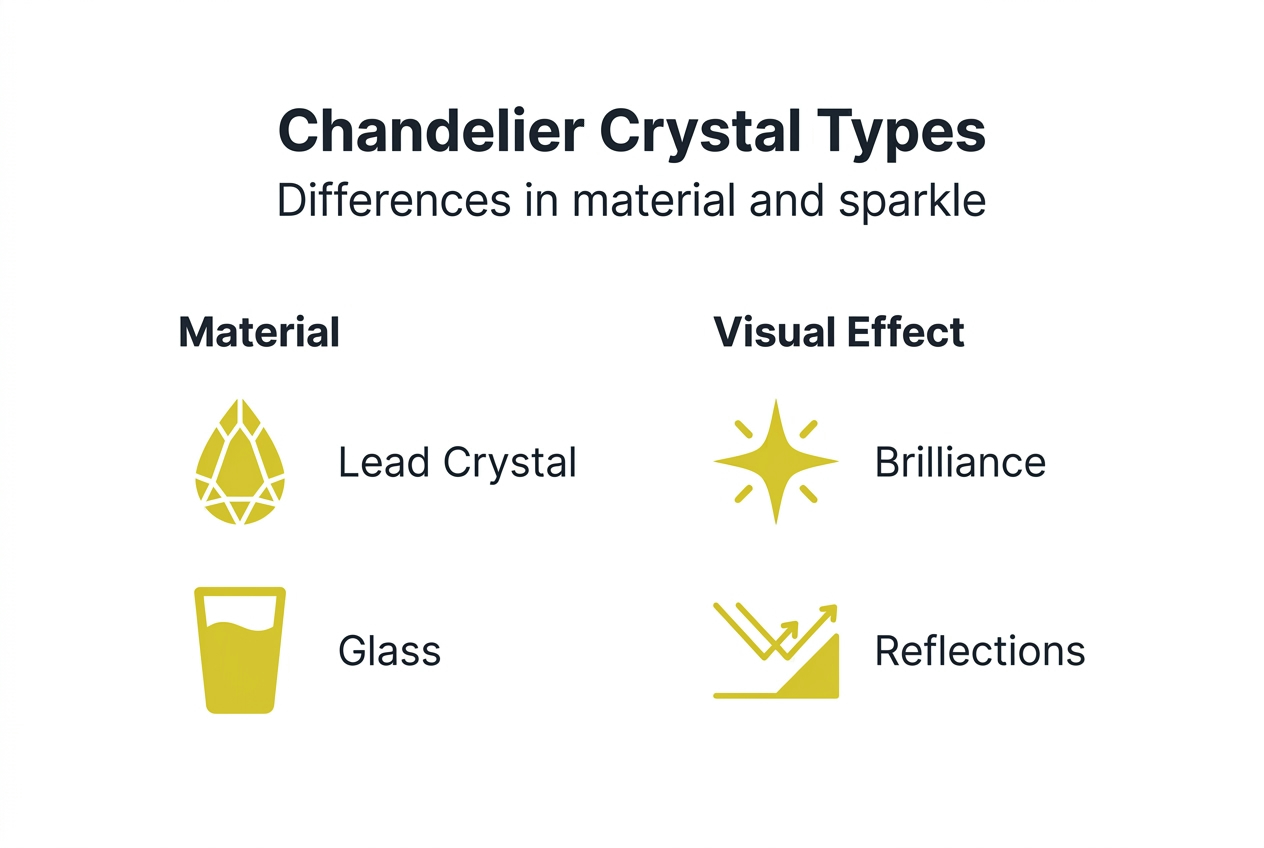
A chandelier crystal is glass containing high lead oxide content, typically 24% or more, which dramatically enhances its optical properties. Authentic Maria Theresa chandeliers use lead crystal with minimum 24% lead oxide cut in traditional Austrian or Czech workshops. This lead content transforms ordinary glass into a material capable of bending and dispersing light with exceptional brilliance.
The lead oxide increases the material’s density and weight while improving its ability to split white light into spectrum colors. Crystal’s refractive index ranges from 1.5 to 1.6, generating those enchanting rainbow effects that make crystal chandeliers so desirable. Glass without significant lead content has a lower refractive index and produces less dramatic light dispersion.
Chandelier crystals differ fundamentally from standard glass and acrylic substitutes:
- Lead crystal: Contains 24% or more lead oxide for authentic sparkle and weight
- Standard glass: Little to no lead content, resulting in minimal light refraction
- Acrylic: Plastic substitute that mimics appearance but lacks brilliance and durability
- K9 crystal: Optical glass with lower lead content than traditional crystal
- Swarovski crystal: Premium option with over 30% lead oxide for maximum sparkle
When you’re ready to choose the right chandelier crystal types for brilliance, understanding these fundamental differences helps you select materials that deliver the lighting impact you want.
Pro Tip: Hold a crystal piece up to natural light and look for rainbow prisms dancing across nearby surfaces. This immediate test reveals genuine crystal’s superior light-bending properties compared to glass or acrylic.
Types of chandelier crystals: materials and visual impact
Different crystal types create distinct visual effects based on their lead content, manufacturing precision, and optical qualities. Swarovski crystals with over 30% lead content offer unmatched clarity and dazzling effects due to their high refractive index. These premium crystals undergo precision cutting that maximizes light dispersion, creating that signature sparkle associated with luxury lighting.
Standard lead crystal with at least 24% lead oxide represents the traditional authentic option. These crystals provide excellent brilliance and rainbow effects while remaining more affordable than Swarovski. Czech and Austrian manufacturers have perfected lead crystal production over centuries, delivering reliable quality for classic chandelier designs.
K9 crystal provides affordable luxury, being 15% lighter yet still enchanting with bright reflections. This optical glass contains less lead than traditional crystal but uses advanced manufacturing techniques to enhance its refractive properties. K9 works well for larger chandeliers where weight becomes a practical concern.
Acrylic alternatives fall short in both durability and brilliance compared to genuine crystal and glass. While acrylic costs significantly less and resists breakage, it scratches easily and loses clarity over time. The material cannot replicate crystal’s light-bending capabilities, producing flat reflections instead of dynamic rainbows.
| Crystal Type | Lead Content | Refractive Index | Price Point | Visual Effect |
|---|---|---|---|---|
| Swarovski | 30%+ | 1.6+ | Premium | Exceptional sparkle, vivid rainbows |
| Lead Crystal | 24%+ | 1.5-1.6 | Moderate | Brilliant light dispersion, authentic shine |
| K9 Crystal | 10-20% | 1.5 | Budget-friendly | Good sparkle, lighter weight |
| Acrylic | 0% | 1.49 | Low | Minimal refraction, flat appearance |
The right bulb selection amplifies your crystal’s inherent qualities. Incandescent bulbs produce warm light that enhances crystal sparkle, while LED options offer energy efficiency with adjustable color temperatures. Matching bulb warmth to your crystal type maximizes the brilliance you’ll experience daily.

Pro Tip: Combine standard lead crystal for larger pendant pieces with Swarovski accents in prominent positions. This strategy delivers stunning visual impact while managing your budget effectively.
Explore examples of chandelier crystals that enhance brilliance to see how different types perform in real lighting applications.
Crystal vs glass vs acrylic chandeliers: visual and practical differences
Crystal chandeliers refract light more intensely than glass chandeliers due to higher lead content, creating a disco ball effect that transforms rooms. This dramatic light dispersion results from crystal’s superior refractive index, bending light rays at sharper angles to produce vivid spectrum colors across walls and ceilings.
Glass chandeliers without significant lead content produce gentler, more subdued reflections. While they still catch and redirect light, the effect lacks crystal’s intensity and rainbow generation. Glass works well for understated elegance where subtle shimmer complements rather than dominates a space.
Crystal chandeliers resist scratches better than glass chandeliers, maintaining their polished surfaces and clarity for decades. The lead content actually hardens the material, making it more durable despite crystal’s reputation as delicate. This scratch resistance preserves the precise facets that create brilliant light effects.
| Feature | Crystal | Glass | Acrylic |
|---|---|---|---|
| Scratch Resistance | High | Moderate | Low |
| Weight | Heavy | Medium | Light |
| Light Refraction | Intense, rainbow effects | Moderate, soft shimmer | Minimal, flat reflection |
| Durability | Excellent with care | Good | Poor, dulls quickly |
| Maintenance | Regular gentle cleaning | Occasional cleaning | Frequent, prone to cloudiness |
Acrylic mimics crystal’s appearance from a distance but reveals its limitations up close. The material lacks depth in its reflections and cannot produce the crisp, defined light patterns that characterize genuine crystal. Over time, acrylic develops a cloudy appearance that no amount of cleaning can restore.
Room size dramatically affects how these materials perform. In smaller spaces, crystal’s intense refraction can feel overwhelming, while glass provides appropriate sparkle without visual chaos. Larger rooms benefit from crystal’s ability to project light across greater distances, filling the space with dynamic illumination.
Consider your chandelier’s placement height when selecting materials:
- High ceilings (10+ feet): Crystal maximizes light throw and visibility from below
- Standard ceilings (8-9 feet): Glass or crystal both work well depending on desired intensity
- Low ceilings (under 8 feet): Glass may provide sufficient sparkle without overwhelming the space
- Entryways: Crystal creates impressive first impressions with dramatic light effects
- Dining rooms: Crystal enhances intimate gatherings with warm, reflected candlelight
Understanding how to choose the right size crystal chandelier ensures your material selection complements your fixture’s proportions and room dimensions.
Selecting and caring for chandelier crystals in your home
Homeowners should consider chandelier size and scale relative to the room for proper visual balance. A chandelier that’s too small disappears in a large space, while an oversized fixture overwhelms modest rooms. Calculate your ideal diameter by adding room length and width in feet, then converting to inches for chandelier size.
Choosing appropriate light bulbs like incandescent or LED complements the crystal type and enhances overall lighting ambiance. Incandescent bulbs produce full-spectrum light that maximizes rainbow effects, though LED technology now offers comparable color rendering at higher efficiency. Match bulb color temperature to your room’s purpose: warm light (2700K-3000K) for living spaces, neutral light (3500K-4000K) for kitchens.
Follow these steps to maintain your chandelier’s brilliance:
- Dust weekly using a soft microfiber cloth or feather duster to prevent buildup that dims sparkle
- Deep clean quarterly with a solution specifically formulated for crystal or a mild soap and water mixture
- Inspect connections every six months, tightening any loose crystals before they fall and break
- Check bulb wattage to ensure you’re not exceeding fixture limits, which can damage crystals with excessive heat
- Document your process by photographing crystal arrangements before cleaning for easy reassembly
Regular gentle cleaning and inspection ensures optimal light refraction and chandelier longevity. Even a thin layer of dust significantly reduces crystal’s ability to catch and bend light, diminishing the sparkle that makes your fixture special.
Avoid these common cleaning mistakes:
- Harsh chemicals: Ammonia and bleach damage crystal coatings and dull surfaces permanently
- Abrasive cloths: Paper towels and rough fabrics scratch crystal facets, reducing brilliance
- Excessive water: Soaking crystals can weaken adhesive connections and loosen metal findings
- High heat: Hot water and direct heat sources can crack crystals or cause clouding
Pro Tip: Place a thick blanket or soft towels beneath your chandelier before cleaning. If a crystal slips from your fingers, the cushioned landing prevents breakage and saves you from hunting for expensive replacements.
When selecting new crystals, prioritize clarity and precision cutting over size alone. Smaller, high-quality crystals with sharp facets often deliver more sparkle than larger pieces with imprecise cuts. Balance your budget by investing in premium Swarovski crystals for eye-level positions where you notice them most, using standard lead crystal for higher elements.
Learn more about choosing the right chandelier size and discover effortless crystal chandelier cleaning with Brilliante for professional results at home.
Discover premium crystals for your chandelier
Transforming your lighting starts with selecting authentic, high-quality crystals that deliver the brilliance you envision. Crystal Place specializes in genuine Swarovski and lead crystal pieces that bring elegance and stunning light refraction to any space. Since 1992, we’ve helped homeowners and decorators source the finest chandelier crystals and decorative elements for residential and commercial projects.
Our clear crystal ornament and rainbow maker showcases how premium Swarovski crystals create mesmerizing light effects in your home. Browse detailed examples of chandelier crystals that enhance brilliance to find the perfect pieces that match your vision. Whether you’re restoring a vintage fixture or designing a custom chandelier, our selection of crystal prisms, beads, and pendants provides the quality and variety you need to create truly spectacular lighting.
FAQ
What is the difference between lead crystal and glass?
Lead crystal contains lead oxide that enhances brilliance and sparkle through superior light refraction. Glass lacks significant lead content and reflects less light distinctly, producing gentler shimmer. The lead in crystal increases its density and refractive index, creating those characteristic rainbow effects that glass cannot match.
How does the lead content affect chandelier crystal quality?
Higher lead content increases light refraction and brilliance by raising the material’s refractive index. Swarovski crystals have over 30% lead for superior sparkle and vivid rainbow generation. Standard lead crystal with 24% lead oxide provides excellent quality, while lower lead content reduces optical performance and visual impact.
Can acrylic chandeliers mimic crystal sparkle?
Acrylic may look similar from a distance but lacks the same sparkle and refractive properties as genuine crystal. It is less durable and more prone to scratches and dulling over time. Acrylic cannot produce the crisp, defined light patterns and rainbow effects that make crystal chandeliers so visually stunning.
How should I maintain my crystal chandelier to keep its brilliance?
Regular gentle dusting and quarterly deep cleaning keep crystals sparkling at their best. Check for loose crystals every six months and use appropriate bulbs that complement your crystal type to enhance light refraction. Avoid harsh chemicals and abrasive materials, opting instead for solutions specifically formulated for crystal care to preserve clarity and prevent damage.
Recommended
- Crystal Chandeliers at Your Home with Brilliance – CrystalPlace
- Chandelier crystals: 40% more sparkle with quality cuts – CrystalPlace
- Choose the right chandelier crystal types for brilliance – CrystalPlace
- Examples of chandelier crystals to enhance brilliance – CrystalPlace