

Learn how crystal material, facet quality, shape, size, placement, and cleaning affect chandelier sparkle and how to choose matching replacement prisms.
Two chandelier crystals can look similar in a photograph and perform very differently once they are placed under light. Material clarity, facet quality, shape, size, and placement all influence how much light a crystal reflects and how clearly it creates flashes of color.
There is no trustworthy universal percentage that measures how much more one crystal will sparkle than another. The difference is easier to understand by looking at how the crystal is made and how it will be used.
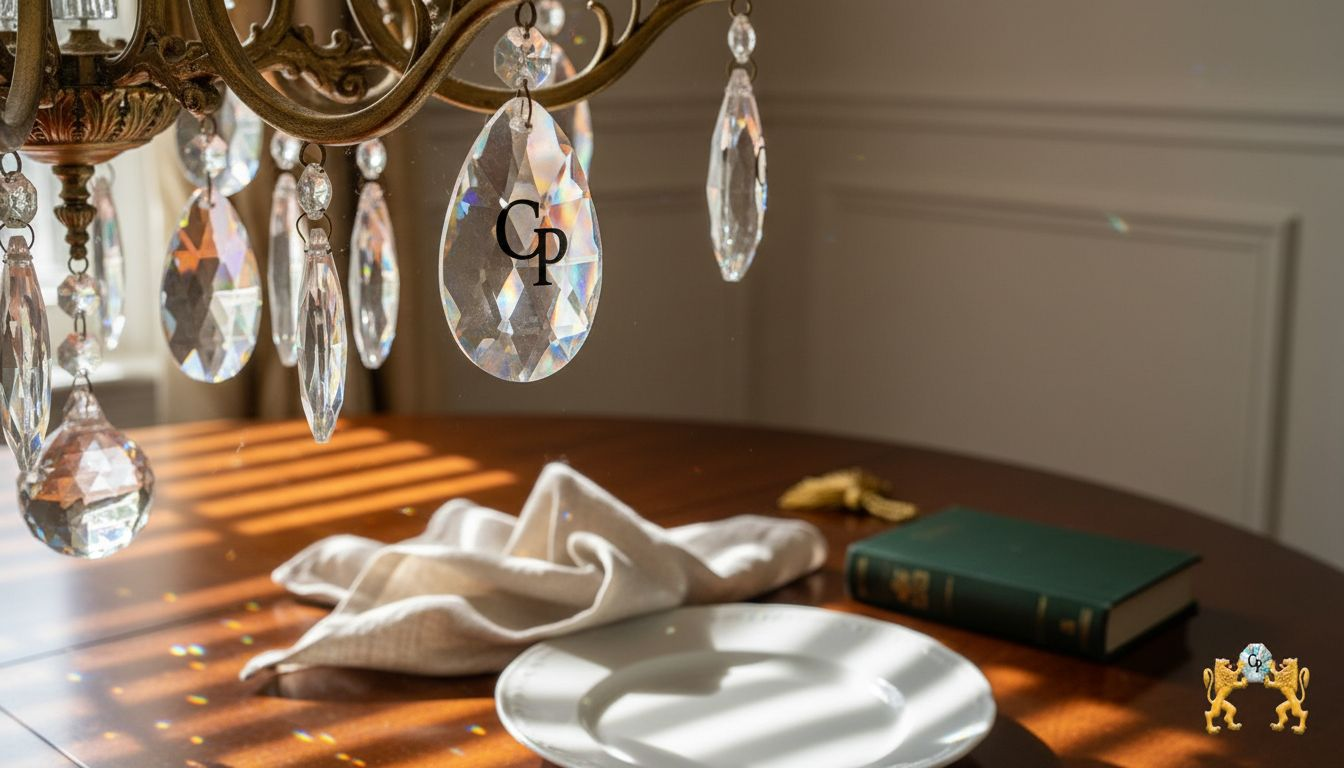
What Creates Sparkle in a Chandelier Crystal?
Sparkle begins when light enters the crystal, changes direction, and reflects from its cut surfaces.
Several details affect the result:
- Clean, accurately cut facets reflect light more consistently.
- Clear material allows light to travel through the crystal with less visible haze.
- Multiple facet angles create more opportunities for light to change direction.
- Direct light usually produces stronger flashes than soft, indirect light.
- Crystal movement creates changing reflections across the room.
- Dust, grease, and fingerprints reduce clarity and soften the effect.
A well-cut crystal does not need an exaggerated performance claim to look impressive. Its value becomes visible when the facets are even, the edges are clean, and the crystal is placed where light can reach it.
How Material Quality Affects Appearance
Chandelier prisms are produced from several types of crystal glass and optical glass. Each can be suitable for a different restoration, decorative project, or budget.
When comparing crystals, look for:
- Consistent clarity
- Even color
- Clean edges
- Symmetrical facets
- Smooth, accurately positioned holes
- Minimal bubbles or visible internal flaws
- Matching size and weight
Brand reputation can be helpful, but the brand name should not replace careful inspection. A replacement crystal must also match the scale, shape, color, and hanging position of the original chandelier.
Read our guide to the crystal materials used in chandeliers for a broader comparison.
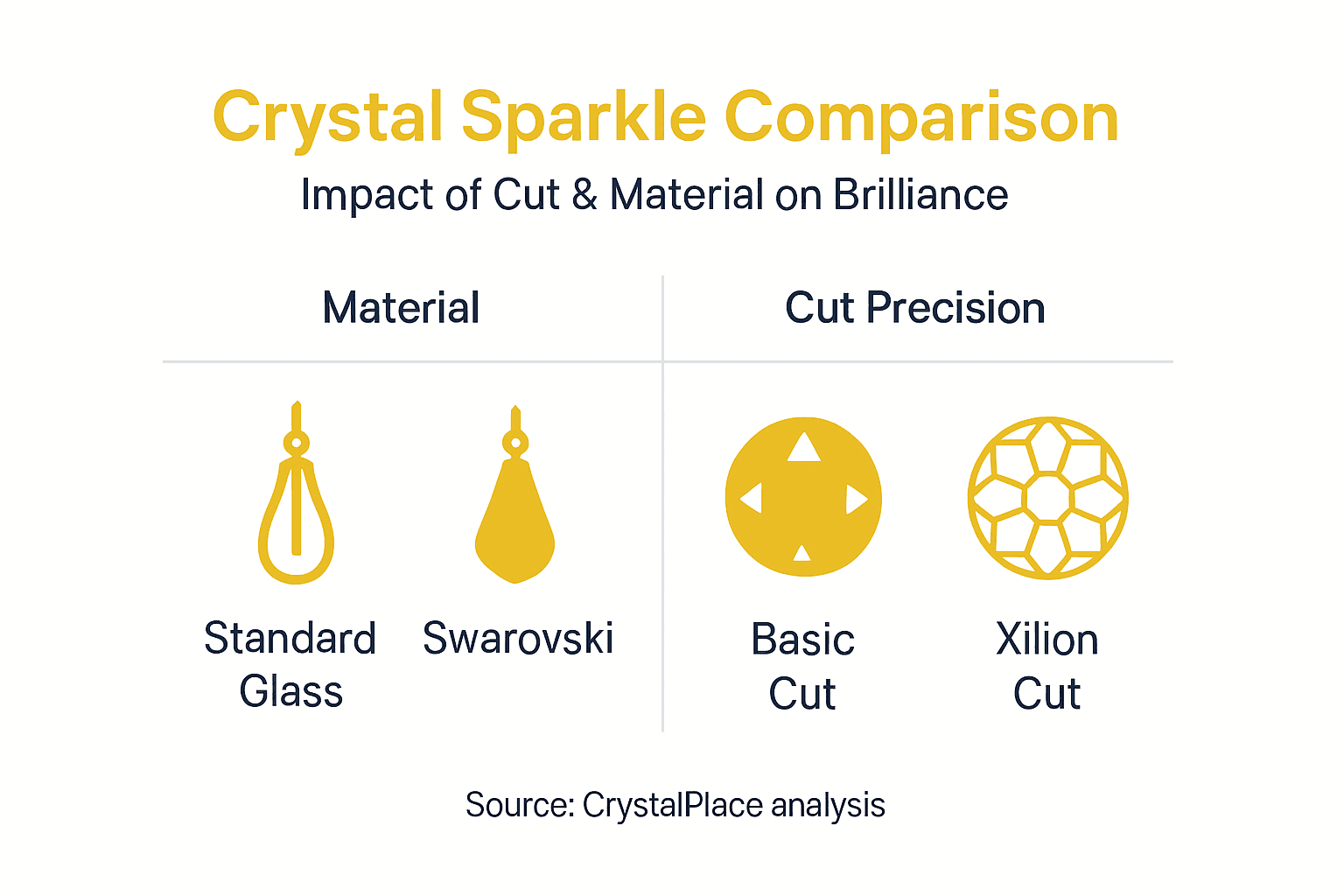
Why the Cut and Shape Matter
Every crystal shape handles light differently.
Octagons create many small flashes and work well in chains or layered sections. Pendalogues and teardrops provide a larger reflective surface and are commonly used around the lower portion of a chandelier. Spears create longer vertical reflections, while crystal balls distribute light through many small facets.
The best shape depends on the chandelier’s design and the position of the crystal. A large prism is not automatically brighter than a smaller one. A smaller, well-positioned crystal may catch more direct light and appear more active.
When replacing crystals, match the original shape before experimenting with a different design. Changing the size or weight can affect spacing, balance, and the way neighboring crystals hang.
How to Compare Replacement Crystals
Start with measurements, not appearance alone.
Check:
- Overall height and width
- Thickness
- Hole size and location
- Number and arrangement of facets
- Crystal color
- Connector finish
- Weight
- Space between neighboring crystals
Photograph the original crystal beside a ruler before ordering. If the chandelier uses several shapes, label each position and work on one section at a time.
For a large restoration, order a sample before purchasing the full quantity. View it on the chandelier during the day and at night. This is more useful than relying only on a product photograph.
Our crystal-size selection guide can help with measurements and proportion.
Choosing Swarovski and Other Crystal Options
Swarovski is known for precision crystal cutting and consistent manufacturing. Other well-made crystal and optical-glass options can also provide an attractive result when their clarity, cut, and dimensions suit the chandelier.
Avoid assuming that every unbranded crystal is poor quality or that every crystal described as “Swarovski-style” is a genuine Swarovski product. “Swarovski-style” describes an appearance; it does not establish authenticity.
When authenticity matters:
- Ask for the manufacturer or product information.
- Review the seller’s description carefully.
- Keep the original packaging and invoice.
- Confirm the exact size, shape, and stock number when available.
- Purchase from an established source that clearly identifies what it sells.
Not every genuine component uses the same visible marking, so appearance alone should not be treated as proof.
Keeping Chandelier Crystals Clear
Dust and residue block light from reaching the facets. Gentle cleaning helps restore clarity, but there is no reliable percentage that applies to every crystal or chandelier.
Begin with a soft, lint-free cloth or brush. Follow the fixture and crystal manufacturer’s instructions before using water or a cleaning product.
Swarovski’s official care guidance recommends avoiding harsh, abrasive materials and glass cleaners. For washable crystal décor, it recommends lukewarm water, mild pH-neutral dish detergent, minimal water contact, and thorough drying.
For an installed chandelier:
- Turn off the light and allow the bulbs to cool.
- Do not spray sockets, wiring, or electrical connections.
- Support each crystal while cleaning it.
- Avoid twisting against the pin or connector.
- Allow every component to dry completely before restoring power.
Read our updated crystal chandelier maintenance guide for complete cleaning and inspection instructions.
Choosing Crystals for the Room
Consider the chandelier and the room together.
Clear crystals work well when you want bright, neutral reflections. Colored crystals add a decorative accent but may change the color of the light reflected into the room.
Direct light, open space around the chandelier, and a clean crystal surface generally create more visible sparkle. Dark rooms or fixtures with heavily shaded bulbs may produce a softer effect regardless of crystal quality.
Before replacing an entire chandelier’s crystal set, test a few pieces under the fixture’s normal lighting. The most useful comparison is the one made in the room where the chandelier will be used.
Final Advice
Choose chandelier crystals based on accurate measurements, clean faceting, material clarity, and how they perform under your actual lighting.
Avoid unsupported percentages and vague promises. A careful side-by-side comparison will tell you more than a claim that one crystal is automatically brighter than another.
CrystalPlace has supplied chandelier crystals and replacement parts since 1992. Whether you are replacing one missing prism or restoring an entire fixture, matching the correct shape, size, and connector is the best place to begin.
Sources
- Swarovski care instructions for crystal decorations
- Swarovski brand protection and authenticity information