

Discover crystal chandelier wattage requirements for the perfect ambiance. Learn how to choose between LED and incandescent for sparkling results.
TL;DR:
- Wattage requirements for crystal chandeliers depend on fixture size, bulb type, and room atmosphere.
- Choosing the right wattage enhances brightness and enhances the chandelier’s sparkle without overpowering or dulling the space.
What wattage does a crystal chandelier actually need?
Crystal chandelier wattage requirements depend on three things: fixture size, bulb type, and how you want the room to feel. Get those right, and you get both the sparkle and the ambiance. Get them wrong, and you either wash out the room or leave it dim and flat.
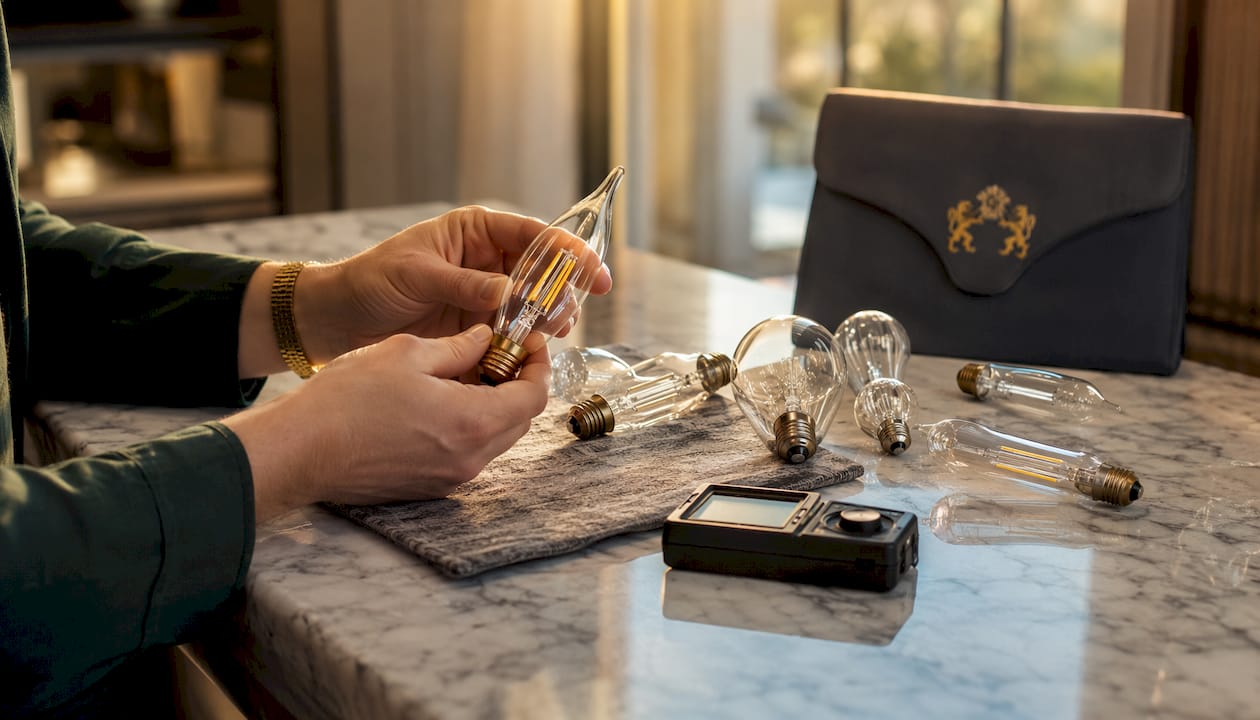
Small crystal chandeliers with LED bulbs typically require 15 to 25 watts total, while the same size with incandescent bulbs uses 120 to 200 watts. Medium chandeliers scale up to 25 to 100 watts with LED or 200 to 600 watts with incandescent. Larger and grand fixtures further increase wattage, but the difference between LED and incandescent always remains substantial.
Calculating total load is straightforward. Multiply bulb wattage by the number of bulbs. Eight bulbs at relatively high wattage equals a few hundred watts total. Swap those for low-wattage LEDs and the same fixture uses much less electricity, cutting energy use significantly with no visible loss in brightness.
Most crystal chandeliers use candelabra base bulbs (E12), which generally run low wattage in LED or much higher wattage in incandescent. That base size is worth confirming before you order replacements.
What factors actually influence how much wattage you need?
Fixture size alone does not determine your wattage needs. Room dimensions, ceiling height, and even how the crystals are arranged all play a role.
- Chandelier diameter relative to table size: For a rectangular dining table, the chandelier diameter should fall between half and two-thirds of the table’s width. A medium-sized table calls for a moderately sized fixture. A larger fixture carries more bulbs, which raises total wattage.
- Ceiling height and hanging distance: Standard ceiling heights work with moderate hanging distances. Higher ceilings push the fixture further from eye level, which can reduce perceived brightness and may call for slightly higher output.
- Crystal arrangement: How crystals are positioned matters as much as raw wattage. Directing bulb light through crystal facets, rather than simply surrounding bulbs with crystals, maximizes refractive brilliance without adding a single watt.
- Ambient vs. task lighting: Chandeliers work best as ambient light sources. For task lighting at a dining table or kitchen island, plan on supplemental sources so the chandelier does not have to carry the full load.
Pro Tip: If your chandelier sits inside a dense crystal cluster, reposition the bulbs so they aim outward through the facets rather than straight down. You will get noticeably more sparkle at the same wattage, and you can read more about crystal lighting benefits to understand why facet alignment matters.
How to choose the right bulb type for your chandelier
Bulb choice shapes both the look and the running cost of a crystal chandelier more than any other single decision.
- LED bulbs are the practical default. Low wattage, long life, and minimal heat output protect the crystal pinning and metal components over time. Modern LED filament bulbs replicate the warm glow of incandescent without the heat risk, making them the go-to for crystal fixtures.
- Incandescent bulbs produce a rich, warm light that many designers still prefer for formal or traditional spaces. The trade-off is higher wattage and heat, both of which add up quickly in a multi-bulb fixture.
- Color temperature: Aim for 2700K for intimate settings like dining rooms and bedrooms. Soft white at 3000K works well for general entertaining spaces. Anything above 3500K tends to read as clinical under crystal, which scatters and amplifies cool tones.
- Dimmer compatibility: Not every LED bulb dims cleanly on a standard dimmer. Confirm the bulb is rated as dimmable and that your dimmer switch is LED-compatible before installing. A mismatch causes flickering and shortens bulb life.
- E12 base fit: Most crystal chandeliers use the candelabra E12 base. Verify this before purchasing bulbs, since standard A19 bulbs will not fit. Retailers like Novelty Lights carry wattage-specific candelabra options worth checking.
How wattage shapes the look and feel of your space
Wattage is not just an electrical spec. It directly controls the mood a chandelier creates.
- Higher wattage increases brightness and amplifies the sparkle from crystal facets, which suits large dining rooms, entryways, and formal living spaces. Push it too high in a small room, though, and the fixture overpowers the space.
- Lower wattage creates a softer, more intimate atmosphere. A bedroom or sitting room rarely needs the same output as a grand foyer, and dialing back the wattage per bulb shifts the feel from dramatic to relaxed.
- Bulb count versus wattage per bulb: A 12-bulb fixture at 5 watts per bulb (60 watts total) produces a different quality of light than a 4-bulb fixture at 15 watts per bulb (also 60 watts total). More bulbs at lower individual wattage distributes light more evenly and tends to look more refined under crystal.
- Layering light sources: Pairing a dimmed chandelier with recessed lighting or wall sconces gives you full control over the room’s mood without asking the chandelier to do everything.
LED chandeliers typically use 25 to 100 watts total and cost about $3 to $12 per year to operate. Incandescent equivalents use 200 to 600 watts and cost $24 to $72 per year, making LED options much more efficient.
- No universal wattage cap exists. Maximum wattage depends on bulb count and the fixture’s own design specifications. Always check the label inside the canopy or on the socket for the manufacturer’s per-socket limit, and never exceed it.
- Electrical capacity: Multi-bulb chandeliers add meaningful load to a circuit. Verify your existing wiring and circuit breaker can handle the fixture before installation. The installation guide from Crystalplace covers electrical compatibility checks worth reviewing.
- Heat and crystal safety: Incandescent and halogen bulbs run hot enough to loosen crystal pins and degrade adhesives over time. LED bulbs eliminate that risk almost entirely.
Pro Tip: Install a LED-compatible dimmer and keep the chandelier at 60–70% brightness for everyday use. You cut energy consumption proportionally, extend bulb life, and the softer output often looks better under crystal than full blast.
Key Takeaways
Choosing the right wattage for a crystal chandelier means matching fixture size, bulb type, and room scale so the light is both efficient and visually right.
| Point | Details |
|---|---|
| Size determines bulb count | Smaller fixtures have fewer bulbs and lower wattage; larger fixtures have more bulbs and higher wattage. |
| LED cuts costs dramatically | LED chandeliers cost significantly less to run than incandescent equivalents. |
| Color temperature matters | Warm color temperatures produce flattering light for crystal chandeliers in dining and living spaces. |
| No universal wattage cap | Maximum wattage depends on fixture specs; always check the manufacturer’s per-socket rating. |
| Dimmer switches save energy | An LED-compatible dimmer reduces consumption proportionally and extends bulb life. |
Recommended
- Custom crystal chandelier design guide for interior success – CrystalPlace
- Statement Chandelier Room Sizing: The Complete Guide – CrystalPlace
- What Size Chandelier Crystals Do I Need? – CrystalPlace
- How to Choose the Right Size Crystal Chandelier – CrystalPlace