

Explore crystal decor trends 2026: fewer pieces, greater impact. Discover how intentional placements can transform your space today!
TL;DR:
- In 2026, crystal decor emphasizes fewer, intentional pieces acting as light architects to shape room atmosphere. The trend favors large, museum-grade anchor pieces over many small decor stones, with a focus on authenticity and ethical sourcing. Modern interior styles embrace warm neutrals, with crystal choices and placement designed to maximize natural light and atmospheric effect.
Crystal decor trends 2026 center on one defining shift: fewer pieces, placed with far more intention. The industry term for this approach is “light architecture,” and design experts now treat crystals as functional objects that shape room atmosphere by bending and scattering natural light rather than simply sitting on a shelf. The 2026 aesthetic pairs these statement pieces with warm, earthy interiors, moves away from cold minimalism, and demands ethical sourcing from buyers who want authenticity. Whether you are a homeowner, a decorator, or a design enthusiast, understanding this shift will change how you shop, place, and live with crystal.
What defines the anchor piece trend in 2026 crystal decor?
The anchor piece trend is the single most important shift in crystal decor this year. Instead of filling shelves with dozens of small tumbled stones, designers now recommend one museum-grade crystal cluster or a statement chandelier as the focal point of an entire room. The piece does not just sit there. It works.
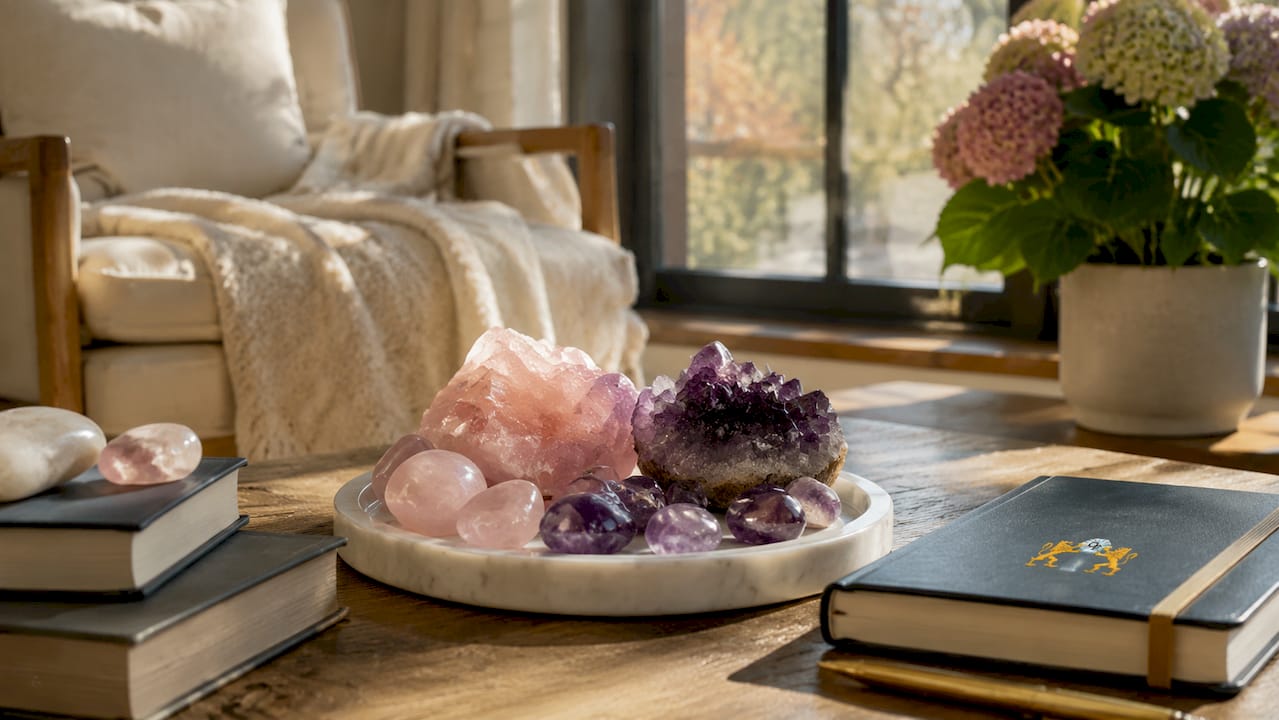
Industry insiders draw a clear line between decor-grade and collector-grade crystals. Decor-grade vs. collector-grade specimens differ primarily in surface treatment and scale. Collector-grade pieces feature natural, untreated surfaces and significant mass, which produce far more complex light behavior. A small polished stone scatters light predictably. A large raw amethyst cathedral refracts it in ways that shift with the hour of the day.
The price range reflects this distinction directly. Small crystal accents cost under $50. Statement pieces typically run $200–$800. Large amethyst cathedrals start at $1,000, placing them firmly in the collector category. That investment makes sense when you treat the piece as a permanent architectural element rather than seasonal decor.
Pro Tip: Before buying a large specimen, photograph the space at three different times of day. Morning, midday, and late afternoon light hit crystal from different angles. The photo test shows you exactly where refraction will land and whether the placement works before you commit.
| Crystal type | Best use case |
|---|---|
| Small tumbled stones (under $50) | Accent styling on trays or bookshelves |
| Statement clusters ($200–$800) | Tabletop focal point in living or dining rooms |
| Amethyst cathedrals (from $1,000) | Floor-standing room anchor or fireplace surround |
| Statement chandeliers | Ceiling focal point defining entire room identity |
How do 2026 color and style trends shape crystal choices?
The dominant 2026 interior aesthetic is warm modern heritage, and it changes everything about which crystals work in a room. Designers favor layered textures and earthy neutrals over the beige-on-beige palettes that dominated the early 2020s. Cold minimalism is out. Warmth, depth, and authenticity are in.
This shift has a direct effect on crystal selection. Clear quartz and icy blue tones that looked sharp against white walls now feel disconnected in rooms painted mushroom, chocolate brown, or warm greige. Citrine and smoky quartz have gained ground because their amber and gray tones read as natural extensions of earthy palettes rather than contrasts against them. Large amethyst geodes remain versatile because their purple hues harmonize with both warm and cool accent colors.
The complementary accent colors in 2026 interiors also matter for crystal placement. Blue-green tones and heritage-inspired patterns, think aged brass, terracotta, and botanical prints, create a backdrop where crystal catches light without competing for attention. The crystal becomes the quiet star of a layered room rather than a jarring focal point in a bare one.
Specific room types where this pairing works best:
- Living rooms with linen sofas and walnut furniture: a smoky quartz cluster on the coffee table reads as a natural material, not a novelty.
- Dining rooms with warm-toned walls: a crystal chandelier with brass fittings ties the metallic and mineral elements together.
- Home offices with dark wood shelving: a single citrine point on the desk adds warmth and visual weight without clutter.
- Entryways with stone or tile floors: a hanging crystal suncatcher in a south-facing window creates a daily light show that changes with the season.
What are the ethical and authenticity considerations when buying crystals?
Ethical sourcing and supplier transparency are now baseline expectations for serious crystal buyers in 2026, not optional extras. The mass market is flooded with dyed glass, resin fakes, and heat-treated stones sold as natural specimens. Buyers who do not ask questions often pay collector prices for decor-grade imitations.
The risks are specific and worth knowing:
- Dyed glass is the most common counterfeit. It mimics amethyst and rose quartz but lacks the natural inclusions and surface texture of real crystal.
- Resin composites are sold as selenite or calcite slabs. They feel lighter than stone and often have a uniform, plastic-like sheen.
- Heat-treated citrine is actually amethyst that has been baked to change color. It is not fake, but it is not natural citrine either, and sellers should disclose this.
- Unknown mine origin is a red flag. Reputable sellers know where their stock comes from and can name the country and region.
Pro Tip: Ask any seller for an “ethical receipt.” This is not a formal document but a plain-language explanation of the mine origin, the supply chain, and whether workers received fair pay. Sellers who cannot answer this question are not worth your money.
Buying from established sources matters. Crystalplace has sourced directly from authentic crystal brands, including Swarovski, since 1992. That track record is the kind of supply chain transparency the 2026 market demands. For questions about Swarovski crystal authenticity, Crystalplace publishes detailed guidance that helps buyers distinguish genuine pieces from imitations.
How should you place crystal decor to maximize light and atmosphere?
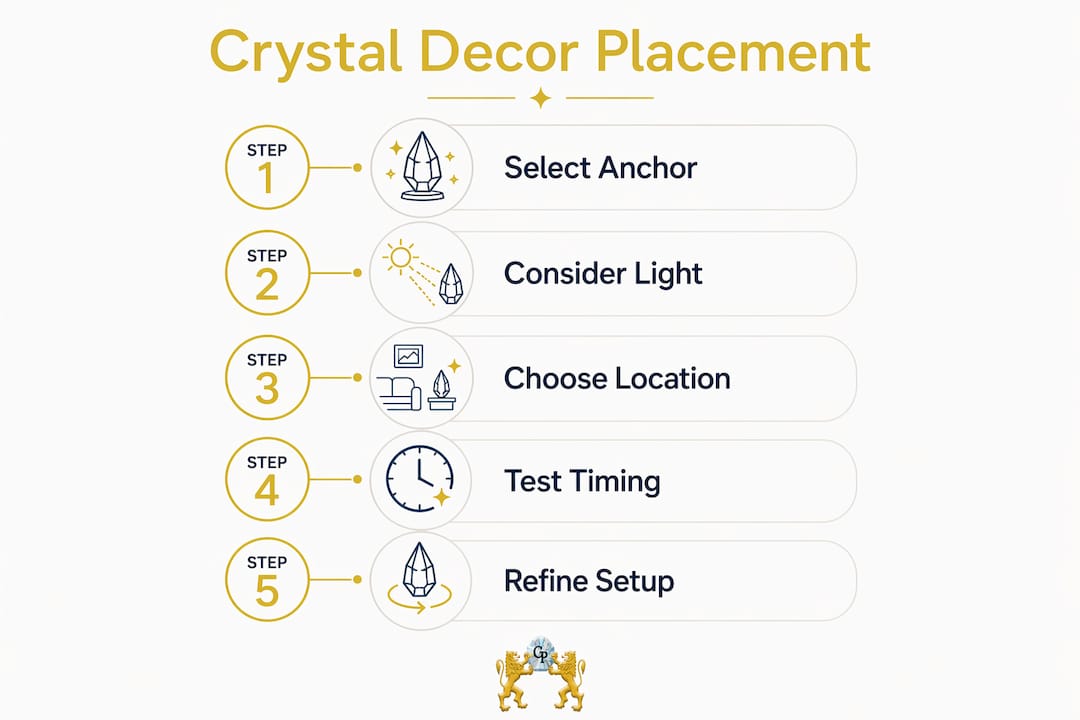
Crystals function as light architecture when placed with intention, and that means thinking about where light enters your room at different times of day. A crystal placed in morning sun produces a different effect than the same piece in afternoon light. Professional decorators test placement across the full day before finalizing a position.
Follow these steps to place crystal pieces for maximum impact:
- Map your light sources. Identify which windows receive direct sun in the morning, midday, and afternoon. Note where the light falls on your walls and floors.
- Place the crystal in the path of direct light. For hanging pieces like suncatchers, a south or west-facing window gives the longest daily exposure. For tabletop clusters, position them where a beam of light will cross them at your most-used time of day.
- Clear the surrounding area. A crystal surrounded by books, plants, and small objects cannot refract light effectively. Give it at least 12 inches of open space on all sides.
- Layer your artificial lighting. A lamp or sconce placed at a low angle behind or beside a crystal cluster extends its light-play into evening hours. Warm-toned bulbs (2700K–3000K) complement the earthy 2026 palette better than cool white light.
- Adjust seasonally. Sun angles change throughout the year. A placement that works in june may need to shift by december to catch the lower winter sun.
| Placement type | Light source | Best crystal choice |
|---|---|---|
| South-facing window | Direct sun, all day | Hanging prisms, suncatchers |
| Dining table center | Overhead chandelier | Clear quartz cluster |
| Fireplace mantel | Ambient room light | Amethyst geode, smoky quartz |
| Home office desk | Task lamp | Citrine point, small quartz |
Placing crystal thoughtfully relative to natural light cycles is a detail most amateur decorators skip. Getting it right separates a room that feels alive from one that just has a crystal sitting in it.
What are the latest trends in crystal lighting fixtures in 2026?
Crystal lighting in 2026 favors restraint and geometric precision over heavy opulence. The era of the chandelier as a status symbol loaded with as many drops as possible is over. Modern crystal chandeliers balance craftsmanship and proportion to produce a refined glow rather than maximalist sparkle.
Lighting professionals describe the current standard as controlled brilliance. The fixture references tradition through its use of crystal but aligns with contemporary architecture through clean geometry and elevated finishes. Brass and matte black frames are the most common pairings with crystal drops in 2026.
The styles gaining the most traction this year:
- Geometric crystal chandeliers: Angular frames with precisely arranged crystal drops. These work in dining rooms and entryways with strong architectural lines.
- Sculptural minimalist pendants: A single large crystal or a small cluster suspended from a thin cord or rod. These suit kitchens, reading nooks, and bedrooms where a full chandelier would overwhelm the space.
- Vintage reinterpretations: Classic tiered chandelier silhouettes updated with modern finishes and fewer, larger crystal elements. These fit living rooms with warm modern heritage interiors.
- Organic form fixtures: Irregular, asymmetric arrangements that mimic natural crystal growth. These are the most distinctive option and work best as solo statement pieces in rooms with minimal other decor.
| Chandelier style | Best room | Key feature |
|---|---|---|
| Geometric | Dining room, entryway | Angular frame, precise crystal arrangement |
| Sculptural minimalist | Bedroom, kitchen | Single pendant, clean lines |
| Vintage reinterpretation | Living room | Classic silhouette, modern finish |
| Organic form | Feature rooms | Asymmetric, nature-inspired structure |
Chandeliers in 2026 are curated statement pieces that express the identity of a space. Designers treat them as the ceiling equivalent of an anchor crystal: one piece that defines the room rather than one of many competing elements. For a deeper look at how these fixtures shape modern spaces, Crystalplace covers crystal chandelier trends in detail.
Key takeaways
The most effective approach to crystal decor in 2026 is one intentional anchor piece, placed in direct light, sourced from a verified supplier, and chosen to complement a warm, layered interior.
| Point | Details |
|---|---|
| Anchor piece over clutter | One museum-grade crystal or statement chandelier outperforms a shelf of small stones every time. |
| Match crystal to your palette | Citrine and smoky quartz suit warm neutrals; clear quartz and amethyst work across most 2026 color schemes. |
| Verify before you buy | Ask for mine origin and supply chain details; avoid sellers who cannot answer basic sourcing questions. |
| Place for light, not just looks | Test placement at multiple times of day to find where refraction creates the strongest atmospheric effect. |
| Choose restraint in lighting | Geometric and sculptural chandeliers with controlled brilliance define the 2026 crystal lighting standard. |
The case for buying less and choosing better
The most common mistake I see decorators and homeowners make with crystal is buying volume. A tray of ten small stones feels like a collection. One large amethyst cathedral feels like a decision. The 2026 shift toward anchor pieces is not a trend in the seasonal sense. It reflects a deeper understanding of what crystal actually does in a room.
Crystal is not decoration in the way a throw pillow is decoration. It is a light-reactive material that changes the atmosphere of a space every hour of the day. When you treat it that way, the calculus around buying changes completely. You stop asking “which one looks nice?” and start asking “where does the light fall, and what will this piece do with it?” That is a much better question.
Ethical sourcing matters here too, and not just for moral reasons. A crystal with a known origin and a verified supply chain is almost always a better specimen. The transparency that ethical sourcing requires tends to filter out the dyed glass and resin composites that flood the mass market. Buying well and buying ethically point in the same direction.
My honest recommendation: invest in one or two pieces that you genuinely cannot stop looking at, place them where natural light will find them, and leave the rest of the shelf empty. The room will thank you.
— BCC
Crystalplace: quality crystal pieces for modern interiors
Crystalplace has supplied authentic crystal products since 1992, sourcing directly from Swarovski and other verified crystal brands. The collection covers everything from individual crystal prisms and hanging decor to full chandelier components and custom lighting solutions.
For decorators and homeowners working with the 2026 warm modern heritage aesthetic, Crystalplace stocks crystal prisms, suncatchers, and chandelier drops that align with the restraint and precision the current trend demands. Free shipping applies to orders over $22 within the USA. The role of crystals in lighting is covered in depth on the Crystalplace blog for anyone who wants to go further before purchasing.
FAQ
What is the anchor piece trend in crystal decor?
The anchor piece trend replaces multiple small crystals with one large, museum-grade specimen or statement chandelier used as the room’s focal point. Designers treat this single piece as a light-manipulating architectural element rather than decorative filler.
How do I know if a crystal is authentic or fake?
Real crystals have natural inclusions, irregular surfaces, and a weight consistent with stone. Ask the seller for mine origin and supply chain details. Dyed glass and resin composites are the most common fakes in the mass market.
What crystal types work best with 2026 warm neutral interiors?
Citrine and smoky quartz complement earthy palettes like mushroom and chocolate brown. Amethyst geodes are versatile enough to work across most 2026 color schemes, from warm neutrals to blue-green accent rooms.
Where should I place a crystal piece for the best light effect?
Position crystal in the direct path of natural light, ideally near a south or west-facing window. Test the placement at morning, midday, and afternoon to find where refraction produces the strongest atmospheric effect throughout the day.
What chandelier style defines 2026 crystal lighting?
Geometric and sculptural minimalist chandeliers with controlled brilliance define the 2026 standard. These fixtures use precise crystal arrangements and modern finishes like brass or matte black to produce refined light rather than maximalist sparkle.
Recommended
- Chandelier Design Trends to Watch in 2026 – CrystalPlace
- The Role of Crystal Decor in Events: 2026 Guide – CrystalPlace
- How Crystal Accents Transform Interiors: Design Impact – CrystalPlace
- Crystal Decor Styling Tips for a Polished Home – CrystalPlace