

Discover the transformative role of crystal in interiors. Learn how to enhance your space with light, luxury, and style for any design aesthetic.
TL;DR:
- Crystal adds subtle luxury and enhances light behavior in various interior styles.
- Proper placement and scale are essential for crystal to effectively elevate a space.
- Using quality crystal and practicing restraint creates timeless, impactful decor accents.
Crystal isn’t reserved for ballrooms or five-star hotel lobbies. That belief has kept countless homeowners from experimenting with one of the most light-transforming materials available. Whether your space leans modern, eclectic, or transitional, a well-chosen crystal accent adds depth, movement, and a quiet kind of luxury that few other materials can match. This guide breaks down exactly how and why crystal works in real interiors, covering light behavior, placement strategies, selection advice, and practical tips you can apply whether you’re redesigning a single room or rethinking an entire home.
Key Takeaways
| Point | Details |
|---|---|
| Crystal’s new versatility | Crystal is no longer just for ballrooms; it adapts to any room when chosen and placed thoughtfully. |
| Light and mood enhancement | Crystal refracts light to create luminous atmospheres, with effects shaped by placement and scale. |
| Scale and subtlety matter | Selecting the right crystal size for your space ensures elegance rather than clutter. |
| Creative design options | Beyond chandeliers, crystal decor and hardware offer flexible, low-commitment ways to elevate interiors. |
Reframing the role of crystal: More than just sparkle
For centuries, crystal was a direct signal of wealth and status. Grand chandeliers hung in royal courts, opera houses, and the dining rooms of the very rich. That association stuck, and for many people, crystal still carries the weight of excess. But something has shifted noticeably in recent years.
Today’s design conversation looks very different. Homeowners and designers are gravitating toward crystal not as a showpiece of abundance, but as a deliberate accent that adds precision and luminosity. The goal isn’t to fill a room with glittering surfaces. It’s to introduce a single moment of brilliance that catches the eye and lifts the entire space.
As Architectural Digest notes, crystal elevates spaces through timeless sparkle, but experts now prioritize subtlety over abundance to avoid clutter. The emphasis has moved from “how much crystal?” to “how well placed is this crystal?”
That shift matters a lot in practical terms. It means a modest dining room can benefit just as much as a grand foyer, provided the scale and context are right.
“A crystal chandelier can be a terrific sculpture in the right setting, but it reads as completely out of place when the grandeur isn’t there to support it.” This tension, observed by designers at House & Garden, captures why crystal is so often either loved or dismissed.
When crystal works, it works because someone made intentional decisions. Here are the modern roles crystal plays beyond the traditional chandelier:
- Statement lighting in entryways, dining rooms, and living rooms
- Subtle accents like drawer pulls, vases, and decorative bowls
- Architectural features including light-catching trim and wall installations
- Suncatchers and hanging prisms that cast rainbow light across walls
Understanding choosing crystal lighting begins with recognizing that crystal has evolved far beyond its aristocratic origins. The crystal lighting benefits available today are as much about mood and atmosphere as they are about opulence.
How crystal shapes light and atmosphere
With crystal’s cultural associations clarified, it’s crucial to understand its physical impact within a space.
Crystal doesn’t simply reflect light the way a mirror does. It refracts it, bending white light into its component colors and scattering them across walls, ceilings, and floors. That scattering creates what designers call “living light,” a quality that changes with the time of day, the season, and the angle of the sun. No two moments look exactly alike, which is something you simply cannot achieve with paint, fabric, or standard glass.
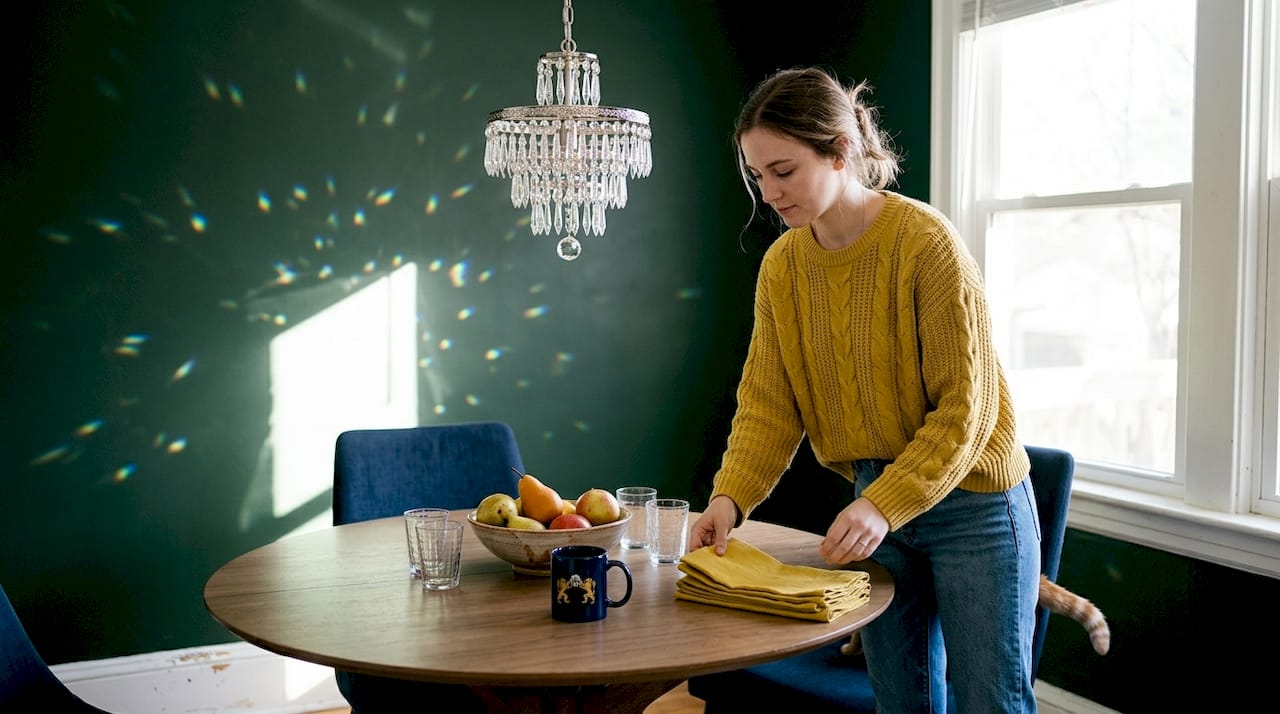
This behavior is what separates authentic crystal from acrylic alternatives. Acrylic may look similar in a product photo, but in a real room, the difference is immediately visible. Real crystal produces richer prismatic effects, and how crystal transforms lighting in a space is genuinely distinct from what any substitute can deliver.
Comparing crystal, glass, and acrylic in a lighting context:
| Material | Light refraction | Prismatic effect | Durability | Cost |
|---|---|---|---|---|
| Authentic crystal | High | Strong, vivid | Excellent | Higher |
| Glass | Moderate | Mild | Good | Medium |
| Acrylic | Low | Minimal | Lower | Budget |
According to Homestyler, strategic placement near south or west-facing windows maximizes crystal’s brilliance, and pairing it with reflective surfaces opposite the fixture amplifies the effect even further.
Here’s how to position crystal for maximum light impact:
- Place near south or west windows to capture the strongest natural light across the most hours of the day.
- Position opposite mirrors or metallic surfaces so reflected light bounces back through the crystal and multiplies the scatter.
- Layer with uplighting or downlighting to control mood at night, giving you soft warmth or dramatic brilliance depending on the scene.
- Scale the chandelier diameter to the room size, with larger rooms typically needing fixtures at least one meter in diameter for the effect to read properly.
Pro Tip: In a small room, a single well-placed crystal pendant or suncatcher creates far more impact than a cluster of small decorative pieces. Crowding reduces the effect because the light scatter interferes with itself.
Balancing natural and artificial light is where crystals in lighting design really shows its complexity. During the day, sunlight through crystal produces those signature rainbow patterns on walls. At night, the warmth of artificial bulbs makes the crystal glow more amber and intimate. Both effects are valid, but they serve very different moods, and the best placements are chosen with both in mind.
Choosing the right crystal for your space
Once you understand crystal’s effects on light, the next step is choosing pieces tailored to your space and taste.
Not every crystal fixture suits every room, and the most common mistake isn’t choosing the wrong style. It’s choosing the wrong scale. A chandelier that works beautifully in a high-ceilinged dining room can make a small apartment feel oppressive and cluttered. The reverse is equally true: a delicate pendant disappears in a large, open-plan living space.
Room size and crystal fixture guide:
| Room size | Recommended fixture | Crystal type |
|---|---|---|
| Small (under 120 sq ft) | Pendant or single sconce | Fine cut, small prisms |
| Medium (120 to 250 sq ft) | Mid-size chandelier | Mixed cut, clear or tinted |
| Large (250 sq ft and above) | Statement chandelier, multi-tier | Full-cut, large pendants |
| Hallway or entryway | Narrow pendant or column fixture | Long prisms, vertical elements |
As House & Garden points out, crystal can be unsuitable for rustic or country interiors unless the piece is grand enough to function as a clear focal point. In those contexts, a small crystal chandelier reads as an afterthought rather than an accent.
When evaluating crystal options, consider these factors carefully:
- Cut: Precision-cut crystal (like Swarovski) produces more defined prismatic effects than roughly cut pieces. The more facets, the more dynamic the light.
- Color: Clear crystal is the most versatile, but amber, rose, and smoky tints add personality and pair well with warmer color palettes.
- Finish: Polished surfaces scatter light most effectively. Frosted finishes diffuse light softly for a more intimate effect.
- Authenticity: Genuine leaded crystal and brand-certified materials (such as Swarovski Strass) deliver a noticeably different quality to synthetic alternatives.
For those working on sizing crystal chandeliers, a simple rule is to add the room’s length and width in feet, and that number in inches is a starting point for chandelier diameter. A 12 by 14-foot dining room suggests a 26-inch chandelier as a baseline. Ceiling height also matters; taller ceilings call for longer drops and more elaborate vertical structure to fill the space well.
Eclectic and modern interiors can absolutely incorporate crystal, provided the fixture is chosen with the existing palette in mind. A minimal, geometric crystal pendant in matte brass hardware reads as modern and intentional. An ornate multi-armed chandelier in the same space would feel contradictory. Knowing your interior’s visual language is the first filter when selecting crystal fixtures for elegance.
Integrating crystal: Placement strategies and practical tips
Now that you know what to look for, how can you implement it most successfully in your home or project?
Placement is everything. The most beautiful crystal fixture underperforms if it’s positioned incorrectly. The most important locations to consider are above dining tables, near windows that receive strong direct light, and opposite reflective surfaces like mirrors or polished metal wall panels.
Based on guidance from Homestyler, here is a reliable sequence for integrating crystal into any room:
- Identify your anchor point. Every room needs one primary crystal element. It could be a chandelier, a pendant, or even a grouping of suncatchers. Decide before adding anything else.
- Choose your light sources. Think about how natural and artificial light interact at the anchor point throughout the day. Will the fixture catch morning sun, or does the room face north?
- Layer supplementary lighting. Uplights or recessed downlights positioned to complement your crystal fixture add dimensionality and prevent flat, single-source lighting.
- Add secondary accents. Once your primary fixture is placed, small accents like crystal vases or hardware should follow the same visual logic without competing for attention.
- Review the overall balance. Step back and assess whether the room feels cohesive or whether the crystal reads as isolated or out of scale.
Pro Tip: Crystal is highly seasonal in character. During winter months, when natural light is limited, adding warm-toned artificial light behind or below crystal fixtures creates a cozy, luminous glow. In summer, let in as much direct sunlight as possible and let the prism effects do the work.
Cleaning and care often gets overlooked in the excitement of installation. Crystal that hasn’t been maintained loses its brilliance quickly. Dust dulls refraction. A gentle wipe-down with a microfiber cloth every few weeks, combined with occasional use of a proper crystal cleaning solution, keeps the surface performance at its best.
Mixing crystal with other materials builds a layered, sophisticated look. Pairing crystal with raw wood adds warmth and prevents the space from feeling cold or overly formal. Crystal alongside brushed brass or matte black hardware feels very current. The contrast between crystal’s delicate transparency and the solidity of other materials is exactly what makes both stand out more.
Explore crystal interior lighting solutions and consult a custom chandelier guide if you’re working on a space with unusual dimensions or specific design requirements.
Beyond chandeliers: Crystal as decor and architectural accent
While chandeliers steal much attention, crystal can subtly elevate every corner or detail of a home.
Most people picture a chandelier when they think of crystal, but some of the most effective uses are far smaller and more personal. Crystal drawer pulls on a built-in cabinet catch light every time a door opens. A crystal bowl on a coffee table scatters afternoon sun across the ceiling. Hanging prisms in a window create constantly shifting color without any furniture commitment at all.
Here is where crystal really opens up as a design tool for people who aren’t ready to invest in major lighting fixtures:
- Crystal drawer pulls and cabinet hardware add sparkle to kitchens and dressing rooms without structural changes
- Decorative bowls and vases work as centerpieces on dining tables, consoles, or shelving units
- Suncatchers and hanging prisms positioned in south-facing windows fill a room with shifting rainbow light at minimal cost
- Crystal finials on curtain rods or lamp bases add a finishing detail that looks considered and refined
- Wall-mounted crystal sconces provide both light and decorative texture simultaneously
As Architectural Digest makes clear, crystal requires a thoughtful approach to scale and context. This applies just as much to small accents as it does to chandeliers. Overcrowding a shelf with crystal ornaments doesn’t multiply the effect; it cancels it out.
“Restraint is what distinguishes a curated crystal look from a store-room of unsold inventory. One beautiful piece on an otherwise quiet surface always wins.”
This is a useful principle for crystal ornaments for decor, where the temptation to add more is constant. The best-looking interiors use crystal as punctuation, not as the entire paragraph. Understanding the types of chandelier crystals available helps you mix shapes, cuts, and sizes in a way that feels intentional rather than random.
Crystal in interiors: What most people get wrong
After years of working with homeowners and designers, one pattern stands out clearly. The failures almost always come from the same mistake: more. More pieces, more tiers, more sparkle packed into a space that doesn’t have the scale or context to support it.
Crystal is not a volume game. A single well-chosen pendant above a dining table, positioned near a window with strong southern exposure, will consistently outperform a room filled with mismatched crystal pieces at every surface. The drama comes from contrast and placement, not accumulation.
The other common error is ignoring context entirely. Crystal in a small, low-ceilinged room doesn’t become intimate. It becomes overwhelming. Crystal in a rustic farmhouse kitchen, unless the piece is extraordinary and deliberate, reads as a style accident.
What works is treating crystal as a mood-setting tool. Ask yourself what feeling you want a room to create, and then ask whether crystal placed here, at this scale, in this context, moves toward that feeling or away from it. That single question eliminates most of the mistakes we see. Explore the full range of chandelier crystal types to find what genuinely fits your intent.
Enhance your home with authentic crystal decor
Discovering the right approach is only part of the journey. Making it a reality starts with finding beautiful, well-crafted options sourced from trusted makers.
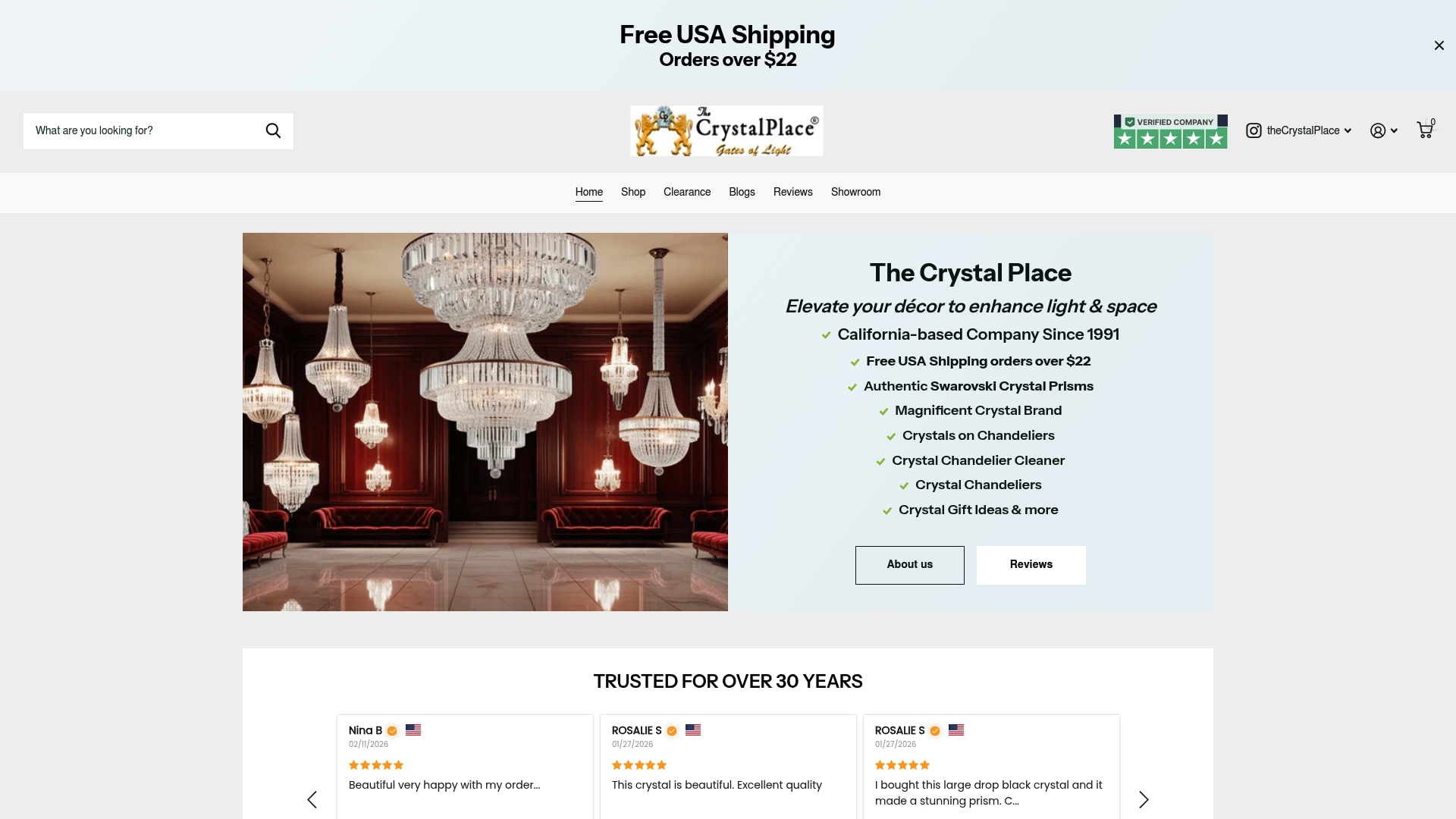
At Crystal Place, we’ve been sourcing authentic crystal products directly from trusted brands including Swarovski since 1992. Our selection covers everything from statement chandeliers and individual crystal prisms to suncatchers, ornaments, and hardware accents that work across every interior style. Whether you’re adding a single suncatcher to a north-facing window or replacing worn crystal drops on a vintage chandelier, you’ll find exactly what you need. We offer free shipping on orders over $22 within the USA. Browse our full crystal decor solutions and start transforming your space with the brilliance only real crystal delivers.
Frequently asked questions
Why does crystal look different from glass or acrylic in lighting?
Crystal’s unique structure refracts and scatters light more brilliantly than glass or acrylic, creating richer sparkle and prismatic effects. As House & Garden notes, acrylic alternatives are noticeably less vivid in real-world lighting conditions.
What is the ideal room type or location for a crystal fixture?
Crystals perform best near south or west-facing windows and above tables in large rooms, but can overwhelm smaller spaces if scaled improperly. Room size and ceiling height should both guide your fixture choice before style considerations.
How do I keep crystal decor from feeling tacky or outdated?
Choose fewer pieces, scale them accurately to your room, and prioritize quality materials over quantity. As Architectural Digest confirms, experts prioritize subtlety over abundance to create timeless rather than cluttered results.
Can I use crystal accents in rustic or country interiors?
Crystal suits rustic styles best when it functions as a grand, unmistakable focal point rather than a small scattered accent. House & Garden notes that crystal is generally unsuitable for rustic or country settings unless the scale and grandeur support it.
Recommended
- Enhance Your Home with Crystal Interior Lighting – CrystalPlace
- Crystal lighting benefits: 30% brighter, elegant interiors – CrystalPlace
- Enhance your space: the role of crystals in lighting – CrystalPlace
- Crystal Fixtures: Elevate Lighting and Elegance in Any Space – CrystalPlace