

Discover the art of lighting enhancement with crystals. Transform your home’s ambiance with brilliant prisms and elegant designs. Click to learn more!
TL;DR:
- Lighting enhancement with crystals involves using faceted elements to refract and diffuse light, creating prismatic ambiance. High-CRI, 2700K to 3000K LED bulbs placed within 12 inches of crystals maximize sparkle and color effects, especially with lead crystals like Swarovski. Regular cleaning preserves crystal brilliance and ensures vivid rainbow displays, transforming ordinary fixtures into dazzling focal points.
Lighting enhancement with crystals is the practice of using faceted crystal elements to scatter, refract, and diffuse light sources, transforming ordinary illumination into layered, prismatic ambiance. Unlike a plain glass shade or frosted diffuser, a crystal prism breaks light into spectral components, casting rainbows and soft sparkle across walls and ceilings. The effect works with both natural sunlight and LED fixtures, making it one of the most flexible decorative lighting techniques available to homeowners. Pair the right crystal material with the right LED color temperature, and a single pendant or chandelier can redefine the entire mood of a room.
How do crystals enhance lighting through refraction and diffusion?
Crystal facets act as micro-prisms, and that single fact explains everything about why crystal lighting feels so different from standard fixtures. Each flat, polished surface redirects incoming light at a slightly different angle, so one beam entering a crystal exits as dozens of smaller beams traveling in multiple directions. The result is softer ambient illumination with far fewer harsh shadows than a bare bulb produces.
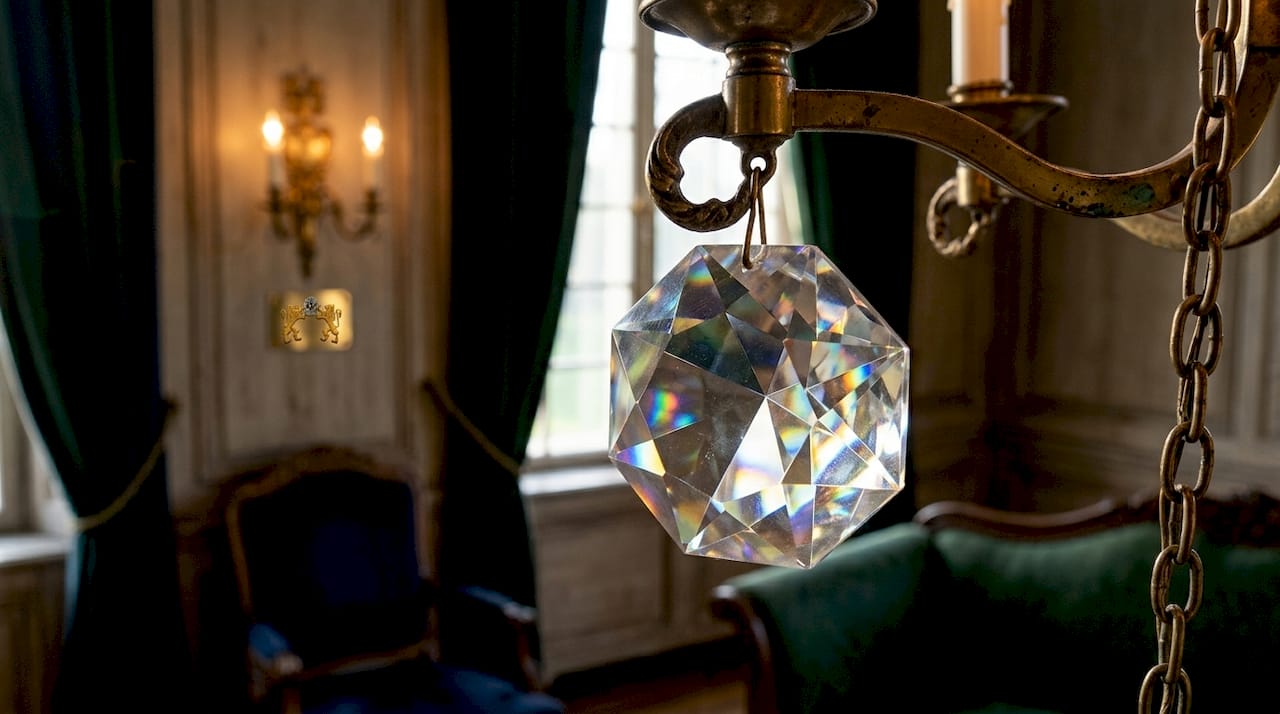
The material itself matters enormously. Swarovski crystals contain roughly 32% lead oxide, which gives them a higher refractive index than standard glass or acrylic alternatives. A higher refractive index means light bends more sharply at each facet, producing more vivid spectral separation and stronger sparkle. Acrylic crystals bend light less aggressively, which makes them a reasonable budget option but noticeably less brilliant in direct comparison.
The multiplication effect is what makes crystal fixtures feel alive. Consider a chandelier with 60 individual drops: each drop has multiple facets, and each facet redirects light independently. The total number of redirected beams runs into the hundreds, which is why faceted crystal surfaces produce ambient glow and rainbow patterns rather than a single focused beam.
Key optical benefits of crystal light diffusion include:
- Shadow softening: Scattered light fills corners that a directional fixture leaves dark.
- Rainbow projection: Spectral separation casts colored light patches on walls and ceilings.
- Glare reduction: Diffused output is easier on the eyes than a bare LED point source.
- Dynamic movement: As air currents shift hanging crystals, the sparkle patterns shift with them, adding life to the room.
Pro Tip: Position a faceted crystal drop within 12 inches of your LED source. The closer the crystal is to the light, the more intense the refraction and the wider the sparkle pattern it casts across the room.
Which LED color temperatures and CRI ratings best complement crystal lighting?
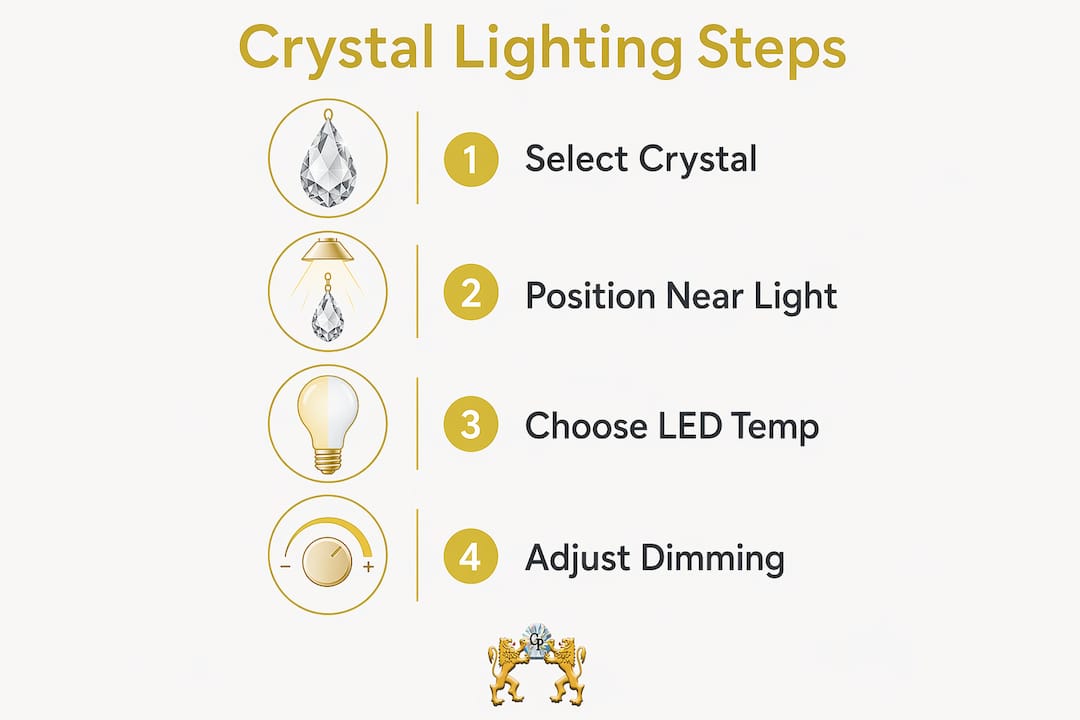
The LED you choose is just as important as the crystal itself. 2700K and 3000K LEDs represent the two most practical choices for crystal fixtures, and they produce meaningfully different results in the same room.
| LED Setting | Color Appearance | Best Room Use | Crystal Effect |
|---|---|---|---|
| 2700K warm white | Soft, yellowish glow | Bedrooms, living rooms | Warm amber sparkle, cozy ambiance |
| 3000K warm white | Cleaner, brighter white | Dining rooms, kitchens | Crisper sparkle, more defined rainbows |
| High CRI 90+ | Accurate color rendering | Any crystal fixture | Vivid spectral colors, richer rainbow display |
| Dimmable LED | Adjustable intensity | All spaces | Control sparkle intensity by mood or time of day |
A 2700K source wraps a room in warmth that feels residential and relaxed. The 2700K warm white tone is the standard choice for crystal capsule pendants and bedroom chandeliers precisely because it flatters skin tones and creates an inviting glow. A 3000K source reads as crisper and slightly more energetic, which suits dining rooms where you want the table setting to look sharp and the crystal fixture above it to sparkle with definition.
CRI, or Color Rendering Index, determines how accurately a light source renders the full visible spectrum. CRI above 90 is the threshold where crystal rainbow effects become genuinely vivid. Below 90, the spectral gaps in the LED output mean some colors in the rainbow simply do not appear, and the overall sparkle looks muted. LEDVANCE and similar quality LED brands offer dimmable 2700K bulbs at CRI 90+ that deliver both warmth and spectral richness.
Smart tunable LED systems let you shift between 2700K and 3000K on demand, which is genuinely useful in a multipurpose room. Set the fixture to 2700K for a relaxed evening and shift to 3000K when you want the crystal chandelier to perform at full visual impact for guests.
Pro Tip: Always buy dimmable LEDs for crystal fixtures. Dimming to 60 to 70 percent output often produces the most flattering sparkle because it reduces the harshness of the direct source while keeping enough intensity to drive strong refraction through the crystal.
What are practical ways to integrate crystals into different lighting fixtures and spaces?
Crystal lighting fixtures span a wide range of formats, and each one suits a different room and design goal. Chandeliers remain the most dramatic option, delivering ceiling-level sparkle that fills an entire room. Pendant lamps concentrate the effect over a specific surface like a dining table or kitchen island. Sconces add sparkle at eye level along hallways or beside mirrors, and table lamps with crystal bases or shades bring the effect down to a human scale in bedrooms and living rooms.
Here is a room-by-room approach to placing crystal elements for maximum effect:
- Living room: Hang a crystal chandelier or multi-drop pendant at the center of the seating area. The fixture becomes the focal point, and the sparkle it casts across the ceiling creates a sense of height and luxury.
- Dining room: Position a crystal chandelier so its lowest point sits 30 to 36 inches above the tabletop. At this height, the fixture illuminates the table directly while projecting rainbow patterns onto surrounding walls.
- Bedroom: Use a smaller crystal pendant or a pair of crystal sconces flanking the bed. The lower wattage and 2700K color temperature create a soft, intimate glow without overwhelming the space.
- Entryway: A crystal pendant or small chandelier in an entry hall makes an immediate impression. Hanging crystals near a window or LED source in this space maximizes prismatic sparkle for guests arriving at any time of day.
- Bathroom: Crystal sconces beside a mirror double the sparkle effect through reflection. Choose moisture-rated fixtures and pair them with a 3000K CRI 90+ bulb for clean, flattering light.
When selecting crystal material, match the choice to your budget and the room’s visual demands. Swarovski and other lead crystal options deliver the strongest sparkle and are worth the investment in high-visibility spaces like dining rooms and entryways. Standard glass crystal works well in secondary rooms. Acrylic is appropriate for children’s rooms or spaces where durability matters more than brilliance.
Placement geometry also determines the quality of the effect. Crystals hung directly in the path of a light beam produce the strongest refraction. Crystals placed to the side of a fixture catch less direct light and produce a subtler, more diffused glow. Both approaches are valid, but knowing the difference lets you design intentionally rather than by accident.
How to maintain and care for crystal lighting to preserve brilliance
Dust is the primary enemy of crystal sparkle. A thin layer of household dust on crystal surfaces scatters incoming light before it reaches the facets, reducing the clarity and intensity of the prismatic effect. Monthly cleaning maintains up to 95% of original light diffusion efficiency, which means a neglected fixture can lose nearly all of its sparkle over time without a single crystal being damaged.
Follow these maintenance steps to keep crystal lighting performing at its best:
- Dust weekly with a soft microfiber cloth or a clean feather duster. This prevents buildup from hardening on the surface.
- Clean monthly with a non-abrasive crystal spray cleaner. Products formulated specifically for delicate crystal surfaces dissolve grime without scratching the facets.
- Never wipe wet crystals. Wiping spreads residue and risks micro-scratches that permanently dull the surface. Use a drip-dry formula and let crystals air dry completely.
- Turn off and cool the fixture before any cleaning. Hot bulbs can crack crystal if cold cleaning solution contacts them directly.
- Inspect hardware annually. Check pins, wire loops, and frame connections on chandeliers. Loose fittings allow crystals to shift out of their optimal light-catching positions.
Pro Tip: Lay a clean white sheet on the floor beneath a chandelier before cleaning. Any drops that fall during the process land safely on the sheet rather than on hardwood or tile, and you can easily spot and reattach them.
Common mistakes and troubleshooting tips when enhancing lighting with crystals
Most crystal lighting disappointments trace back to a small number of avoidable errors. Recognizing them before installation saves both money and frustration.
- Using low-CRI bulbs. CRI below 90 strips the spectral richness from the light before it even reaches the crystal. The rainbow effect disappears, and the fixture looks flat. Replace any bulb below CRI 90 first before assuming the crystal itself is the problem.
- Ignoring color temperature. A 5000K daylight bulb in a crystal chandelier produces cold, clinical sparkle that clashes with warm residential interiors. Match color temperature to the room’s purpose using the 2700K to 3000K range.
- Skipping the cleaning schedule. Accumulated dust reduces light diffusion and brilliance faster than most homeowners expect. A fixture that looked spectacular at installation can look dull within three months without regular care.
- Poor placement relative to the light source. Crystals hung too far from the bulb receive insufficient direct light to refract effectively. Test placement with a temporary hook before committing to a permanent installation.
- Buying without testing. Order a sample crystal or a small set before purchasing a full chandelier replacement kit. Hold the sample near your actual light source in your actual room to confirm the sparkle meets your expectations.
“The single most common fix I see in crystal lighting is simply swapping a low-CRI bulb for a high-CRI equivalent. The transformation is immediate and costs less than ten dollars.”
Testing lighting samples before final installation is the one step most homeowners skip and most designers never do. The difference between a crystal that performs beautifully in a showroom and one that looks flat in your home almost always comes down to the bulb behind it.
Key takeaways
Crystal lighting enhancement works best when high-quality faceted crystals, CRI 90+ LEDs at 2700K to 3000K, and a consistent monthly cleaning routine are combined in the same fixture.
| Point | Details |
|---|---|
| Crystal material determines sparkle quality | Lead crystal like Swarovski produces stronger refraction than glass or acrylic due to a higher refractive index. |
| LED color temperature shapes the mood | Use 2700K for warm, cozy rooms and 3000K for dining or task spaces where crisper sparkle suits the setting. |
| CRI 90+ is non-negotiable | Bulbs below CRI 90 suppress the spectral colors that make crystal rainbow effects vivid and impressive. |
| Placement drives performance | Hang crystals directly in the light path and within 12 inches of the source for maximum prismatic output. |
| Monthly cleaning preserves up to 95% efficiency | Dust accumulation is the fastest way to lose sparkle without any physical damage to the crystal itself. |
Why crystals changed how I think about home lighting
I spent years recommending paint colors and furniture arrangements to clients who wanted their rooms to feel more alive. The single change that consistently produced the most dramatic reaction was adding crystal elements to an existing light fixture. Not a full chandelier replacement. Sometimes just a set of hanging crystal drops clipped to a pendant lamp the client already owned.
What surprises people is how much the LED behind the crystal matters. I have seen beautiful Swarovski drops look completely flat under a cheap 4000K bulb, and I have seen modest glass crystals perform brilliantly under a quality 2700K CRI 95 source. The crystal is the instrument, but the LED is the musician. Get the bulb wrong and the instrument stays silent.
The maintenance piece is where most homeowners underinvest. A dusty crystal fixture is not just less beautiful. It is actively working against your lighting by scattering incoming light before the facets can do their job. A ten-minute monthly cleaning with the right crystal spray cleaner is the difference between a fixture that performs at 95% and one that performs at 60%.
My honest recommendation: start with one room, one fixture, and the right bulb. The results will tell you everything you need to know about whether to go further.
— BCC
Bring your home to life with Crystalplace crystal lighting
Crystalplace has supplied authentic crystal lighting elements to homeowners and designers since 1992, sourcing directly from Swarovski and other verified crystal manufacturers.
Whether you are outfitting a new chandelier, refreshing an existing fixture with replacement drops, or exploring decorative hanging crystals for a window or pendant lamp, Crystalplace carries the full range of crystal prisms, drops, beads, and finials you need. Every product is selected for optical clarity and craftsmanship, so the sparkle you see in the product photos is the sparkle you get in your home. Orders over $22 ship free within the USA. Browse the full crystal lighting collection and find the pieces that match your fixture, your room, and your vision.
FAQ
What is lighting enhancement with crystals?
Lighting enhancement with crystals is the use of faceted crystal elements to refract, diffuse, and scatter light from LED or natural sources, creating prismatic sparkle and soft ambient glow in interior spaces. The effect comes from the crystal’s faceted geometry and refractive index, not from any electrical modification to the fixture itself.
What LED bulb works best with crystal fixtures?
A dimmable LED at 2700K or 3000K with a CRI rating above 90 produces the strongest crystal sparkle and most vivid rainbow effects. Bulbs below CRI 90 suppress spectral colors and make even high-quality crystals look flat.
How often should I clean crystal lighting?
Monthly cleaning with a non-abrasive crystal spray cleaner maintains up to 95% of original light diffusion efficiency. Weekly dusting with a microfiber cloth prevents buildup between deeper cleans.
Does crystal type affect the sparkle quality?
Lead crystal, such as Swarovski, produces noticeably stronger sparkle than glass or acrylic because its higher refractive index bends light more sharply at each facet. For high-visibility spaces like dining rooms and entryways, lead crystal delivers the most dramatic effect.
Can I add crystals to an existing light fixture?
Individual crystal drops, prisms, and hanging crystals attach to most existing fixtures using standard pins or wire loops, making it straightforward to upgrade a pendant lamp, chandelier, or sconce without replacing the entire fixture.
Recommended
- Enhance your space: the role of crystals in lighting – CrystalPlace
- Enhance Your Home with Crystal Interior Lighting – CrystalPlace
- DIY crystal light fixture upgrade: step-by-step guide – CrystalPlace
- Crystal lighting benefits: 30% brighter, elegant interiors – CrystalPlace