

Discover the role of chandelier crystals, their types, benefits for interior design, light enhancement, and expert tips for selection and DIY repairs.
Gorgeous light patterns dancing across your dining room often start with the right chandelier crystals. These decorative pieces do more than simply hang in your home—they use ordered structures to refract and reflect light, creating spectacular brilliance that enhances any interior. Knowing the basics of crystallization and quality materials empowers you to select, repair, or customize your chandelier, ensuring every detail brings out beauty and sophistication in your space.
Key Takeaways
| Point | Details |
|---|---|
| Chandelier Crystals Enhance Lighting | Crystals improve light refraction, creating dazzling patterns and increasing overall brightness in a room. |
| Material Quality Matters | Authentic crystals, like Swarovski, provide superior sparkle and durability compared to standard glass, affecting long-term performance. |
| Shape Influences Light Effects | The shape of chandelier crystals alters light distribution; select shapes that complement your design and desired visual impact. |
| Proper Care is Essential | Using the right cleaning techniques and regular maintenance can prevent damage and prolong the life of chandelier crystals. |
What Are Chandelier Crystals? Essential Basics
Chandelier crystals are decorative glass or mineral components that hang from chandeliers to catch and reflect light. They transform ordinary fixtures into stunning focal points that scatter brilliant patterns throughout your room. Understanding what they are helps you appreciate their value and make informed choices when upgrading your own chandeliers.
The Core Definition
At their simplest, chandelier crystals are precision-cut pieces designed to bend and bounce light rays. Minerals like quartz form the basis of many authentic crystals, with their ordered atomic structures creating the clarity needed for superior light refraction. Unlike basic glass, true crystals have a consistent internal structure that determines how light travels through them.
These pieces come in various shapes and sizes, each engineered to maximize light reflection from different angles. A single chandelier might contain anywhere from a dozen to several hundred individual crystals working together.
How Chandelier Crystals Are Made
Chandelier crystals start as raw materials that undergo crystallization processes to develop their distinctive properties. Manufacturers freeze molten material until molecules organize into precise geometric formations that catch light.
The production involves several key steps:
- Heating raw materials to extremely high temperatures
- Cooling the material in controlled conditions to form crystal structures
- Cutting and polishing each piece to exact specifications
- Inspecting for clarity and flaws
This careful manufacturing ensures that every crystal sparkles consistently and aligns with your neighbors in the chandelier.
Authentic Versus Standard Crystals
Not all chandelier crystals perform equally. Authentic crystals like Swarovski contain higher lead content, which increases their refractive index and creates more brilliant light effects. Standard glass alternatives scatter light adequately but lack the intense sparkle of premium materials.
The difference becomes obvious when sunlight hits your chandelier:
- Premium crystals throw sharp, rainbow-like prisms across walls and ceilings
- Standard glass produces softer, less defined light patterns
- Lower-quality imitations show noticeable cloudiness or color inconsistencies
Authentic chandelier crystals contain carefully engineered compositions that create superior light refraction compared to standard glass alternatives.
When you’re shopping for replacement crystals or planning a DIY repair, choosing authentic materials ensures your chandelier will deliver the elegant light display you expect.
Why Shape Matters
Chandelier crystals come in distinct shapes, each affecting how light travels through your fixture. Common shapes include:
- Pendeloque (teardrop shape) - creates dramatic hanging lines
- Arabesque (geometric prism) - maximizes light reflection in multiple directions
- Ball (spherical) - adds weight and uniform sparkle
- Icicle (elongated crystal) - produces vertical light patterns
The shape you choose depends on your chandelier’s design style and the light effect you want to create. An Arabesque prism works beautifully in modern fixtures, while Pendeloque crystals complement traditional chandeliers perfectly.
Pro tip: When replacing damaged crystals, match the exact shape and size of originals to maintain consistent light distribution across your entire chandelier.
Types of Chandelier Crystals and Quality Differences
Not all chandelier crystals are created equal. The materials used, precision of cutting, and optical properties determine whether your chandelier sparkles brilliantly or merely glimmers. Understanding these differences helps you make smart choices when upgrading or repairing your fixture.
Material Types
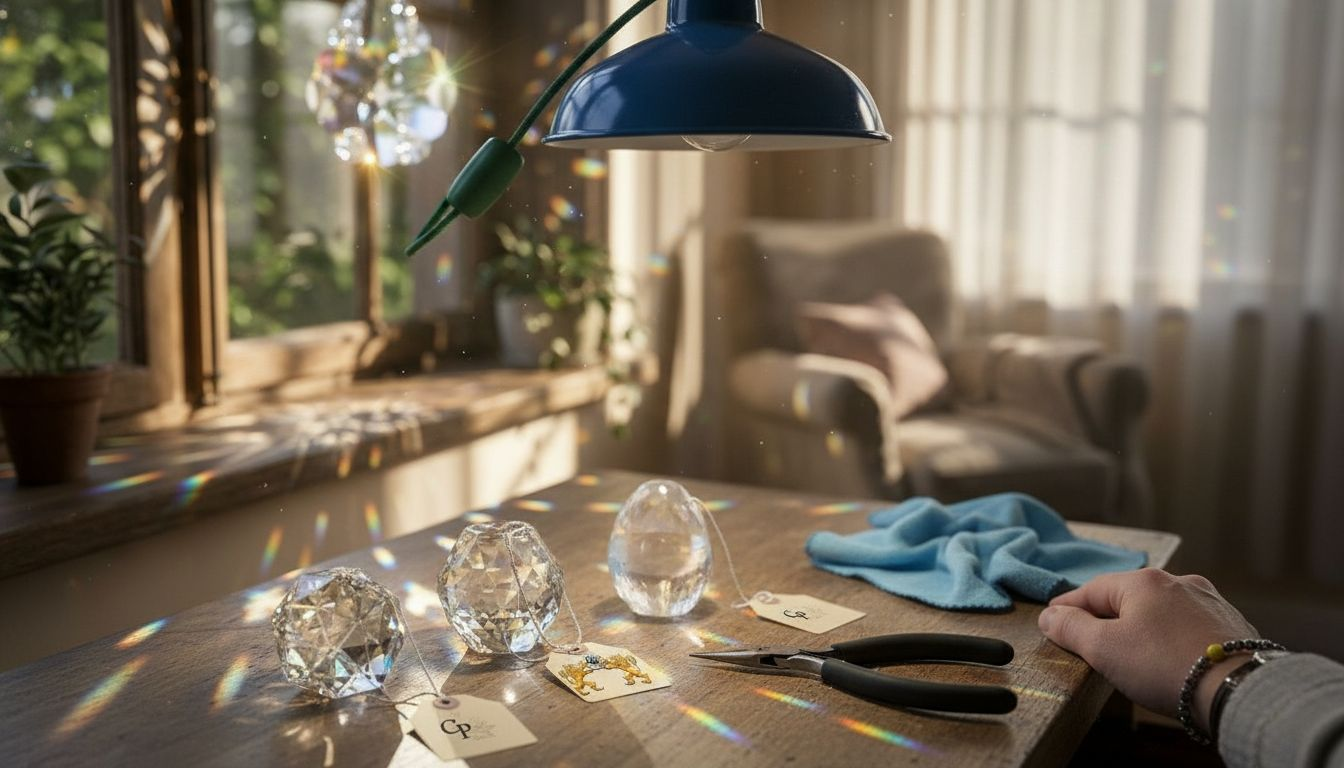
Chandelier crystals come from several material categories, each with distinct properties and price points. Material composition and refractive index directly affect how light travels through the crystal and creates visual effects.
The main types include:
- Swarovski crystals - precision-cut with superior optical properties and highest sparkle
- Lead crystal - contains 24 to 32 percent lead oxide for enhanced brilliance
- Quartz and rock crystal - natural minerals with excellent clarity and durability
- Glass crystals - more affordable alternatives that mimic premium crystal appearance
- Synthetic crystals - lab-created materials engineered to simulate natural properties
Each material serves different budgets and aesthetic preferences, but the performance gap between premium and budget options is immediately visible under light.
Here’s a quick comparison of popular chandelier crystal materials and their typical benefits:
| Material Type | Visual Impact | Durability | Approximate Cost Level |
|---|---|---|---|
| Swarovski Crystal | Maximal brilliance | Resists clouding | Very high |
| Lead Crystal | Strong sparkle | Long-lasting | High |
| Quartz/Rock Crystal | Natural clarity | Excellent scratch resistance | High |
| Glass | Subtle shimmer | Prone to dulling | Low |
| Synthetic Crystal | Imitates premium look | Moderate lifespan | Medium |
Quality Factors That Matter
Three key elements separate high-quality crystals from mediocre ones: clarity, cut precision, and optical properties including color and luster.
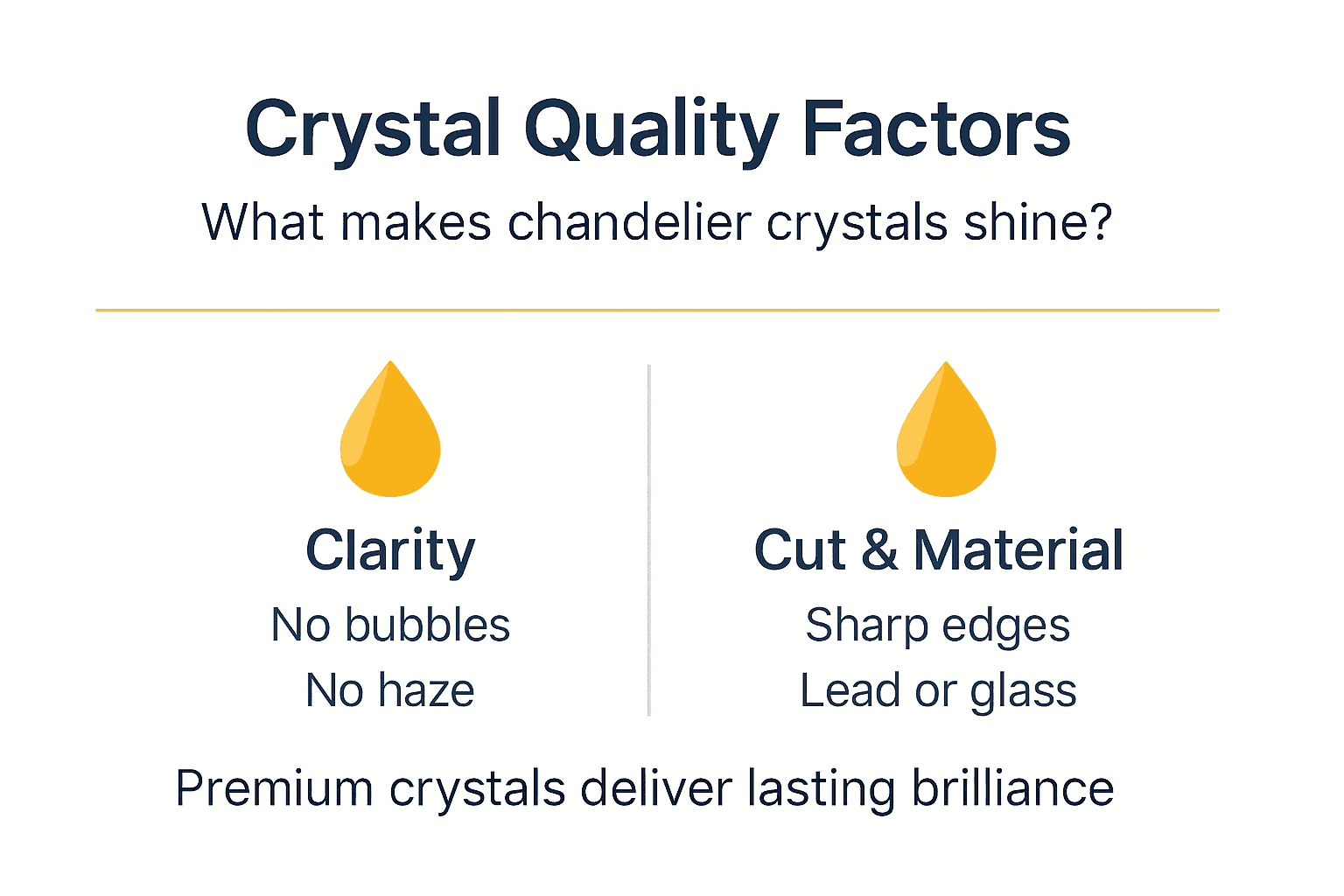
Clarity means the crystal should be completely transparent without cloudiness, bubbles, or color inconsistencies. Premium crystals show zero defects when held to light.
Cut precision determines how effectively light refracts and disperses. Poorly cut crystals waste light by reflecting it unevenly. High-quality cuts maximize the number of light rays bouncing inside the crystal before exiting, creating those mesmerizing rainbow patterns.
Authentic Swarovski Versus Imitations
Swarovski crystals represent the gold standard for chandelier materials. Their precision cutting and specially formulated glass deliver unmatched sparkle and light dispersion. You can spot authentic Swarovski crystals by their laser-etched logos and consistent high-quality appearance.
Imitation crystals look similar at first glance but reveal themselves under close inspection:
- Authentic Swarovski - crystal-clear, sharp light rays, precise facets
- Lower-quality imitations - slightly cloudy, dull sparkle, rough edges
- Budget glass - noticeably murky, minimal light reflection, visible manufacturing flaws
Investing in authentic crystals pays dividends through superior light performance and lasting elegance that cheaper alternatives cannot match.
When shopping for real crystals versus chandelier crystal replacements, expect higher prices for genuine materials. Quality crystals typically cost three to five times more than imitations, but they deliver proportionally superior results.
Price Versus Performance
Budget crystals might seem like smart economics initially. However, they fade quickly under regular lighting and require replacement far sooner than premium options. Authentic crystals maintain their brilliance for decades.
Consider the long-term value: spending more upfront on quality crystals means fewer replacements and consistent elegance throughout your home.
Pro tip: Request close-up photos or samples from sellers before committing to bulk crystal purchases, since online images often don’t reveal surface defects or cloudy areas visible in person.
How Chandelier Crystals Enhance Lighting Effects
Chandelier crystals do far more than hang from a fixture. They transform ordinary bulb light into spectacular visual displays that fill your room with brilliance and color. Understanding how they work helps you appreciate their value and choose the right crystals for your space.
The Science of Light Refraction
When light passes through chandelier crystals, it bends and bounces in controlled ways. Refraction, reflection, and light dispersion combine to create the dazzling effects you see shimmering across your walls and ceiling.
Each faceted surface on a crystal acts like a tiny mirror and prism combined. Light enters the crystal, bounces around inside, and exits from multiple angles. This redirects light in directions it wouldn’t naturally travel, spreading illumination throughout your room far more effectively than a bare bulb.
Creating Spectral Colors
One of the most magical aspects of chandelier crystals is their ability to break white light into rainbow colors. This happens because different wavelengths of light bend at different angles when passing through crystal material.
The result creates:
- Color dynamics - subtle rainbow hues dancing across surfaces
- Visual complexity - intricate light patterns that change as you move
- Atmospheric depth - layered lighting that adds sophistication
- Enhanced elegance - those spectacular sparkles that make chandeliers iconic
Even modest lighting becomes dramatic when filtered through quality crystals.
Amplifying Overall Brightness
Chandelier crystals don’t just scatter light randomly. They amplify it. A chandelier with hundreds of crystals multiplies the visible brightness far beyond what the bulbs alone could produce.
Consider how professional installations work: multiple bulbs combined with crystal chains and prisms create luminance levels that appear almost magical. The crystals catch light from every angle and redistribute it, making rooms feel brighter and more inviting without increasing actual wattage.
High-quality crystals multiply the apparent brightness of your lighting by reflecting and refracting light multiple times before it reaches your eyes.
This efficiency means you can use lower-wattage bulbs while maintaining superior illumination quality. Your electricity bill stays lower while your room glows more beautifully.
Transforming Ambient Light Into Dynamic Effects
Ordinary room lighting becomes extraordinary when crystal chandeliers enter the picture. Static light transforms into a dynamic visual experience with movement and dimension.
As natural light shifts throughout the day or as you adjust artificial lighting, the crystals respond by creating different patterns and intensities. This constantly evolving display adds life to your interior design that flat ceiling fixtures simply cannot match.
When combined with proper chandelier lighting effects and home elegance, the right crystal arrangement becomes a permanent feature that enhances your space’s character.
Pro tip: Install your chandelier where morning or afternoon sunlight can strike the crystals directly, since natural light creates more dramatic and colorful prism effects than artificial lighting alone.
Selection Tips for Aesthetic and Functional Goals
Choosing the right chandelier crystals requires balancing beauty with practical performance. Your selections should enhance your room’s lighting while complementing your interior design style. The right approach considers both what looks stunning and what actually works in your space.
Assess Your Lighting Goals First
Before selecting crystals, clarify what you want your chandelier to achieve. Do you need bright task lighting for dining, ambient sparkle for a living room, or dramatic accent lighting for an entryway? Your primary goal shapes every other decision.
Lighting design goals including warmth and sparkle directly influence which crystal types work best for your needs. Warm-toned bulbs pair beautifully with lead crystal that enhances golden hues. Cool white bulbs showcase the sharp, clear sparkle of Swarovski crystals more dramatically.
Consider these lighting factors:
- Brightness level - how much illumination you need
- Color temperature - warm, neutral, or cool light preference
- Sparkle intensity - subtle shimmer versus dramatic prism effects
- Light distribution - concentrated beam or spread illumination
Evaluate Your Space and Style
Your room’s size, ceiling height, and decor style narrow down which crystals work best. A small dining room with 8-foot ceilings needs different crystals than a grand foyer with vaulted ceilings. Similarly, traditional spaces call for classic Pendeloque cuts, while modern interiors benefit from geometric Arabesque shapes.
Measure your chandelier’s dimensions and note your current decor colors and materials. Crystals should feel like natural extensions of your design, not afterthoughts.
Consider Durability and Maintenance
Not all crystals perform equally over time. Authentic materials resist clouding and maintain their sparkle for decades. Budget alternatives dull noticeably within a few years of regular use.
Think about maintenance too. Some crystal shapes collect dust more easily than others. Hanging crystals in high-traffic areas need different durability considerations than those in formal living rooms.
Selecting high-quality, durable crystals means fewer replacements and consistent elegance that lasts through years of enjoyment.
Weight and Structural Compatibility
Crystal selection must account for your chandelier’s mounting system and electrical components. Heavier Swarovski and lead crystal options require proper support structures. Lightweight glass alternatives work with less robust installations but sacrifice some performance benefits.
Verify your fixture can safely support your chosen crystal weight. Check mounting hardware capacity and ceiling junction box ratings before purchasing.
Key structural considerations:
To help with budgeting and fixture compatibility, here’s a summary of considerations for crystal selection:
| Selection Factor | Why It Matters | Typical Recommendation |
|---|---|---|
| Weight | Fixture must support load | Check mounting specs before purchase |
| Light Distribution | Impacts room brightness | Choose shape for targeted illumination |
| Maintenance Needs | Affects sparkle longevity | Prefer durable, easy-to-clean materials |
| Cost Efficiency | Influences lifespan value | Compare price per year |
- Total crystal weight capacity of your fixture
- Individual crystal size and how they attach
- Chain or stem stability for hanging systems
- Existing fixture condition and age
Budget Alignment
Authentic Swarovski crystals cost more upfront but deliver superior performance and longevity. Budget options cost less initially but require replacement sooner, ultimately costing more over time.
Calculate your true cost by dividing crystal price by expected lifespan. Premium crystals often win on cost-per-year basis.
Pro tip: Mix crystal types strategically by using authentic premium crystals in visible hanging positions where light hits them directly, and standard-quality crystals in less visible areas, maximizing visual impact while managing your overall budget.
Common Mistakes in Crystal Maintenance and Repair
Many homeowners damage their beautiful chandelier crystals through well-intentioned but misguided maintenance practices. Knowing what not to do protects your investment and keeps your chandelier sparkling for years. These mistakes are surprisingly common, but they’re entirely preventable.
Using the Wrong Cleaning Products
This is the single most damaging mistake people make. Harsh chemical cleaners, window sprays, and abrasive scrubbers scratch and cloud crystal surfaces permanently. What works on glass countertops destroys delicate chandelier crystals.
Proper cleaning methods using gentle solutions protect crystal luster far better than aggressive products. Vinegar solutions and specialized crystal cleaners dissolve dust and residue without causing damage.
Avoid these cleaning mistakes:
- Ammonia-based cleaners - cause clouding and discoloration
- Abrasive scrubbers - create microscopic scratches that dull sparkle
- Paper towels - leave lint and scratch surfaces
- Bleach or strong solvents - damage lead crystal’s surface coating
Neglecting Regular Cleaning Schedules
Dust builds up gradually on crystals, making them look dull and lifeless. Skipping regular cleanings forces you into deeper cleaning eventually, which risks more damage. Consistency beats intensity every time.
Dust accumulation happens faster in kitchens, living rooms with fireplaces, or homes with pets and high foot traffic. These areas demand more frequent attention.
Establish monthly or quarterly cleaning habits depending on your environment. Quick monthly touch-ups prevent the need for aggressive annual deep cleans.
Improper Handling During Removal and Reattachment
Dropped or broken crystals happen when people rush removal or force crystals back into position. Each crystal needs careful support from below as you work the wire or hook free. Yanking or twisting crystals breaks the mounting wire and damages delicate edges.
Careful removal and reattachment techniques prevent breakage and structural damage that compromises your chandelier’s appearance and safety.
When removing crystals for cleaning, support the crystal’s weight in your palm while gently loosening the wire. Reattach slowly, ensuring the wire seats properly before releasing pressure.
Ignoring Manufacturer Guidelines for DIY Repairs
Not all chandeliers are designed for amateur crystal replacement. Some use specialized mounting systems that require specific techniques or tools. Guessing at repair methods causes more problems than it solves.
Before attempting any repair, consult your chandelier’s documentation or contact the manufacturer. Professional guidance prevents costly mistakes.
When DIY repairs make sense:
- Simple crystal swaps on modern fixtures with standard wire hooks
- Routine cleaning with proper materials
- Basic dust removal and maintenance
When to call professionals:
- Structural repairs to mounting systems
- Electrical work or rewiring
- Repairs on antique or valuable chandeliers
- Crystal replacement on complex or delicate fixtures
Not Addressing Loose Crystals Promptly
A single loose crystal becomes a cascade of problems. Loose crystals vibrate during ceiling fan operation or when doors slam, loosening adjacent crystals. One problem multiplies into many within weeks.
Inspect your chandelier monthly for loose crystals. Gently tighten any that wobble. This five-minute check prevents hours of future repair work.
Pro tip: Take close-up photos of your chandelier’s crystal arrangement before cleaning, so you can reference the exact placement when reattaching crystals, ensuring consistent aesthetics and proper weight distribution.
Elevate Your Space with Authentic Chandelier Crystals
The article highlights how chandelier crystals transform ordinary lighting into dazzling displays that fill your room with brilliance and elegance. If you have ever struggled with dull or cloudy crystals or wanted to enhance your chandelier’s sparkle, you understand the importance of superior clarity, precision cuts, and durable materials like Swarovski or lead crystal. Achieving the perfect light refraction and lasting beauty involves choosing authentic crystals that maximize brightness and create those enchanting prism effects discussed in the article.

Discover our extensive collection of high-quality chandelier crystals, including Swarovski and premium lead crystal options, at Crystal Place. Whether you need crystal prisms, replacement parts, or even custom-designed chandeliers, we provide all the essentials for stunning light and refined décor. Shop now to experience the unmatched sparkle that only genuine crystals can deliver and benefit from free shipping on orders over $22 within the USA. Don’t wait let your chandeliers shine brilliantly today with authentic crystals from Crystal Place. Explore our selection here chandelier crystals and start your journey to luminous elegance.
Frequently Asked Questions
What are chandelier crystals made of?
Chandelier crystals can be made from various materials, including authentic Swarovski crystals, lead crystal, quartz or rock crystal, glass, and synthetic crystals. Each material type has distinct properties affecting their appearance, brilliance, and cost.
How do chandelier crystals enhance lighting effects?
Chandelier crystals enhance lighting by refracting and reflecting light, creating a dazzling visual display. The facets of each crystal bend light, resulting in colorful patterns and increased brightness compared to bare light bulbs.
What is the difference between authentic and standard chandelier crystals?
Authentic chandelier crystals, like those from Swarovski, have a higher lead content, resulting in a more brilliant sparkle and superior light refraction. Standard glass alternatives are more affordable but produce less intense light effects and might have inconsistencies in clarity.
How should I maintain chandelier crystals to ensure their longevity?
To maintain chandelier crystals, use gentle cleaning solutions like a vinegar solution or a specialized crystal cleaner. Avoid abrasive scrubbers and harsh chemicals that can scratch or cloud the surface. Regular cleaning every few months helps keep them sparkling and clear.
Recommended
- Chandelier Crystals: Transforming Home Lighting Elegance – CrystalPlace
- What Are Chandelier Crystals: Craftsmanship and Impact – CrystalPlace
- Crystal Chandelier Explained: Elegance and Practicality – CrystalPlace
- Hanging Crystals for Chandeliers: Elevate Decor 2025 – CrystalPlace