

Discover why choose crystal beads for your jewelry and decor projects. Experience unmatched sparkle, durability, and design versatility.
TL;DR:
- Crystal beads offer superior optical brilliance and durability due to their high refractive index and scratch resistance, making them ideal for jewelry, decor, and events. Selecting the right bead depends on project purpose, attachment method, and desired light effects, with size and finish choices enhancing overall design. Their consistent quality and versatile application justify their premium price over glass or acrylic beads, especially in professional craftsmanship.
Crystal beads are premium-quality, faceted glass beads engineered for maximum light refraction, durability, and visual consistency, making them the superior material choice for jewelry, home decor, and event design. Unlike standard glass or acrylic alternatives, crystal beads deliver a level of sparkle and precision that elevates any project from ordinary to polished. Whether you are stringing a bridal necklace, assembling a chandelier garland, or designing a centerpiece for a wedding reception, the reasons to choose crystal beads come down to three factors: optical performance, structural integrity, and creative range.
Why choose crystal beads over other materials
Crystal beads earn their premium status through measurable physical properties, not marketing language. They carry a Mohs hardness rating of 6 to 7, placing them well above plastic and acrylic beads on the scratch-resistance scale. That hardness matters in everyday jewelry, where beads rub against skin, fabric, and other surfaces constantly.
The optical brilliance of crystal beads comes from their high refractive index. Lead oxide was historically used to achieve this effect, but modern crystal beads are lead-free and still maintain the same level of brilliance. This makes them safe for all users, including children, without any sacrifice in sparkle. Brands like Swarovski and Czech crystal producers achieve this through precision cutting and fire-polishing processes that maximize light entry and exit angles.
Consistent facet polishing gives crystal beads a professional uniformity that glass beads cannot match. When you are building a matching set or following a tutorial pattern, every bead behaves the same way under light. That repeatability is not a minor convenience. It is the difference between a finished piece that looks intentional and one that looks assembled.
Key material advantages at a glance:
- Scratch resistance: Mohs 6 to 7 hardness outperforms acrylic (Mohs 2 to 3) and standard glass
- Optical clarity: High refractive index produces rainbow light dispersion across surfaces
- Precision cutting: Facets are machine-cut or fire-polished for consistent angles
- Lead-free safety: Modern formulas meet international safety standards without losing brilliance
- Uniformity: Consistent sizing across a batch simplifies pattern work and professional finishing
How to choose crystal beads for your specific project
Selecting the right crystal bead starts with your project’s function, not its appearance. Experienced artisans prioritize attachment method and project type over sparkle alone when choosing cuts. A bead that photographs beautifully may be impractical if it cannot be secured properly to your chosen substrate.
Here is a practical framework for making the right call:
-
Define your attachment method first. Threaded beads work for stringing and wire wrapping. Flat-back crystals are designed for gluing onto fabric, resin, or rigid surfaces. Sew-on beads have two or four holes for stitching directly into textiles. Choosing the wrong format wastes both time and material.
-
Match the cut to the desired light effect. Bicone beads concentrate light into sharp points, creating high-contrast sparkle ideal for jewelry focal points. Rondelles produce a softer, wider light spread suited to layered necklaces and bracelets. Drop shapes create movement and are the standard choice for chandelier strands and earrings. Cubes and hexagons produce geometric reflections that work well in modern decor applications.
-
Choose finish based on mood and setting. Aurora Borealis (AB) coatings add a rainbow iridescence that reads as glamorous under event lighting. Matte finishes reduce glare and suit minimalist or bohemian aesthetics. Metallic and luster finishes sit between the two, offering warmth without full-on sparkle. Crystal bead cuts like bicones, rondelles, and drops each suit different applications, so matching finish to cut amplifies the intended effect.
-
Size your beads to the scale of the project. For delicate jewelry like bracelets and earrings, 4mm to 6mm beads are standard. Necklace focal points and hair accessories typically use 8mm to 12mm. Decor applications like garlands and curtain strands call for 10mm to 14mm beads, where the larger surface area catches ambient light across a room.
-
Consider your skill level honestly. Smaller beads require finer wire and more precise knotting. If you are new to beadwork, starting with 8mm round or bicone beads gives you enough surface area to handle comfortably while still producing a polished result.
Pro Tip: Before purchasing in bulk, order a small sample pack in your chosen cut and finish, then test it under the actual lighting conditions of your final display space. A bead that glows under a jewelry store spotlight may look flat under warm residential lighting.
Crystal beads vs. glass, acrylic, and gemstone beads
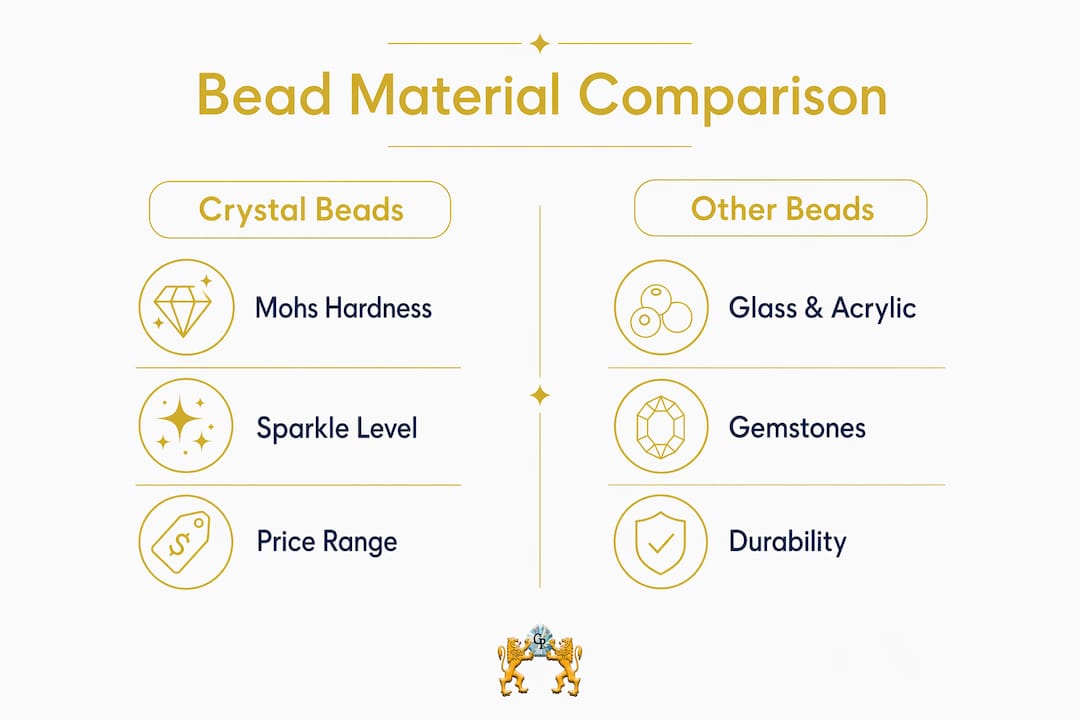
Understanding where crystal beads sit in the broader bead market helps you spend your budget where it counts. Crystal beads command a premium price due to their optical properties, typically ranging from $15 to $50 or more per 100 pieces compared to $3 to $15 for standard glass beads. That price gap reflects real differences in performance.
| Bead type | Price per 100 pcs | Mohs hardness | Sparkle level | Best applications |
|---|---|---|---|---|
| Crystal beads | $15 to $50+ | 6 to 7 | High, consistent | Fine jewelry, luxury decor, events |
| Glass beads | $3 to $15 | 5 to 6 | Moderate | Casual jewelry, craft projects |
| Acrylic beads | $1 to $5 | 2 to 3 | Low to moderate | Children’s crafts, budget decor |
| Gemstone beads | $20 to $100+ | Varies by stone | Variable | Statement jewelry, healing-focused work |
Crystal beads occupy the sweet spot between everyday glass and expensive gemstones. They deliver sparkle at an accessible price point that positions them as the practical choice for professional artisans who need consistent results without gemstone costs.
Gemstone beads bring natural variation in color and texture, which appeals to makers focused on crystal beads healing properties and energy work. But that natural variation is also a liability when you need 200 matching beads for a garland or a uniform bracelet set. Crystal beads win on consistency every time.
Fire-polished Czech glass beads offer a softer luster and subtle color variation that suits elegant, understated jewelry. They are a legitimate alternative for projects where full-intensity sparkle would overwhelm the design. The distinction matters: fire-polished glass is not the same as crystal, even though both use fire in their production. Crystal beads have a higher refractive index and sharper facets, producing a noticeably more intense light play.
Creative ways to use crystal beads in decor, jewelry, and events
Crystal beads are one of the most versatile materials in a decorator’s or artisan’s toolkit. The same 10mm faceted bead that anchors a bridal necklace can string into a window garland or accent a table centerpiece. That cross-application flexibility is a genuine advantage when you are working across multiple project types.
For jewelry design, crystal bead craftsmanship shines in layered necklaces where different cuts and sizes create visual depth. A bicone focal bead surrounded by smaller rondelles creates a graduated effect that draws the eye without requiring expensive gemstones. Bridal jewelry is one of the strongest use cases: the AB finish on Swarovski-style bicones catches ceremony lighting in a way that photographs exceptionally well.
For home decor and lighting, crystal bead strands illuminate interior spaces by refracting ambient light into prismatic patterns across walls and ceilings. Hanging a strand of 12mm faceted beads near a window creates a natural suncatcher effect that changes throughout the day. This is one of the most cost-effective ways to add visual interest to a room without structural changes.
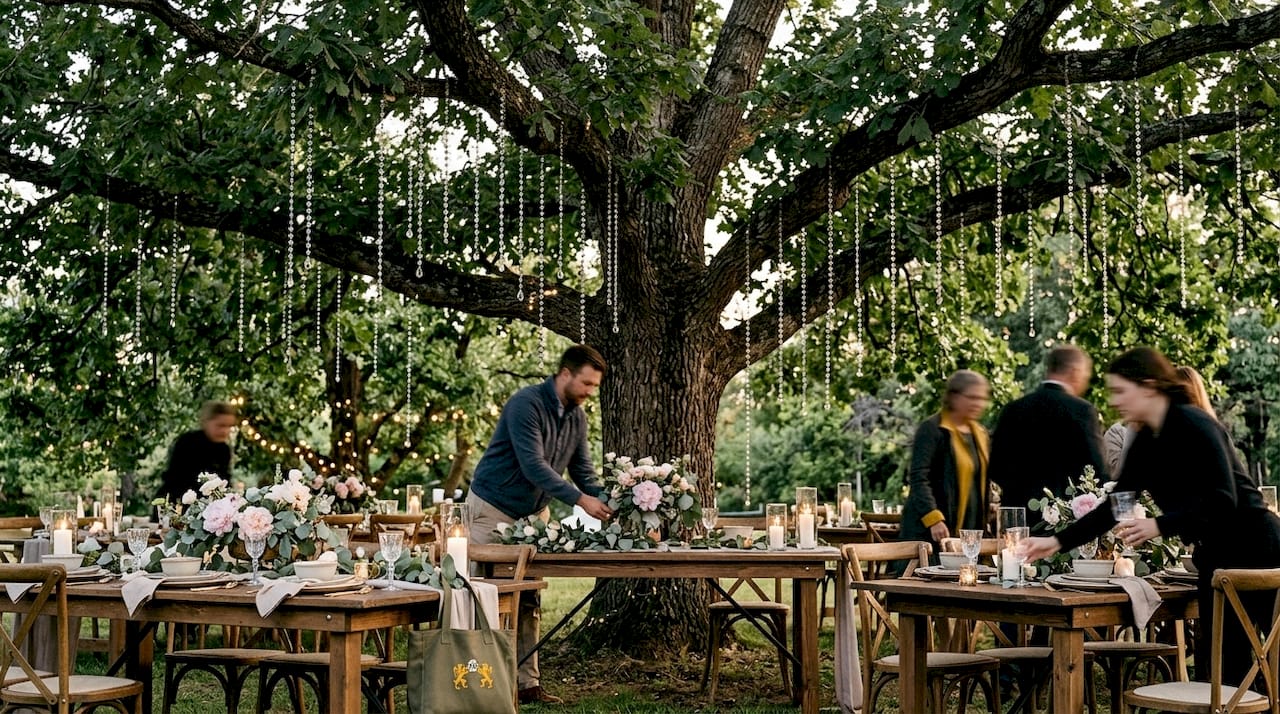
For event design, crystal bead garlands are the standard choice for wedding arches, table runners, and chair accents. The 10mm faceted bead strand is a proven workhorse for this application, offering enough visual weight to read across a reception hall without looking heavy or overdone.
Pro Tip: Pair crystal beads with matte gold or brushed silver wire rather than bright silver. The contrast between the warm metal and the cool crystal sparkle creates a more sophisticated result than matching finishes.
Crystal beads combine naturally with metal, wood, and textile components to produce layered, textured designs. A strand of clear crystal beads threaded between wooden discs creates a bohemian aesthetic. The same crystal beads threaded on fine gold wire against silk ribbon reads as formal and bridal. The material does not dictate the style. Your pairing choices do.
To preserve brightness over time, store crystal beads away from direct sunlight when not in use, and clean finished pieces with a soft, dry cloth. Avoid ultrasonic cleaners on strung pieces, as the vibration can weaken thread or wire over time.
Key takeaways
Crystal beads outperform glass, acrylic, and gemstone beads on consistency, sparkle, and durability, making them the most reliable material for professional jewelry, decor, and event design work.
| Point | Details |
|---|---|
| Superior hardness | Mohs 6 to 7 rating makes crystal beads far more scratch resistant than acrylic or plastic alternatives. |
| Lead-free brilliance | Modern crystal beads are lead-free and safe for all users while retaining full optical performance. |
| Cut determines function | Choose bicone, rondelle, drop, or cube cuts based on attachment method and light effect, not appearance alone. |
| Price-quality balance | Crystal beads sit between glass and gemstones in cost, delivering professional sparkle without gemstone pricing. |
| Cross-application versatility | The same crystal bead works in fine jewelry, home decor, and event design with different pairing choices. |
What I have learned from years of working with crystal beads
The most common mistake I see artisans make is buying crystal beads based on how they look in a product photo under studio lighting. Real-world light is messier and more interesting. A bead that looks like a simple clear sphere in a flat-lay image can throw prismatic arcs across an entire wall when placed near a window. You cannot know this until you test it in your actual space.
The second mistake is over-specifying sparkle. Not every project benefits from maximum brilliance. I have seen beautiful decor pieces ruined because every element competed for attention. Crystal beads work best when they are the deliberate focal point, not the default choice for every component. Pair them with matte or textured materials to let the sparkle land.
On the question of quality investment: buying cheaper acrylic beads to prototype a design makes sense. But finishing a piece in acrylic when the design calls for crystal is a false economy. The difference in light behavior is visible to anyone standing in the room, and it affects how the finished work is perceived and valued.
The trend I find most interesting right now is the use of crystal beads in architectural lighting contexts, specifically in residential spaces where homeowners want the effect of a custom chandelier without the full installation cost. A well-placed crystal bead garland near a pendant light fixture can transform the light quality of an entire room. That application is underused and worth exploring.
— BCC
Explore premium crystal beads at Crystalplace
Crystalplace has supplied authentic crystal products to homeowners, artisans, and event designers since 1992. The collection covers every format serious makers need: faceted bead strands, individual bicones and rondelles, AB and metallic finishes, and sizes from 4mm to 14mm. Every product is sourced directly from trusted crystal manufacturers, so the quality and consistency you see in product images matches what arrives at your door. Explore the full range of crystal prisms and bead strands at Crystalplace, with free shipping on US orders over $22. Whether you are repairing a chandelier, building a bridal piece, or designing an event installation, the right bead is in stock and ready to ship.
FAQ
What makes crystal beads different from regular glass beads?
Crystal beads have a higher refractive index and a Mohs hardness of 6 to 7, producing sharper sparkle and greater scratch resistance than standard glass beads. The precision-cut facets in crystal beads also create more consistent light reflection across a finished piece.
Are crystal beads safe to use in children’s jewelry?
Modern crystal beads are lead-free and meet international safety standards, making them safe for use in children’s accessories. Always verify the product specification confirms lead-free formulation before purchasing for children’s projects.
How do I choose between bicone and rondelle crystal beads?
Bicone beads concentrate light into sharp, high-contrast points and work best as focal elements in jewelry. Rondelles produce a wider, softer light spread and are better suited to layered designs or stringing between other bead types.
Can crystal beads be used for home decor and not just jewelry?
Crystal beads are widely used in home decor applications including window garlands, chandelier repairs, curtain accents, and table centerpieces. Their ability to refract ambient light into prismatic patterns makes them particularly effective near natural light sources.
What is the best way to maintain crystal bead brightness?
Store crystal beads away from prolonged direct sunlight and clean finished pieces with a soft, dry cloth. Avoid ultrasonic cleaners on strung or wired pieces, as vibration can weaken the thread or wire over time.
Recommended
- Why Use Crystal Beads for Your Craft Projects – CrystalPlace
- The Role of Crystal Beads in Design for Decorators – CrystalPlace
- Crystal Bead Types: Enhance Lighting and Style with Informed Choices – CrystalPlace
- The Ultimate Guide to Choosing Crystal Round Faceted Beads – CrystalPlace