

Discover creative hanging crystal use cases that refract light into rainbows, brighten rooms, and enhance home decor with expert placement and maintenance tips.
Most people assume hanging crystals are purely decorative accents that add sparkle to a room. In reality, these elegant pieces function as powerful light tools that refract sunlight into vibrant rainbows, brighten dim spaces, and transform ordinary rooms into dynamic environments. Whether you’re a homeowner seeking fresh decor ideas or an interior decorator exploring innovative lighting solutions, understanding how to strategically use hanging crystals unlocks creative possibilities that blend beauty with function. This guide reveals practical use cases, placement strategies, and expert tips to maximize the impact of crystals in your home.
Key Takeaways
| Point | Details |
|---|---|
| Window placement matters | Position crystals in direct sunlight near east or west facing windows to maximize rainbow dispersion. |
| Diverse crystal shapes | Mix teardrop prisms spheres icicle shapes octagon crystals and disks to create varied light patterns while keeping metal finishes cohesive. |
| Distance from glass matters | Place crystals 2 to 4 inches from window glass to optimize light capture. |
| Secure installation essential | Use secure hardware like monofilament fishing line, jump rings, or chandelier pins and test stability before leaving crystals unattended. |
Common hanging crystal use cases for home decor
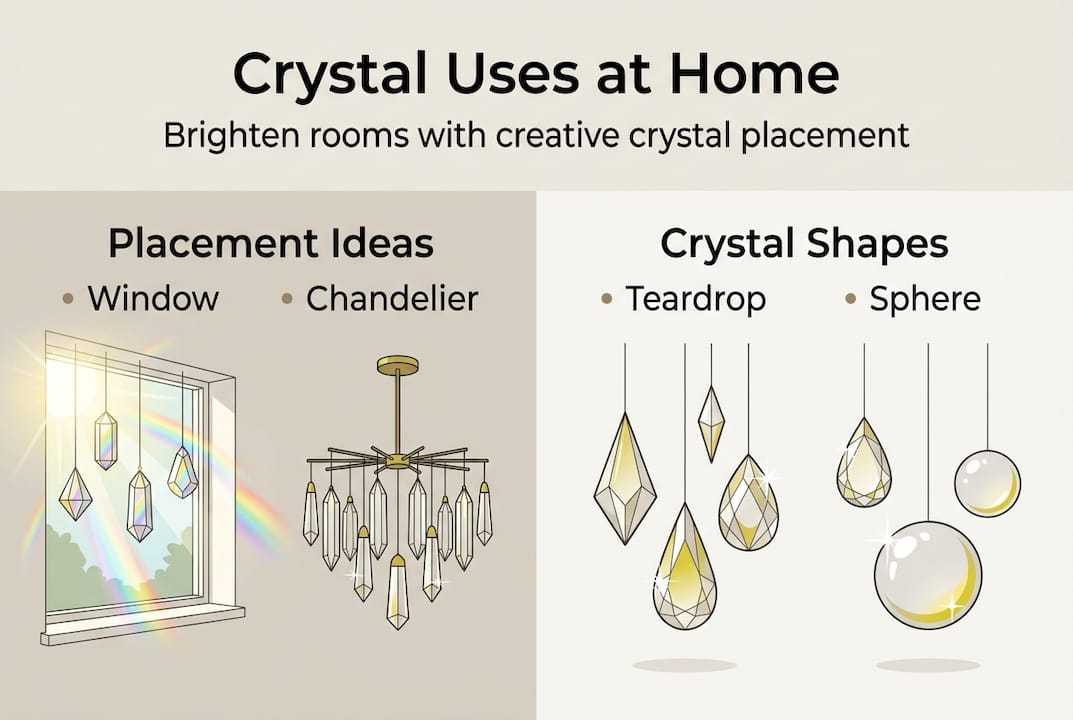
Hanging crystals are used in windows, chandeliers, standalone installations to refract light into rainbows and brighten spaces. Each application offers unique aesthetic and functional benefits that transform how light moves through your home.
Windows represent the most popular location for hanging crystals. When positioned to catch direct sunlight, crystals scatter light across walls and floors, creating moving rainbow patterns that shift throughout the day. East or west-facing windows work best because morning and afternoon sun hits at optimal angles for maximum dispersion. South-facing windows provide consistent light but may produce less dramatic color separation.
Chandeliers showcase crystals in clustered arrangements that multiply sparkle effects. Traditional designs use teardrop prisms, octagon beads, and icicle shapes to catch light from bulbs and scatter it in every direction. Modern interpretations might feature geometric clusters or asymmetric arrangements that create unique shadow patterns. The key advantage is that chandelier crystals work day and night, unlike window installations that depend on natural light.
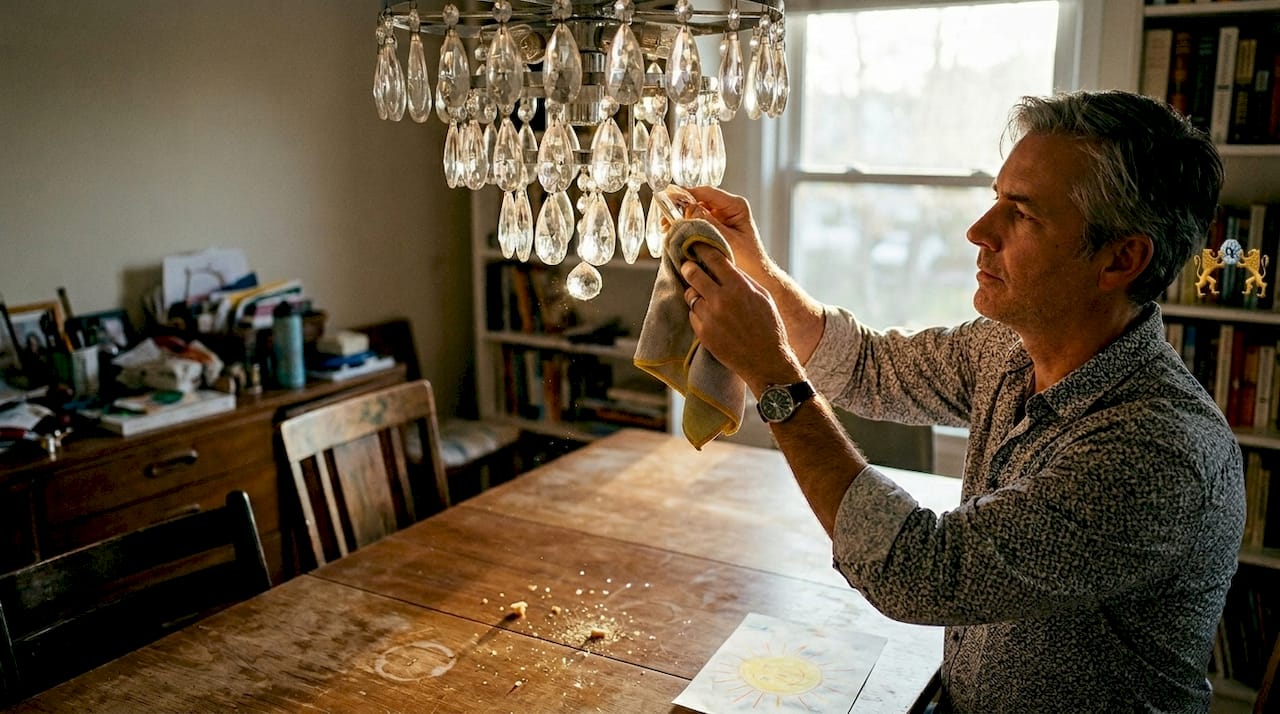
Standalone displays offer flexibility for creative placement. Hanging a single large suncatcher in an entryway creates an immediate focal point that greets visitors with color. Grouping smaller crystals at varying heights in a corner adds dimension to empty spaces. Some decorators suspend crystals from ceiling beams or archways to define room boundaries without solid partitions.
Different crystal shapes serve distinct decorative purposes:
- Teardrop prisms produce classic rainbow arcs with concentrated color bands
- Spheres create circular light patterns that diffuse evenly across surfaces
- Icicle shapes deliver elongated prisms ideal for vertical spaces
- Octagon crystals generate geometric light patterns with sharp color definition
- Disk shapes spread light widely, perfect for illuminating larger wall areas
The choice depends on your room’s architecture and the mood you want to establish. Mixing shapes within a single installation adds visual interest while maintaining cohesive style through consistent metal finishes and spacing.
How to hang and position crystals for optimal light effect
Proper installation determines whether your crystals deliver stunning light displays or disappointing results. Use fishing line, jump rings, or chandelier pins on sturdy hooks; position 2-4 inches from window glass; stagger heights for clusters; match hardware to decor.
Follow these steps for secure, effective crystal hanging:
- Select clear monofilament fishing line (20-30 lb test) or metal jump rings for invisible or decorative hanging options
- Install small adhesive hooks or cup hooks in window frames, ensuring they support the crystal’s weight
- Measure hanging length so crystals suspend 2-4 inches from window glass for optimal light capture
- Attach crystals using chandelier pins or wrapped wire loops that won’t slip or loosen over time
- Test the installation by gently tugging to confirm security before leaving crystals unattended
Positioning distance from the window glass significantly impacts light refraction quality. Too close (under 2 inches) and crystals may not catch enough direct sunlight. Too far (over 5 inches) and light disperses before reaching the crystal’s facets. The 2-4 inch sweet spot allows maximum sunlight penetration while preventing the crystal from touching glass during movement.
When creating grouped displays, stagger crystal lengths by 3-6 inches between each piece. This prevents crystals from colliding during air movement and creates layered depth that makes installations more visually interesting. Odd numbers (3, 5, or 7 crystals) typically look more balanced than even groupings.
Pro Tip: Rotate crystals 90 degrees every few months to ensure even wear on hanging points and prevent line weakening from constant sun exposure in one position.
Hardware finish matters more than many realize. Brass or gold-tone fixtures complement warm color schemes and traditional decor. Chrome or silver finishes suit modern, minimalist spaces. Clear or white hardware disappears visually, letting crystals take center stage. Matching your hanging crystal prism decor ideas to existing room elements creates cohesive design.
For chandelier installations, understanding how to replace chandelier crystals ensures you maintain proper balance and symmetry. Uneven crystal distribution creates lopsided light patterns and reduces overall impact.
Choosing authentic crystals vs. faux: impact on lighting and decor
Authentic lead crystal or Swarovski crystals refract light better than glass or plastic due to higher refractive index, producing sharper rainbows. Understanding material differences helps you make informed purchasing decisions that match your budget and performance expectations.
| Crystal Type | Refractive Index | Light Quality | Durability | Price Range |
|---|---|---|---|---|
| Lead Crystal | 1.545-1.650 | Brilliant, sharp rainbows | Excellent, resists scratching | $$$ |
| Swarovski Crystal | 1.650+ | Maximum sparkle, vivid colors | Superior, precision cut | $$$$ |
| Standard Glass | 1.500-1.520 | Good color, softer edges | Moderate, chips easily | $$ |
| Acrylic/Plastic | 1.490 | Weak dispersion, fades | Poor, yellows with UV | $ |
Lead crystal contains at least 24% lead oxide, which increases density and refractive properties. This higher refractive index means light bends more sharply as it passes through, separating into more distinct color bands. The result is rainbows with deeper reds, brighter yellows, and more saturated blues compared to standard glass.
Swarovski chandelier prisms represent the premium tier, featuring precision machine cutting that creates perfectly symmetrical facets. These uniform surfaces reflect and refract light with mathematical consistency, producing the most brilliant sparkle available. Swarovski’s proprietary crystal formula achieves refractive indices above 1.650, noticeably superior to standard lead crystal.
Glass crystals offer a middle ground for budget-conscious buyers. While they lack the extreme brilliance of lead crystal, quality glass still produces attractive rainbow effects. Glass crystals generate richer red and violet tones due to their specific light dispersion properties. However, glass scratches more easily and may develop cloudiness over years of handling.
Acrylic and plastic alternatives initially seem appealing due to low cost and light weight. These materials fail in long-term performance because UV exposure causes yellowing and surface degradation. Plastic’s low refractive index produces weak, washed-out rainbows that disappoint compared to authentic crystal. For temporary decorations or outdoor use where breakage risk is high, plastic works, but indoor permanent installations deserve better materials.
Pro Tip: Hold a crystal up to bright light and observe the rainbow it casts on a white surface. Authentic lead crystal produces rainbows with clearly separated color bands, while glass shows softer transitions and plastic creates barely visible color shifts.
When you choose the right chandelier crystal types for your lighting fixtures, material quality directly impacts the ambiance and visual drama your installation creates. Investing in authentic crystal pays dividends through superior performance and longevity that faux materials cannot match.
Common challenges and expert tips for maintaining hanging crystals
Dust dulls sparkle; secure hardware prevents breakage; avoid dark corners and overcrowding for best effect. Addressing these common issues ensures your crystals maintain their beauty and function for years.
Dust accumulation is the primary enemy of crystal brilliance. Even thin layers of household dust scatter light before it reaches crystal facets, reducing rainbow intensity by 30-40%. Regular cleaning every 2-3 weeks prevents buildup. Use a soft microfiber cloth slightly dampened with distilled water and a drop of mild dish soap. Avoid paper towels, which scratch surfaces, and harsh chemicals that may damage crystal coatings or metal hardware.
Hardware failure causes crystals to fall, creating safety hazards and potential breakage. Adhesive hooks lose strength over time, especially in humid environments or near heating vents. Inspect mounting points monthly, replacing any hooks showing signs of loosening. For valuable or heavy crystals, upgrade to screw-in cup hooks that anchor directly into window frames or ceiling joists. Metal fatigue in jump rings or chandelier pins can develop after years of stress, so replace hardware every 2-3 years as preventive maintenance.
Overcrowding installations creates chaotic light patterns that confuse the eye rather than delight it. When crystals hang too close together (less than 2 inches apart), their individual rainbows overlap and muddy color separation. Proper spacing allows each crystal’s light display to remain distinct while contributing to an overall cohesive effect. Think of it like speakers in a sound system: proper positioning creates clarity, while cramming everything together produces noise.
Placement in unsuitable locations wastes crystal potential:
- North-facing windows receive minimal direct sunlight in most climates
- Corners far from windows never catch enough light to produce rainbows
- Behind furniture or curtains blocks light paths and hides visual effects
- Near air vents where constant movement causes crystals to tangle or strike each other
“The most common mistake is hanging beautiful crystals in spots where they’ll never catch adequate light. A $50 crystal in the right window outperforms a $200 crystal in a dark corner every time. Placement trumps quality when it comes to visible results.”
Temperature extremes can affect crystal integrity over time. Avoid hanging crystals directly against windows in climates with severe winters, as rapid temperature changes may cause micro-fractures in lead crystal. Similarly, intense summer heat concentrated through south-facing glass can weaken adhesive hooks or fishing line.
To transform your space with prisms effectively, treat maintenance as an ongoing practice rather than an occasional task. A quick weekly inspection takes 30 seconds but prevents most problems before they escalate.
Enhance your home with premium hanging crystals from CrystalPlace
Now that you understand how to select, position, and maintain hanging crystals for maximum impact, finding quality products becomes the next step. CrystalPlace specializes in authentic crystal prisms for chandeliers and decorative installations, offering Swarovski and lead crystal options that deliver the brilliant light refraction this guide describes.
Explore a curated selection designed specifically for homeowners and decorators who demand genuine quality. Each product includes detailed specifications about crystal type, dimensions, and optimal use cases, removing guesswork from your purchasing decisions. Whether you need a single statement piece like the crystal ornament suncatcher rainbow maker or components to restore an entire chandelier, expert guidance ensures you choose crystals that match your specific lighting and aesthetic goals. Free shipping on orders over $22 makes it easy to experiment with different styles and placements throughout your home.
FAQ
What are the best windows for hanging crystals?
East and west-facing windows are ideal because morning and afternoon sun hits at angles that produce the most vibrant rainbow displays. South-facing windows provide consistent light throughout the day but may create less dramatic color separation. Avoid north-facing windows in most climates, as they receive minimal direct sunlight and won’t activate crystal prism effects effectively.
How often should I clean hanging crystals?
Clean crystals gently every 2-3 weeks using a soft microfiber cloth dampened with distilled water and a drop of mild dish soap. More frequent cleaning may be necessary in dusty environments or homes with pets. Avoid harsh chemicals, abrasive materials, or paper towels that can scratch crystal surfaces and reduce their light-refracting capabilities over time.
Can hanging crystals improve room lighting in low-light spaces?
Qualitative reports suggest hanging crystals multiply light, making rooms feel brighter even in low-light areas. Crystals refract and scatter available light across surfaces, creating the perception of increased brightness through distributed illumination. While effects aren’t empirically measured in lumens, many users report noticeable improvements in how spacious and welcoming dim rooms feel after adding strategically placed crystals.
Are there Feng Shui benefits to hanging crystals?
In Feng Shui, crystals like clear quartz amplify chi and amethyst crystals promote calmness. Practitioners believe crystals influence energy flow and emotional atmosphere in living spaces. From a practical standpoint, glass crystals offer superior visual benefits compared to plastic alternatives, creating light displays that naturally draw attention and enhance mood through color and movement regardless of spiritual beliefs.
What crystal shapes work best for small spaces?
Single sphere or teardrop crystals work exceptionally well in compact rooms because they create focused light patterns without overwhelming limited space. Avoid large clustered installations that can make small areas feel cluttered. One strategically placed 40-50mm crystal near a window often delivers more impact than multiple smaller pieces, concentrating rainbow effects into a defined area that becomes a natural focal point.
Recommended
- Hanging Crystals: Transforming Light and Elegance – CrystalPlace
- 12 Hanging Crystal Prism Decor Ideas That Glow – CrystalPlace
- Why Hanging Crystals Change a Room’s Energy – CrystalPlace
- Why hanging crystals sparkle: science and decor tips 2026 – CrystalPlace