

Learn how to choose the best crystal prisms for your home or commercial space. Compare shapes, materials, and placements to maximize light and beauty.
TL;DR:
- Correct selection factors include clarity, cut precision, size, material, and hardware.
- Shape and material choices should match space style and lighting goals.
- Lead crystal provides superior sparkle, while glass offers cost-effective, versatile options.
Choosing the right crystal prism feels simple until you’re standing in a room that just doesn’t sparkle the way you imagined. A prism that looks stunning in a catalog can fall flat in your entryway, or worse, scatter light in ways that feel harsh instead of magical. The difference between a room that glows with warm, dancing rainbows and one that feels flat often comes down to a few overlooked decisions: cut quality, material, shape, and placement. This guide walks you through every factor that matters, so you can select crystal prisms with real confidence and get the visual results you’re after.
Key Takeaways
| Point | Details |
|---|---|
| Material matters | Choose between lead crystal for maximum sparkle or glass for budget projects with solid results. |
| Shape impacts effect | Pick prism styles like icicle, droplet, or octagon to match your lighting and decorative goals. |
| Room-based selection | Tailor prisms to each space, using bold cuts for entryways and subtle designs for bedrooms or offices. |
| Strategic placement | Placing prisms in sunlight or under spotlights enhances their rainbow and light-reflection effects. |
Key criteria for selecting crystal prisms
Before you browse shapes and styles, you need a clear framework for what actually makes one prism better than another for your specific space. Light refraction, cut quality, and hanging style are the three pillars of any good prism selection decision. Get these right, and everything else falls into place.
Here are the core criteria to evaluate:
- Clarity: Look for prisms with no visible bubbles, cloudiness, or imperfections. High clarity means more light passes through cleanly, producing sharper rainbows and brighter reflections.
- Cut precision: The number of facets and how precisely they are angled determines how light bends. More precise cuts produce more vibrant color dispersion.
- Size: Larger prisms cast wider light patterns. Smaller prisms create delicate, concentrated effects. Match size to the scale of your room and fixture.
- Material: Lead crystal and glass behave very differently under light. We cover this in detail in a later section.
- Mounting hardware: The pin, loop, or clip that attaches your prism to a chandelier or window hook affects both security and how the prism hangs and rotates.
For residential spaces, you generally want prisms that balance beauty with durability. For commercial settings like hotel lobbies or retail stores, the priority often shifts toward visual drama and consistent performance under artificial lighting.
Exploring the full range of crystal prism types before you commit helps you avoid buying something that looks beautiful in isolation but clashes with your fixture or room style. You should also consider how prism suncatcher uses differ from chandelier applications, since placement and light source change everything.
Pro Tip: Hang a test prism in your window at different times of day before committing to a full chandelier replacement. The angle of sunlight shifts dramatically between morning and afternoon, and your rainbow effects will too.
Top types of crystal prisms for home and commercial spaces
Now that you know what to look for, let’s explore the top prism shapes and their best uses. Different shapes like icicles, drops, and octagons produce unique lighting patterns, so matching shape to intent is key.
- Icicle prisms: Long and tapered, these create sweeping arcs of refracted light. They work beautifully in modern and transitional spaces where you want movement and drama without heavy ornamentation.
- Ball prisms: Spherical shapes scatter light in all directions evenly. They suit nurseries, reading nooks, and any space where you want soft, ambient glow rather than directional rainbows.
- Octagon prisms: The classic chandelier choice. Their eight flat facets produce sharp, defined light patterns. They pair well with traditional and formal dining rooms.
- Drop prisms: Teardrop shaped and elegant, these are popular in entryways and foyers. They catch light from multiple angles and add a graceful, flowing quality to any fixture.
- Pendeloque prisms: A designer favorite. Their elongated, faceted shape produces rich, layered light effects. They are the go-to choice for high-end residential and boutique commercial spaces.
“The shape of your crystal prism is not just an aesthetic decision. It is a lighting decision. Choose based on the effect you want the room to feel, not just how the prism looks on its own.”
For entryways specifically, drops and pendeloques tend to outperform other shapes because they move slightly with air currents, creating a living, shifting light display. Check out entryway prism ideas for curated recommendations by room type. If you want broader chandelier design inspiration before finalizing your choice, visual references can help you see how shapes translate from product page to real room. The chandelier prism guide is also a strong starting point for matching prism shapes to specific fixture styles.
Crystal materials: Lead crystal vs. glass
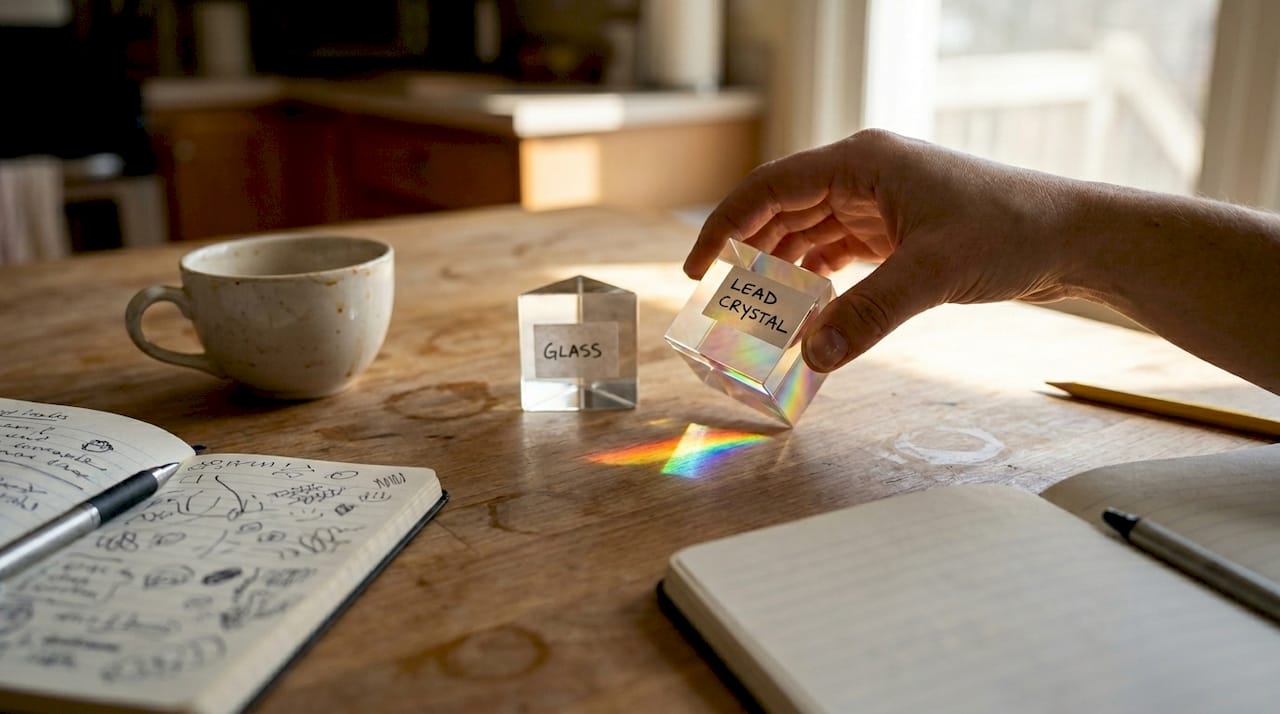
Selecting your prism shape is just one piece. Your material choice matters just as much. Lead crystal delivers superior sparkle and sharper refraction compared to standard glass, but that does not mean glass is always the wrong call.
| Feature | Lead crystal | Glass |
|---|---|---|
| Light refraction | Exceptional, sharp rainbows | Good, softer dispersion |
| Clarity | Very high | Moderate to high |
| Weight | Heavier | Lighter |
| Durability | Slightly more fragile | More impact resistant |
| Price | Higher | More affordable |
| Best use | Feature fixtures, focal points | Large installations, budget projects |
Here is a quick breakdown of when each material makes sense:
- Choose lead crystal when: You are outfitting a statement chandelier in a dining room or entryway, where the fixture is a visual centerpiece and you want maximum sparkle.
- Choose glass when: You need to replace dozens of prisms on a large fixture, cover a wide area, or are working within a tighter budget without sacrificing the overall look.
- Avoid cheap imitations: Some products labeled as crystal are actually low-grade acrylic or plastic. These yellow over time and produce dull, lifeless light effects.
For a deeper look at the tradeoffs, the lead crystal vs glass comparison covers everything from refractive index to long-term value. If you want your space to feel genuinely luxurious, these luxurious prism tips show how to get a high-end result even on a moderate budget. You can also find specialty options like glass crystal cabochons for surface applications where hanging prisms are not practical.
Pro Tip: Hold a prism up to a light source before buying. Lead crystal will produce immediate, sharp color separation. Glass will produce a softer glow. That quick test tells you more than any product description.
Situational recommendations: Choosing the right prism for your space
With materials and shapes in mind, tailor your choice for each room with these focused recommendations. Suncatchers, chandeliers, and entryways each benefit from different prism choices for both aesthetic and functional reasons.
| Room | Best prism type | Recommended material |
|---|---|---|
| Living room | Icicle or pendeloque | Lead crystal |
| Dining room | Octagon or drop | Lead crystal |
| Entryway/foyer | Drop or pendeloque | Lead crystal |
| Bedroom | Ball or small drop | Glass or lead crystal |
| Kitchen | Small icicle or ball | Glass |
| Commercial lobby | Pendeloque or octagon | Lead crystal |
| Retail space | Icicle or ball | Glass or lead crystal |
Here are some practical dos and don’ts to guide your final decision:
- Do consider the direction your windows face. South-facing rooms get strong afternoon sun, making any quality prism perform beautifully. North-facing rooms need lead crystal to maximize whatever light is available.
- Do layer different prism types on larger fixtures for a custom, designer look.
- Don’t mix acrylic and real crystal on the same fixture. The difference in sparkle will be obvious and distracting.
- Don’t overlook scale. A single large pendeloque in a small bedroom can overwhelm the space. Several small drops will feel more balanced.
For window applications, exploring window suncatcher options gives you a focused look at what works best with natural light. If you want the absolute pinnacle of sparkle, Swarovski prism ideas show how authentic Swarovski pieces can transform both residential and commercial spaces.
What most decorators overlook: Beyond the basics of crystal prism selection
After years of working with homeowners and designers, we have noticed a consistent pattern. People spend significant time comparing brands and prices, then place their prisms in a spot that gets almost no direct light. The result is a beautiful product that never performs the way it should.
Color temperature matters enormously. A warm-toned bulb (around 2700K) paired with lead crystal creates a golden, romantic glow. A cool daylight bulb (5000K and above) produces crisp, icy rainbows. Neither is wrong, but the combination needs to be intentional.
Sun orientation is equally underrated. East-facing windows deliver the best morning rainbow displays. West-facing windows shine in the afternoon. If your room faces north, you will rely more on artificial lighting, which changes your material and cut priorities entirely.
Fixture compatibility is the third overlooked factor. A prism that hangs beautifully on one chandelier style may rotate awkwardly or sit at the wrong angle on another. Always check pin size and loop diameter before ordering. We also recommend reading about entryway prism insights to see how real installations handle these variables. The brand on the label matters far less than getting these three factors right.
Find the perfect crystal prisms for your next project
Ready to discover prisms tailored exactly to your project? Here’s where to get started.
At Crystal Place, we have been sourcing and supplying authentic crystal prisms since 1992, working directly with trusted brands to bring you genuine quality for both residential and commercial spaces. Whether you are refreshing a single chandelier or outfitting an entire hotel lobby, our selection covers every shape, size, and material you need.
Start with our clear rainbow maker prism, a customer favorite that delivers stunning rainbow effects in any sunlit space. For a broader look at everything we carry, browse our full chandelier crystal selection and filter by shape, material, and size to find exactly what your project calls for. Orders over $22 ship free within the USA.
Frequently asked questions
What is the best material for crystal prisms?
Lead crystal offers superior refraction and sparkle for statement fixtures, but high-quality glass prisms are a smart, affordable choice for larger installations where you need volume without sacrificing overall visual impact.
How do I choose the right prism shape for my chandelier?
Match the prism shape to your fixture’s style and the light effect you want. Icicle and octagon prisms suit modern and transitional looks, while pendeloques and drops complement classic and formal designs.
Can crystal prisms create rainbows in my room?
Yes. When placed in direct sunlight or under a strong light source, properly cut crystal prisms cast vibrant, moving rainbows across walls and ceilings. Cut quality and placement angle are the two biggest factors in how vivid those rainbows appear.
Are there budget-friendly crystal prism options?
Glass prisms offer a classic look at a lower price point and perform well for most decorative needs. Glass versions are available for budget-conscious projects without completely giving up the sparkle effect.
What is the most popular use for crystal prisms in home decor?
Suncatchers and chandeliers are the most common decorative uses. Hanging suncatchers in south or west-facing windows and accenting chandeliers with crystal drops or pendeloques remain the top choices for homeowners and decorators alike.
Recommended
- Types of crystal prisms for stunning home lighting in 2026 – CrystalPlace
- Best Crystal Prisms for Rainbow Light – CrystalPlace
- Transform Your Space with Premium Crystal Prisms – CrystalPlace
- Crystal Prism Basics: Lighting, Decor, and Brilliance – CrystalPlace
- Top 7 advantages of marble lighting for elegant interiors – Marmorique