

Learn how to choose and place crystal lighting in modern rooms, compare crystal details, select suitable bulbs, and keep fixtures clear and balanced.
Crystal lighting does not belong only in ballrooms and traditional dining rooms. With the right shape, scale, and finish, it can bring light and character to modern kitchens, bedrooms, entryways, and living spaces.
The effect comes from the way cut surfaces reflect and redirect light. Crystal does not create additional lumens, so claims that it makes every room a specific percentage brighter are misleading. The visible result depends on the crystal, its cut, the bulbs, the fixture design, and the room around it.
What Makes Crystal Lighting Look Different?
When light reaches a faceted crystal, it can reflect from the surface, change direction as it passes through the material, and separate into flashes of color.
The result depends on several details:
- Clarity of the material
- Quality and symmetry of the facets
- Crystal shape and size
- Position of the crystal around the bulbs
- Direction and intensity of the light
- Movement of the hanging pieces
- Cleanliness of the crystal
A large crystal is not automatically more brilliant than a smaller one. A well-cut prism placed directly in the light may produce a stronger visual effect than a larger piece positioned in shadow.
Our guide to chandelier crystal cut and quality explains these differences in more detail.
Compare Crystal by What You Can See
Marketing labels do not tell the whole story. When comparing crystal components, inspect the actual pieces whenever possible.
Look for:
- Clean, polished edges
- Evenly arranged facets
- Consistent clarity
- Minimal visible bubbles or internal marks
- Smooth holes without chipped edges
- Matching color and dimensions
- A shape that suits the fixture
Brand information can be helpful when authenticity matters, but a replacement must still fit the chandelier correctly.
For restoration work, compare a sample with the existing crystals during the day and after the chandelier is illuminated. That real-room comparison is more useful than an unsupported brightness percentage.
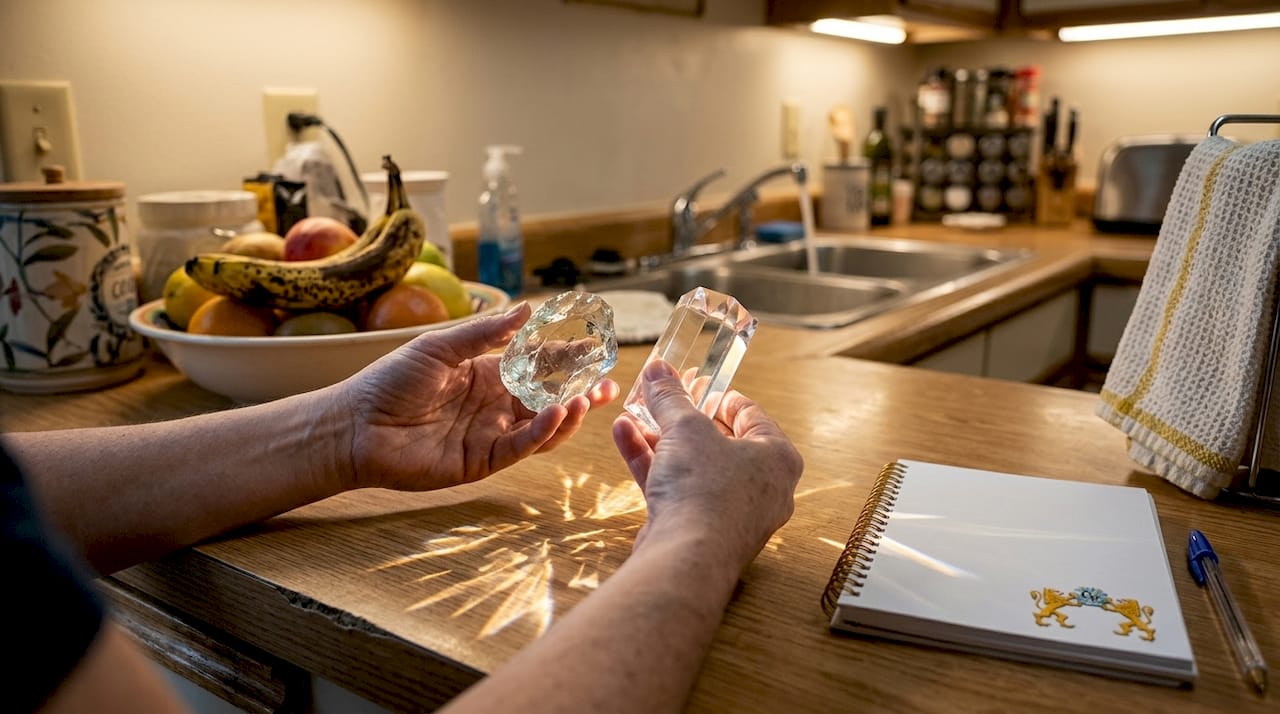
Read our guide to the crystal materials used in chandeliers before selecting replacement pieces.
Choose the Right Bulbs First
The bulb determines how much light the fixture produces. Crystal changes the way that light looks and moves through the room.
The U.S. Department of Energy recommends using lumens—not watts—to compare bulb brightness. Wattage measures electricity use, while lumens measure the amount of light produced.
Also check the bulb’s color temperature:
- Lower Kelvin values produce warmer, more yellow light.
- Higher Kelvin values produce cooler, bluer light.
- Warm light often creates a softer, traditional atmosphere.
- Neutral or cooler light can give clear crystal a crisper appearance.
Use only bulbs that match the chandelier manufacturer’s socket, wattage, heat, and dimmer requirements. If a dimmer is installed, confirm that both the bulbs and dimmer are compatible.
Match the Fixture to the Room
A crystal fixture should feel connected to the room rather than added as an afterthought.
Consider:
- Ceiling height
- Fixture width and overall drop
- Table or furniture placement
- Available headroom
- Nearby doors and walkways
- Natural light
- Other decorative finishes
- The fixture’s weight and mounting requirements
There is no single sizing formula that works for every room. A long dining table may suit a linear crystal fixture, while a tall entryway may need a narrower chandelier with more vertical presence.
Before ordering, confirm the complete fixture dimensions and ask a qualified installer to verify that the ceiling support is appropriate for its weight.
Our crystal chandelier sizing guide provides additional measurement advice.
Crystal Lighting for Different Rooms
Dining rooms
A crystal chandelier can define the dining area and create reflections around the table. Center the fixture carefully and consider how it looks from both seated and standing positions.
Entryways
An entry chandelier creates a strong first impression, but safe clearance matters. Check the fixture from the staircase, upper landing, doorway, and main walking path before choosing its size.
Kitchens
Modern crystal pendants or linear fixtures can soften hard surfaces such as stone, metal, and painted cabinetry. Keep the design visually clean so it complements rather than crowds the workspace.
Bedrooms
A smaller crystal fixture can add gentle detail without making the room feel overly formal. A dimmable light source provides more flexibility for different times of day.
Living rooms
Use crystal lighting as one part of a layered lighting plan. Floor lamps, table lamps, and accent lighting can provide practical illumination while the chandelier serves as the room’s focal point.
Make Crystal Work With Modern Décor
The frame often determines whether a crystal fixture feels traditional or contemporary.
For a modern room, consider:
- Simple geometric frames
- Open silhouettes
- Linear or waterfall arrangements
- Restrained use of crystal
- Brushed, polished, or warm metal finishes
- Clear crystals paired with neutral colors
- Repeated shapes instead of heavily mixed ornament
Traditional chandeliers can also work in modern interiors when the contrast looks deliberate. An ornate crystal fixture can become a focal point in an otherwise simple room.
Keep the Crystal Clear
Dust, grease, and fingerprints soften reflections and reduce the crisp appearance of the facets. Cleaning restores clarity, but no universal percentage applies to every chandelier.
Begin with a soft, lint-free cloth or brush. Follow the chandelier and crystal manufacturer’s instructions before using water or a cleaning product.
Swarovski’s official care instructions recommend avoiding harsh or abrasive materials and glass cleaners. For suitable washable crystal décor, Swarovski recommends lukewarm water, mild pH-neutral dish detergent, minimal water contact, and thorough drying.
For an installed chandelier:
- Turn off the power and allow the bulbs to cool.
- Do not spray sockets, wiring, or electrical connections.
- Support each crystal while cleaning.
- Avoid twisting crystals against their pins or connectors.
- Let every component dry completely before restoring power.
See our complete crystal chandelier maintenance guide for additional safety and care guidance.
Frequently Asked Questions
Does crystal lighting make a room brighter?
Crystal reflects and redirects light, which can make a fixture appear more active and visually brilliant. It does not guarantee a specific increase in measurable room brightness. The bulbs, fixture design, crystal placement, and room surfaces all affect the result.
What bulb color looks best with crystal?
That depends on the room. Warm light creates a softer, more traditional atmosphere, while neutral or cooler light can make clear facets look crisper. Compare bulbs using their Kelvin rating and choose the appearance that suits the space.
Can crystal lighting work in a modern home?
Yes. Linear fixtures, open frames, restrained crystal arrangements, and simple metal finishes work comfortably in modern interiors.
How should I compare crystal quality?
Look at clarity, facet symmetry, polished edges, hole quality, color consistency, and how the crystal performs under your actual lighting. For a larger purchase, test a sample first.
How do I choose the correct chandelier size?
Measure the fixture’s complete width and drop, then consider the room dimensions, ceiling height, furniture placement, walking clearance, and mounting requirements. Do not rely on one universal formula.
How should crystal lighting be cleaned?
Start with a soft, lint-free cloth and follow the manufacturer’s care instructions. Avoid harsh, abrasive products and prevent moisture from reaching electrical parts.
Final Advice
Choose crystal lighting for how it works in the actual room—not because of a promised brightness percentage.
The most successful fixture combines appropriate scale, clear and well-cut crystal, suitable bulbs, careful placement, and regular gentle maintenance. View samples under your normal lighting whenever possible and confirm the fixture’s installation requirements before purchasing.
CrystalPlace has supplied chandelier crystals and replacement components since 1992. Our team can help identify suitable crystals by shape, measurement, color, and connector style.
Sources
- U.S. Department of Energy: Consumer Guide to Energy-Efficient Lighting
- ENERGY STAR: Choosing Bulb Brightness and Color
- Swarovski: How to Care for Crystal Decorations