

Crystal prisms enhance interior lighting and décor by creating vibrant rainbows. Learn types, features, placement tips, and what sets real crystal apart.
Brightening a room can be as simple as introducing the right crystal prism into your décor. When sunlight or bulb light filters through these carefully crafted objects, the result is a display of bold, shifting rainbow hues that standard fixtures simply cannot achieve. For American interior decorators and homeowners who want both style and function, understanding the optical magic of genuine crystal prisms opens the door to brilliant, dynamic lighting and enduring visual appeal.
Key Takeaways
| Point | Details |
|---|---|
| Crystal Prisms Enhance Light | Crystal prisms bend and separate light, creating vibrant rainbow effects that enhance any space’s ambience. |
| Material Quality Matters | Authentic crystal outperforms glass alternatives in light refraction, offering superior visual brilliance and color saturation. |
| Placement is Key | Strategic positioning in areas with direct sunlight or near lighting fixtures maximizes the prism’s rainbow display. |
| Choose the Right Type | Select prism types based on light sources—natural sunlight or artificial bulbs—to achieve optimal effects in your décor. |
What Defines a Crystal Prism and Its Purpose
A crystal prism is a transparent solid object designed to bend and separate light into its individual colors through a process called refraction. When white light passes through the prism’s carefully angled surfaces, each wavelength bends at a slightly different angle, creating that iconic rainbow spectrum effect.
The magic happens because of the prism’s internal structure. A crystal lattice arrangement of atoms creates the optical properties that make light manipulation possible. This ordered atomic pattern is what distinguishes authentic crystal from ordinary glass.
Why Prisms Matter for Your Home
For homeowners and decorators, crystal prisms serve a dual purpose:
- Light enhancement: They multiply and amplify natural or artificial light, making rooms feel brighter and more dynamic
- Decorative brilliance: The rainbow effects add visual interest and sophistication to any space
- Functional elegance: Unlike purely decorative items, prisms actively transform your lighting environment
The refraction of light into spectrum colors creates depth and movement that static décor cannot achieve. Imagine sunlight streaming through a window and suddenly casting rainbow patterns across your walls and furniture. That’s the prism effect.
Real-World Applications
Crystal prisms work in countless ways throughout your home:
- Window suncatchers catch morning light and paint rainbows across rooms
- Chandelier crystals refract bulb light for amplified brilliance
- Hanging prisms create focal points in entryways or dining areas
- Shelf displays add sparkle to bookcases and cabinet collections
Authentic crystal delivers superior light refraction compared to glass or plastic alternatives, which is why quality matters when investing in your décor.
Not all prisms are created equal. Authentic crystal products, like premium crystal prisms designed for superior light performance, offer clarity and brilliance that budget materials cannot match. The density and composition of the crystal directly impact how effectively it disperses light.
Pro tip: Position crystal prisms where natural sunlight hits them directly during morning or afternoon hours to maximize rainbow effects and visual impact throughout your space.
Main Types and Distinct Features of Crystal Prisms
Crystal prisms come in different varieties, each with unique characteristics that affect how they refract light and suit different décor applications. The primary distinction comes down to their internal structure and how that geometry influences their optical performance.
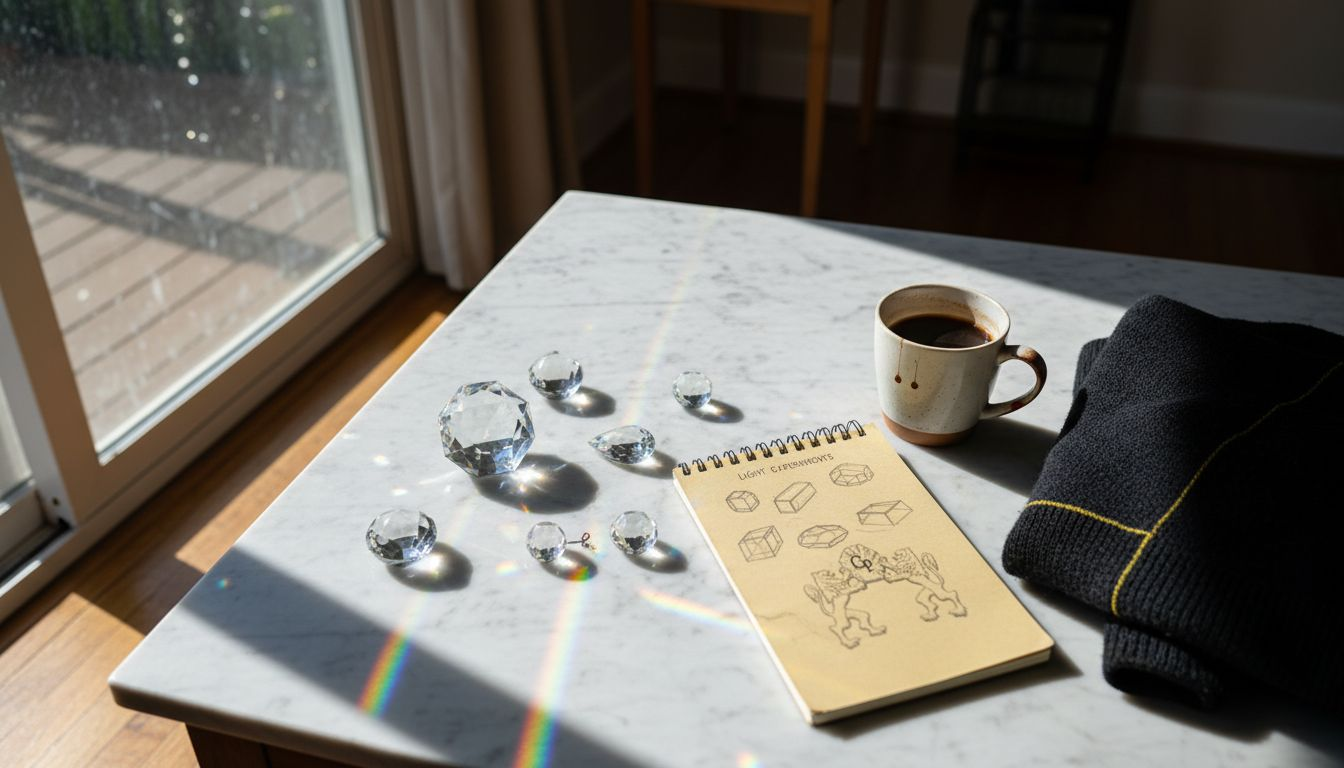
The seven crystal systems/07%3A_Molecular_and_Solid_State_Structure/7.01%3A_Crystal_Structure) create the foundation for understanding prism types. Cubic crystals, for example, have equal angles and faces, producing symmetrical rainbow patterns. Hexagonal and tetragonal systems create different refraction angles, which changes the visual effect dramatically.
Common Prism Types for Home Décor
When selecting crystal prisms for your space, you’ll encounter several main categories:
Here’s a quick comparison of common crystal prism types and their typical uses:
| Prism Type | Best Light Source | Typical Use Location | Visual Effect |
|---|---|---|---|
| Faceted Prism | Artificial bulb | Chandeliers, pendants | Bold, vivid rainbows |
| Teardrop Prism | Natural sunlight | Windows, suncatchers | Elongated spectrum |
| Sphere/Globe Prism | Sunlight/bulbs | Table displays, windows | 360° rainbow spread |
| Flat Suncatcher | Natural sunlight | Window glass | Subtle color bands |
| Chandelier Crystal | Artificial bulb | Chandeliers, fixtures | Concentrated sparkles |
- Faceted prisms: Multiple angled surfaces maximize light dispersion and create bold rainbow effects
- Tear-drop prisms: Classic elongated shape that hangs beautifully in windows and works well with natural light
- Sphere and globe prisms: Symmetrical designs that cast rainbows in all directions
- Chandelier crystals: Specialized prisms designed to amplify bulb light rather than natural sunlight
- Suncatchers: Flat or shallow designs optimized for window mounting
What Makes Each Type Different
The number and angle of facets on a prism directly control light behavior. More facets create more refraction points, producing intricate rainbow patterns across larger areas.
Crystal morphology and symmetry determines both the shape you see and the optical properties hidden inside. A prism cut from authentic crystal will perform differently than one made from glass because of how tightly the atomic structure is organized.
Material composition matters too. Authentic Swarovski crystals contain lead oxide, which increases the refractive index and creates superior sparkle. Standard crystal has less lead content, affecting clarity and brilliance.
The facet pattern on your prism isn’t just decorative—it’s engineered to bend light at specific angles for maximum visual impact.
Choosing the Right Type for Your Space
Consider your lighting situation before selecting a prism type. Natural light applications (windows, suncatchers) need different facet angles than artificial light situations (chandeliers, pendant fixtures). Understanding how different prism designs enhance specific lighting environments helps you make the right choice for your room.
Size also affects functionality. Larger prisms create broader rainbow spreads across walls, while smaller ones produce concentrated, intense light patterns.
Pro tip: Match prism type to your light source—use faceted prisms for artificial bulb light and teardrop or sphere designs for strong natural window light to maximize rainbow effects in your home.
How Crystal Prisms Enhance Light and Ambience
Crystal prisms transform ordinary lighting into something extraordinary by bending and dispersing light into visible spectrum colors. When light enters a prism at the correct angle, it splits into rainbow wavelengths that dance across your walls, ceiling, and furnishings.
This transformation happens through a physical process called refraction. Light bending through prisms/01%3A_Reflection_and_Refraction/1.06%3A_Refraction_by_a_Prism) occurs because different colors have different refractive indices—meaning blue light bends differently than red light. The result is a spectacular spectrum that no standard light fixture can replicate.
The Prism Effect on Room Ambience
Beyond the visual rainbow display, crystal prisms create several lighting improvements:
- Expanded light distribution: Refracted light spreads across larger areas than direct bulb light
- Dynamic visual depth: Moving rainbows create living, changing décor throughout the day
- Amplified brightness perception: Multiple light rays bouncing through facets make rooms feel brighter
- Color richness: Spectrum effects add warmth and visual interest no paint color can match
- Focal point creation: Prisms naturally draw the eye and anchor room design
Natural vs. Artificial Light Effects
The type of light source dramatically affects prism performance. Sunlight creates bold, crisp rainbow patterns with clear color separation and movement. Artificial bulb light produces softer, more diffused spectrum effects depending on the bulb type and prism design.
The prism effect with different light wavelengths shows why positioning matters. Morning or afternoon sunlight streaming through a window-mounted prism creates the most dramatic rainbow display, while evening bulb light produces a gentle, ambient glow.
Strategic prism placement transforms how light behaves in a room, turning functional lighting into decorative art that changes throughout the day.
Practical Ambience Applications
Consider where you want enhanced lighting and ambience:
- Windows: Capture natural light and cast rainbows indoors
- Chandeliers: Amplify bulb light for maximum brilliance and sparkle
- Pendant fixtures: Refract task lighting into decorative accent lighting
- Shelving: Create layered light effects in display areas
- Entryways: Make first impressions with dynamic spectrum displays
Authentic crystal prisms deliver superior light enhancement compared to glass alternatives because their higher refractive index bends light more dramatically. This means richer colors, more pronounced rainbows, and greater overall brightness amplification in your space.
Pro tip: Install prisms in east or west-facing windows to capture the most intense sunlight angles during early morning or late afternoon, when sunlight hits at the optimal refraction angle for maximum rainbow color and intensity.
Choosing, Placing, and Caring for Crystal Prisms
Selecting the right crystal prism starts with understanding your space and lighting goals. Do you want bold rainbow displays from natural sunlight, or subtle spectrum effects from artificial lighting? Your answer shapes every decision that follows.
Choosing the Right Prism
When evaluating prisms, focus on these key factors:
- Material quality: Authentic crystal with higher lead content delivers superior refraction and brilliance
- Clarity: Look for optical-grade transparency without cloudiness or bubbles
- Shape and facet pattern: Faceted designs maximize light dispersion, while smooth shapes create softer effects
- Size: Larger prisms create broader rainbow spreads; smaller ones produce concentrated patterns
- Coating: Some prisms have protective or reflective coatings that enhance performance
Authentic Swarovski and premium crystal prisms outperform budget glass alternatives because of their superior optical properties. Selecting prisms with correct refractive index and clarity/01%3A_Reflection_and_Refraction/1.06%3A_Refraction_by_a_Prism) ensures you get the aesthetic and functional results you’re paying for.
Strategic Placement for Maximum Impact
Location determines how effectively your prism performs. Position matters more than you’d think—even slight angle changes affect light refraction dramatically.
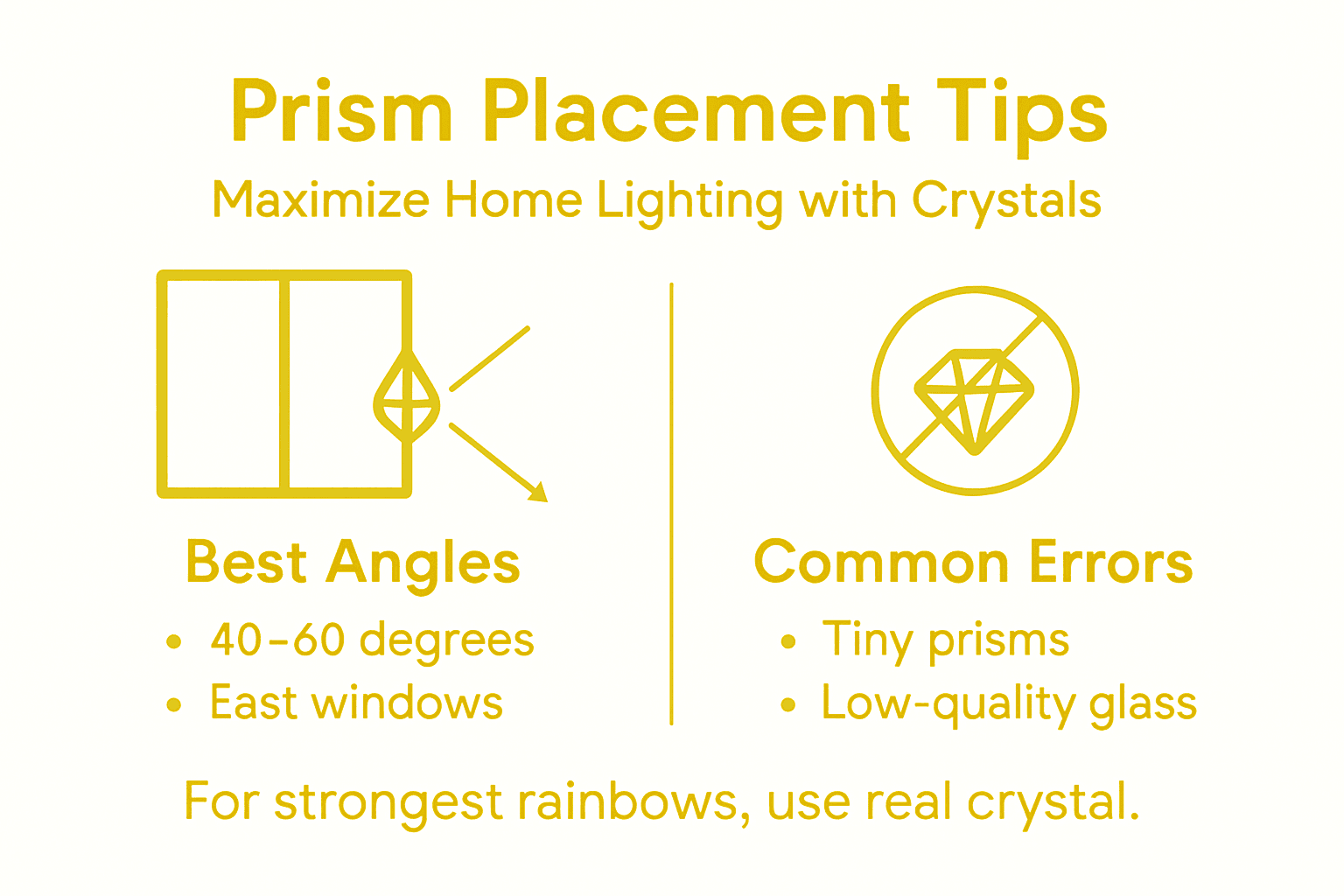
Place prisms where light hits them at 40 to 60 degrees for optimal spectrum display. East or west-facing windows catch the best natural light angles. For artificial lighting, mount prisms near bulbs where light can refract through multiple facets.
Proper positioning optimizes light refraction and spectral display by ensuring light enters at the correct angle. Experiment with placement—move your prism slightly and watch how the rainbow effect shifts across your room.
See how material and placement choices impact prism performance:
| Factor | How It Influences Prism Effect | What To Prioritize |
|---|---|---|
| Prism Material | Higher quality gives sharper rainbows | Authentic, leaded crystal |
| Prism Clarity | Fewer flaws means more brilliance | Optical grade transparency |
| Size & Space | Bigger prisms spread more light | Match size to room and fixture |
| Placement Angle | Correct angle amplifies rainbows | Position for direct light entry |
| Facet Pattern | More facets, richer spectrum | Suits both décor and lighting |
The difference between a mediocre and stunning prism display often comes down to placement rather than the prism itself.
Essential Care and Maintenance
Keeping your prisms brilliant requires consistent, gentle care:
- Dust regularly: Use a soft microfiber cloth weekly to prevent dust buildup
- Clean gently: Mix warm water with mild dish soap; avoid harsh chemicals
- Dry completely: Water spots dull clarity; use lint-free cloths for drying
- Avoid abrasives: Never use scouring pads or rough materials
- Handle carefully: Protect prisms from drops and physical shock
Never use vinegar, alcohol, or ammonia-based cleaners—these can damage crystal coatings and clarity. A soft approach preserves your investment’s brilliance for years.
Pro tip: Clean your crystal prisms monthly and immediately after any dust accumulation, since even light dust significantly reduces light transmission and dims the rainbow spectrum effect across your rooms.
Common Mistakes with Crystal Prism Selection
Many homeowners and decorators invest in crystal prisms only to find they deliver disappointing results. The problem rarely involves the prism itself—it usually stems from selection errors that happen before purchase.
Mistake 1: Choosing Based on Price Alone
Budget glass prisms cost significantly less than authentic crystal, making them tempting. However, cheap alternatives produce dim, washed-out rainbow effects compared to genuine crystal with higher lead content.
Low-quality materials have lower refractive indices, which means light bends less dramatically. Your “savings” result in mediocre décor that fails to transform your space. Authentic crystal delivers the brilliance and color saturation worth the investment.
Mistake 2: Ignoring Size and Space Relationships
Buying a prism without considering room size creates visible mismatch. A tiny prism in a large entryway creates barely noticeable effects, while oversized prisms in small spaces feel overwhelming.
Measure your space and visualize where rainbows will project. For windows, prisms should be proportional to window size. For fixtures, match prism dimensions to the fixture structure.
Mistake 3: Wrong Prism Type for Your Light Source
Selecting a prism designed for natural light and placing it under artificial bulbs disappoints. Different light sources require different facet patterns and angles for optimal refraction.
Understanding prism orientation requirements prevents selecting designs that don’t match your lighting situation. Natural light prisms have specific facet angles optimized for sunlight wavelengths, while artificial-light prisms are engineered differently.
Mistake 4: Misunderstanding Optical Center Alignment
Proper placement matters more than most people realize. Incorrect prism base direction or optical center alignment reduces effectiveness and creates unwanted visual distortions.
If mounting a prism in a fixture, ensure light hits the optical center directly. Even slight misalignment diminishes the rainbow effect noticeably.
Spending money on premium crystal only to place it incorrectly wastes your investment and diminishes the spectacular display you paid for.
Mistake 5: Overlooking Material Quality and Clarity
Some “crystal” products contain cloudiness, bubbles, or internal flaws invisible at first glance. These defects scatter light inefficiently and dim the overall brilliance.
Always inspect clarity under bright light before purchasing. Look for:
- Optical-grade transparency throughout
- No visible bubbles or inclusions
- No cloudiness or frosted areas
- Consistent color and light transmission
Pro tip: Request product images showing the prism held against bright light before ordering online, and always verify return policies in case clarity issues appear upon delivery.
Elevate Your Space with Authentic Crystal Prisms from Crystal Place
The article highlights common challenges such as selecting the right prism type for your lighting, ensuring high clarity and quality, and mastering proper placement to achieve stunning rainbow effects. You want to avoid dim or dull prisms that fail to amplify light and create brilliance in your home décor. At Crystal Place, we understand how crucial authentic Swarovski and premium crystal prisms are for transforming your lighting environment with vivid rainbows and enhanced brightness.
Discover a curated collection of crystal prisms, chandelier crystals, and suncatchers crafted for superior light refraction and lasting clarity. Whether you are aiming to brighten rooms with natural sunlight or amplify artificial lighting, our premium crystal products guarantee the radiant sparkle and refined elegance you deserve. Visit Crystal Place today and turn your lighting challenges into breathtaking displays of color and brilliance. Shop now to enjoy free shipping on orders over $22 and expert assistance for your perfect crystal décor.
Frequently Asked Questions
What is a crystal prism and how does it work?
A crystal prism is a transparent solid object designed to bend and separate light into its individual colors through refraction. As white light passes through the prism’s angled surfaces, each wavelength bends differently, creating a rainbow spectrum effect.
How can I use crystal prisms to enhance my home lighting?
Crystal prisms can be used in several ways, such as window suncatchers that catch natural light, chandelier crystals that amplify bulb light, and decorative hanging prisms that create focal points in different areas. Position them where sunlight hits directly for maximum effect.
What are the different types of crystal prisms and their uses?
Common types of crystal prisms include faceted prisms, teardrop prisms, sphere/globe prisms, flat suncatchers, and chandelier crystals. Each type is optimized for different light sources and effects, such as bold rainbows, subtle color bands, or 360° light dispersion.
How do I choose the right crystal prism for my space?
To choose the right crystal prism, consider your lighting situation—natural versus artificial light—as different designs perform better under specific conditions. Additionally, think about the size of the prism in relation to your space, and ensure higher quality, optical-grade materials to achieve the best light refraction.
Recommended
- Crystal Ornaments That Make Rooms Feel Luminous – CrystalPlace
- 12 Hanging Crystal Prism Decor Ideas That Glow – CrystalPlace
- Transform Your Space with Premium Crystal Prisms – CrystalPlace
- Crystal Sun Catcher Prisms That Look Expensive – CrystalPlace