

Learn how crystal affects lighting through refraction and dispersion, and discover practical tips for placement, quality, and mood to transform your home.
Most homeowners spend hours choosing the perfect light fixture, only to end up with a room that still feels flat or dim. The secret ingredient they’re missing? Crystal. Real crystal doesn’t just hang prettily from a chandelier; it actively works with light to create brilliance, warmth, and even color. According to refraction and dispersion science, crystal bends and splits white light into its spectral colors through a high refractive index of 1.5 to 1.7, producing the sparkle and rainbow effects that make a room feel alive. This guide breaks down exactly how crystal interacts with light, what quality factors matter most, and how to use placement and color to transform any room.
Key Takeaways
| Point | Details |
|---|---|
| Crystal amplifies light | Using crystal can make rooms look significantly brighter and more dynamic without increasing wattage. |
| Quality matters | Higher lead content and better cuts provide more sparkle and visual effects than ordinary glass. |
| Placement boosts effect | Optimal positioning near sunlight or the right lamp angle creates more rainbow and brilliance. |
| Mood and style impact | Crystal not only transforms brightness but can enhance or calm a room’s atmosphere with color and layering. |
The science behind crystal and light
Light is invisible until it hits something. When it strikes crystal, something remarkable happens. The crystal bends the light inward, slows it down, and then releases it in a burst of color and brilliance. This process is called refraction, and the splitting of white light into rainbow colors is called dispersion. Think of it like a prism you held up to sunlight as a kid, except now it’s working for your living room every single day.
The key measurement here is the refractive index, which tells you how strongly a material bends light. The higher the number, the more dramatic the effect. Chandelier crystals and home lighting work so well because real crystal has a significantly higher refractive index than ordinary glass, which means more sparkle, more color, and more visual depth in your space.
Here’s a comparison that puts it in perspective:
| Material | Refractive index | Lead content | Visual effect |
|---|---|---|---|
| Standard glass | 1.45 to 1.52 | None | Mild reflection, little sparkle |
| Standard crystal | 1.52 to 1.58 | 10 to 24% | Moderate sparkle, some color |
| Premium crystal | 1.54 to 1.70 | 24 to 33% | Intense sparkle, vivid rainbows |
The numbers tell a clear story. Premium crystal vs regular glass produces up to 30% more light output, not because it generates light, but because it amplifies and redirects what’s already there. That’s a meaningful upgrade without touching your electrical system.
You can also explore crystal types in chandeliers to understand which materials deliver the best results for your specific lighting goals.
Crystal quality and cut: what really matters for lighting
Not all crystals are created equal, and the difference shows up immediately in how your room looks. Three factors drive quality: lead content, optical clarity, and craftsmanship. Higher lead content raises the refractive index, clarity removes visual noise, and precision craftsmanship ensures every facet is cut at the exact angle needed to maximize light interaction.
Here’s a quick breakdown of how the three main categories compare:
- Standard glass: Low cost, minimal sparkle, no prismatic effect. Fine for decorative accents but won’t transform your lighting.
- Standard crystal: Some sparkle and color, decent clarity. A step up, but still limited in brilliance.
- Premium crystal (such as Swarovski or 30% lead crystal): Maximum sparkle, vivid rainbow dispersion, and a luxurious visual weight that elevates any fixture.
The cut matters just as much as the material. Faceted prisms and teardrops create multiple internal reflections that amplify perceived brightness and direct light patterns across walls and ceilings. Smooth cuts, by contrast, diffuse light softly, which works beautifully for a calm, spa-like atmosphere but won’t give you that dramatic sparkle.
“The right cut doesn’t just catch light, it choreographs it. A well-faceted crystal turns a single bulb into a light show that fills the entire room.”
For a deeper look at how cut affects output, crystal quality and sparkle is worth exploring. And if you want to understand the full picture of what makes crystal beautiful and functional, brilliance and elegance with crystal covers it thoroughly.
How crystal placement and lighting type change the effect
Even the finest crystal won’t perform well if it’s placed in the wrong spot or paired with the wrong light source. Placement is where theory becomes practice, and small adjustments make a huge difference.
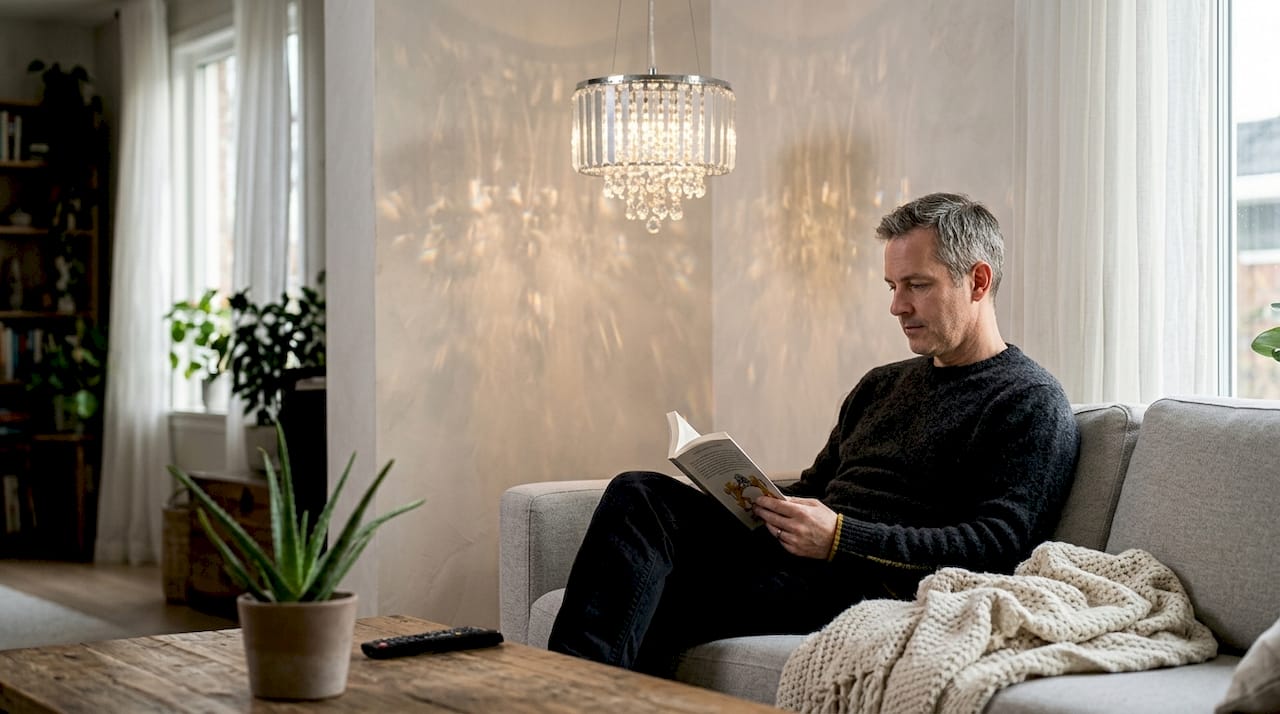
Crystals in chandeliers and hanging prisms multiply ambient light and make rooms feel brighter without increasing wattage. The sweet spot for light incidence is 40 to 60 degrees, which is the angle at which light enters the crystal and produces the most vivid rainbow dispersion. Outside that range, you get less color and less drama.
Here are three steps to position and light your crystals for maximum impact:
- Place near east or west-facing windows. Morning and afternoon sunlight hits at a lower angle, which is ideal for prisms and rainbow light. North-facing rooms get softer, more diffused light that won’t produce the same effect.
- Adjust your lamp angle. If you’re using a table lamp or floor lamp near a crystal piece, position the light source so it strikes the crystal at roughly 40 to 60 degrees. You’ll see the difference immediately.
- Switch to dimmable warm LEDs. Dimmable LEDs at 2700 to 3000K enhance crystal effects without glare. Warm light brings out the golden tones in clear crystal and makes colored crystals glow more richly.
Pro Tip: Pair your crystals with a smart dimmer switch so you can dial in the exact ambiance for any time of day. Bright and energizing in the morning, soft and warm in the evening, all from the same fixture.
For more ideas on enhancing light and elegance in your home, there’s a wealth of practical guidance available.
Aesthetic and emotional impact: mood and atmosphere with crystal
Crystal isn’t just a lighting tool. It’s a mood tool. The way light scatters through crystal affects how a room feels, not just how it looks. A well-placed crystal chandelier or a cluster of hanging prisms can shift a space from ordinary to extraordinary in a way that paint colors and furniture simply can’t replicate.
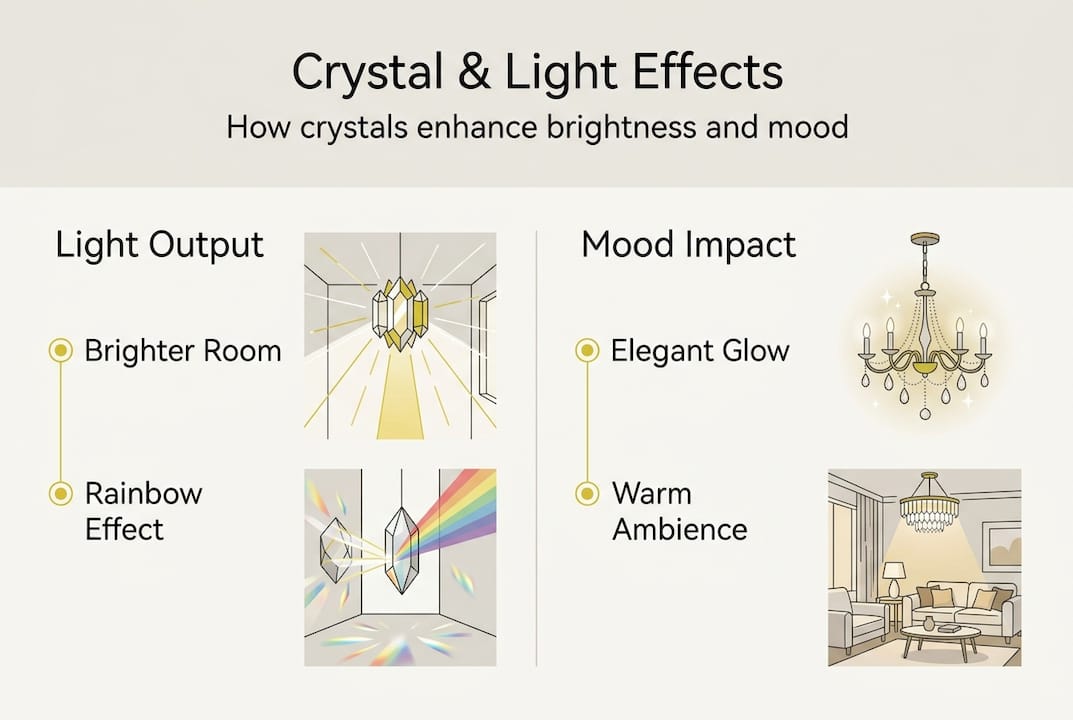
Crystal enhances perceived luxury and mood, and the effect varies depending on the type of crystal you choose. Clear crystals scatter bright, energizing light that feels uplifting and expansive. Colored crystals filter light through their hue, creating a tinted glow that sets a specific emotional tone.
Here’s how different crystal colors tend to affect a room’s atmosphere:
- Clear crystal: Energizing, bright, and timeless. Works in any room but especially powerful in living rooms and entryways.
- Blue crystal: Calming and cool. Ideal for bedrooms, bathrooms, or any space where you want to feel relaxed.
- Pink crystal: Warm and romantic. A favorite for bedrooms and dining rooms where softness matters.
- Amber or gold crystal: Rich and cozy. Pairs beautifully with warm wood tones and traditional decor.
- Green crystal: Fresh and grounding. Works well in home offices or reading nooks.
Pro Tip: Don’t limit yourself to one crystal type. Layering different shapes and colors in a single room creates dynamic, shifting light effects throughout the day as the sun moves. A clear prism near the window plus a pink pendant over the dining table gives you both energy and warmth in the same space.
For inspiration on how to use crystal as a focal point, custom chandeliers for decor shows what’s possible when crystal is designed specifically for your space. And if you’re wondering whether the investment is worth it, timeless elegance and value makes a compelling case.
Bring your lighting vision to life with Crystal Place
At Crystal Place, we’ve been helping homeowners and decorators find the right crystal elements since 1992. Whether you’re upgrading an existing chandelier, adding hanging prisms to a sunny window, or designing a custom fixture from scratch, we carry authentic Swarovski crystals and premium crystal components that deliver real results.
Our selection includes crystal prisms, chandelier parts, suncatchers, and everything you need to repair, rebuild, or reimagine your lighting. We source directly from trusted crystal brands, so you know exactly what you’re getting. Orders over $22 ship free within the USA, making it easy to experiment with a few pieces before committing to a full redesign. Browse our collection and see how the right crystal can completely change the way your home feels.
Frequently asked questions
Does crystal really make a room brighter?
Yes. Crystal amplifies and redirects existing light, and premium crystal delivers up to 30% more light output than standard glass without requiring any additional wattage.
What’s the difference between crystal and glass in lighting?
Crystal has a higher refractive index of 1.54 to 1.70 versus 1.45 to 1.52 for glass, which produces significantly more sparkle, prismatic color effects, and overall light intensity.
Where should I place crystals for the best rainbow effects?
Position crystals near east or west-facing windows or lamps, and aim for a 40 to 60 degree light incidence angle to produce the most vivid and consistent rainbow effects.
Can colored crystals change the mood of a room?
Absolutely. Clear crystals tend to energize a space with bright, scattered light, while colored crystals like blue or pink create a calming, tinted glow that shifts the emotional tone of the room.
Recommended
- Crystal lighting: 30% more brilliance for your space – CrystalPlace
- Crystal Ornaments That Make Rooms Feel Luminous – CrystalPlace
- Why hanging crystals sparkle: science and decor tips 2026 – CrystalPlace
- Role of Chandelier Crystals: Enhancing Light and Elegance – CrystalPlace
- Diamond Cut Explained: Why Sparkle Matters Most – Eternal Carat