

Discover how upgrading chandelier crystals enhances light quality by 30%, creates stunning rainbow effects, and elevates room elegance with premium Swarovski and lead crystal options.
Upgrading your chandelier crystals can transform a room from ordinary to extraordinary, yet many homeowners assume all crystals deliver the same effect. The truth is that premium crystals refract light up to 30% more effectively than standard options, creating mesmerizing rainbow patterns and intensified sparkle that elevate both ambiance and perceived home value. This article explores how upgraded crystals enhance light quality through superior refraction, compares crystal grades and cuts to help you choose wisely, and provides practical guidance on matching crystals to your decor while maintaining their brilliance for years to come.
Key takeaways
| Point | Details |
|---|---|
| Superior light refraction | Higher-grade crystals with elevated refractive index create up to 30% more brilliant light output and captivating rainbow effects. |
| Crystal type matters | Swarovski, Bohemian, and K9 crystals differ significantly in lead content, clarity, and sparkle intensity. |
| Cut influences brilliance | Prism shapes and octagonal cuts determine how light reflects and scatters throughout your space. |
| Maintenance preserves value | Regular gentle cleaning and inspection ensure lasting sparkle and prevent dullness or loose pieces. |
| Design compatibility | Matching crystal style, color, and bulb type to your room decor maximizes aesthetic impact and lighting performance. |
How upgraded chandelier crystals enhance light quality
Upgrading chandelier crystals enhances light refraction and dispersion, leading to increased brilliance and sparkle that transforms your lighting experience. The secret lies in the refractive index, a measure of how effectively a material bends light as it passes through. Premium crystals achieve refractive index values between 1.5 and 1.7, significantly higher than standard glass, which typically ranges from 1.45 to 1.52.
Lead content plays a crucial role in this optical performance. Swarovski crystals contain over 30% lead oxide, which dramatically increases both clarity and brilliance compared to lead-free alternatives. This higher lead percentage creates a denser material that slows light more effectively, producing the signature sparkle that catches every eye in the room. The lead also enhances the crystal’s ability to disperse white light into its component colors, generating those enchanting rainbow effects that dance across walls and ceilings.
The physics of light dispersion explains why upgraded crystals can increase light output by up to 30% compared to standard options. When light enters a high-quality crystal, it doesn’t simply pass through. Instead, the crystal’s internal structure and precise cuts create multiple reflection points, bouncing light rays in various directions before they exit. Each reflection amplifies the perceived brightness, making a room feel more luminous even with the same wattage bulbs.
Different crystal cuts influence this light behavior in distinct ways. Faceted surfaces act like tiny mirrors, creating sharp points of reflected light that produce the characteristic sparkle. Smooth curved surfaces generate softer, more diffused light patterns. The role of chandelier crystals in lighting extends beyond mere decoration to actively shaping how illumination fills your space.
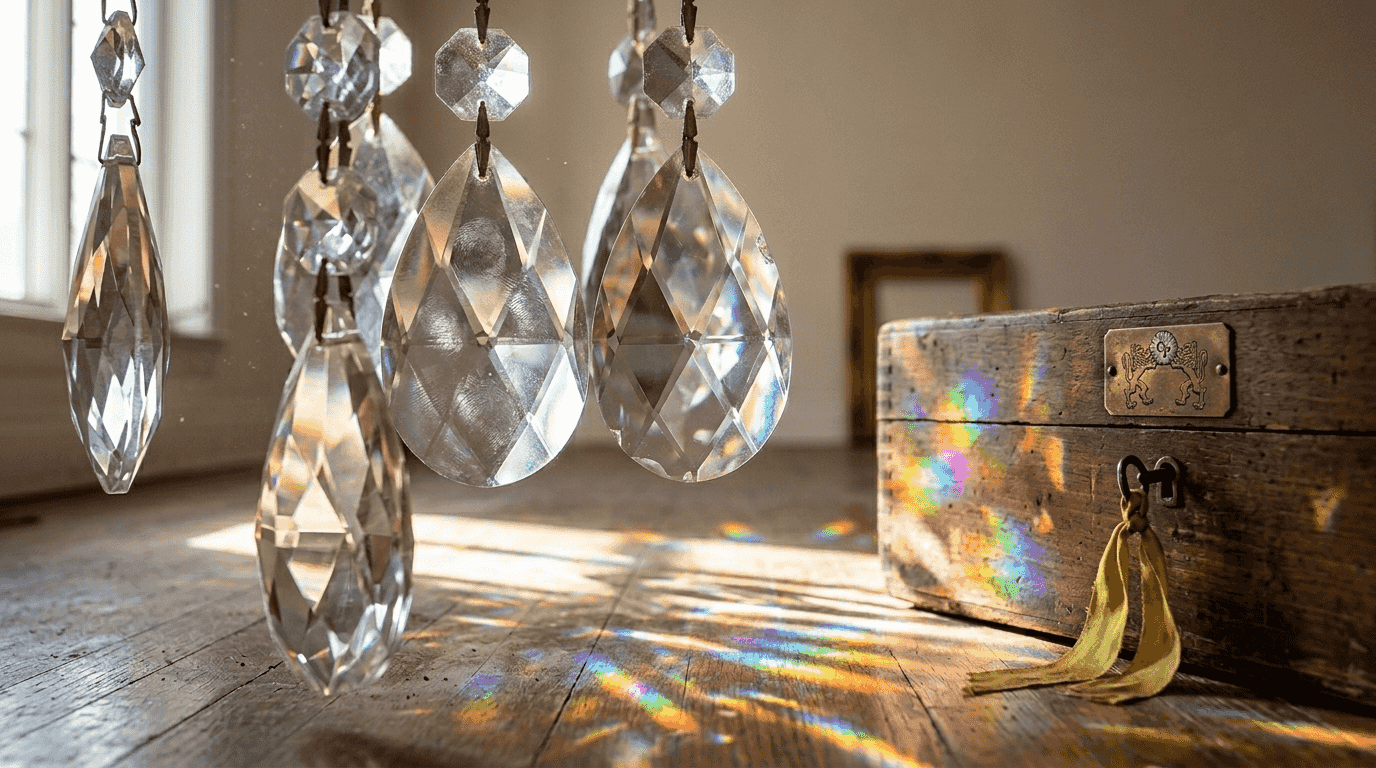
Pro Tip: Position your upgraded chandelier where natural daylight can interact with the crystals during the day. This creates stunning rainbow projections that change throughout the day as sunlight angles shift.
The interplay between refractive index, lead content, and cut geometry creates a synergistic effect. A well-cut crystal with high lead content doesn’t just look prettier; it fundamentally changes how light behaves in your room. The increased light output means you can achieve the same brightness with lower-wattage bulbs, potentially reducing energy costs while enhancing visual appeal.
Key factors affecting crystal light performance:
- Refractive index determines light bending intensity and sparkle quality
- Lead oxide percentage directly correlates with clarity and brilliance
- Facet count and precision influence reflection patterns and rainbow dispersion
- Crystal thickness affects light travel distance and color separation
- Surface polish quality impacts light transmission efficiency
| Crystal Property | Standard Glass | Premium Crystal | Impact on Light |
|---|---|---|---|
| Refractive Index | 1.45-1.52 | 1.54-1.70 | Higher values create more intense sparkle |
| Lead Content | 0-10% | 24-33% | Increased clarity and rainbow effects |
| Light Output Gain | Baseline | Up to 30% more | Brighter ambient illumination |
| Dispersion Quality | Minimal | Pronounced | Vivid rainbow patterns on surfaces |
Comparing crystal grades and cuts: choosing the right upgrade
Understanding the distinctions between crystal grades helps you make informed decisions that balance aesthetics, performance, and budget. Swarovski crystals are the diamond standard due to flawless clarity and intense brilliance, while Bohemian lead crystal offers warm, rainbow sparkle; K9 balances clarity and cost for budget-conscious upgrades.
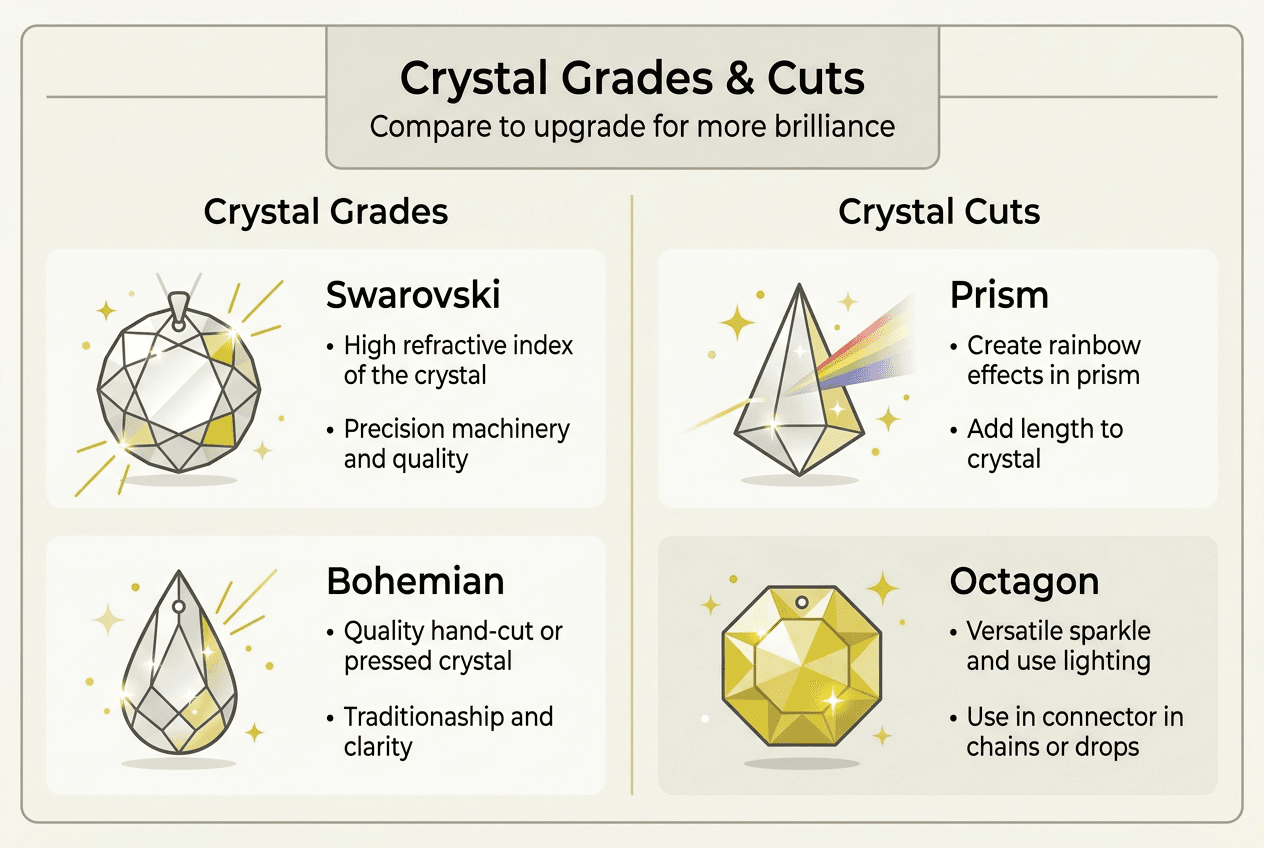
Swarovski crystals represent the pinnacle of optical performance. With lead oxide content exceeding 30% and precision machine cutting, these crystals deliver unmatched clarity and the most intense light refraction available. Every facet is cut to exacting tolerances, ensuring consistent sparkle across the entire chandelier. The investment in Swarovski crystals pays dividends in rooms where lighting serves as a focal point, such as dining rooms, entryways, or formal living spaces.
Bohemian crystal brings centuries of European craftsmanship to your chandelier. These traditional lead crystals typically contain 24% lead oxide, producing a slightly warmer tone than Swarovski while still generating impressive rainbow fire. The hand-cutting techniques used in Bohemian crystal production create subtle variations that some decorators prefer for their organic, artisanal character. This option works beautifully in spaces with vintage or classical decor themes.
K9 crystal offers an accessible entry point for homeowners seeking noticeable improvement without premium pricing. While containing less lead than Swarovski or Bohemian options, K9 crystals still provide good clarity and moderate brilliance that surpasses standard glass significantly. These crystals suit secondary lighting fixtures, guest rooms, or situations where budget constraints limit options but quality still matters.
Crystal cut styles create dramatically different visual effects. Prism cuts feature long, multifaceted surfaces that excel at dispersing light into rainbow patterns. These work exceptionally well in chandeliers positioned to catch natural light or in rooms with white or light-colored walls that showcase the color projections. Octagonal cuts offer a more geometric, modern aesthetic while still providing excellent light reflection through their eight precisely angled facets.
Pro Tip: Choose the right chandelier crystal types by considering your room’s natural light exposure. South-facing rooms with abundant sunlight maximize rainbow effects from high-dispersion crystals, while north-facing spaces benefit from crystals optimized for artificial light reflection.
The relationship between cut complexity and sparkle intensity isn’t always linear. A crystal with too many small facets can create visual confusion, while too few facets may appear flat and lifeless. Premium manufacturers balance facet count with facet size to optimize light behavior. For examples of how chandelier crystals enhance brilliance, examine how different cuts perform in various lighting conditions.
Crystal selection factors by priority:
- Budget constraints determine feasible crystal grade options
- Room lighting conditions influence optimal cut style selection
- Existing decor style guides traditional versus modern crystal choices
- Chandelier size affects total crystal quantity and cost calculations
- Desired maintenance level impacts crystal type durability considerations
| Crystal Type | Lead Content | Clarity Rating | Brilliance Level | Best Use Case | Price Point |
|---|---|---|---|---|---|
| Swarovski | 30-33% | Flawless | Maximum | Formal spaces, focal lighting | Premium |
| Bohemian | 24% | Excellent | High | Traditional decor, warm ambiance | Mid to High |
| K9 | 10-15% | Good | Moderate | Secondary fixtures, budget upgrades | Affordable |
| Standard Glass | 0-5% | Fair | Low | Temporary solutions only | Economy |
Design and practical considerations for upgrading chandelier crystals
Selecting crystals that harmonize with your room’s aesthetic requires balancing visual appeal with technical performance. The crystal style and color you choose should complement both your chandelier’s frame material and your room’s overall design language. A brass or gold-finished chandelier pairs beautifully with warm-toned crystals or traditional Bohemian styles, while chrome or silver frames showcase the cool brilliance of clear Swarovski crystals.
Choosing the right light bulbs complements the crystal type and enhances lighting ambiance in ways many homeowners overlook. LED bulbs with color temperatures between 2700K and 3000K produce warm white light that enhances the rainbow dispersion of high-lead crystals. Cooler LED temperatures around 4000K create crisp, modern lighting that suits contemporary crystal cuts and minimalist spaces. Incandescent bulbs, while less energy-efficient, generate a continuous light spectrum that some decorators prefer for maximizing color separation in premium crystals.
Chandelier size and placement fundamentally affect how upgraded crystals perform. A large chandelier positioned in a two-story foyer benefits from longer crystal drops that catch light at multiple heights, creating a cascading sparkle effect. Smaller chandeliers in dining rooms or bedrooms work better with shorter, more uniform crystal arrangements that provide consistent illumination without overwhelming the space. Consider ceiling height when selecting crystal length; drops that hang too low create hazards, while too-short crystals fail to maximize light distribution.
Steps for matching crystals to your decor:
- Assess your room’s dominant color palette and identify complementary or contrasting crystal tones
- Evaluate natural and artificial light sources to determine optimal crystal cut for light capture
- Measure your chandelier’s dimensions to calculate appropriate crystal sizes and quantities
- Select bulb color temperature that enhances your chosen crystal’s refractive properties
- Plan installation timing to minimize disruption and ensure proper cleaning before mounting
Regular maintenance and gentle cleaning preserve optimal light refraction and chandelier longevity, protecting your investment for decades. Dust accumulation reduces light transmission by up to 40%, gradually diminishing the sparkle that makes upgraded crystals worthwhile. Clean your chandelier crystals every three to six months using a solution of warm water with a small amount of ammonia-free glass cleaner.
Inspection during cleaning sessions helps catch loose crystals before they fall and break. Gently test each crystal’s connection point, tightening any that feel unstable. Check metal connectors for corrosion or wear, replacing damaged components promptly to prevent crystal loss. This preventive approach costs far less than replacing fallen crystals or repairing damage from dropped pieces.
Pro Tip: Create a crystal map by photographing your chandelier from multiple angles before any maintenance. This visual reference makes reassembly foolproof if you remove crystals for deep cleaning, ensuring each piece returns to its optimal position for light performance.
The right size crystal chandelier for your space depends on room dimensions and ceiling height. As a general rule, add your room’s length and width in feet, then convert that sum to inches for the ideal chandelier diameter. A 12-foot by 14-foot room suggests a 26-inch diameter chandelier. This sizing ensures the fixture provides adequate light coverage without dominating the space visually.
Color selection extends beyond clear crystals. Choosing chandelier crystal colors strategically can enhance specific design themes or create desired moods. Amber crystals add warmth to traditional spaces, while champagne tones offer subtle elegance in transitional designs. Colored crystals work best as accents rather than primary elements, maintaining the light-enhancing benefits of clear crystals while adding personality.
Maintenance best practices:
- Turn off power and allow bulbs to cool completely before cleaning
- Use microfiber cloths to prevent scratching crystal surfaces
- Avoid harsh chemicals that can cloud or damage crystal finish
- Dry crystals thoroughly to prevent water spots that reduce sparkle
- Document crystal positions before removal for accurate reinstallation
For ongoing care guidance and selection support, explore resources on how to choose, refresh, and care for crystal chandeliers. These comprehensive guides walk you through every stage of chandelier ownership, from initial selection through long-term maintenance strategies that preserve beauty and performance.
Enhance your home with premium chandelier crystals
Ready to transform your lighting with the brilliance and elegance that upgraded crystals deliver? Discover an expertly curated selection of crystal prisms for chandeliers that bring professional-grade sparkle to your home. Each piece is carefully selected for optimal light refraction and lasting beauty.
Explore specialized options like the crystal ornament suncatcher rainbow maker featuring genuine Swarovski crystals engineered for maximum rainbow dispersion. Whether you’re replacing worn crystals or upgrading to premium quality, you’ll find the perfect pieces to match your vision.
Need guidance selecting the ideal crystals for your specific chandelier and room? The chandelier crystal guide to brilliance and elegance provides detailed comparisons and expert recommendations to simplify your decision-making process and ensure stunning results.
Why upgrade chandelier crystals: frequently asked questions
What difference do upgraded chandelier crystals make?
Upgraded crystals increase light output by up to 30% while creating more intense sparkle and rainbow effects throughout your room. The higher refractive index and lead content in premium crystals fundamentally change how light behaves, transforming ordinary illumination into captivating visual displays that enhance both ambiance and perceived home value.
How do I choose the best crystals for my chandelier?
Match crystal grade to your budget and room importance, selecting Swarovski for formal spaces, Bohemian for traditional aesthetics, or K9 for cost-effective upgrades. Consider your chandelier’s frame finish, room lighting conditions, and desired maintenance level when choosing the right chandelier crystal types. Measure existing crystals to ensure proper sizing and compatibility with your fixture’s hardware.
How often should I clean and maintain my chandelier crystals?
Clean your chandelier crystals every three to six months to prevent dust buildup that reduces light transmission by up to 40%. Use warm water with ammonia-free cleaner and microfiber cloths, inspecting connection points during each cleaning session. More frequent cleaning may be necessary in kitchens or homes with pets where airborne particles accumulate faster.
Can upgraded crystals increase my home’s perceived value?
Yes, premium lighting fixtures with high-quality crystals significantly enhance a home’s perceived luxury and attention to detail during showings or appraisals. The improved light quality and visual appeal create memorable impressions that distinguish your property from comparable listings. While not a direct dollar-for-dollar return, upgraded chandelier crystals contribute to the overall finish quality that influences buyer perception and willingness to meet asking prices.
Recommended
- Chandelier crystal guide: brilliance and elegance in 2026 – CrystalPlace
- Replace Chandelier Crystals: 65% Less Damage in 2026 – CrystalPlace
- Real Crystals, Chandelier Crystal Replacements – CrystalPlace
- Examples of chandelier crystals to enhance brilliance – CrystalPlace
Tags
Comments
-
Good