

Discover the advantages of Swarovski crystals for home and design. Enhance your decor with unmatched brilliance and versatility today!
TL;DR:
- Swarovski crystals are precisely cut, high-quality glass that offers unmatched brilliance and durability for decorative applications. Their consistent manufacturing processes ensure batch-to-batch color and size uniformity, making them ideal for professional and large-scale designs. The combination of superior light refraction, scratch resistance, and versatile formats justifies their premium price over generic alternatives.
Swarovski crystals are precision-cut crystal glass engineered for maximum brilliance, durability, and design versatility, making them the preferred choice for homeowners, interior designers, and event decorators worldwide. The advantages of Swarovski crystals go well beyond aesthetics. Their computer-controlled facet cutting, lead-free Advanced Crystal formula, and batch-consistent color make them a functional material as much as a decorative one. Whether you are restoring a chandelier, designing a wedding centerpiece, or adding light-catching detail to a custom accessory, Swarovski delivers results that generic glass simply cannot replicate.
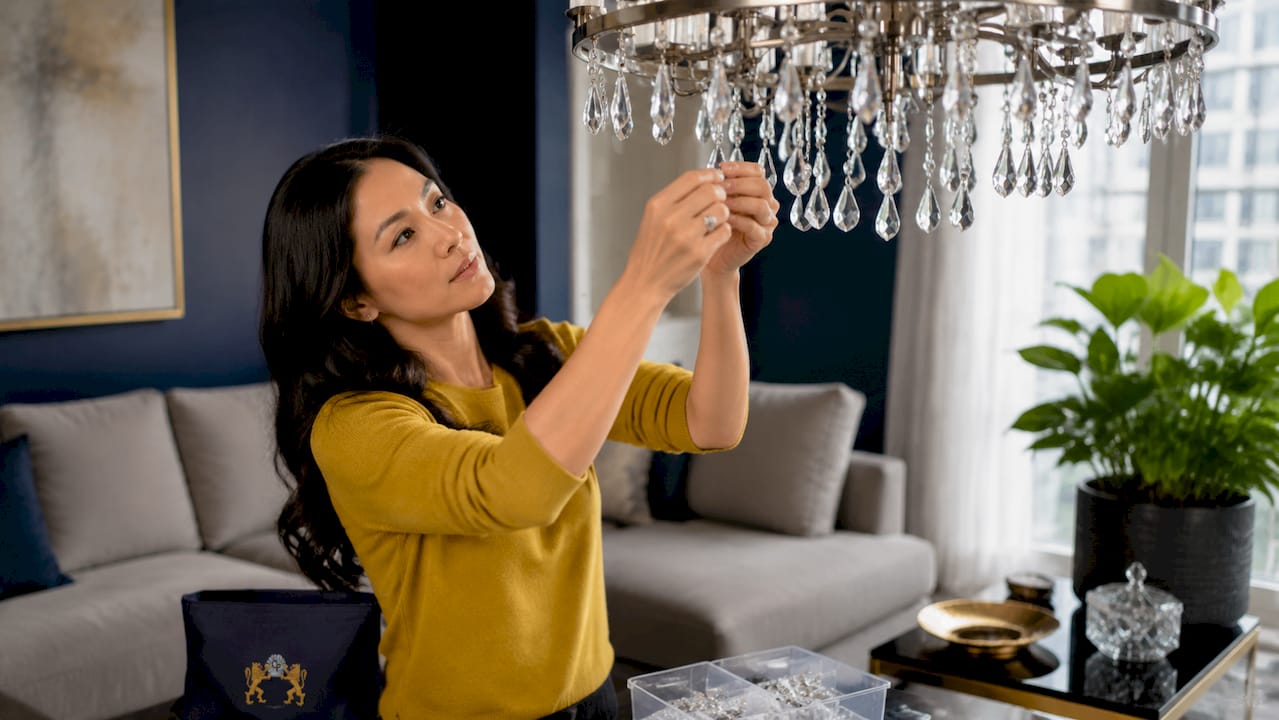
1. Unmatched brilliance from precision facet cutting
The core Swarovski crystal advantage is optical performance. Swarovski cuts up to 100 facets per stone using computer-controlled machinery calibrated to micrometer tolerances, producing angles that maximize light refraction and dispersion. The result is a sparkle that reads clearly across a room, under photography lighting, or in a sunlit window.
Precision facet angles are what separate Swarovski from cheaper alternatives. Other crystals may use similar glass formulas, but incorrect facet angles reduce brilliance regardless of material quality. This is why two stones that look identical in a catalog can perform very differently once light hits them.
For lighting applications, this matters enormously. A chandelier fitted with Swarovski prisms throws defined, colorful light patterns across walls and ceilings. The same fixture fitted with generic glass produces a duller, less structured effect. If you want to understand the difference between glass and crystal at a material level, the refractive index gap explains most of the visual difference.
Key brilliance properties at a glance:
- Up to 100 precisely angled facets per stone
- Computer-controlled cutting for consistent light dispersion
- High refractive index producing vivid color separation
- Uniform sparkle across every stone in a batch
2. Durability and scratch resistance for everyday use
Swarovski crystals carry a Mohs hardness rating of 6 to 7, compared to standard soda-lime glass at approximately 5.5. That difference means Swarovski resists scratching from everyday contact with keys, coins, and metal surfaces that would visibly damage cheaper glass. For decor pieces handled regularly, or lighting components cleaned on a schedule, that hardness translates directly into longer-lasting visual quality.
Scratch resistance and impact resistance are not the same thing. Swarovski crystals are still brittle and can chip on a sharp, direct impact. The material’s hardness protects the surface finish over time, but a dropped stone or a hard knock against a metal edge can still cause damage. Knowing this distinction helps you plan installation and storage correctly.
Pro Tip: Treat Swarovski crystals the way you treat fine glassware. Pad your work surface, handle stones individually, and never drop them into a container. This single habit prevents the majority of chipping incidents during installation.
For chandelier work specifically, the chandelier crystal installation guide at Crystalplace covers padded staging and stepwise attachment methods that protect stones throughout assembly. Installers who skip these steps account for most of the chipping that gets blamed on the material itself.
Since 2012, Swarovski has used a lead-free Advanced Crystal formula that maintains full optical performance while meeting EU safety regulations. This matters for designers working on children’s spaces, wearable accessories, or any project where material safety is a client concern.
3. Versatility across surfaces, formats, and applications
One of the most practical benefits of Swarovski crystals is how many ways you can apply them. Swarovski stones are available in sewn, glued, and heat-applied formats, making them compatible with fabrics, resin art, ornaments, lighting components, and architectural surfaces. A single product line covers embroidery, chandelier assembly, custom accessories, and event installations.
This format flexibility is what makes Swarovski the go-to material for large-scale event decoration. A wedding designer can use hotfix crystals on table runners, sew-on stones on bridal accessories, and glued prisms on centerpiece lighting, all from the same brand with matching color and sparkle. Consistency across formats is something generic suppliers rarely offer.
Common Swarovski application formats:
- Hotfix crystals: Heat-activated adhesive backing for fast fabric application
- Sew-on stones: Foiled stones with holes for stitched attachment to garments or soft furnishings
- Flatback rhinestones: Glue-applied stones for resin, ornaments, and rigid surfaces
- Prisms and pendants: Drilled or looped pieces for chandelier and hanging decor use
The range of shapes, sizes, colors, and finishes available from Swarovski is broader than any generic supplier. From classic round stones to bicone beads, teardrop prisms, and geometric cuts, the catalog supports both traditional and contemporary design directions. You can read more about how Swarovski delivers elegance and brilliance across product categories at Crystalplace.
4. Color consistency and uniformity across batches
Designers working on repeatable projects, such as event decor, custom lighting, or product lines, depend on color and size consistency between orders. Swarovski’s computer-controlled cutting achieves identical facet geometry across millions of stones, and each batch is inspected for color saturation and brilliance uniformity. You can reorder the same color six months later and get a match.
Generic crystals do not offer this reliability. Color variation between batches is common, and size tolerances are loose enough to cause visible inconsistencies in tight patterns or grid-based designs. For a designer placing hundreds of stones in a geometric arrangement, even a 0.2mm size variation breaks the visual flow.
| Feature | Swarovski crystals | Generic crystals |
|---|---|---|
| Facet precision | Micrometer tolerances, computer-controlled | Manual or low-tolerance machine cutting |
| Color consistency | Batch-inspected, reorderable by exact code | Variable between batches |
| Size uniformity | Consistent across millions of units | Loose tolerances, visible variation |
| Finish options | 30+ named finishes including AB, metallic, matte | Limited, often unlabeled |
| Brilliance reliability | Predictable across all stones | Inconsistent, angle-dependent |
For event decorators producing large installations, predictability is not a luxury. It is a production requirement. Swarovski’s uniformity means you can delegate crystal placement to a team without checking every stone individually.
5. Why Swarovski crystals outperform regular crystals
The Swarovski crystals vs regular crystals comparison comes down to three measurable factors: material quality, cutting precision, and manufacturing consistency. Regular crystals, meaning generic glass rhinestones or low-cost crystal alternatives, typically use lower-grade glass with a reduced refractive index. Even when the glass formula is comparable, the facet angles on generic stones are cut to wider tolerances, which reduces sparkle noticeably.
Professionals favor Swarovski specifically because the results are predictable. When you are producing a high-end chandelier or a luxury event installation, you cannot afford visual inconsistency. Generic crystals introduce that risk at every stage, from individual stone variation to batch-to-batch color drift.
The price premium Swarovski commands is real, but so is the performance gap. For short-term or low-visibility projects, generic alternatives may be acceptable. For anything that will be photographed, displayed under direct lighting, or used as a signature design element, the performance difference justifies the cost. The Swarovski prisms vs generic crystals comparison at Crystalplace breaks down these differences with specific product examples.
6. Professional-grade tool compatibility and application precision
Swarovski crystals are compatible with professional tools including tweezers, wax pencils, and pick-up devices, which makes precise placement fast and repeatable. The stones’ consistent dimensions mean tools calibrated for one stone size work reliably across an entire project without adjustment.
For complex beadwork or detailed embellishment patterns, this compatibility reduces placement errors significantly. A wax pencil picks up a Swarovski flatback cleanly because the stone’s flat base and consistent diameter create reliable contact. Generic stones with irregular bases or size variation cause the tool to slip or misplace the stone, slowing production and increasing waste.
Pro Tip: For large-scale projects, organize Swarovski stones by size and color in labeled trays before starting placement. The time saved retrieving and sorting during application more than offsets the setup time, especially on projects with more than 500 stones.
Swarovski’s hotfix format deserves specific mention for fabric and soft furnishing work. The heat-activated adhesive is calibrated to bond at temperatures that are safe for most fabrics, and the bond strength is significantly higher than cold-glue alternatives. For event decor items that will be handled repeatedly, this matters. Stones that stay in place through transport, setup, and teardown protect both the design and the client relationship.
Key takeaways
Swarovski crystals outperform generic alternatives because precision cutting, material quality, and manufacturing consistency work together to deliver predictable, high-impact results across every application.
| Point | Details |
|---|---|
| Brilliance from facet precision | Up to 100 facets per stone cut to micrometer tolerances produce superior sparkle. |
| Durability advantage | Mohs hardness of 6 to 7 resists everyday scratching better than standard glass. |
| Application versatility | Sewn, glued, and hotfix formats cover fabrics, lighting, resin, and ornaments. |
| Batch consistency | Computer-controlled cutting and color inspection make reordering reliable. |
| Professional tool compatibility | Consistent stone dimensions work with tweezers, wax pencils, and pick-up tools. |
Why I think the price debate misses the point
Most discussions about Swarovski crystals get stuck on cost. The argument goes: generic crystals look similar and cost far less, so why pay the premium? After years of working with both materials across chandelier restorations, event installations, and custom decor projects, I find that framing misses what actually matters.
The real issue is not price per stone. It is the cost of inconsistency. When you are placing 800 crystals on a chandelier frame and the stones vary in size by even a fraction of a millimeter, the finished piece looks uneven under light. You do not notice it stone by stone. You notice it when the chandelier is lit and the sparkle pattern is uneven. At that point, you are either living with a result that does not match your vision, or you are pulling stones and starting over.
Swarovski removes that variable. Every stone performs the way the last one did. For a homeowner doing a one-time chandelier repair, that predictability means confidence in the finished result. For a designer producing repeat work for clients, it means a reputation for quality that generic materials cannot support.
The one area where I do think people underestimate Swarovski is handling. The material is harder than standard glass, but it is not forgiving of sharp impacts. I have seen more chipping happen on the work table than during installation. Padding your surface and handling stones individually is not overcaution. It is the difference between a flawless result and a wasted order.
— BCC
Explore Swarovski crystals at Crystalplace
Crystalplace has sourced authentic Swarovski crystals directly since 1992, offering one of the most complete selections available for home decor, chandelier lighting, and event decoration.
Whether you need prisms for a chandelier restoration, hotfix stones for event accessories, or sew-on crystals for a custom design project, Crystalplace carries the shapes, sizes, and finishes to match your vision. Every order ships free within the USA on purchases over $22. Browse the full Swarovski crystal collection at Crystalplace and see the difference that genuine precision cutting makes in your next project.
FAQ
What makes Swarovski crystals better than regular glass?
Swarovski crystals are cut to micrometer tolerances with up to 100 facets per stone, producing significantly more light refraction and sparkle than standard glass. The combination of a high refractive index and precise facet angles is what separates them from generic alternatives.
Are Swarovski crystals safe for children’s decor and wearables?
Yes. Since 2012, Swarovski has used a lead-free Advanced Crystal formula that meets EU safety regulations while maintaining full optical performance. This makes them suitable for children’s spaces, wearable accessories, and any project with material safety requirements.
How do Swarovski crystals hold up over time?
Swarovski crystals carry a Mohs hardness rating of 6 to 7, which resists scratching from everyday contact better than standard soda-lime glass. They should be handled like fine glassware to avoid chipping from sharp impacts, but with proper care they maintain their brilliance for years.
Can I reorder Swarovski crystals and get a color match?
Yes. Swarovski’s batch inspection process controls color saturation and facet uniformity across production runs, so reordering the same color code produces a consistent match. This reliability is one of the primary reasons designers choose Swarovski for large-scale or repeat projects.
What is the best way to apply Swarovski crystals to fabric?
Hotfix Swarovski crystals use a heat-activated adhesive backing that bonds securely to most fabrics at safe temperatures. For items that will be handled repeatedly, hotfix application produces a stronger bond than cold-glue methods and keeps stones in place through transport and use.
Recommended
- Swarovski crystals: history, craft, and home impact – CrystalPlace
- Why Swarovski crystals deliver elegance and brilliance – CrystalPlace
- 7 Advantages of Real Crystal Prisms for Home Lighting – CrystalPlace
- Elevate Home Decor with Swarovski Crystal Prisms – CrystalPlace