

Learn how to choose chandelier crystals by material, quality, and style to maximize brilliance and lasting beauty in any room of your home.
TL;DR:
- Crystal material choice affects light reflection, weight, durability, and price.
- Matching crystal shape and size to room style enhances chandelier brilliance and harmony.
- Regular cleaning and proper installation maintain the chandelier’s sparkle and safety over time.
You spend weeks selecting the perfect chandelier, hang it with care, and then step back expecting a room filled with dancing rainbows and warm, radiant light. Instead, the crystals look flat, the room feels ordinary, and that expensive fixture barely catches the eye. It is a frustrating experience that happens more often than most people realize, and almost always comes down to one thing: the wrong crystal choice. This guide walks you through every decision you need to make, from understanding crystal materials and quality benchmarks to matching them to your space, verifying authenticity, and keeping them brilliant for years.
Key Takeaways
| Point | Details |
|---|---|
| Crystal type matters | Swarovski and high-lead crystals offer superior sparkle; K9 and acrylic balance cost and safety. |
| Room and style fit | Choose crystal shape and size based on your room dimensions and ceiling height for best results. |
| Test before buying | Always verify crystal quality with light tests and by checking for brand authenticity marks. |
| Maintenance impacts beauty | Clean gently and handle installation carefully to ensure your chandelier’s lasting brilliance. |
Understanding chandelier crystal types and quality
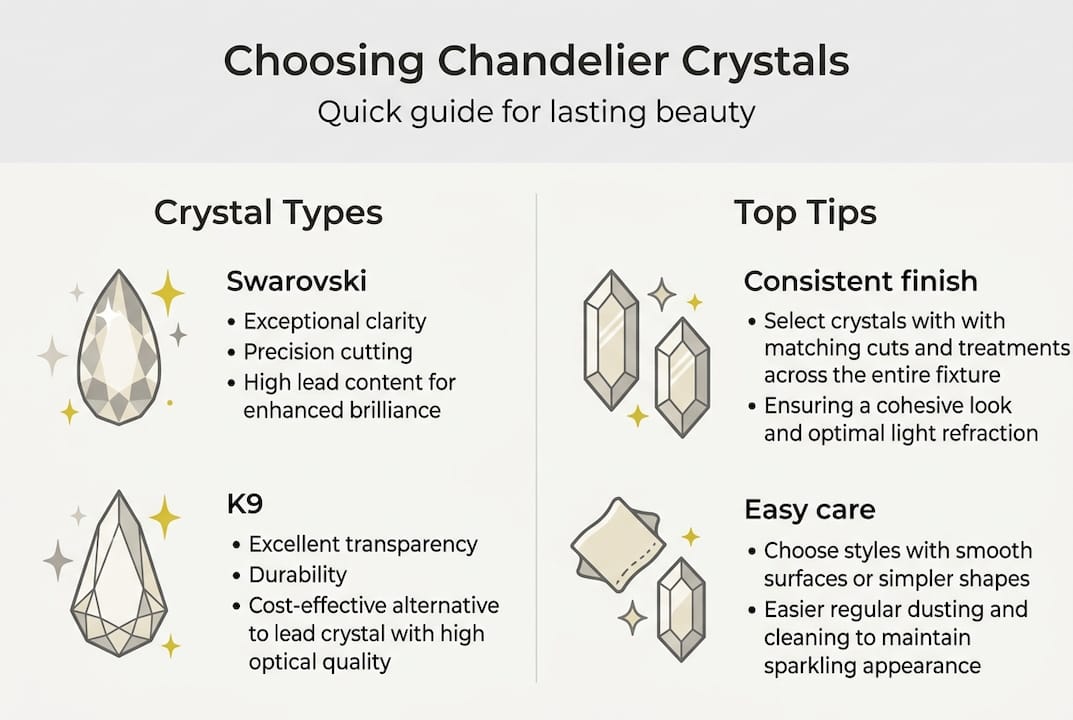
Not all chandelier crystals are created equal, and understanding what separates them is the first step toward a genuinely stunning result. The material a crystal is made from determines how it bends and scatters light, how heavy it feels, how long it lasts, and how much it costs. There are six main categories you will encounter.
| Crystal type | Lead content | Refractive index | Best for |
|---|---|---|---|
| Swarovski | 30%+ | ~1.72 | Focal-point fixtures, luxury spaces |
| Lead crystal | 24–30% | 1.5–1.7 | Traditional and formal rooms |
| K9 | Low/none | ~1.52 | Budget upgrades, casual spaces |
| Lead-free | Barium/zinc | Variable | Child-safe households |
| Glass | None | ~1.5 | Minimalist designs |
| Acrylic | N/A | Low | High-traffic, outdoor, durability |
As chandelier crystal types vary in composition, their visual impact differs sharply. Swarovski crystals contain over 30% lead with a refractive index of approximately 1.72, producing vivid rainbow effects that genuinely fill a room. Lead crystal sits just below that, offering strong brilliance at a more accessible price. K9 is lighter, nearly lead-free, and provides decent clarity, though its refractive difference from premium options means less dramatic sparkle.
Here is a quick breakdown of each type’s key characteristics:
- Swarovski: Exceptional rainbow scatter, premium price, ideal for show-stopping focal points
- Lead crystal: High brilliance, good weight, suits classic and formal interiors
- K9: Affordable clarity, lighter weight, works well for casual or transitional spaces
- Lead-free: Safe alternative using barium or zinc, similar appearance to lead crystal
- Glass: Clean and simple, minimal sparkle, suits modern minimalist styles
- Acrylic: Most durable, no meaningful refraction, best where breakage risk is high
To see how these materials compare visually in real installations, look at examples that enhance chandelier brilliance across different room types.
Pro Tip: Reserve Swarovski or high-lead crystals for your room’s main focal fixture. K9 or lead-free options work beautifully for supporting pieces without stretching your budget thin.
How to match chandelier crystals to your space and style
With a solid grasp of crystal quality, let’s make sure your selections fit your unique space and interior vision. Even the finest Swarovski crystal will look wrong if the shape, size, or finish clashes with your room’s personality.

Start with dimensions. A practical rule for sizing your chandelier: add the room’s length and width in feet, and that number in inches gives you the ideal chandelier diameter. So a 12 by 14 foot dining room calls for a fixture roughly 26 inches wide. For ceiling height, rooms taller than 9 feet benefit from longer, heavier crystal drops that use the vertical space rather than fighting it. Choosing the right size is one of the most commonly skipped steps, yet it makes one of the largest visual differences.
Crystal shape matters just as much as size. Different shapes carry distinct design associations:
- Octagon beads: Classic elegance, formal dining rooms, traditional spaces
- Icicle drops: Dramatic and contemporary, tall ceilings, modern interiors
- Pendeloque: Teardrop shape, transitional style, works across many room types
- Rondelle beads: Casual sparkle, layered arrangements, boho or eclectic decor
- Faceted balls: Symmetrical and clean, works in both classic and modern contexts
Here is a practical reference for matching room type to crystal choices:
| Room type | Recommended shape | Finish | Crystal tier |
|---|---|---|---|
| Formal dining room | Octagon, pendeloque | Clear or silver | Lead crystal, Swarovski |
| Living room | Faceted ball, mixed drops | Warm gold or silver | K9 or lead crystal |
| Entryway/foyer | Icicle, long drops | Clear | Swarovski or premium K9 |
| Bedroom | Rondelle, small pendeloque | Soft gold | K9 or lead-free |
| Kitchen/bathroom | Small beads or acrylic | Brushed finishes | Acrylic or glass |
Mixing shapes can work beautifully, but keep finishes consistent. Combining a silver-finish frame with gold-toned crystals creates visual tension rather than harmony. When it comes to colored crystal accents, a general guideline is to use them sparingly. One or two accent colors in small quantities add character. More than that tends to look busy and can make a fixture feel dated within a few years. According to chandelier selection guidance, shapes like octagons suit classic rooms while icicle forms add drama to contemporary spaces.
Step-by-step: Choosing and verifying crystal quality
Choosing a style is just half the story. Making sure you get true brilliance and quality is the next step, and skipping this part is where many buyers end up disappointed.
Follow these steps before committing to any crystals:
- Shortlist your options based on room type, style, and budget tier using the material guide above.
- Request samples if buying in bulk. Most reputable suppliers will send a few pieces so you can test them at home.
- Hold each crystal to natural light. Quality crystals scatter bright, distinct rainbow prisms. Dull or washed-out colors signal low refractive index.
- Check the weight. Lead crystal and Swarovski feel noticeably heavier than K9 or acrylic. Weight is a fast, reliable quality signal.
- Examine the facets closely. Sharp, clean edges indicate precision cutting. Blurry or rounded facets mean less light dispersion and lower quality.
- Verify Swarovski authenticity by looking for laser etching or holograms on the crystal itself. Counterfeits often lack this marking entirely or carry a smudged version.
- Check your fixture’s weight rating before purchasing heavy lead crystals. Overloading a fixture creates a genuine safety risk.
For vivid rainbows, RI above 1.6 is the benchmark that separates truly brilliant crystals from acceptable ones. Anything below that threshold will still look attractive under soft lighting but will not produce the dramatic rainbow scatter most people are after.
Important: Never exceed your chandelier fixture’s stated weight limit. Adding heavier lead crystals to an older or lighter-rated frame puts stress on the mounting hardware and ceiling support. When in doubt, consult a licensed electrician before installing heavy crystal upgrades.
Pro Tip: Bring a small flashlight when shopping in-store. Hold it behind the crystal at an angle. The more vivid and spread the rainbow, the better the quality you are holding.
A good chandelier maintenance checklist can also help you decide how much effort you want to commit to long-term upkeep based on the crystal type you choose.
Practical care, installation, and safety for lasting chandelier brilliance
Now that you have your perfect crystals, maintaining their beauty is essential for years of enjoyment. Crystals do not stay brilliant on their own. Dust, residue, and the wrong lighting choices all chip away at their impact over time.
Here are the care practices that make the biggest difference:
- Clean regularly using a non-ammonia cleaner and a soft lint-free cloth. Ammonia can etch crystal surfaces and dull the finish permanently.
- Dust weekly with a clean, dry microfiber cloth to prevent buildup between deep cleans.
- Dry completely after any wet cleaning before turning the fixture back on.
- Check hardware annually. Pins, hooks, and connectors can loosen over time, especially with heavier crystals.
For installation, always upgrade your hanging hardware when moving to heavier lead crystal drops. Standard hooks designed for acrylic or glass will not hold lead crystal safely under repeated vibration. This is one area where cutting costs creates real risk.
Machine-cut crystals deliver up to 40% more sparkle compared to hand-cut versions because their facets are geometrically precise, allowing light to bend at exactly the right angles. That precision is invisible to the naked eye but very visible in the light output.
For families with small children, lead-free options and acrylic are the practical choices. They eliminate breakage risk and remove any concern about lead exposure, even though the actual risk from intact crystals is extremely low.
A smart budget approach: use premium Swarovski or high-lead crystals as accent drops at the most visible points on your chandelier, and fill the remaining positions with quality K9. The result looks close to fully premium but costs significantly less. For a full routine, the crystal chandelier maintenance guide covers seasonal upkeep in detail.
Pro Tip: Swap incandescent bulbs for warm LED bulbs in your chandelier. Warm-spectrum LEDs intensify the amber and gold tones in crystal refraction, making rainbows richer and more dramatic without raising your energy bill.
Expert perspective: The truth about brilliance, budget, and style
Here is the part most buying guides skip: you do not need to spend a premium on every crystal in your home to achieve a genuinely stunning result. In our experience since 1992, most homes achieve 80 to 90% of the visual impact of a fully Swarovski chandelier by using high-quality mid-tier crystals for the bulk of a fixture and reserving premium pieces for the eye-level accent positions.
The real mistake people make is not choosing the wrong price tier. It is choosing without a plan. Mixing too many shapes or more than two accent colors makes even expensive crystals look chaotic. A chandelier with consistent shape language and one quality tier throughout will always outperform a mismatched assortment of premium and budget pieces.
Splurge on Swarovski for your foyer or dining room fixture, the one that guests see first. For bedrooms and secondary spaces, a well-chosen K9 or lead-free crystal does the job beautifully without the premium cost. You can browse examples of chandelier brilliance to see what thoughtful selection actually looks like across different spaces. The secret is intention, not price.
Bring home sparkling brilliance with our crystal collection
Ready to put this knowledge to work? At Crystal Place, we have been sourcing authentic Swarovski and premium chandelier crystals directly from trusted manufacturers since 1992, and our collection is built for exactly the kind of thoughtful buyer this guide was written for.
Browse our top-rated Swarovski icicle crystal for dramatic drop installations, or explore the elegant Swarovski crystal ball for symmetrical, timeless arrangements. If you want bold rainbow effects, the rainbow maker snowflake is one of our most beloved accent pieces. We offer free shipping on all orders over $22 within the USA, and our team is always available to help you match crystals to your specific fixture and room.
Frequently asked questions
What’s the difference between lead crystal, K9, and Swarovski crystals?
Lead crystal contains 24 to 30% lead for strong refraction and noticeable weight, K9 is lighter with a lower refractive index of about 1.52 and less sparkle, while Swarovski exceeds 30% lead with a refractive index around 1.72 for unmatched rainbow brilliance.
How can I tell if chandelier crystals are genuine Swarovski?
Genuine Swarovski crystals carry laser-etched logos or holograms and produce crisp, vivid rainbow prisms when held to natural light. Counterfeits typically lack sharp facets and clear markings.
Is lead-free or acrylic crystal a good option for homes with children?
Yes. Lead-free and acrylic crystals are smart choices for households with young children, reducing breakage risk and eliminating lead concerns, though you will trade some sparkle for that added safety.
What’s the best way to clean chandelier crystals without damaging them?
Use a gentle, non-ammonia cleaning solution with a soft cloth, and always dry crystals completely before restoring power to the fixture to avoid streaks or surface damage.
Recommended
- How to Select Chandelier Crystals for Style and Brilliance – CrystalPlace
- How to choose chandelier crystals for stunning lighting – CrystalPlace
- Examples of chandelier crystals to enhance brilliance – CrystalPlace
- Choose the right chandelier crystal types for brilliance – CrystalPlace